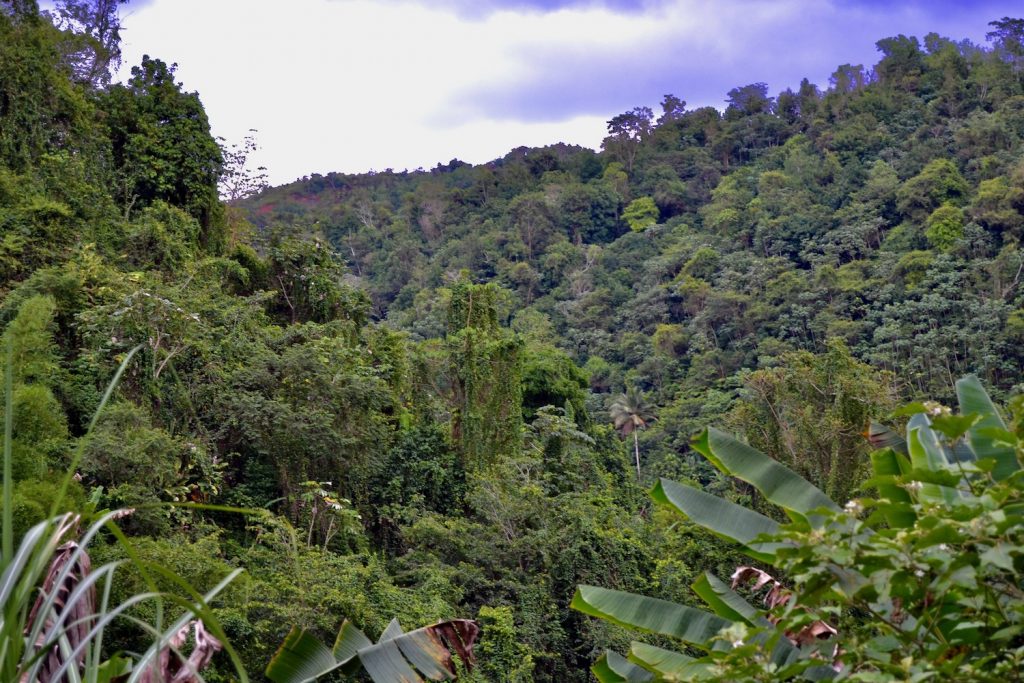
In an era of increased global connectivity, which brings not just people and ideas but also unintended ecological threats, innovators at the University of Connecticut (UConn) are turning to artificial intelligence to restore balance to nature. Their newly developed framework harnesses machine-learning algorithms to predict which plant species may become invasive before they arrive in a new area.
A New Frontier
Ecologists have long grappled with the problem of invasive species, plants introduced into non-native habitats that rapidly proliferate, displacing native flora and altering entire ecosystems. As the UConn team notes, by the time traditional risk assessments identify a species as invasive, the damage is often already done.
Enter AI. Led by Assistant Professor Julissa Rojas-Sandoval (Geography, Sustainability, Urban, and Community Studies), in collaboration with Physics Associate Professor Daniel Anglés-Alcázar and Ecology/Evolutionary Biology Professor Michael Willig, the team reimagined machine-learning techniques borrowed from astrophysics—specifically, galaxy-classification tools—to address terrestrial biology.
Rojas-Sandoval explains: “What is exciting is that we are not just providing a framework to classify plants as invasive and not, we are providing a way to identify which species have the potential to become invasive and problematic before they arrive in a new area.”
How It Works
The system analyzes three primary data streams:
- Biological and ecological traits of the plant such as reproduction strategies and growth form.
- Historical invasion records where and when a species has already caused problems.
- Habitat preference characteristics which ecosystems the species thrives in.
Feeding this data into machine-learning models, the team identified strong invasion predictors, such as species with a history of invasiveness elsewhere, those capable of reproducing via multiple methods (seeds, cuttings, etc.), or those that generate many generations in a single growing season.
Remarkably, the framework achieved over 90% accuracy in predicting invasive species in the tested region, an improvement over traditional assessments.
Why This Matters
This tool is designed to supplement, not replace, existing risk-assessment methods. As Rojas-Sandoval emphasizes, "This is a new strategy to take advantage of the wonderful datasets and machine learning tools available… to complement previous methods and become more effective at preventing new invasions."
With the ability to screen species before they are imported, policy-makers and regulators could prevent ecological problems rather than react to them. This shift from reactive to proactive is powerful.
A Vision for the Future
While the current models were developed using data from Caribbean islands, the team is already looking ahead. They invite researchers in other regions to contribute data so that similar frameworks can be trained to address invasions elsewhere.
They also acknowledge the complexity of global ecosystems: no single model will solve every scenario overnight. However, by identifying generalizable patterns thanks to AI’s pattern-recognition capabilities the hope is to build a toolkit that can be customized to each region and ecosystem.
In a world where human activity increasingly blurs ecological boundaries, this AI-driven approach offers a spark of hope. It reminds us that with creativity, data, and technology, we can turn the tide protecting biodiversity, empowering communities, and safeguarding nature for future generations.
In Summary
The new machine-learning framework from UConn demonstrates that artificial intelligence isn’t solely about self-driving cars or chatbots; it can be a guardian of the living world. By identifying threats before they occur, it sets a new standard for ecological resilience. The research team’s work points toward a future where we don’t just react to invasions we prevent them.