

In research resembling a cosmic warning, scientists at the University of Rhode Island (URI) and collaborators used advanced supercomputing to simulate how the melting Antarctic Ice Sheet will reshape our climate and coastlines over the next two centuries. The results are sobering. Dr. Ambarish Karmalkar, assistant professor in URI’s Department of Geosciences and co-author of the study, helped design and run simulations that integrate the ice sheet, ocean, and atmosphere simultaneously.
“Simulating ice-sheet–climate interactions … is challenging but critical,” he says. Supercomputing is proving to be the heavy lifter of climate truths. To gain meaningful insight into complex systems like Antarctica’s ice and the global climate, the team relied on high-end supercomputing resources. In their experiment, they ran interactive models on a supercomputer that allowed the meltwater discharge from Antarctica to dynamically affect oceans and atmosphere, rather than just being included as a simple input.
Why does this matter?
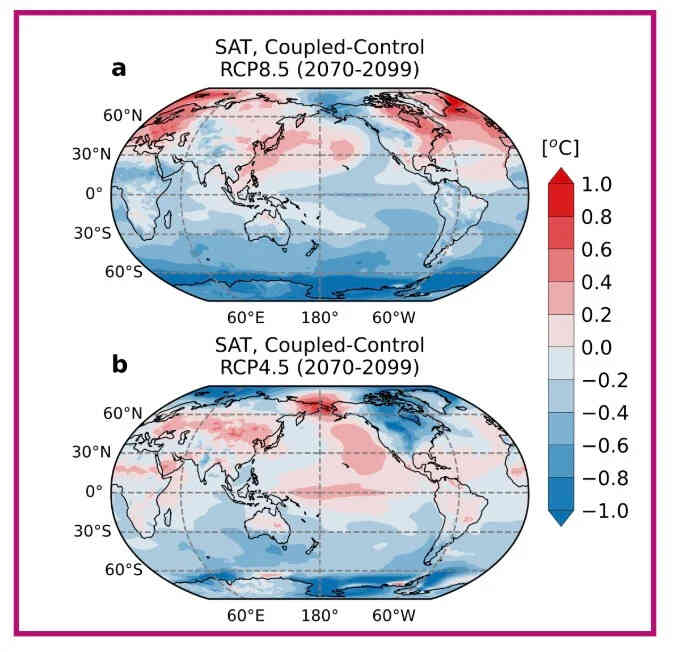
Previous models, lacking real-time feedback from the ice sheet, painted an overly optimistic picture. However, when we fully couple the ice, ocean, and atmosphere, we uncover hidden risks: uneven sea level rise, particularly in the Pacific, Indian Ocean, and Caribbean; unexpected warming in regions far from Antarctica, such as eastern North America; and complex, counter-intuitive dynamics where meltwater cools the Southern Hemisphere but warms the Northern Hemisphere. In short, the supercomputer didn't just predict global sea level rise; it revealed where, how fast, and how unevenly it will occur.
The Forecast: One to Three Meters by 2200, Unless We Act
Under a “very high emissions” scenario, the melting Antarctic sheet alone could contribute over 3 meters (10 feet) of global sea level rise by the year 2200. Under a more moderate scenario, it’s still ~1 meter (3 feet).
Meanwhile, some low-lying islands and coastal regions in the Pacific, Indian, and Caribbean zones could see regional rises of up to 1.5 meters (5 feet) due to gravitational and Earth-deformation effects.
These are not distant problems. By 2060, more than one billion people will live in low-elevation coastal zones already vulnerable today to storms, erosion, and surge.
And the ripple effects from major sea-level rise reach inland: migration pressures, infrastructure costs, economic shifts, all rippling waves.
The Takeaway
The team at URI used cutting-edge supercomputing to reveal a harder truth: melting Antarctica isn't a far-off apocalypse; it's an unfolding structural change with winners, losers, and vast uncertainties. The models show a world where your location and speed of action make a difference. Shrugging won't help. Investing in "knowing the future" via data, modeling, narratives, tools will.