

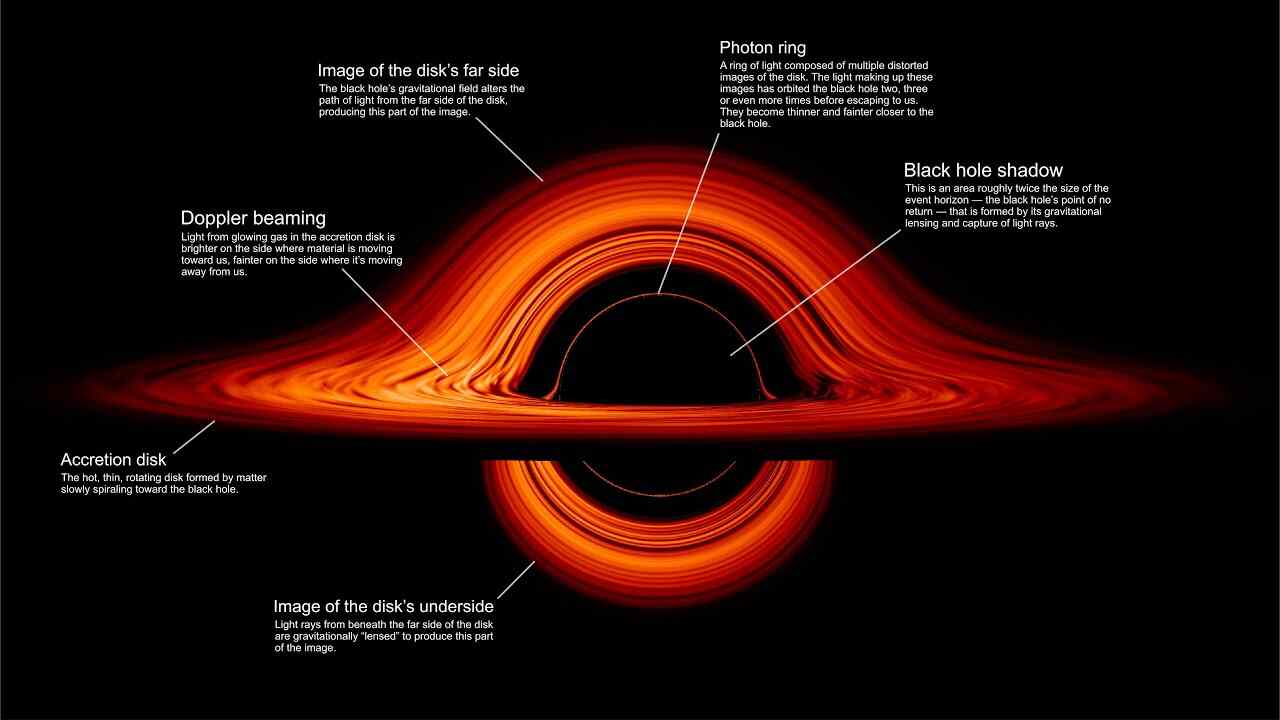
A team of computational astrophysicists has broken new ground, using the planet's most powerful supercomputers to simulate, in full fidelity, how matter spirals into a black hole and lights up in a blaze of radiation. Their results, published on December 3, 2025, by the Institute for Advanced Study (IAS) and the Flatiron Institute, deliver what may be the most detailed, realistic model yet of "luminous black hole accretion."
From Toy Models to Full-Blown Virtual Realities
For decades, astrophysicists have studied black hole accretion, the process by which gas, dust, and other matter fall into black holes, using simplified models. These toy-model approximations treated radiation as if it were a fluid, glossing over the real physics of how light moves through warped spacetime around a black hole.
Thanks to a new computational algorithm coupled with access to exascale-class supercomputers, namely Frontier at Oak Ridge and Aurora at Argonne, the researchers directly solved the full radiation-transport equations under general relativity, without simplifying assumptions.
Lead author Lizhong Zhang describes it as "observing" black hole behavior not through telescopes, but through the computer, effectively creating a digital observatory of regions impossible to image directly.
What the Simulations Reveal
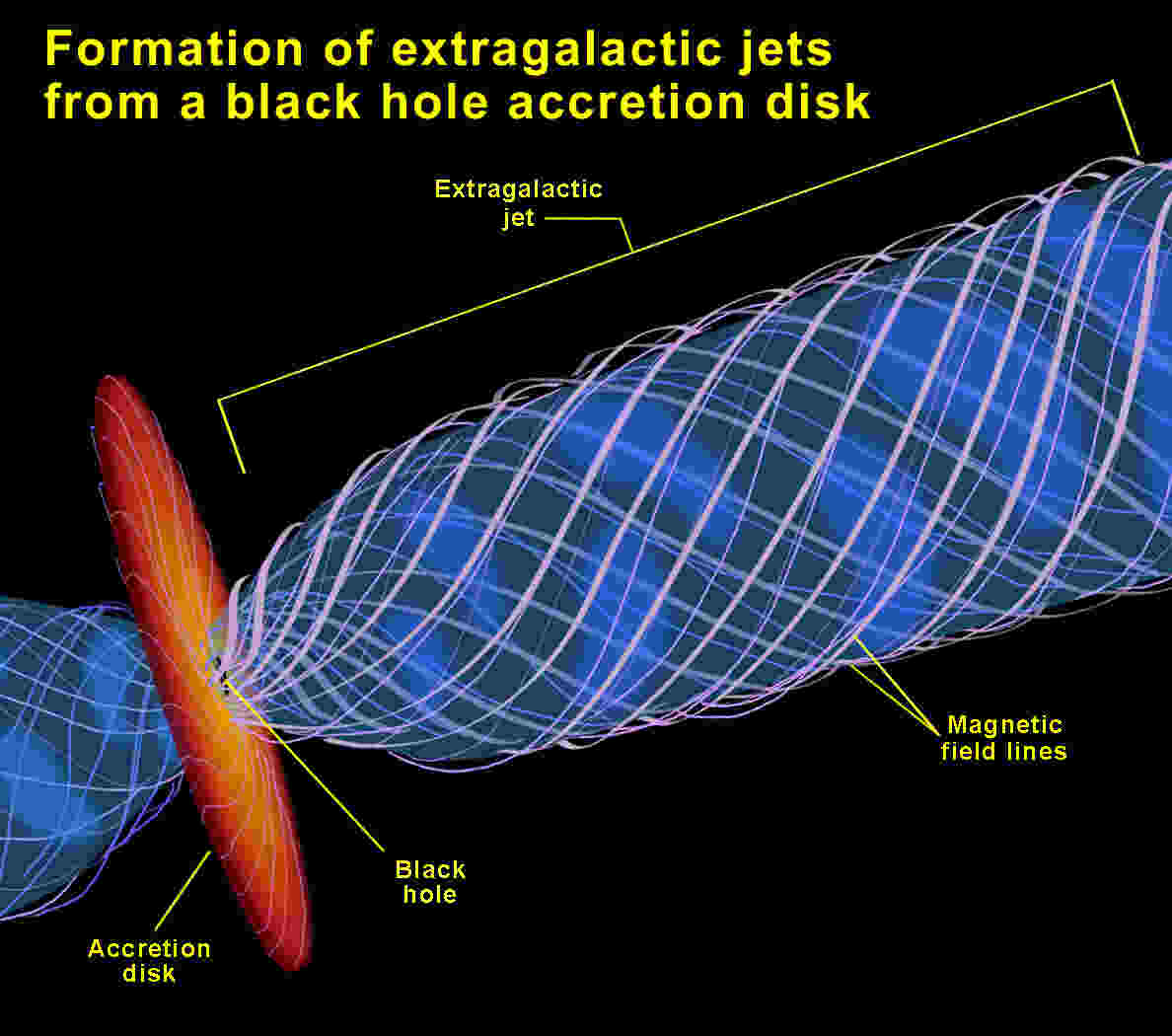
- The simulations show that, even in a radiation-dominated, highly turbulent environment, matter forms a dense, thin thermal disk near the black hole, embedded inside a magnetically dominated envelope. The envelope appears to stabilize the system, a surprising sign of structural order emerging from chaos.
- Around the disk, the model captures winds and sometimes powerful jets: outflows of matter and energy that match what astronomers see in real systems like ultraluminous X-ray sources and X-ray binaries.
- When the team compared the simulated radiation spectra to real observations, the match was strong. That suggests the simulation is more than theoretical; it may faithfully represent how black holes behave in nature.
Why Supercomputers Were Critical
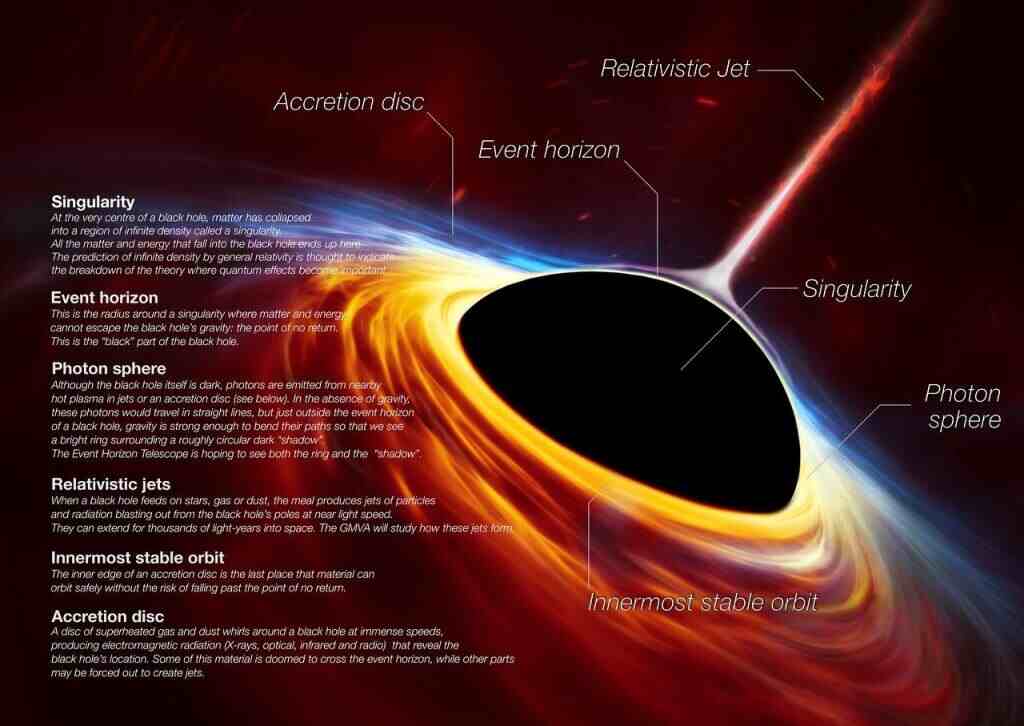
Modeling a black hole's accretion in full detail is computationally brutal. Gravity warps spacetime (general relativity), matter behaves under magneto-hydrodynamics (MHD), and radiation interacts with gas, all tightly coupled in nonlinear, dynamic ways. Solving that in 3D over time requires billions of calculations per second and software optimized down to the metal.
The combination of cutting-edge algorithm design (led by co-authors such as Christopher White and Patrick Mullen) with the brute force of exascale machines allowed the team to finally do this computation, the kind of problem that would have been intractable a decade ago.
What's Next: Cosmic Simulations Go Big
This is just the first in a series of papers. The team plans to apply their model to a wider range of black hole systems, from stellar-mass holes (a few times the mass of the Sun) to the supermassive giants that lurk at the centers of galaxies.
If successful, this work could reshape our understanding of how black holes grow and affect their surroundings, from the jets they shoot out to the winds they drive, and how they light up in X-rays and other wavelengths.
Big Picture: When Code Becomes Our Telescope
We're living in an era where code + supercomputing = cosmic telescope. With enough computational power and smart algorithms, researchers can simulate regions of the universe that not even our most advanced telescopes can resolve. The result is a kind of synthetic observation, a digital microscope turned on the universe's darkest objects.
It's a perspective shift: rather than just watching the universe, we're now capable of recreating pieces of it in silico, exploring how extreme gravity, magnetism, and radiation dance together around black holes.
The cosmic circus is no longer only for telescopes; now, supercomputers get front-row seats.