

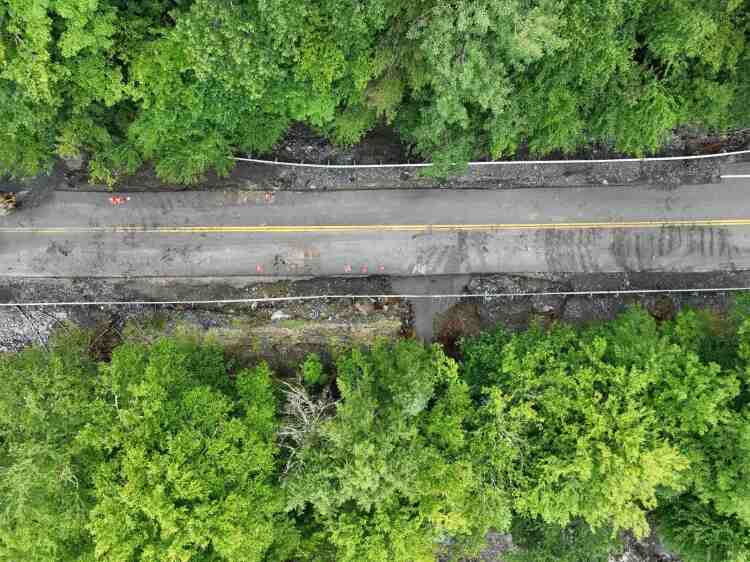
As torrential storms drive rivers to overflow, the importance of precise flood forecasting has never been greater. With climate extremes becoming more severe, scientists increasingly rely on advanced computing, and especially supercomputing, to expand the frontiers of water prediction. A recent partnership between the National Weather Service’s Office of Water Prediction (OWP) and the University of Vermont (UVM) has resulted in a potentially game-changing advancement in forecasting technology, grounded in supercomputing and next-generation modeling.
At the heart of this effort is the newly published NextGen Water Resources Modeling Framework. This framework isn’t just another hydrologic model; it is a flexible, model-agnostic platform designed for the modern era of computing. It enables researchers to run diverse hydrologic and hydraulic models under a common architecture, whether on a laptop, in the cloud, or on a high-performance supercomputer.
What makes NextGen intriguing for the supercomputing community is its ambition to fuse massive geospatial datasets, physical process models, and performance-oriented compute resources. Traditional flood forecasting systems have often been constrained by rigid, single-model architectures that struggle to scale across regions or use the full capacity of parallel computing systems. The NextGen framework sidesteps these limits by allowing heterogeneous models, written in languages such as C, Fortran, and Python, to execute concurrently in a unified environment, leveraging standards like the Basic Model Interface for data exchange and configuration.
Supercomputers excel at breaking down complex equations across millions of computing cores. Flood forecasting requires solving sophisticated, multi-dimensional physical processes, rainfall infiltration, snowmelt runoff, and river routing across vast spatial domains. By opening doors to distributed execution and modular coupling of models, NextGen lays the groundwork for future implementations that could harness supercomputers to deliver real-time, high-resolution forecasts at continental scales.
In their institutional announcement, UVM researchers highlighted how the framework addresses long-standing challenges in hydrologic prediction, particularly the need to simulate water’s movement through a landscape that varies wildly in terrain, soil, vegetation, and climate. With computing at the crux, NextGen treats a wide variety of models and data inputs with standardized outputs, enabling researchers and forecasters to run experiments that were once computationally prohibitive.
For computational scientists, the framework’s support for high-performance environments isn’t just about raw speed; it’s about collaboration across disciplines. The ability to prototype a new flood-inundation algorithm in Python one day, and then scale it to run across thousands of nodes on a supercomputer the next, opens doors for innovative research pipelines that blur the line between development and deployment.
Looking ahead, the NextGen framework promises to influence not just national operational models, such as the forthcoming version of the National Water Model, but also fundamental research in hydrology and Earth system simulation. When paired with advances in machine learning, GPU-accelerated computing, and real-time data assimilation, this modular foundation could spur a new generation of forecasting applications that bring supercomputing power directly to the urgent task of flood prediction.
Every hour of reliable flood warning can mean saved lives and billions of dollars saved in damages. The integration of supercomputing and hydrologic science is no longer a technological novelty; it is an urgent need. As NextGen takes the lead, the flood forecasting field stands poised for a paradigm shift, fueled by high-performance computing once exclusive to fields like physics and cosmology.