

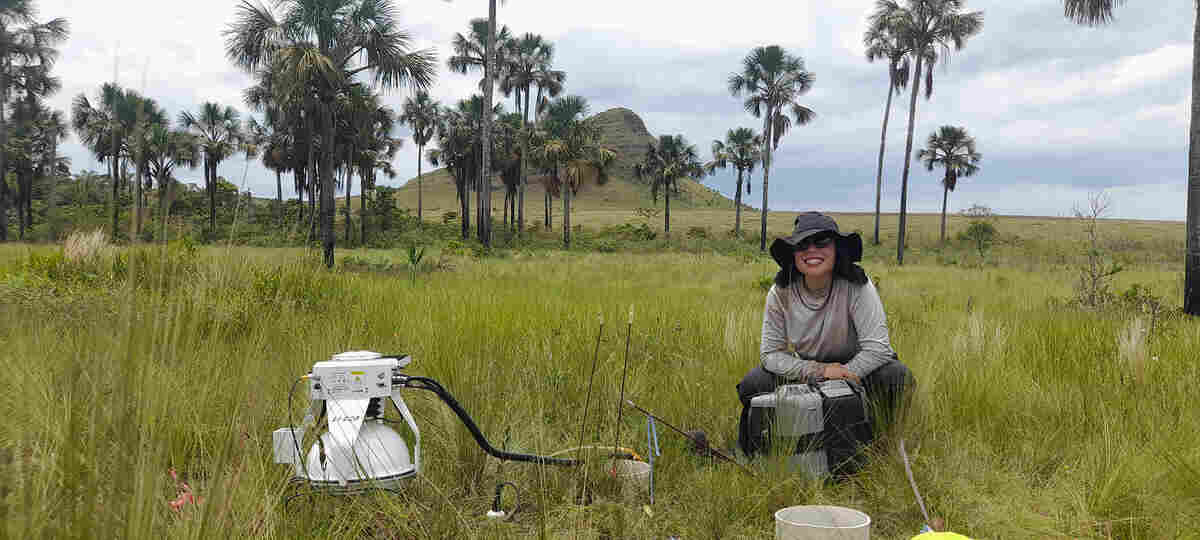
The Brazilian Cerrado, often overshadowed by the Amazon rainforest, is emerging as a new frontier for computational climate science. According to researchers at the Cary Institute of Ecosystem Studies, wetlands scattered across this vast tropical savanna may act as unexpectedly powerful carbon reservoirs, yet quantifying their role in the global carbon cycle is proving to be a complex data problem increasingly addressed with machine learning and large-scale environmental modeling.
For machine learning professionals working with environmental data, the research highlights a fascinating challenge: detecting and modeling carbon storage in ecosystems that are spatially heterogeneous, seasonally dynamic, and poorly mapped.
The Cerrado’s Hidden Carbon System
The Cerrado biome covers roughly two million square kilometers across central Brazil and is widely recognized as one of the most biodiverse savanna ecosystems on Earth. But ecologically, its most important features may lie underground.
Researchers often describe the Cerrado as an “underground forest”, where plants store a significant portion of their biomass in deep root networks rather than aboveground trunks and canopies.
Seasonal wetlands within this landscape, such as veredas, peatlands, and marshy valley systems, play an outsized role in carbon storage. These ecosystems accumulate organic carbon in waterlogged soils where decomposition occurs slowly, allowing carbon to build up over centuries.
Some estimates suggest that Cerrado peatlands may hold around 13% of the region’s soil carbon while covering less than 1% of its surface area, illustrating the concentration of carbon within these specialized environments.
Yet despite their importance, the spatial distribution and total carbon stocks of these wetlands remain poorly constrained.
A Data Problem Well Suited to Machine Learning
This is where computational methods come in.
To understand how Cerrado wetlands influence regional and global carbon cycles, researchers must integrate several challenging datasets simultaneously:
- Satellite imagery capturing seasonal hydrology and vegetation structure.
- Soil carbon measurements from sparse field sampling campaigns
- Topographic and hydrological models predicting water flow and wetland formation
- Climate data describing temperature, rainfall, and evapotranspiration dynamics
Machine learning models, particularly ensemble regression and geospatial deep learning frameworks, are increasingly used to interpolate carbon density across unsampled regions and to identify wetland systems that conventional maps miss.
Such models often operate on multi-terabyte remote-sensing datasets, requiring HPC pipelines capable of processing satellite imagery, generating spatial features, and training predictive models across millions of grid cells.
For ML engineers, this workflow closely resembles large-scale geospatial modeling tasks seen in climate simulation or Earth-observation analytics.
Mato Grosso do Sul: A Case Study in Rapid Landscape Change
The state of Mato Grosso do Sul provides a particularly revealing example of the computational challenge.
Cerrado landscapes dominate much of the state, covering more than 60% of its territory, and include a mosaic of savannas, grasslands, forests, and wetland fields that feed major river basins connected to the Pantanal.
However, the region has undergone rapid land-use change in recent decades. Between 1985 and 2022, more than 4.6 million hectares of native vegetation were largely replaced by cattle pasture and soybean agriculture.
For environmental modelers, these changes introduce a moving target. Carbon storage potential must be estimated not just for intact ecosystems but also for landscapes undergoing continuous transformation.
Machine learning models, therefore, need to account for temporal dynamics, incorporating satellite time-series data and land-use classification models that track vegetation shifts over decades.
Building the Next Generation of Ecological Models
Researchers associated with the Cary Institute of Ecosystem Studies, including ecologist Amy Zanne, are exploring how plant traits, microbial processes, and wetland hydrology influence carbon storage and greenhouse gas fluxes across the Cerrado.
For the machine learning community, these questions translate into a broader computational challenge:
How can models capture interactions among vegetation traits, soil microbiology, hydrology, and climate across continental-scale landscapes?
Traditional ecological models struggle with the dimensionality of these systems. Data-driven approaches, combining remote sensing, statistical inference, and ML, offer a pathway toward scalable predictions.
Curiosity for the ML Community
From an algorithmic standpoint, the Cerrado wetlands project illustrates an emerging domain sometimes called computational ecosystem science.
It sits at the intersection of:
- Geospatial machine learning
- Earth-system modeling
- Large-scale environmental data assimilation
For machine learning engineers, the appeal is clear. Few real-world datasets are as complex, or as consequential, as those describing Earth’s carbon cycle.
And in the Cerrado’s wetlands, the stakes may be surprisingly high. Beneath the grasses and shrubs of Brazil’s savanna lies a vast, partially hidden carbon reservoir whose behavior could influence climate models for decades to come.
Understanding it will require more than field biology alone.
It will require algorithms capable of learning from the landscape itself.