

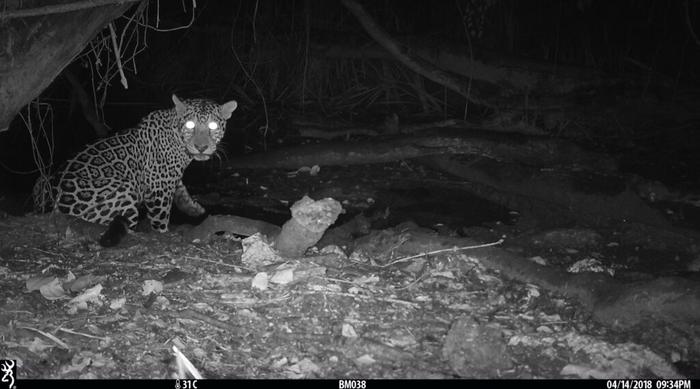
Artificial intelligence is revolutionizing science, but its most profound impacts are unfolding beyond tech hubs and consumer devices. In ecology and environmental science, AI is emerging as a vital tool for unraveling the intricacies of life, uncovering hidden relationships within ecosystems, expediting conservation efforts, and transforming how researchers engage with the natural world. Evidence now shows AI is no longer just a computational aid for ecology; ecological insights are increasingly influencing AI’s own development. This convergence signals a new era, one that could reshape both environmental research and the evolution of intelligent systems.
Ecology meets machine intelligence
Ecological systems are among the most complex networks known to science. Forests, oceans, disease ecosystems, and wildlife populations all involve enormous numbers of interacting variables evolving across space and time.
Traditional statistical approaches often struggle to capture this complexity. AI, however, excels at identifying patterns across vast, multidimensional datasets.
Researchers are now using machine learning to:
- Detect biodiversity changes from soundscapes.
- Map food-web relationships between species.
- Predict disease spillover risks.
- Analyze ecosystem resilience under climate stress.
- Identify hidden interactions within environmental networks.
At Rice University, scientists recently demonstrated how AI can reconstruct “tropical forest connectomes” by analyzing hundreds of hours of bioacoustic recordings from rainforest ecosystems. Instead of manually identifying animal calls, machine learning systems automatically segment and interpret ecological soundscapes, revealing how biodiversity varies across habitats.
The approach transforms ecology from a field constrained by human observation into one capable of continuous, large-scale environmental monitoring.
From wildlife data to ecological intelligence
One of the most promising developments involves AI’s ability to interpret ecological relationships that were previously invisible.
Researchers have begun applying advanced mathematical frameworks, such as optimal transport analysis, to compare ecological networks across entirely different ecosystems. These methods allow scientists to determine whether species occupying different continents may nonetheless perform equivalent ecological roles.
In practical terms, AI can now infer whether a jaguar in South America functions ecologically like a lion in Africa, even though the two species never interact directly.
This shift represents more than automation. It signals the emergence of computational ecology, where AI systems uncover ecological structure at scales too large and interconnected for manual analysis.
AI inspired by nature
The relationship between ecology and AI is becoming increasingly reciprocal.
Researchers argue that ecological principles may help solve some of artificial intelligence’s biggest weaknesses, including fragility, bias, and lack of adaptability.
Modern AI systems often perform exceptionally well in narrowly defined tasks but struggle when conditions change unexpectedly. Ecological systems, by contrast, are inherently resilient. Forests, microbial networks, and food webs adapt continuously to disturbance through diversity, redundancy, and decentralized interactions.
Scientists now believe these same principles could inspire more robust AI architectures.
For example:
- Ecological diversity may help reduce “mode collapse” in neural networks.
- Distributed ecological systems could inspire decentralized AI models.
- Adaptive ecosystem behavior may guide self-correcting machine learning systems.
- Multi-species interactions could inform collaborative AI agents.
This emerging philosophy reframes intelligence itself, not as isolated computation, but as a dynamic property of interconnected systems.
The rise of planetary-scale environmental monitoring
AI is also enabling unprecedented environmental observation capabilities.
Modern ecological research generates enormous datasets from:
- Satellite imagery
- Drone surveys
- Camera traps
- Bioacoustic sensors
- Climate monitoring networks
- Genomic sequencing
Processing these datasets requires advanced computational infrastructure and increasingly sophisticated AI pipelines.
In conservation science, machine learning systems are now identifying animal species automatically from camera-trap imagery, detecting illegal deforestation from satellite data, and estimating ecosystem health in near real time.
The scale is extraordinary. Some projects analyze millions of wildlife images or thousands of hours of environmental audio recordings, tasks that would take human researchers decades to complete manually.
AI reduces that timeline to hours.
Toward an ecological future for AI
Researchers involved in the emerging field emphasize that the implications extend beyond ecology itself.
The same computational systems developed for environmental science could help address broader global challenges, including:
- Pandemic prediction
- Food security
- Climate adaptation
- Biodiversity preservation
- Sustainable resource management
At the same time, ecology may help guide AI development toward more ethical and socially resilient systems.
Scientists increasingly warn that AI trained only on narrow datasets risks inheriting blind spots and reinforcing systemic biases. Ecological thinking, by contrast, emphasizes diversity, interconnectedness, adaptation, and coexistence.
This philosophical shift may prove as important as the technology itself.
A new scientific frontier
The convergence of AI and ecology represents one of the most intellectually ambitious movements in modern science.
Ecology provides AI with models of resilience and adaptation refined through billions of years of evolution. AI provides ecology with computational capabilities powerful enough to analyze the staggering complexity of living systems.
Together, they are enabling researchers to see ecosystems not as isolated collections of species, but as deeply interconnected networks of information, energy, and behavior.
In doing so, AI is becoming more than a tool for studying nature.
It is beginning to learn from it.