

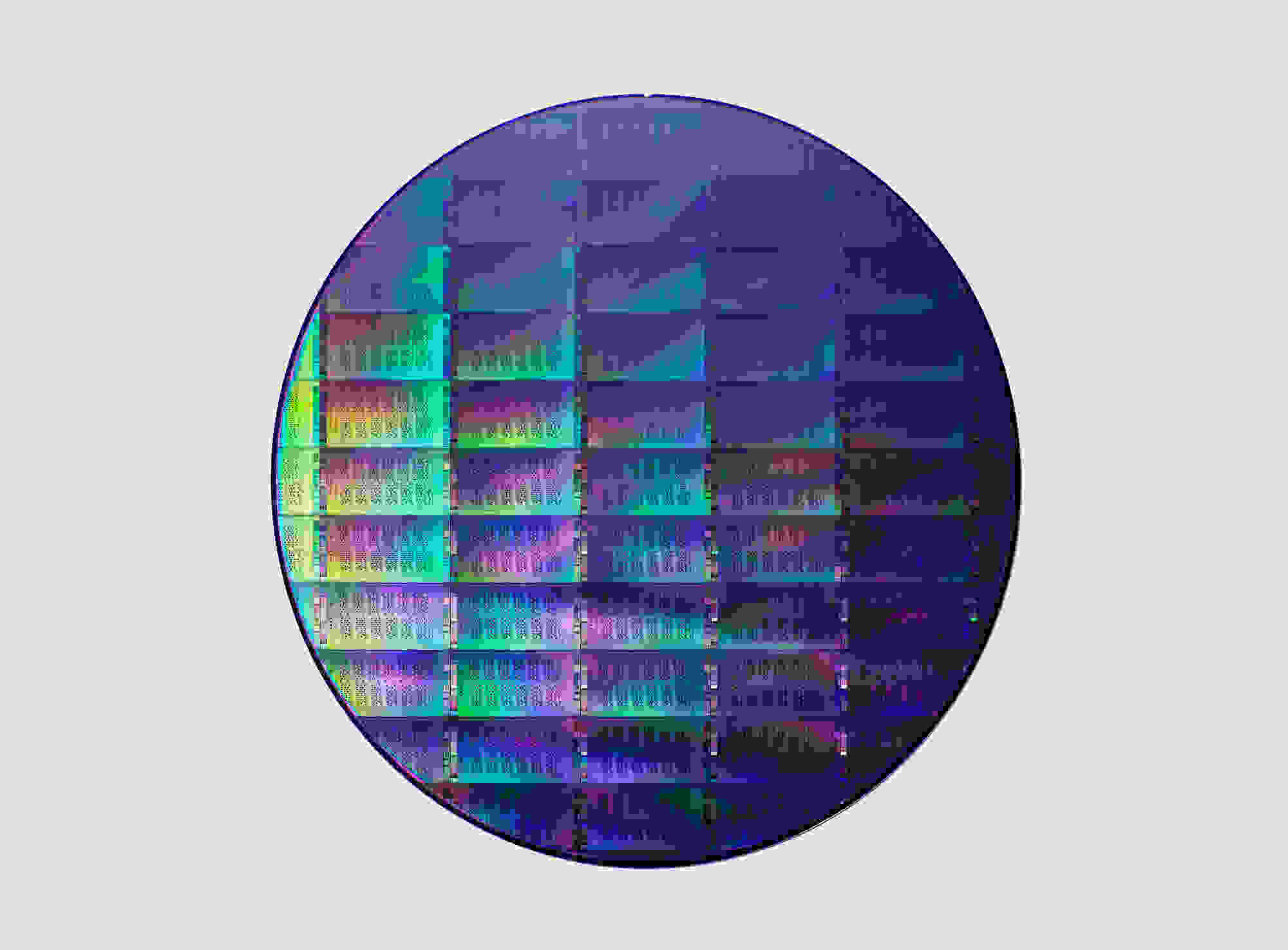
The announcement of the United States’ first dedicated quantum foundry might be expected to represent a milestone in hardware engineering.
Instead, it reads like a warning.
This week, IBM and the U.S. Department of Commerce unveiled plans for a new company called Anderon, backed by a proposed $1 billion award under the CHIPS and Science Act, to build what officials describe as the nation’s first dedicated quantum chip manufacturing facility.
On the surface, the initiative appears visionary: a massive federal investment designed to secure American leadership in quantum computing. But beneath the headlines lies a more unsettling reality for the supercomputing industry.
The world’s appetite for compute has become so extreme that governments are now funding technologies that may not become commercially viable for years, or even decades.
Classical supercomputing is reaching its limits
For years, the growth of supercomputing followed a relatively predictable path. Faster CPUs, denser GPUs, and larger clusters steadily expanded the capabilities of high-performance computing systems.
That model is beginning to fracture.
Artificial intelligence training, climate simulation, molecular modeling, national security analytics, and exaflops workloads are consuming computational resources at rates that conventional semiconductor scaling can no longer comfortably sustain. Modern AI models now require millions of GPU-hours and enormous power budgets simply to remain competitive.
The compute crisis is no longer theoretical.
It is now driving governments and corporations toward increasingly speculative architectures in the desperate search for the next performance leap.
IBM’s new quantum foundry initiative reflects that pressure more than technological confidence.
A $2 billion bet born from fear
The broader federal initiative surrounding the IBM announcement includes roughly $2 billion in investments across multiple quantum firms, with the U.S. government taking direct equity stakes in several companies.
IBM alone is expected to receive approximately $1 billion in federal support while contributing another $1 billion of its own capital toward the Anderon facility in New Albany, New York.
Such investments reveal how seriously policymakers now view the compute bottleneck.
Quantum computing is no longer treated as a distant academic experiment. It has become a strategic hedge against the possibility that classical computing may soon be unable to meet future computational demand efficiently enough.
That shift should concern the HPC industry.
Despite decades of progress in CPUs, GPUs, accelerators, and interconnects, the world’s largest technology firms are effectively admitting that existing architectures may not scale fast enough to support the next generation of AI and scientific computing workloads.
The economics of compute are becoming unsustainable
The rise of exaflops systems has already exposed how fragile the economics of supercomputing have become.
Modern HPC facilities consume extraordinary amounts of power and require increasingly complex cooling infrastructure. AI datacenters are now forcing utilities to rethink regional power grids.
Semiconductor fabrication costs continue to climb, while leading-edge process nodes become exponentially more difficult to manufacture.
Quantum computing promises an escape route, but one built on uncertainty.
Unlike conventional processors, quantum systems remain plagued by instability, decoherence, cryogenic operating requirements, and severe error-correction challenges. Useful fault-tolerant quantum systems still do not exist at a meaningful production scale.
Yet governments are investing billions anyway.
That is not necessarily a sign of confidence. It may instead reflect anxiety that current computing paradigms are approaching practical limits.
Supercomputing’s identity crisis
The HPC industry now faces a difficult paradox.
Demand for compute has never been higher. AI, simulation, and scientific workloads continue expanding at extraordinary rates. Organizations around the world are racing to build larger clusters, deploy more accelerators, and secure more energy capacity.
But the harder the industry pushes classical architectures, the clearer the limitations become.
This tension is reshaping the meaning of supercomputing itself.
Historically, supercomputers were engineering achievements built from deterministic, reliable hardware. Quantum computing introduces a radically different philosophy, probabilistic systems that require constant correction and may only outperform classical systems in highly specialized domains.
The danger is that the industry may be chasing quantum not because it is ready, but because it has run out of obvious alternatives.
CHIPS Act funding signals a strategic panic
The CHIPS and Science Act was originally framed to restore semiconductor manufacturing resilience and strengthen domestic supply chains.
Now, those same funding mechanisms are increasingly being redirected toward experimental quantum infrastructure.
IBM’s announcement makes clear that Washington no longer views quantum research as optional.
The concern is geopolitical as much as technological. China, Europe, and other global powers are aggressively pursuing quantum leadership, creating pressure on the United States to invest despite technical uncertainty.
That geopolitical urgency is accelerating funding decisions faster than the underlying science may justify.
The harsh reality ahead
Quantum computing may eventually revolutionize chemistry, optimization, cryptography, and scientific simulation. IBM and other researchers have undeniably made important progress toward scalable quantum architectures.
But the current investment frenzy also exposes a more uncomfortable truth: the computing industry is running out of easy paths forward.
The extraordinary rise of AI has pushed infrastructure demand beyond what conventional scaling strategies comfortably support. Supercomputing centers are consuming unprecedented power, datacenter costs are spiraling upward, and semiconductor development is becoming economically brutal.
IBM’s quantum foundry is therefore more than a manufacturing project.
It is evidence that the industry increasingly believes the future of computation may require abandoning many of the assumptions that built modern supercomputing in the first place.
And that realization carries less optimism than the headlines suggest.