

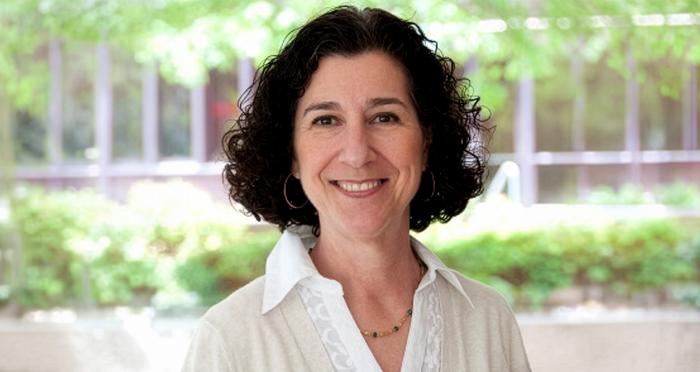
Sanford Burnham Prebys recruits one of the world’s leading computational biologists to accelerate AI-driven biomedical discovery through advanced computing
For decades, supercomputers have reshaped our understanding of the universe through feats like simulating stellar explosions, modeling global climate patterns, and engineering next-generation aircraft. Today, these immense computational capabilities are being directed inward to address one of science’s greatest challenges: deciphering the complex language of human biology.
This shift was underscored this week by the appointment of Dr. Jill P. Mesirov, a pioneer in computational biology and cancer genomics, as Distinguished Professor and Senior Vice President for Computational Science at Sanford Burnham Prebys. Her recruitment marks a strategic effort to integrate advanced computing, artificial intelligence, and data science into the core of the institute’s biomedical research. For the high-performance computing (HPC) community, this move is more than just a key hire; it signals the definitive convergence of supercomputing, AI, and modern medicine.
Biology has become an HPC problem
Biological research has undergone a remarkable transformation during the past twenty years. Sequencing a human genome once required years of effort and billions of dollars. Today, thousands of genomes can be sequenced in days. Single-cell sequencing technologies now generate millions of individual cellular measurements from a single experiment, while spatial transcriptomics and advanced imaging systems produce multidimensional datasets measured in petabytes.
Extracting meaningful biological insight from these data is no longer primarily an experimental challenge.
It is a computational one.
Modern cancer research depends upon algorithms capable of integrating genomic, transcriptomic, proteomic, metabolomic, and clinical datasets simultaneously. These analyses involve billions of variables and demand computational infrastructures that resemble those found in national supercomputing centers.
Mesirov has spent her career developing precisely these kinds of computational approaches, helping establish data science as a central pillar of biomedical research. Her work has contributed to widely used computational tools and analytical frameworks that enable researchers to interpret complex genomic information and identify molecular mechanisms underlying disease.
Beyond bioinformatics
The title “computational biology” scarcely captures the breadth of modern biomedical computing.
Today’s computational scientists build machine-learning models capable of identifying previously unknown cancer subtypes, predicting patient responses to therapy, reconstructing cellular signaling networks, and discovering molecular biomarkers hidden within enormous genomic datasets.
Each of these workflows requires sophisticated numerical methods executed across large-scale computing systems.
Genome-wide association studies routinely analyze millions of genetic variants across hundreds of thousands of individuals.
Single-cell RNA sequencing experiments may profile millions of cells simultaneously.
Deep-learning pathology systems process gigapixel microscope images using thousands of GPU cores.
Drug discovery platforms evaluate billions of molecular interactions through simulation and AI-guided optimization.
Collectively, these workloads have made biomedical research one of the fastest-growing consumers of high-performance computing resources worldwide.
Supercomputers as biomedical instruments
Traditional scientific instruments observe nature.
Supercomputers increasingly function as instruments themselves.
Rather than collecting photons or particles, they construct mathematical representations of biological systems, allowing scientists to investigate processes that cannot be observed directly.
Large GPU clusters now train foundation models on genomic sequences, protein structures, electronic health records, and multimodal imaging data. These models can identify relationships that would be impossible for human investigators to recognize manually.
Increasingly, biological discovery begins not in the laboratory but inside large-scale computational infrastructure.
This shift explains why research institutions are investing heavily in computational leadership alongside experimental expertise.
By recruiting Mesirov, Sanford Burnham Prebys is reinforcing the idea that future biomedical breakthroughs will emerge from close integration between laboratory science and advanced computing. The institute has emphasized expanding capabilities in data science and AI as part of its broader research strategy.
AI changes the scale of discovery
Artificial intelligence is rapidly changing every stage of biomedical research.
Deep neural networks now predict protein structures with remarkable accuracy.
Generative AI models assist researchers in designing new therapeutic molecules.
Machine learning accelerates image segmentation, genomic classification, biomarker discovery, and clinical decision support.
Yet AI itself depends upon extraordinary computational infrastructure.
Training state-of-the-art biomedical foundation models requires clusters containing thousands of GPUs connected through high-bandwidth interconnects, supported by distributed storage systems capable of delivering terabytes of data every second.
The resulting computational demands rival those of traditional scientific supercomputing applications.
As AI becomes embedded within biomedical research, institutions capable of combining biological expertise with leadership-class computing infrastructure will possess a growing competitive advantage.
The rise of computational medicine
Medicine is steadily becoming a predictive science.
Instead of reacting after disease develops, researchers increasingly seek to model disease progression before symptoms appear.
Digital representations of tumors can simulate therapeutic response.
Network models identify previously unknown disease pathways.
Multiomic analyses reveal subtle molecular signatures long before conventional diagnostics detect abnormalities.
These capabilities depend upon sophisticated computational pipelines integrating simulation, statistical inference, machine learning, uncertainty quantification, and large-scale data management.
Each represents a mature discipline within high-performance computing.
Rather than replacing laboratory experiments, supercomputers now guide them.
Scientists can prioritize promising therapeutic targets computationally before committing years of experimental effort.
This dramatically shortens the path from hypothesis to discovery.
Converging scientific disciplines
The significance of Mesirov’s appointment extends beyond cancer research.
It reflects a broader transformation occurring across scientific computing.
Historically, computational biology evolved separately from traditional HPC disciplines such as computational fluid dynamics, astrophysics, and climate modeling.
Today, those boundaries are dissolving.
Shared technologies, including GPU acceleration, distributed computing, cloud-native workflows, AI frameworks, high-performance storage, and advanced visualization, are becoming universal scientific tools.
The same accelerator architectures used to simulate galaxy formation now train genomic foundation models.
Parallel computing techniques originally developed for physics increasingly drive precision medicine.
The future of supercomputing is no longer defined by scientific discipline.
It is defined by computational capability.
Building the next generation of discovery
Perhaps the most inspiring aspect of this appointment is what it represents for the future of biomedical research.
Scientific progress has always depended upon better instruments.
Microscopes revealed cells.
DNA sequencers revealed genomes.
Today, supercomputers reveal patterns hidden within biological complexity.
Every additional GPU, every faster interconnect, every more efficient algorithm expands researchers’ ability to understand disease at unprecedented resolution.
By bringing one of computational biology’s most influential leaders to Sanford Burnham Prebys, the institute is making a clear statement about where biomedical science is headed.
The laboratories of the future will still contain microscopes, sequencers, and imaging systems.
But they will also rely upon leadership-class computing clusters, artificial intelligence, and computational scientists capable of translating massive datasets into actionable biological knowledge.
For the supercomputing community, that evolution represents one of the most exciting frontiers in computational science.
The next life-saving medical breakthrough may not emerge solely from a laboratory bench.
It may first appear within the processors of a supercomputer, where mathematics, biology, and artificial intelligence converge to reveal discoveries that would otherwise remain invisible.