

The upcoming satellite experiment LiteBIRD is expected to probe the physics of the very early Universe if the primordial inflation happened at high energies. But now, new research shows it can also test inflationary scenarios operating at lower energies. 
Cosmologists believe that in its very early stages, the Universe underwent a very rapid expansion called “cosmic inflation”. A success story of this hypothesis is that even the simplest inflationary models can accurately predict the inhomogeneous distribution of matter in the Universe. During inflation, these vacuum fluctuations were stretched to astronomical scales, becoming the source of all the structures in the Universe, including the Cosmic Microwave Background anisotropies, distribution of dark matter, and galaxies.
The same mechanism also produced gravitational waves. These propagating ripples of space and time are important for understanding the physics during the inflationary epoch. In general, detecting these gravitational waves is considered to determine the energy at which inflation took place. It is also linked to how much the inflation field, or the energy source of inflation, can change during inflation — a relation referred to as the “Lyth bound”.
The primordial gravitational waves generated from vacuum are extremely weak and are very difficult to detect, but the Japanese-led LiteBIRD mission might be able to detect them via the polarization measurements of the Cosmic Microwave Background. Because of this, understanding primordial gravitational waves theoretically is gaining interest so any potential detection by LiteBIRD can be interpreted. It is expected LiteBIRD will be able to detect primordial gravitational waves if inflation happened at sufficiently high energies.
Several inflationary models constructed in the framework of quantum gravity often predict a very low energy scale for inflation, and so would be untestable by LiteBIRD. However, a new study by researchers, including the Kavli Institute for the Physics and Mathematics of the Universe (Kavli IPMU), has shown the opposite. The researchers argue such scenarios of fundamental importance can be tested by LiteBIRD if they are accompanied by additional fields, sourcing gravitational waves.
The researchers suggest an idea, logically very different from the usual.
"Within our framework in addition to the gravitational waves originating from vacuum fluctuations, a large amount of gravitational waves can be sourced by the quantum vacuum fluctuations of additional fields during inflation. Due to this, we were able to produce an observable amount of gravitational waves even if inflation takes place at lower energies.
“The quantum fluctuations of scalar fields during inflation are typically small, and such induced gravitational waves are not relevant in standard inflationary scenarios. However, if the fluctuations of the additional fields are enhanced, they can source a significant amount of gravitational waves,” said paper author and Kavli IPMU Project Researcher Valeri Vardanyan.
Other researchers have been working on related ideas, but so far no successful mechanism based on scalar fields alone had been found.
“The main problem is that when you generate gravitational waves from enhanced fluctuations of additional fields, you also simultaneously generate extra curvature fluctuations, which would make the Universe appear more clumpy than it is in reality. We elegantly decoupled the generation of the two types of fluctuations, and solved this problem,” said Vardanyan.
In their work, the researchers proposed a proof-of-concept based on two scalar fields operating during inflation.
"Imagine a car with two engines, corresponding to the two fields of our model. One of the engines is connected to the wheels of the car, while the other one is not. The first one is responsible for moving the car, and, when on a muddy road, for generating all the traces on the road. These represent the seeds of structure in the Universe. The second engine is only producing sound. This represents the gravitational waves, and does not contribute to the movement of the car, or the generation of traces on the road,” said Vardanyan.
The team quantitatively demonstrated their mechanism works and even calculated the predictions of their model for the upcoming LiteBIRD mission 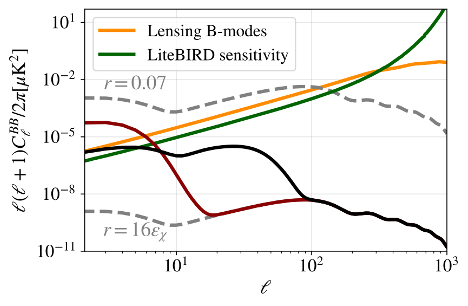 .
.
An asteroid impact can be enough to ruin anyone's day, but several small factors can make the difference between an out-of-this-world story and total annihilation. A researcher from the National Institute of Natural Hazards in China developed a supercomputer simulation of asteroid collisions to better understand these factors. 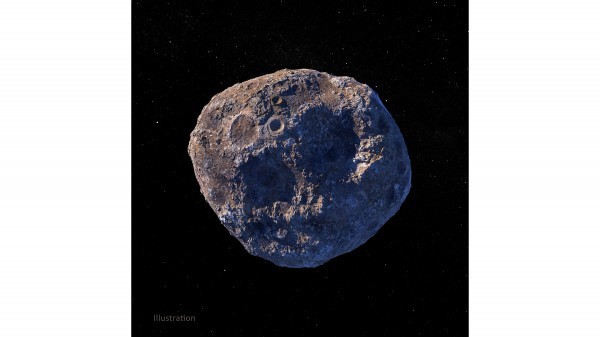
The supercomputer simulation initially sought to replicate model asteroid strikes performed in a laboratory. After verifying the accuracy of the simulation, Duoxing Yang believes it could be used to predict the result of future asteroid impacts or to learn more about past impacts by studying their craters.
"From these models, we learn generally a destructive impact process, and its crater formation," said Yang. "And from crater morphologies, we could learn impact environment temperatures and its velocity."
Yang's simulation was built using the space-time conservation element and solution element method, designed by NASA and used by many universities and government agencies, to model shock waves and other acoustic problems.
The goal was to simulate a small rocky asteroid striking a larger metal asteroid at several thousand meters per second. Using his simulation, Yang was able to calculate the effects this would have on the metal asteroid, such as the size and shape of the crater.
The simulation results were compared against mock asteroid impacts created experimentally in a laboratory. The simulation held up against these experimental tests, which means the next step in the research is to use the simulation to generate more data that can't be produced in the laboratory.
This data is being created in preparation for NASA's Psyche mission, which aims to be the first spacecraft to explore an asteroid made entirely of metal. Unlike more familiar rocky asteroids, which are made of roughly the same materials as the Earth's crust, metal asteroids are made of materials found in the Earth's inner core. NASA believes studying such an asteroid can reveal more about the conditions found in the center of our planet.
Yang believes computer simulation models can generalize his results to all metal asteroid impacts and, in the process, answer several existing questions about asteroid interactions.
"What kind of geochemistry components will be generated after impacts?" said Yang. "What kinds of impacts result in good or bad consequences to local climate? Can we change the trajectory of asteroids heading to us?"