
Computer vision AI has been trained to identify specific objects, places, animals, even people. And it has become extremely popular—so popular, in fact, that its computational techniques have been applied to all sorts of other AI platforms. The result: a kind of digital dark matter that can cloud users’ interpretations without their ever knowing it. AI-generated image: ©V2 Ilugram - stock.adobe.com

Koo’s computational correction can interpret AI's DNA analyses more accurately

Scientists using artificial intelligence technology may be inviting unwanted noise into their genome analyses. Now, CSHL researchers have created a computational correction that will allow them to see through the fog and find genuine DNA features that could signal breakthroughs in health and medicine.

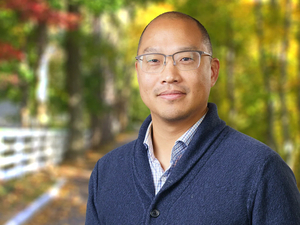
Cold Spring Harbor Laboratory (CSHL) Assistant Professor Peter Koo has found that scientists using popular computational tools to interpret AI predictions pick up too much “noise,” or extra information when analyzing DNA. And he’s found a way to fix this. Now, with just a couple of new lines of code, scientists can get more reliable explanations out of powerful AIs known as deep neural networks. That means they can continue chasing down genuine DNA features. Those features might just signal the next breakthrough in health and medicine. But scientists won’t see the signals if they’re drowned out by too much noise. Peter Koo
So, what causes the meddlesome noise? It’s a mysterious and invisible source like digital “dark matter.” Physicists and astronomers believe most of the universe is filled with dark matter, a material that exerts gravitational effects but that no one has yet seen. Similarly, Koo and his team discovered the data that AI is being trained on lacks critical information, leading to significant blind spots. Even worse, those blind spots get factored in when interpreting AI predictions of DNA function.

Koo says: “The deep neural network is incorporating this random behavior because it learns a function everywhere. But DNA is only in a small subspace of that. And it introduces a lot of noise. And so we show that this problem actually does introduce a lot of noise across a wide variety of prominent AI models.”

Digital dark matter is a result of scientists borrowing computational techniques from computer vision AI. DNA data, unlike images, is confined to a combination of four nucleotide letters: A, C, G, T. But image data in the form of pixels can be long and continuous. In other words, we’re feeding AI an input it doesn’t know how to handle correctly.

By applying Koo’s computational correction, scientists can interpret AI’s DNA analyses more accurately. 

Koo says: “We end up seeing sites that become much more crisp and clean, and there is less spurious noise in other regions. One-off nucleotides that are deemed very important all of a sudden disappear.”

Koo believes noise disturbance affects more than AI-powered DNA analyzers. He thinks it’s a widespread affliction among computational processes involving similar types of data. Remember, dark matter is everywhere. Thankfully, Koo’s new tool can help bring scientists out of the darkness and into the light.
Dong Xu
Dong Xu

Mizzou researchers modernize AI modeling online to help advance other researchers’ discoveries involving proteins

Predicting a protein’s location within a cell can help researchers unlock a plethora of biological information that’s critical for developing future scientific discoveries related to drug development and treating diseases like epilepsy. That’s because proteins are the body’s “workhorses,” largely responsible for most cellular functions.

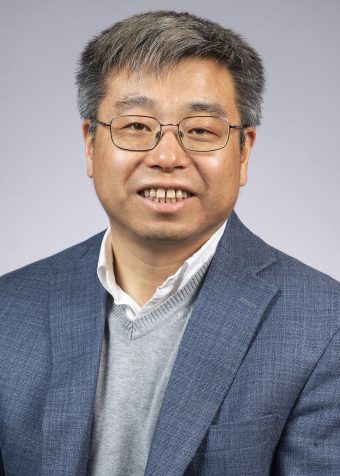
Recently, Dong Xu, Curators Distinguished Professor in the Department of Electrical Engineering and Computer Science at the University of Missouri, and colleagues updated their protein localization prediction model, MULocDeep, with the ability to provide more targeted predictions, including specific models for animals, humans, and plants. The model was created 10 years ago by Xu and fellow MU researcher Jay Thelen, a professor of biochemistry, to originally study proteins in mitochondria.

“Many biological discoveries need to be validated by experiments, but we don’t want researchers to have to spend time and money conducting thousands of experiments to get there,” Xu said. “A more targeted approach saves time. Our tool provides a useful resource for researchers by helping them get to their discoveries faster because we can help them design more targeted experiments from which to advance their research more effectively.”

By harnessing the power of artificial intelligence through a machine learning technique — training computers to make predictions using existing data — the model can help researchers who are studying the mechanisms associated with irregular locations of proteins, known as “mislocalization,” or where a protein goes to a different place than it’s supposed to. This abnormality is often associated with diseases such as metabolic disorders, cancers, and neurological disorders.

“Some diseases are caused by mislocalization, which causes the protein to be unable to perform a function as expected because it either cannot go to a target or goes there inefficiently,” Xu said.

Another application of the team’s predictive model is assisting with drug design by targeting an improperly located protein and moving it to the correct location, Xu said.

This work is currently supported by National Science Foundation. In the future, Xu hopes to receive additional funding to help increase the model’s accuracy and develop more functionalities.

“We want to continue improving the model to determine whether a mutation in a protein could cause mislocalization, whether proteins are distributed in more than one cellular compartment, or how signal peptides can help predict localization more precisely,” Xu said. “While we don’t offer any solutions for drug development or treatments for various diseases per se, our tool may help others with their development of medical solutions. Today’s science is like a big enterprise. Different people play different roles, and by working together we can achieve a lot of good for all.”  

Xu is currently working with colleagues to develop a free, online course for high school and college students based on the biological and bioinformatics concepts used in the model and expects the course will be available later this year. 

A conflict of interest is also noted by Xu and colleagues: While the online version of MULocDeep is available for use by academic users, a standalone version is also available commercially through a licensing fee. 

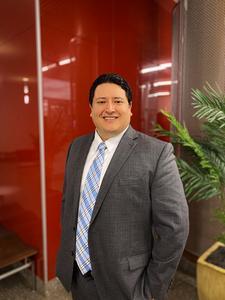
Andrés D. González, Ph.D., assistant professor in the School of Industrial and Systems Engineering at the University of Oklahoma

OU prof González's visual analytics research aims to improve supply chain resiliency

An interdisciplinary team of researchers, led by the University of Oklahoma, is working to provide decision-makers with better information to improve national security and supply chain resiliency through visual analytics 

A new research effort led by the University of Oklahoma and funded by the Defense Advanced Research Projects Agency, or DARPA, will develop a visual analytics system to help Department of Defense decision-makers understand the different types of risks associated with the global supply chain networks, the various actions that can be taken to protect the interests of national security, and ways to withstand and recover from any supply chain disruptions as quickly as possible. Illustrative photo of supply chain modeling  CREDIT Licensed by the University of Oklahoma; Shutterstock photo id: 2195197535

Recent events like the COVID-19 pandemic have made apparent how supply chain networks are an essential yet vulnerable necessity for how resources, goods, and services move around the globe.

“Everything that has happened in recent years has emphasized the importance of studying supply chain networks and making those more resilient to a broad range of disruptions, as well as more adaptable to new technologies,” said Andrés D. González, Ph.D., assistant professor in the School of Industrial and Systems Engineering, Gallogly College of Engineering at OU, and the principal investigator of the study.

“For example, COVID-19 caused significant cascading failures, where in diverse circumstances, a delay or a disruption in one of the functions from a single supplier propagated globally throughout the entire supply chain network and had effects in multiple regions and industries,” he added. “Many of these failures were caused by mechanisms that had never been observed before in history, and the depth and complexity of their effects were not adequately foreseen, thus inspiring the type of work we’re doing.”

González, who is also an affiliate faculty in the data science and analytics program in the Gallogly College of Engineering at OU, is leading an interdisciplinary team composed of experts spanning economics, industrial and systems engineering, computer science, and aerospace and mechanical engineering, among others. González is also working with OU’s Data Institute for Societal Challenges and Oklahoma Aerospace and Defense Innovation Institute, whose executive director, retired Lt. Gen. Gene Kirkland, observed that this effort is “yet another example of emerging partnerships between academic colleges and university-wide centers to advance OU’s research in support of national security challenges.”

Throughout the four-year $3.7 million project, the research team plans to create an extensive computational and visual analytic environment using state-of-the-art modeling and predictive techniques, along with visualizations such as spatiotemporal graphs, charts, and maps, to identify vulnerabilities and patterns that can help to better understand and evaluate the interactions and interdependencies between different components in supply-demand systems.

“First, we need to gain adequate supply chain visibility and understand the complex regional and global supply-demand networks, their structures and dynamical properties, using novel data-driven system identification techniques based on multiple data sources such as contracts, partnerships, and flow of commodities and information,” González said. “Once a good understanding of supply chain network structure and dynamics has been achieved, it is critical to developing advanced models for supplier survivability prediction, risk quantification and propagation, and resilience-based mitigation, preparedness, and recovery actions.”

By integrating those components within a visual analytics environment, researchers and practitioners will have a framework that can show not only visual representations of existing supply-demand networks but also provide significant insights and actionable information for stakeholders and decision-makers.

“A strong visual analytics environment can provide valuable information into what-if scenarios associated with a diverse range of disruptions, as well as pre-and post-event policies,” González said. “For example, what if we had another pandemic? What would be the effect of increasing tributary duties in a particular industry? Or, what if there is some political issue that affects some trade deal? The idea is to learn how people make decisions and how that can also give information to mathematical models to improve their predictive power.

“It is also very important to understand the effect that other countries have on the performance of supply chain networks in the U.S., so having an understanding of this will enable us to make better decisions to reduce vulnerabilities, enhance our resilience, and improve cooperation as well,” he added.