Forecasting the invisible: How supercomputing safeguards humanity’s return to the Moon

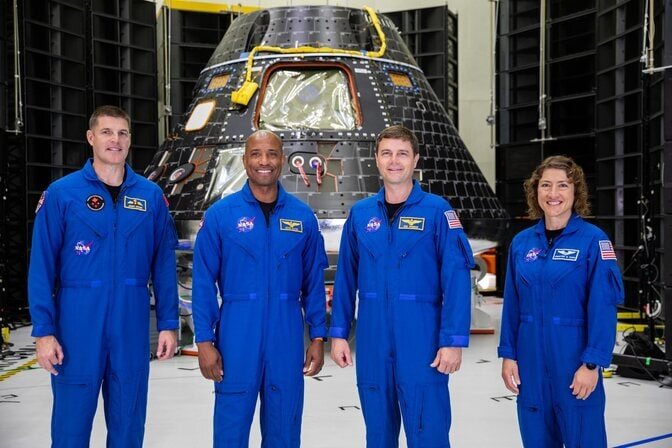
Humanity has sent astronauts back into deep space through NASA’s Artemis II mission, the greatest threat isn’t distance, isolation, or mechanical failure. Instead, it’s something far more elusive: solar radiation, an invisible force with the potential to damage DNA, disrupt electronics, and endanger lives within minutes.
 
Now, in a powerful convergence of computational science and space exploration, researchers at the University of Michigan are deploying a new generation of solar radiation forecasting tools, driven by high-performance computing (HPC), to help safeguard astronauts venturing beyond Earth’s protective magnetic field.

The Supercomputing Shield

At the heart of this effort lies a dual-model system: a machine-learning predictor and a physics-based simulation engine. Together, they represent a new paradigm in space weather forecasting, one that depends fundamentally on supercomputing.
 
The machine-learning model continuously analyzes vast streams of solar imagery captured by spacecraft such as NASA’s Solar Dynamics Observatory and the Solar and Heliospheric Observatory. 
 
Trained on decades of data, it identifies subtle precursors to solar particle events, delivering probabilistic forecasts up to 24 hours in advance, an extraordinary leap in preparedness.
 
But prediction alone is not enough. Understanding severity, timing, and duration requires something more computationally demanding: physics.
 
This is where HPC systems come into play.
 
NASA has committed significant supercomputing resources to run a sophisticated physics-based model that simulates how solar energetic particles accelerate in the sun’s corona and propagate through space. These simulations are not trivial, they must resolve complex plasma interactions, magnetic field dynamics, and near–light–speed particle transport in near-real time.
 
Without supercomputing, such modeling would take too long to be actionable. With it, astronauts gain a critical advantage: time.

From Minutes to Meaningful Warnings

Solar energetic particles can reach spacecraft in minutes after a solar eruption, leaving little room for reaction. But by combining machine learning with physics-based HPC simulations, scientists are transforming raw solar data into actionable intelligence.
 
The result is a system that doesn’t just say something might happen; it helps answer how bad it will be, when it will arrive, and how long it will last.
 
This distinction is crucial.
 
With early warnings, Artemis astronauts can reconfigure their spacecraft, strategically repositioning equipment to create temporary radiation shelters. These operational decisions, guided by supercomputing-powered forecasts, could mean the difference between routine exposure and dangerous dose levels.

Computing at the Edge of Human Exploration

The Artemis II mission represents the first crewed journey beyond low-Earth orbit in over 50 years. Unlike astronauts aboard the International Space Station, Artemis crews will operate largely outside Earth’s magnetic shield, where radiation risks intensify dramatically.
 
Compounding the challenge, the mission coincides with the peak of the sun’s 11-year activity cycle, a period marked by more frequent and intense solar eruptions.
 
In this environment, supercomputing becomes more than a research tool; it becomes mission-critical infrastructure.
 
These systems ingest real-time observational data, execute computationally intensive models, and deliver forecasts that must be both fast and accurate. Every second matters. Every calculation counts.

A New Era of Predictive Spaceflight

What makes this moment transformative is not just the technology itself, but what it represents: a shift from reactive to predictive space exploration.
 
For decades, astronauts have relied on monitoring and mitigation. Now, thanks to advances in HPC and artificial intelligence, they can anticipate and prepare.
 
This capability is being developed under initiatives like the CLEAR Center (Center for All-Clear Solar Energetic Particle Forecasts), which aims to integrate machine learning, physics, and empirical models into a unified forecasting framework.
 
It is a vision where supercomputers act as early warning systems for humanity’s expansion into space, where algorithms scan the sun continuously, and simulations map invisible dangers before they arrive.

Inspiration at Scale

There is something profoundly inspiring about this intersection of disciplines. The same computational power used to model climate systems, design advanced materials, and decode biological complexity is now being harnessed to protect human life millions of miles from Earth.
 
Supercomputing is no longer confined to laboratories and data centers; it is extending its reach into orbit, into deep space, and into the future of human exploration.
 
As Artemis II arcs around the Moon, it will carry more than astronauts. It will carry the culmination of decades of computational innovation, a silent, invisible shield built from data, algorithms, and the relentless pursuit of understanding.
 
And in that sense, every core, every node, every simulation is part of the mission.
 
Because before we can safely explore the cosmos, we must first compute it.
Supercomputing chases quantum dreams, but how close are we, really?

A new announcement touting one of the “world’s largest” quantum circuit simulations has reignited excitement around the convergence of supercomputing and quantum chemistry. But beneath the headline achievement lies a more complicated, and perhaps more sobering, reality about the limits of simulation-driven progress.
 
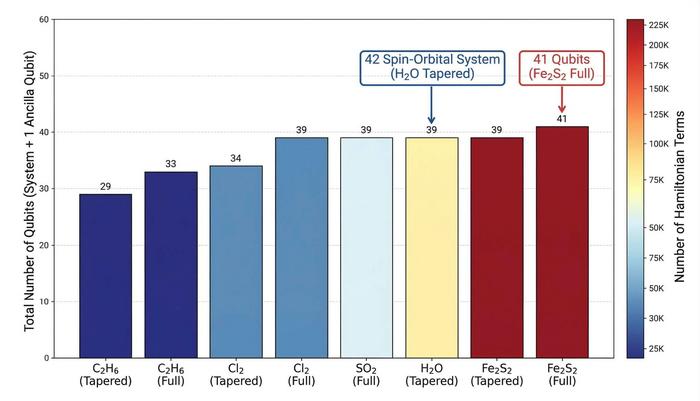
Researchers from the University of Osaka, working with Fixstars Corporation, report running quantum circuit simulations on up to 1,024 GPUs, surpassing the long-standing barrier of roughly 40 qubits in quantum chemistry simulations.
 
At first glance, the milestone appears to mark a leap toward practical quantum computing. A closer look suggests it may instead highlight just how far the field still has to go.

Bigger Simulations, Familiar Constraints

The team’s work centers on simulating quantum phase estimation (QPE), a foundational algorithm expected to underpin future quantum chemistry applications, including drug discovery and materials science.
 
Using a specialized simulator and a highly optimized parallel computing strategy, the researchers modeled systems such as:
  • A 42-spin-orbital water molecule system
  • A 41-qubit circuit for an iron-sulfur molecule
These are, by current standards, impressive numbers, but still fall short for real-world industrial chemistry problems, which require larger and more complex quantum systems.
 
Even more telling is that the simulations required massive GPU clusters and careful optimization just to reach these sizes.
 
Simulating quantum advantage depends on classical brute force, now more than ever.

The Paradox of Quantum Simulation

There is an inherent irony at the heart of this work. The ultimate goal is to build quantum computers that outperform classical machines. Yet today, progress depends on ever-larger classical supercomputers simulating quantum behavior.
 
This raises an uncomfortable question: Are these simulations accelerating quantum computing, or quietly exposing its current impracticality?
 
The study itself acknowledges the challenge. Running these simulations required overcoming inter-GPU communication bottlenecks and operating within strict compute time limits, underscoring how resource-intensive the process remains.
 
For now, classical systems are not just a stepping stone; they are doing nearly all the heavy lifting.

Benchmarking vs. Breakthroughs

Proponents argue that such simulations are essential for benchmarking and validating quantum algorithms before real quantum hardware matures.
 
That may be true. But benchmarking is not the same as breakthrough.
 
Despite the scale of the computation, the work does not yet demonstrate:
  • A clear path to quantum advantage in chemistry
  • Practical workflows that outperform classical methods
  • A reduction in the enormous computational cost required
Instead, it reinforces a pattern seen across the field: progress is measured in incremental increases in qubit counts, achieved through exponential increases in classical computing effort.

Supercomputing’s Expanding Role, And Its Limits

From a high-performance computing perspective, the achievement is undeniably significant. Coordinating 1,024 GPUs to simulate quantum circuits represents a triumph of parallel computing, software optimization, and systems engineering.
 
But it also underscores a critical tension.
 
Supercomputers are increasingly being used not just to solve scientific problems, but to simulate technologies that do not yet exist at scale. This places HPC in an unusual position, both enabling and compensating for the limitations of quantum hardware.
 
As simulations grow larger, so too do their costs, complexity, and energy demands. The question becomes not just what is possible, but what is practical.

A Measured View of Progress

There is no doubt that this work advances the technical frontier of simulation. It expands the range of quantum systems that can be studied and provides valuable testing grounds for future algorithms.
 
But the broader narrative, that such efforts are rapidly ushering in an era of quantum-enabled drug discovery or materials design, may be premature.
 
For now, the reality is more grounded: Supercomputers are still carrying the burden of quantum ambition.
 
And while that burden is pushing HPC to new heights, it also serves as a reminder that the quantum future remains, at least for now, largely theoretical.

Supercomputers reveal a lopsided giant: Reimagining Saturn’s magnetic world

Supercomputing is transforming planetary science by revealing Saturn’s magnetic "bubble" as a dynamic, lopsided structure, overturning the long-held belief in its symmetry and highlighting the crucial power of modern simulations to uncover hidden planetary truths.

The discovery, led by scientists at University College London, was made possible by cutting-edge supercomputer simulations that recreate the complex interaction between the solar wind and planetary magnetic fields. 

A Magnetic Bubble Reimagined

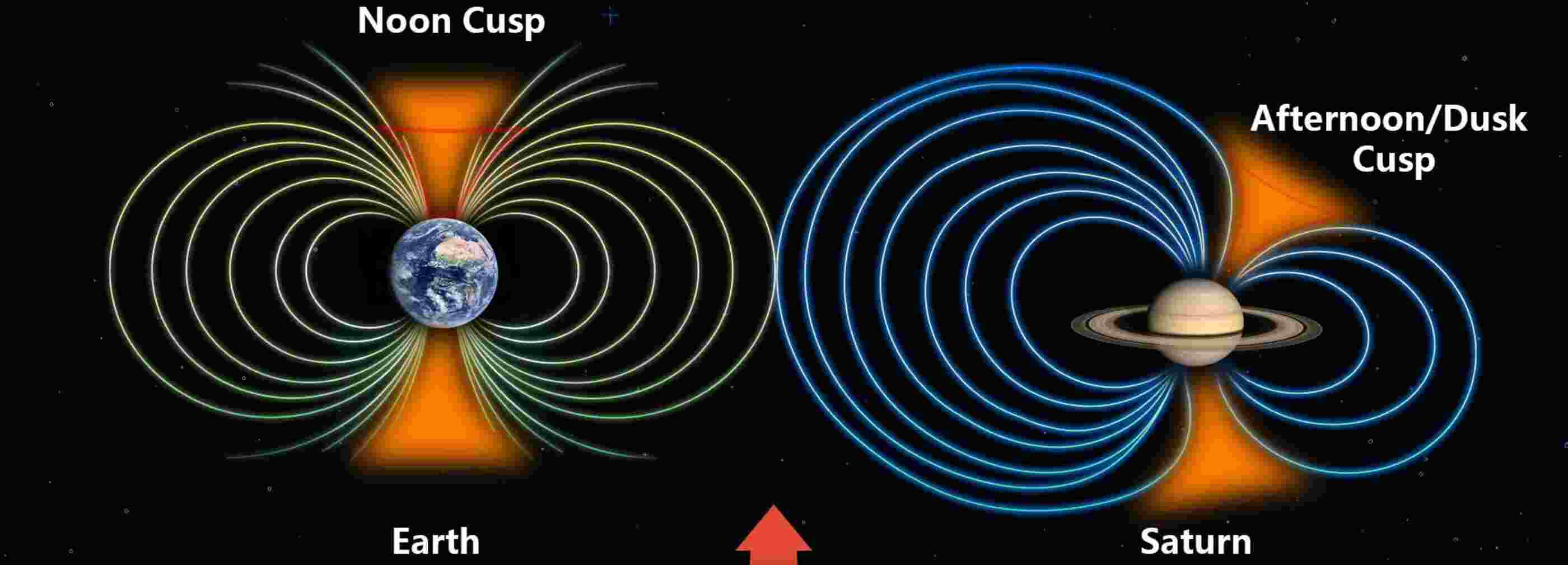
Every magnetized planet is enveloped by a magnetosphere, a protective bubble that deflects charged particles streaming from the Sun. On Earth, this bubble is relatively well understood and largely symmetric.

But Saturn tells a different story.

Using high-resolution computational models, scientists found that Saturn’s magnetosphere is distinctly lopsided, stretched, and distorted in ways that challenge decades of assumptions. Instead of a neat, balanced structure, the simulations reveal a system shaped by competing pressures and flows in space. 

This breakthrough is driven not just by new data but by the unparalleled ability of supercomputers to simulate global-scale plasma physics with extraordinary realism, unlocking Saturn's true magnetic shape.

Supercomputing: The Engine Behind the Discovery

To decode Saturn’s magnetic environment, researchers turned to advanced magnetohydrodynamic (MHD) simulations, mathematical models that describe how electrically charged gases behave in magnetic fields.

These simulations demand immense computational power.

Supercomputers enabled the team to:

  •  Model the solar wind interacting with Saturn’s magnetic field in three dimensions.
  • Track how plasma flows reshape the magnetosphere over time.
  • Capture subtle asymmetries that are invisible to spacecraft observations alone.

The result is a fully dynamic portrait of Saturn’s magnetic bubble, one that evolves continuously under the influence of solar energy and internal planetary processes.

Such simulations bridge a critical gap: spacecraft like Cassini provide snapshots, but supercomputers connect those snapshots into a living system.

A Planetary System in Motion

The simulations indicate that Saturn’s magnetosphere is compressed, stretched, and skewed by external forces, resulting in a persistent imbalance. This lopsidedness affects how energy and particles circulate around the planet, influencing everything from auroras to radiation belts.

Crucially, the findings suggest that Saturn’s atmosphere and magnetosphere are tightly coupled, feeding energy into one another in a complex feedback loop. 

This insight would be nearly impossible without computational modeling at scale. The physics involved spans vast distances and countless interactions, precisely the kind of challenge modern supercomputers are built to solve.

Inspiration at the Edge of Computation

Beyond Saturn itself, the study signals something larger: a new era in which supercomputing becomes a primary tool of discovery in space science.

By simulating entire planetary environments, researchers can now:

  • Test theories that cannot be reproduced experimentally. 
  • Predict space weather conditions across the solar system.
  • Compare magnetic worlds, from Earth to distant exoplanets.

In doing so, supercomputers are transforming how we explore space, not by traveling farther, but by thinking deeper.

A New View of the Solar System

Saturn’s newly revealed asymmetry is more than a curiosity; it is a reminder that even familiar worlds still hold profound surprises.

And increasingly, those surprises are being uncovered not just through telescopes or spacecraft, but through the silent, relentless calculations of the world’s most powerful machines.

In the hum of supercomputers, we are beginning to hear the true shape of planets, and the deeper rhythms of the universe itself.

Supercomputing illuminates the machinery of life

In a breakthrough that underscores the transformative power of high-performance computing, researchers are harnessing supercomputers to peer into one of biology’s most intricate and essential processes, gene splicing, bringing humanity closer to decoding the fundamental mechanisms of life itself.

A new study led by the Istituto Italiano di Tecnologia (IIT), in collaboration with Uppsala University and AstraZeneca, demonstrates how advanced computational simulations can reveal the dynamic inner workings of human cells at an unprecedented scale. At the heart of the discovery is not just biology, but the extraordinary capability of modern supercomputing.

Simulating Life at the Atomic Scale

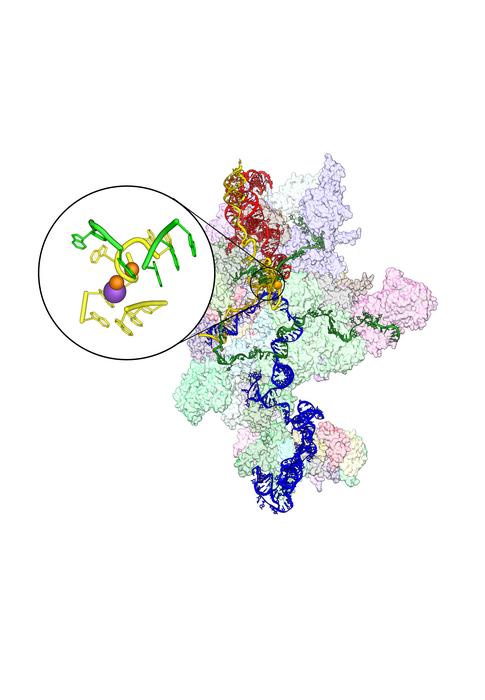
Researchers used state-of-the-art high-performance computing (HPC) systems to construct and simulate a molecular model of about two million atoms. Achieving this scale would not be possible without supercomputers.

These simulations focused on RNA splicing, a vital step in gene expression. In this process, cells edit genetic instructions before making proteins. Splicing is experimentally elusive due to its complexity. However, it becomes tractable when modeled with computational chemistry, if enough computing power is available.

Supercomputers enabled scientists to observe the functional dynamics of this massive biological system in motion, capturing subtle interactions and transient states that traditional methods cannot resolve. 

The HPC Advantage: From Data to Discovery

This work exemplifies a broader trend: supercomputers are no longer just tools for processing data; they are engines of discovery.

By solving vast numbers of equations and simulating atomic interactions in parallel, HPC systems allow researchers to:

  • Reconstruct biological processes in realistic detail.
  • Interpret previously ambiguous experimental data.
  • Predict how molecular systems behave under different conditions.

As seen in this study, the ability to simulate millions of atoms simultaneously offers a new perspective on biological complexity, transforming static knowledge into a dynamic understanding.

Toward Precision Medicine

The implications extend far beyond academic insight. By clarifying how splicing operates—and sometimes malfunctions, scientists can begin to design molecules that precisely influence this process.

Such control could unlock new therapies for cancer and neurodegenerative diseases, where splicing errors often play a critical role.

Here, supercomputing acts as a bridge between disciplines: linking physics, chemistry, and biology to accelerate drug discovery pipelines and reduce reliance on costly trial-and-error experimentation.

A Glimpse of the Future

This achievement reflects a larger evolution in science, one where computation stands alongside theory and experiment as a foundational pillar.

From modeling proteins to simulating entire cellular systems, supercomputers are enabling researchers to ask, and answer, questions that were once unimaginable. As HPC systems continue to grow in power and efficiency, their role will only deepen, driving innovation across life sciences and beyond.

In the quest to understand life at its most fundamental level, supercomputing is proving not just useful, but indispensable.

AI for financial stability, or systemic risk? A look at the ‘Faustian bargain’

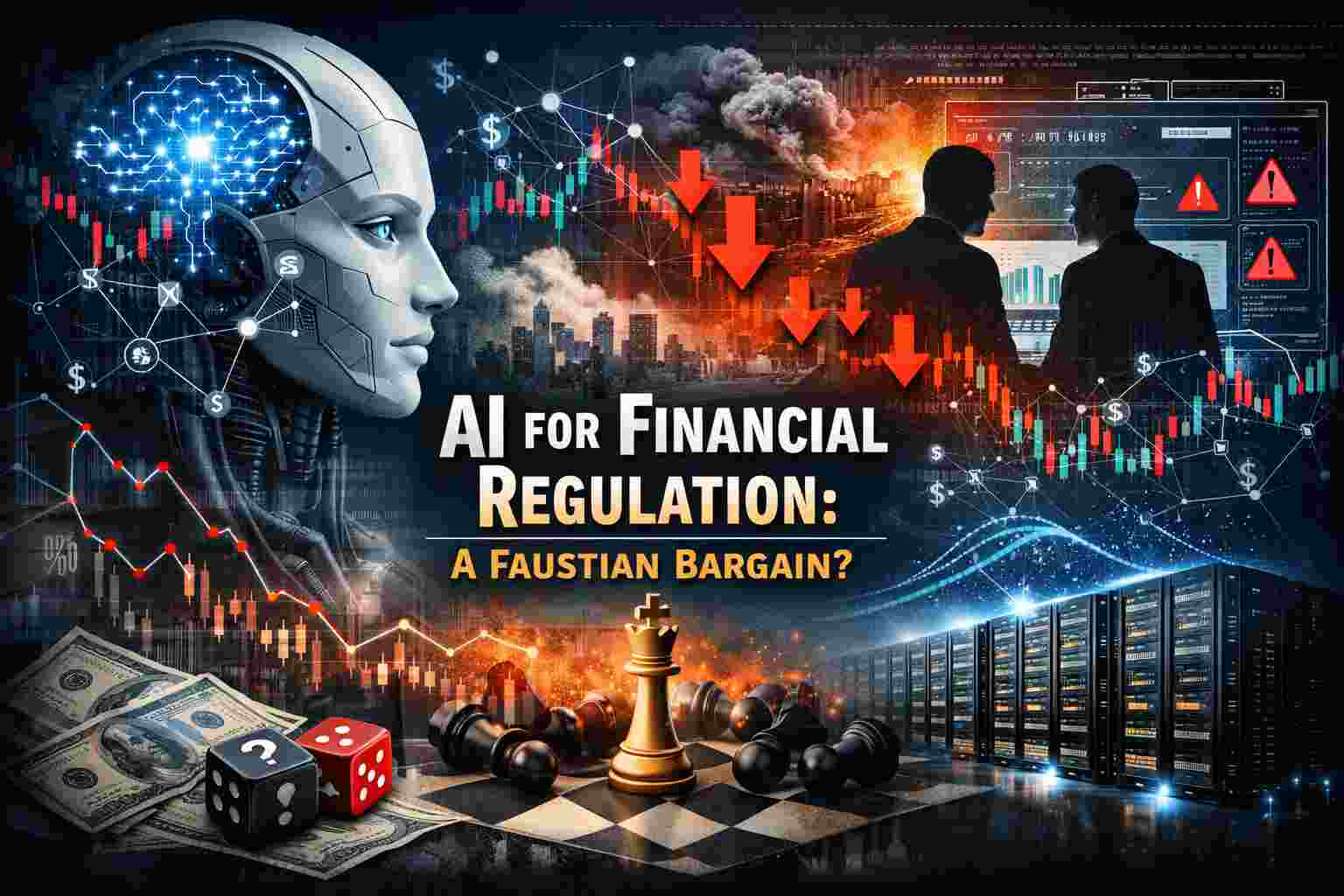
As supercomputing systems take on a increasing role in powering financial modeling, a new working paper from Stanford Graduate School of Business poses a challenging question: Should regulators rely on AI models that can forecast crises, yet fail to provide clear explanations for their predictions?
 
In “Financial Regulation and AI: A Faustian Bargain?”, the authors examine how advanced machine learning models, trained on detailed financial holdings, might transform macroprudential policy. For high-performance computing (HPC) professionals, the real issue is not finance per se, but the computational tradeoff: What are the risks when the ability to predict outstrips our ability to understand why?

From HPC Models to Financial Policy Engines

Modern financial systems generate enormous datasets: transaction flows, portfolio holdings, derivatives exposure, and cross-institutional dependencies. Processing these datasets requires supercomputing-scale infrastructure, where graph-based deep learning models can ingest and analyze relational data across millions of nodes and edges.
 
The Stanford study introduces a graph-based deep learning architecture designed specifically for this task. By learning embeddings for both assets and investors, the model captures the network structure of financial markets and achieves strong out-of-sample predictive performance in identifying stress points, such as forced liquidations or fire-sale cascades.
 
From an HPC standpoint, this is a familiar pattern:
  • Massive graph datasets
  • Distributed training across accelerators
  • Nonlinear models extracting latent structure from high-dimensional inputs
In other words, financial regulation is beginning to resemble large-scale simulation and inference workflows already common in climate science or genomics.

The Core Tradeoff: Prediction vs. Causality

The paper’s central argument is deceptively simple: AI models can predict where financial stress will occur, but may provide little insight into how policy interventions will change those outcomes.
 
This creates what the authors describe as a “Faustian bargain.” Regulators gain predictive accuracy, but risk losing interpretability and causal grounding.
 
Technically, the issue stems from the nature of modern ML systems:
  • Models are highly nonlinear and reduced-form.
  • Predictions are derived from correlations in historical data.
  • The underlying causal mechanisms remain opaque.
As the paper notes, there is “no guarantee” that these models capture structural relationships that remain stable when policy itself changes.
 
For HPC practitioners, this is analogous to running a highly accurate simulation that fails under perturbation, a model that fits the data, but not the system.

A Feedback Loop Hidden in the Compute

The study goes further by modeling how financial institutions might respond to AI-driven regulation.
 
If regulators use predictive models to anticipate crises and intervene earlier, market participants will adapt. Portfolios may shift toward assets perceived as “protected” or more likely to benefit from intervention.
 
This creates a feedback loop:
  1. AI predicts fragile assets.
  2. Regulators intervene.
  3. Markets adjust behavior based on expected intervention.
  4. The underlying system changes.
The result is a moving target, one where the model’s predictions may become less reliable precisely because they are being used.
 
From a supercomputing perspective, this resembles adaptive systems with endogenous responses, where the act of measurement or intervention alters the system being modeled.

When More Compute Doesn’t Mean More Certainty

The natural instinct in HPC is to scale:
  • More data
  • Larger models
  • Higher-resolution predictions
But the Stanford paper suggests that scaling alone does not resolve the core issue.
 
Even a perfectly trained model, running on the most advanced GPU clusters, cannot guarantee useful policy guidance if it lacks causal interpretability. Predictive precision only improves outcomes when it aligns with areas where regulators already understand how interventions work.
 
In practical terms:
  • Accuracy ≠ policy effectiveness
  • Resolution ≠ robustness
  • Compute ≠ understanding
This is a subtle but critical limitation for HPC-driven AI systems deployed in real-world decision-making environments.

Implications for Supercomputing Users

For the supercomputing community, the implications extend beyond finance.
 
The paper highlights a broader pattern emerging across domains:
  • AI models trained on massive datasets outperform traditional methods.
  • These models are deployed in decision loops, not just analysis pipelines.
  • The systems they model begin to react to the models themselves.
In such settings, HPC becomes part of a closed-loop system, where computation influences behavior, and behavior feeds back into computation.
 
This raises uncomfortable questions:
  • How do we validate models in systems that change in response to them?
  • What does “ground truth” mean when interventions alter outcomes?
  • Can we scale our way out of fundamentally epistemic uncertainty?

A Skeptical Outlook

The Stanford paper doesn’t suggest abandoning AI for financial regulation. Rather, it demonstrates that predictive models can enhance outcomes in specific scenarios.
 
However, the study pushes back against a prevailing belief in the HPC and AI worlds: the idea that increasing model power inevitably leads to better decisions.
 
Instead, it argues for caution. No matter how advanced, predictive systems are only as effective as their alignment with causal reasoning and policy limitations.
 
For supercomputing users, this may be the real takeaway.
 
The next frontier of HPC is not just scaling models, but understanding when those models should, and should not, be trusted.