Tulane researchers use AI to improve diagnosis of drug-resistant infections

In a time when drug-resistant infections pose a significant threat to global health, the need for innovative solutions has never been more critical. Recent advancements in technology have provided a glimmer of hope, as researchers at Tulane University have introduced a groundbreaking artificial intelligence (AI)-based approach aimed at revolutionizing the diagnosis and treatment of these challenging infections.

The problem of drug-resistant infections, primarily driven by pathogens like tuberculosis and staphylococcus, continues to worsen, resulting in a serious healthcare crisis. The complexities involved—such as rising treatment costs and higher mortality rates—highlight the urgent need for advanced diagnostic tools. According to the World Health Organization, there were approximately 450,000 cases of multidrug-resistant tuberculosis in 2021, with success rates for treatment plummeting to just 57%.

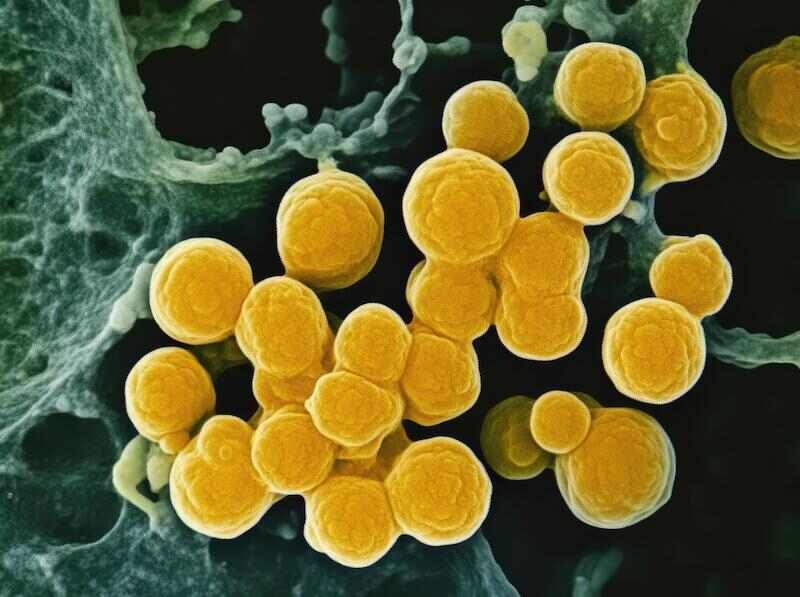
To address this pressing issue, Tulane University scientists have developed an innovative AI-driven method designed to identify genetic markers of antibiotic resistance in notorious pathogens like Mycobacterium tuberculosis and Staphylococcus aureus. This cutting-edge approach introduces the Group Association Model (GAM)—a novel computational model enhanced by machine learning algorithms.

Unlike traditional diagnostic tools that often struggle to accurately determine resistance mechanisms, GAM represents a paradigm shift by analyzing the complete genetic profile of bacteria to identify the genetic mutations responsible for antibiotic resistance. Dr. Tony Hu, the Weatherhead Presidential Chair in Biotechnology Innovation and the director of the Tulane Center for Cellular & Molecular Diagnostics, describes this methodology as a way to uncover bacteria's resistance patterns without relying on preconceived notions.

The strength of GAM lies in its comprehensive analysis of whole genome sequences, allowing scientists to compare bacterial strains with varying resistance profiles. By identifying genetic changes that indicate resistance to specific drugs, this innovative model not only improves diagnostic accuracy but also reduces the occurrence of false positives, which can lead to inappropriate treatment decisions.

Additionally, GAM's integration with machine learning enhances its predictive capabilities, especially when dealing with limited or incomplete data. Validation studies conducted on clinical samples from China have shown that this advanced model significantly outperforms existing methods based on WHO guidelines in predicting resistance to critical front-line antibiotics.

Beyond its immediate applications in healthcare, the implications of this AI-powered diagnostic tool extend beyond medical laboratories. The potential to apply this methodology to other bacterial strains or even to agricultural contexts—where antibiotic resistance is increasingly problematic—underscores the versatility and impact of Tulane's pioneering research.

As lead author Julian Saliba aptly notes, combating drug-resistant infections requires a proactive approach. This innovative tool serves as a vital ally in this ongoing battle. By deepening our understanding of resistance mechanisms and facilitating early intervention, Tulane's novel AI-based method paves the way for personalized treatment regimens and heralds a new era in the fight against drug-resistant infections.
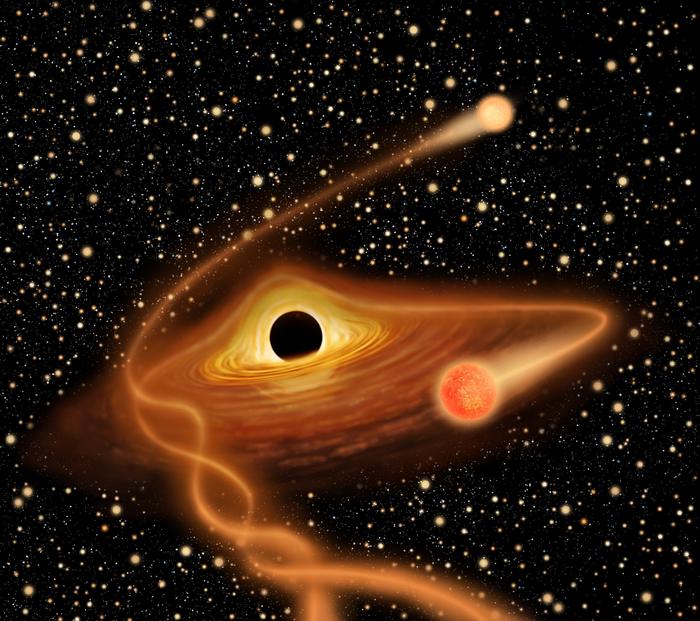
Artist's illustration of an IMBH ejecting a high-velocity star from a globular cluster.  Credit Jingchuan Yu, Yang Huang and Xiaoling Yu.
Artist's illustration of an IMBH ejecting a high-velocity star from a globular cluster. Credit Jingchuan Yu, Yang Huang and Xiaoling Yu.

Unraveling the mystery of intermediate-mass black holes: A Chinese perspective

The cosmos has long been a realm of mystery and fascination, with black holes standing out as enigmatic entities that continue to captivate the minds of astronomers and astrophysicists. Recently, a discovery has sparked curiosity and raised important questions about the existence of intermediate-mass black holes (IMBHs), shedding light on a crucial missing link in black hole evolution.

Associate Professor Yang Huang from the University of Chinese Academy of Sciences, in collaboration with esteemed research institutions, embarked on a groundbreaking journey to uncover the secrets hidden within globular clusters. Their exploration focused on high-velocity stars ejected from these clusters, propelled by a gravitational phenomenon known as the Hills mechanism. This innovative approach aimed to provide compelling evidence for the elusive IMBHs, bridging the gap between stellar-mass black holes and supermassive black holes.

Using meticulous orbital backtracking along with detailed analysis of data from Gaia and LAMOST, the research team made a startling discovery. The high-velocity star J0731+3717, which was ejected from the globular cluster M15 at an astonishing velocity of nearly 550 km/s approximately 20 million years ago, emerged as a key player in this cosmic narrative. Their findings, published as the cover article in the National Science Review, proposed a groundbreaking narrative titled "A High-Velocity Star Recently Ejected by an Intermediate-Mass Black Hole in M15."

The existence of IMBHs, long considered a cosmic puzzle, has sparked intense debates within the scientific community. Globular clusters, known for their dense stellar populations, have been proposed as prime candidates for the formation of these elusive entities. The research journey led by Professor Huang and his team aimed to unveil the mysteries surrounding IMBHs, providing a tantalizing glimpse into the hidden realms of these cosmic giants.

Simulations played a crucial role in unraveling the complex interactions involving the IMBH in M15. By leveraging insights from N-body numerical simulations and pulsar timing studies, the researchers explored new frontiers, challenging traditional understanding and expanding the boundaries of astronomical knowledge. Their bold method of tracing high-velocity stars back to their origins within globular clusters has opened a new chapter in the quest to detect IMBHs, bringing them closer to the heart of these stellar assemblies.

As the study progresses, the implications of this discovery resonate throughout the astronomical community, offering a new perspective on the evolution of black holes. The extensive data from Gaia and large-scale spectroscopic surveys promise to unveil more cosmic secrets, propelling us into previously unexplored territories of discovery.

In a universe filled with celestial wonders and cosmic mysteries, the quest to understand the enigmatic realm of intermediate-mass black holes is a testament to our insatiable curiosity and relentless pursuit of knowledge. As we gaze toward the cosmic horizon, guided by the inquisitive spirit embodied by Professor Huang and his team, we embark on a journey of discovery that transcends the boundaries of space and time, opening doors to realms yet unseen.

Woolpert, Teren leverage geospatial tech for global energy solutions

Woolpert, a respected architecture, engineering, and geospatial (AEG) firm, has announced a strategic partnership with Teren, a leader in AI-driven, lidar-enabled environmental intelligence. This alliance represents a significant advancement in using lidar data for oil and gas infrastructure, aiming to provide innovative geospatial solutions to address global challenges.

Woolpert will integrate Teren's lidar operations as part of this collaboration, taking full advantage of Teren's analytics and software-as-a-service platform, Terevue. Additionally, Woolpert has welcomed Sam Acheson, who previously served as Teren's Chief Commercial Officer and Head of Energy Operations, to offer dedicated support to key energy clients. This partnership allows Woolpert to enhance its geospatial services in the energy sector while complementing its established presence in transportation, government, mining, and renewable markets.

Teren can gain by expanding its geographical reach globally, utilizing Woolpert's industry expertise to enhance its geospatial capabilities. This mutual collaboration is expected to advance the integration of lidar technology with geospatial intelligence, offering organizations actionable insights for proactive responses to environmental threats.

Tobias Kraft, CEO and Founder of Teren emphasizes the importance of providing accessible and timely geospatial intelligence to strengthen infrastructure and community resilience. By collaborating with Woolpert, Teren aims to accelerate the delivery of these critical insights, enabling organizations to tackle environmental challenges proactively.

Neil Churman, President and CEO of Woolpert, expresses enthusiasm about leveraging cutting-edge geospatial technologies through this partnership with Teren. He anticipates combining expertise from both organizations will lead to transformative outcomes for their clients' critical infrastructure needs, particularly with the insights gained from Sam Acheson's 25 years of experience working with leading oil and gas, utilities, and energy companies.

Woolpert, recognized as a top-tier AEG firm, aims to become a global leader by driving innovation across various sectors to serve public, private, and government clients worldwide. The company has received numerous accolades, including being named a Global Top 100 Geospatial Company and a Top Global Design Firm. With a rich legacy dating back to 1911, Woolpert's growth has been characterized by continuous evolution and expansion, employing over 2,700 professionals in more than 60 offices across five continents.

Founded in 2021, Teren focuses on equipping businesses and communities with geospatial intelligence to manage environmental threats effectively. By combining earth science, data analytics, and supercomputing, Teren's cloud-based software solution, Terevue, provides industries with actionable insights to mitigate infrastructure risks and enhance resilience. Serving a diverse range of sectors, including energy, transportation, renewables, utilities, and forestry, Teren offers tailored solutions to support critical infrastructure industries in addressing environmental challenges.

The collaboration between Woolpert and Teren promises to revolutionize the energy landscape by blending advanced technologies with domain expertise. As the global energy sector experiences rapid transformations, the partnership between these industry leaders highlights the potential for fostering sustainable and resilient energy solutions worldwide.