Breakthrough in superconducting magnet development unleashes new possibilities through AI

A team of scientists from King's College London and research institutions in Japan has achieved a breakthrough in superconducting magnet technology. They have created the world's strongest iron-based superconducting magnet, which has potential applications in magnetic resonance imaging (MRI) machines and electrified transport systems.

This development promises to make superconducting magnet technology more affordable and widely available. It could lead to the creation of smaller and lighter MRI machines as well as find applications in electric aircraft and nuclear fusion, revolutionizing medical imaging and transportation technology.

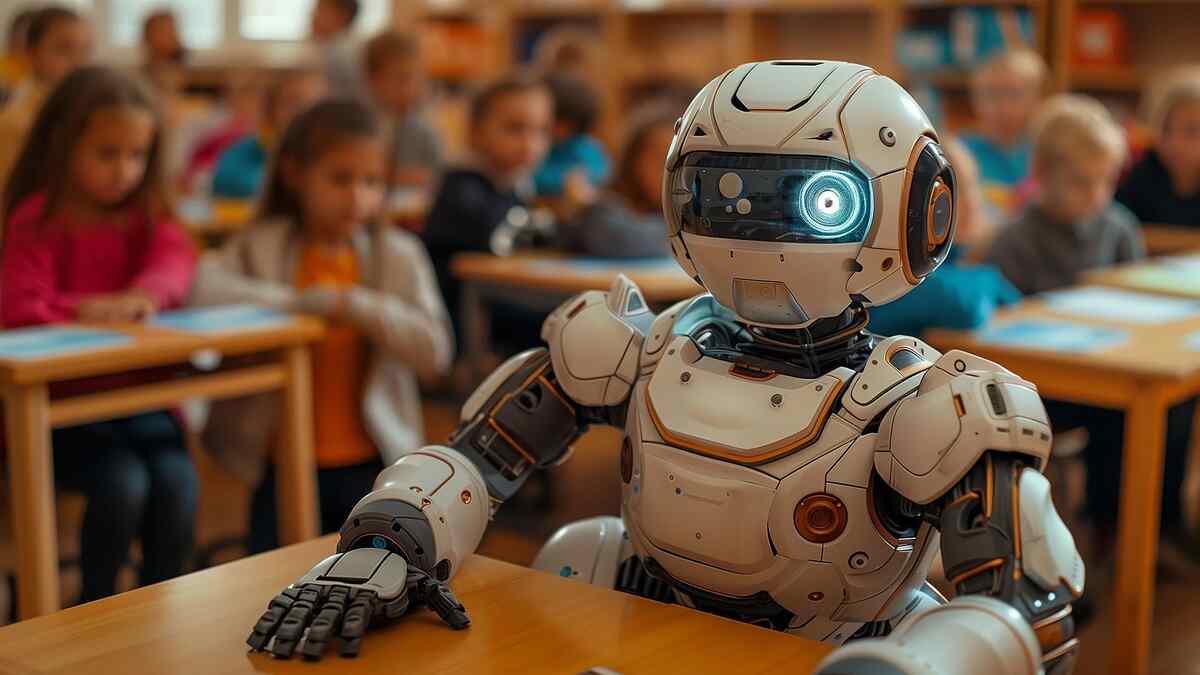
Dr. Mark Ainslie of the King's Department of Engineering led the research. The team used artificial intelligence (AI) and machine learning (ML) to develop a cost-effective and powerful iron-based superconducting magnet. This breakthrough could enable the development of more compact and efficient devices while reducing manufacturing costs.

Dr. Ainslie highlighted the impact of this advancement, explaining that superconducting magnets are essential for imaging cancers with MRI machines and will be vital for electric aircraft and nuclear fusion. However, traditional copper-based wire superconductors are costly. The team's use of ML has led to a scalable, cost-effective alternative using iron, offering flexibility and potential for industrial implementation.

The researchers employed a new machine learning system called BOXVIA to optimize and fabricate superconductors. This system has streamlined the superconductor creation process in the laboratory, significantly reducing the time required for designing and testing new superconductors.

Additionally, scientists have unveiled a paradigm shift in the microscopic structure of the superconductors produced by AI. These samples exhibited a distinctive nanostructure composition characterized by a wide range of iron-based crystals, a departure from the uniform structure pursued by human researchers.

This achievement represents a milestone in superconducting magnet technology, driven by the integration of AI, machine learning, and scientific inquiry. The implications of diagnostic imaging, transportation, and future technological advancements are set to revolutionize various industries and transform the course of superconducting magnet research and development.

Harnessing climate modeling to preserve Australia's ski industry

Harnessing climate modeling to preserve Australia's ski industry

Believe it or not, the land down under, with its beautiful beaches, also offers some amazing spots for skiing and snowboarding. Australia's beloved ski industry finds itself at a critical juncture as the looming threat of climate change brings uncertainty to the snow-capped peaks. However, a pioneering collaboration between Protect Our Winters Australia (POW) and The Australian National University (ANU) has produced new modeling data that presents a picture of hope and resilience, offering a glimmer of light in the face of daunting challenges.

The findings of the report, unveiled by the combined efforts of POW and ANU, reveal a sobering reality: under current greenhouse gas emission trajectories, Australia's ski season could face dramatic reductions, with the average duration potentially shortened by up to 55 days by 2050. Yet, amidst these forecasts of shorter seasons and potential resort closures, a path forward emerges, guided by the insights gleaned from climate modeling.

The research emphasizes the importance of taking proactive measures to address climate change. It presents a compelling narrative that outlines a path towards a sustainable future for the snow industry in Australia. The study demonstrates that by implementing effective actions to reduce climate pollution, ski resorts can benefit, thereby protecting not only the resorts but also the communities that depend on the Australian Alps.

Ruby Olsson, a respected co-author of the report and a dedicated researcher at ANU, highlights the urgency of transitioning to renewable energy sources and decreasing reliance on fossil fuels. She calls for support to strengthen the resilience of ski resorts in response to the changing climate.

The future of Australia's ski industry relies on working together. This means collaboration between state governments, industry stakeholders, and the community. It's important to adapt ski resorts for year-round tourism and to use sustainable practices to protect the environment in the Australian Alps. The report shows that there's hope for the future, combining scientific research with a call for shared responsibility. Professor Adrienne Nicotra emphasizes the interconnectedness of the Australian Alps with the wider ecosystem, highlighting the need for joint investment and proactive adaptation strategies.

The rays of hope shine through the uncertainty, calling for action. Climate modeling doesn't just predict doom, it empowers change-makers with the knowledge to create a brighter future for Australia's snow resorts. The ski industry is at a critical point, where unity, innovation, and commitment are key to safeguarding snowy landscapes for future generations.

Sean McWilliams
Sean McWilliams

Exploring space: WVU scientist studies gravitational waves

An Intriguing Journey into the Heart of the Universe

West Virginia University's astrophysicist, Sean McWilliams, is leading the way in pioneering advancements in gravitational wave detection. With NASA's generous backing of $750,000 through the Established Program to Stimulate Competitive Research, McWilliams is set to develop cutting-edge models to enhance observations from the upcoming space probe, LISA (Laser Interferometer Space Antenna).

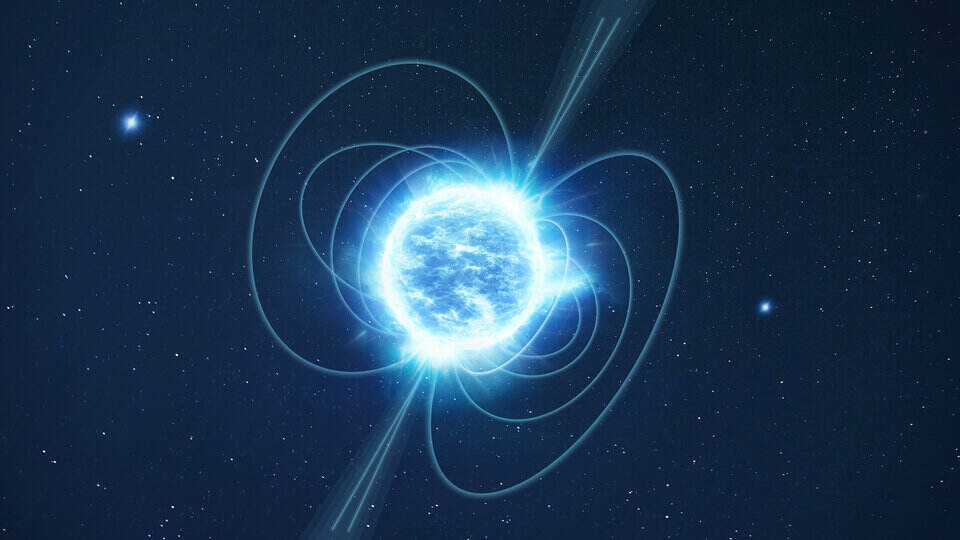
Gravitational waves, first theorized by Albert Einstein in 1916, are cosmic ripples resulting from massive cosmic events such as the merging of black holes, colliding neutron stars, and remnants of the Big Bang. McWilliams and his team will focus on studying the movement of binary systems and colossal binaries within merging galaxies. The insights gained from LISA's observations have the potential to revolutionize our understanding of the universe, shedding light on phenomena that have remained mysterious.

McWilliams' expertise is expected to refine the accuracy of gravitational wave modeling, surpassing previous detections such as those achieved by the Laser Interferometer Gravitational-Wave Observatory (LIGO) in 2015. With LISA's launch scheduled for 2035, McWilliams is determined to enhance modeling accuracy, paving the way for a clearer view of the cosmos.

McWilliams has developed a groundbreaking method called the "backward one-body method," which simplifies the process of interpreting signals from merging black holes, providing a more efficient way for scientists to understand gravitational waves.

McWilliams' team, including Zach Etienne, an adjunct associate professor, is at the forefront of this celestial expedition, using their expertise and determination to explore the unknown frontiers of space-time. Encouraged by the support they have received, McWilliams humbly acknowledges the responsibility to ensure the success of LISA's mission. The team continues their journey armed with advanced computational models, supercomputer simulations, and an insatiable curiosity to unravel the universe's deepest secrets.

Image by NASA, ESA, CSA

El Gordo's study suggests that dark matter may indeed be self-interacting, paving the way for an improved understanding of the universe

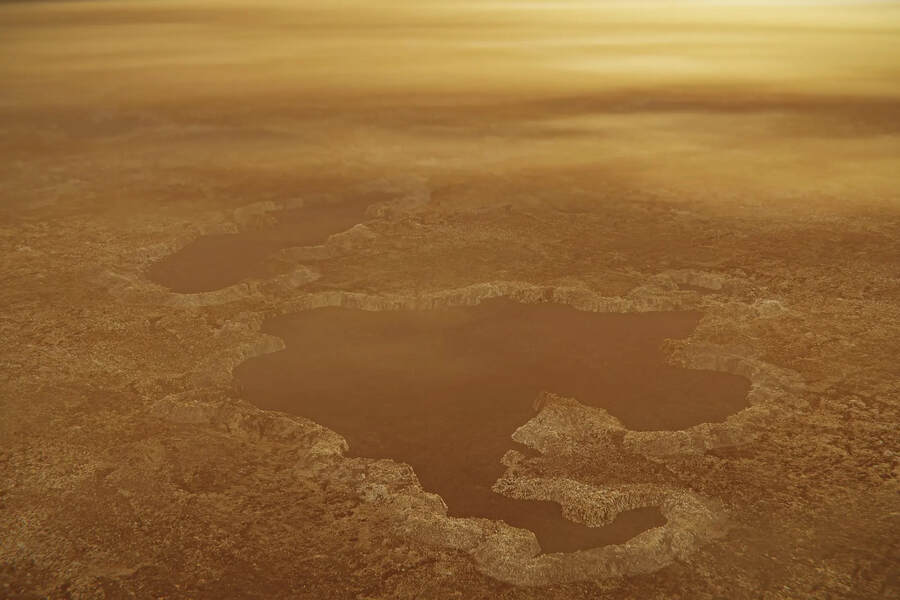
Recent research conducted by the Astrophysics and Cosmology group at Italy's International School for Advanced Studies (SISSA) has provided new insights into the mysterious properties of dark matter. Supercomputer simulations of "El Gordo," a massive merging cluster of galaxies located seven billion light-years away, suggest that dark matter may be self-interacting. This finding challenges the current standard cosmological model and offers a potential alternative by presenting a distinct signature of self-interacting dark matter (SIDM).

According to Riccardo Valdarnini, the author of the study, the prevailing standard model posits that dark matter is composed of cold, collisionless particles that only respond to gravity. However, this model fails to explain all observations. The SIDM model, which proposes that dark matter particles exchange energy through collisions, offers an alternative explanation. Proving the collisional properties of dark matter has been a challenging task.

Valdarnini and his team employed numerical simulations to investigate the behavior of dark matter within El Gordo. Their findings indicate that contrary to the predictions of the standard model, dark matter may indeed be self-interacting. Observations also revealed that dark matter centroids, the points of maximum density, undergo a physical separation from the other mass components in the cluster, providing a true "Signature of SIDM models."

While this research lends significant support to the SIDM model, it is important to note that the cross-section values of SIDM obtained from simulations currently exceed the present upper limits. This suggests that existing SIDM models are only a rough approximation and that the physical processes governing the interaction of dark matter in major cluster mergers are more complex than can be accurately represented by the commonly assumed approach based on the scattering of dark matter particles.

Overall, this significant advancement in our understanding of the universe holds promise for a deeper comprehension of dark matter properties and its potential impact on other aspects of astrophysics and cosmology that are yet to be uncovered.

Landmark study claims advancements in energy-efficient quantum computing using magnets

A potential breakthrough or just empty promises?

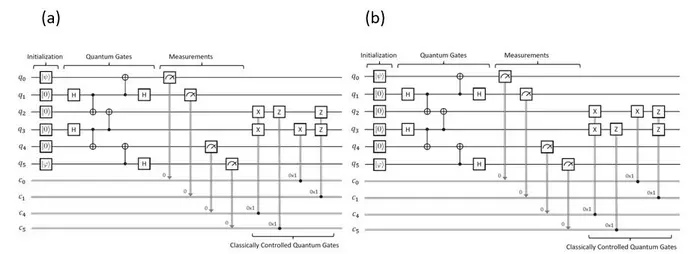
Researchers from Lancaster University in England and Radboud University Nijmegen in the Netherlands claim to have achieved a major milestone in the field of quantum computing. According to their study, the team has successfully generated propagating spin waves at the nanoscale and discovered a potential pathway to modulate and amplify them. While this discovery has been hailed as a significant step towards energy-efficient quantum computing in magnets, some skeptics are questioning the actual feasibility and practicality of these claims.

Quantum computing is an increasingly sought-after technology due to its potential for faster and more energy-efficient computing devices. Traditional computing devices that rely on electric currents have long been plagued by energy losses and subsequent heating. This has prompted researchers to explore alternative methods, such as harnessing spin waves, or the spins of electrons, as a means of storing and processing information.

The lead author of the study, Dr. Rostislav Mikhaylovskiy from Lancaster University, believes that this discovery will be crucial for future spin-wave-based computing. According to him, spin waves are an attractive information carrier because they do not involve electric currents and, as a result, do not suffer from resistive losses. However, these claims are met with skepticism by some experts in the field.

One such skeptic raises doubts about the practicality of spin-wave-based computing. While the idea of using spin waves for quantum computing is intriguing, it's important to consider the scalability and stability of this approach. Creating and manipulating spin waves at the nanoscale is a significant achievement, but it remains to be seen whether it can be scaled up to practical supercomputers.

The researchers generated spin waves through the excitation of certain materials using extremely short pulses of light. These pulses have durations shorter than the period of the spin wave and result in high-frequency rotation of the spins. The team claims that by controlling the timing and interaction of multiple pulses, they were able to modulate and amplify the spin waves, thereby achieving control over their properties.

However, critics argue that the experimental setup used by the researchers may not accurately represent real-world conditions or address the challenges of scaling up the technology. They also point out the need for further research and independent verification of the results.

Dr. Ruben Leenders, former PhD student at Lancaster University and co-author of the study, emphasized the importance of the team's findings in terms of magnon-based data processing. He stated, "Our experiment is a landmark for spin wave studies and holds the potential to open an entirely new research direction on ultrafast coherent magnonics." Yet, some experts argue that such claims should be tempered until further evidence and practical implementations are demonstrated.

While the study is undeniably significant, the road to practical spin-wave-based supercomputing is still riddled with challenges. The research community eagerly awaits further studies to validate and expand upon these findings. Only time will tell if this landmark study is a true breakthrough or just another scientific hype.