Supercomputing illuminates the machinery of life

In a breakthrough that underscores the transformative power of high-performance computing, researchers are harnessing supercomputers to peer into one of biology’s most intricate and essential processes, gene splicing, bringing humanity closer to decoding the fundamental mechanisms of life itself.

A new study led by the Istituto Italiano di Tecnologia (IIT), in collaboration with Uppsala University and AstraZeneca, demonstrates how advanced computational simulations can reveal the dynamic inner workings of human cells at an unprecedented scale. At the heart of the discovery is not just biology, but the extraordinary capability of modern supercomputing.

Simulating Life at the Atomic Scale

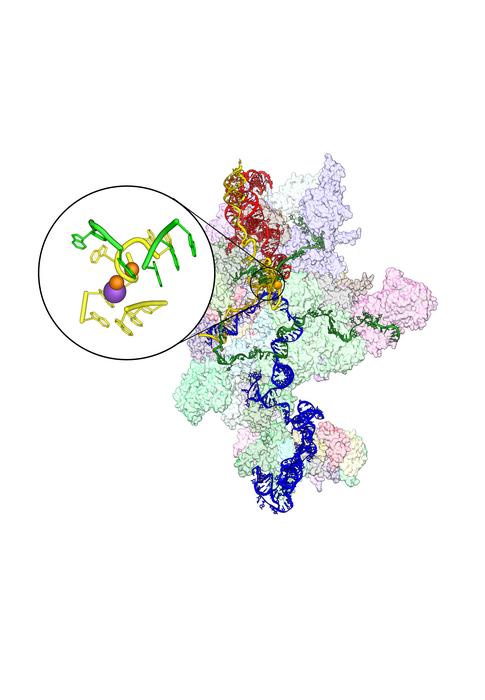
Researchers used state-of-the-art high-performance computing (HPC) systems to construct and simulate a molecular model of about two million atoms. Achieving this scale would not be possible without supercomputers.

These simulations focused on RNA splicing, a vital step in gene expression. In this process, cells edit genetic instructions before making proteins. Splicing is experimentally elusive due to its complexity. However, it becomes tractable when modeled with computational chemistry, if enough computing power is available.

Supercomputers enabled scientists to observe the functional dynamics of this massive biological system in motion, capturing subtle interactions and transient states that traditional methods cannot resolve. 

The HPC Advantage: From Data to Discovery

This work exemplifies a broader trend: supercomputers are no longer just tools for processing data; they are engines of discovery.

By solving vast numbers of equations and simulating atomic interactions in parallel, HPC systems allow researchers to:

  • Reconstruct biological processes in realistic detail.
  • Interpret previously ambiguous experimental data.
  • Predict how molecular systems behave under different conditions.

As seen in this study, the ability to simulate millions of atoms simultaneously offers a new perspective on biological complexity, transforming static knowledge into a dynamic understanding.

Toward Precision Medicine

The implications extend far beyond academic insight. By clarifying how splicing operates—and sometimes malfunctions, scientists can begin to design molecules that precisely influence this process.

Such control could unlock new therapies for cancer and neurodegenerative diseases, where splicing errors often play a critical role.

Here, supercomputing acts as a bridge between disciplines: linking physics, chemistry, and biology to accelerate drug discovery pipelines and reduce reliance on costly trial-and-error experimentation.

A Glimpse of the Future

This achievement reflects a larger evolution in science, one where computation stands alongside theory and experiment as a foundational pillar.

From modeling proteins to simulating entire cellular systems, supercomputers are enabling researchers to ask, and answer, questions that were once unimaginable. As HPC systems continue to grow in power and efficiency, their role will only deepen, driving innovation across life sciences and beyond.

In the quest to understand life at its most fundamental level, supercomputing is proving not just useful, but indispensable.


AI for financial stability, or systemic risk? A look at the ‘Faustian bargain’

As supercomputing systems take on a increasing role in powering financial modeling, a new working paper from Stanford Graduate School of Business poses a challenging question: Should regulators rely on AI models that can forecast crises, yet fail to provide clear explanations for their predictions?
 
In “Financial Regulation and AI: A Faustian Bargain?”, the authors examine how advanced machine learning models, trained on detailed financial holdings, might transform macroprudential policy. For high-performance computing (HPC) professionals, the real issue is not finance per se, but the computational tradeoff: What are the risks when the ability to predict outstrips our ability to understand why?

From HPC Models to Financial Policy Engines

Modern financial systems generate enormous datasets: transaction flows, portfolio holdings, derivatives exposure, and cross-institutional dependencies. Processing these datasets requires supercomputing-scale infrastructure, where graph-based deep learning models can ingest and analyze relational data across millions of nodes and edges.
 
The Stanford study introduces a graph-based deep learning architecture designed specifically for this task. By learning embeddings for both assets and investors, the model captures the network structure of financial markets and achieves strong out-of-sample predictive performance in identifying stress points, such as forced liquidations or fire-sale cascades.
 
From an HPC standpoint, this is a familiar pattern:
  • Massive graph datasets
  • Distributed training across accelerators
  • Nonlinear models extracting latent structure from high-dimensional inputs
In other words, financial regulation is beginning to resemble large-scale simulation and inference workflows already common in climate science or genomics.

The Core Tradeoff: Prediction vs. Causality

The paper’s central argument is deceptively simple: AI models can predict where financial stress will occur, but may provide little insight into how policy interventions will change those outcomes.
 
This creates what the authors describe as a “Faustian bargain.” Regulators gain predictive accuracy, but risk losing interpretability and causal grounding.
 
Technically, the issue stems from the nature of modern ML systems:
  • Models are highly nonlinear and reduced-form.
  • Predictions are derived from correlations in historical data.
  • The underlying causal mechanisms remain opaque.
As the paper notes, there is “no guarantee” that these models capture structural relationships that remain stable when policy itself changes.
 
For HPC practitioners, this is analogous to running a highly accurate simulation that fails under perturbation, a model that fits the data, but not the system.

A Feedback Loop Hidden in the Compute

The study goes further by modeling how financial institutions might respond to AI-driven regulation.
 
If regulators use predictive models to anticipate crises and intervene earlier, market participants will adapt. Portfolios may shift toward assets perceived as “protected” or more likely to benefit from intervention.
 
This creates a feedback loop:
  1. AI predicts fragile assets.
  2. Regulators intervene.
  3. Markets adjust behavior based on expected intervention.
  4. The underlying system changes.
The result is a moving target, one where the model’s predictions may become less reliable precisely because they are being used.
 
From a supercomputing perspective, this resembles adaptive systems with endogenous responses, where the act of measurement or intervention alters the system being modeled.

When More Compute Doesn’t Mean More Certainty

The natural instinct in HPC is to scale:
  • More data
  • Larger models
  • Higher-resolution predictions
But the Stanford paper suggests that scaling alone does not resolve the core issue.
 
Even a perfectly trained model, running on the most advanced GPU clusters, cannot guarantee useful policy guidance if it lacks causal interpretability. Predictive precision only improves outcomes when it aligns with areas where regulators already understand how interventions work.
 
In practical terms:
  • Accuracy ≠ policy effectiveness
  • Resolution ≠ robustness
  • Compute ≠ understanding
This is a subtle but critical limitation for HPC-driven AI systems deployed in real-world decision-making environments.

Implications for Supercomputing Users

For the supercomputing community, the implications extend beyond finance.
 
The paper highlights a broader pattern emerging across domains:
  • AI models trained on massive datasets outperform traditional methods.
  • These models are deployed in decision loops, not just analysis pipelines.
  • The systems they model begin to react to the models themselves.
In such settings, HPC becomes part of a closed-loop system, where computation influences behavior, and behavior feeds back into computation.
 
This raises uncomfortable questions:
  • How do we validate models in systems that change in response to them?
  • What does “ground truth” mean when interventions alter outcomes?
  • Can we scale our way out of fundamentally epistemic uncertainty?

A Skeptical Outlook

The Stanford paper doesn’t suggest abandoning AI for financial regulation. Rather, it demonstrates that predictive models can enhance outcomes in specific scenarios.
 
However, the study pushes back against a prevailing belief in the HPC and AI worlds: the idea that increasing model power inevitably leads to better decisions.
 
Instead, it argues for caution. No matter how advanced, predictive systems are only as effective as their alignment with causal reasoning and policy limitations.
 
For supercomputing users, this may be the real takeaway.
 
The next frontier of HPC is not just scaling models, but understanding when those models should, and should not, be trusted.

Reducing the data bottleneck: A curious look at compression for supercomputing workflows

As high-performance computing (HPC) systems advance toward exascale and beyond, a familiar challenge endures across scientific domains: data movement. In fields such as climate modeling, genomics, and large-scale AI training, the expense of moving, storing, and accessing massive datasets now often matches, or even surpasses, the cost of computation itself.
 
A recently announced compression technology, highlighted in today’s press release from Xinnor, and a recent deployment at GWDG, the HPC center supporting research at the University of Göttingen.
 
In short: GWDG replaced their legacy storage with an all-NVMe Lustre system built by MEGWARE using Xinnor's xiRAID software, achieving more than 4x performance improvement across the board. It seeks to address this imbalance by targeting one of HPC’s most stubborn inefficiencies: the rapid growth of intermediate and output data produced by contemporary workloads.
 
At first glance, compression might seem like a solved problem. But for supercomputing users, the reality is more nuanced. Traditional compression techniques often trade off compression ratio, speed, and fidelity in ways that are not well aligned with the requirements of HPC. The question, then, is whether a new generation of compression tools can meaningfully integrate into performance-critical pipelines without introducing unacceptable overhead.

Compression in the Age of Exascale

Modern HPC systems generate data at extraordinary rates. Simulation codes can produce terabytes per run, while AI workloads routinely generate massive checkpoint files and intermediate tensors. In many workflows, I/O bandwidth and storage capacity have become limiting factors.
 
The product described in the press release is designed to operate within these constraints by offering:
  • High-throughput compression and decompression optimized for parallel environments
  • Integration with HPC storage layers, including parallel file systems
  • Support for large, structured scientific datasets
From an architectural perspective, the focus appears to be on minimizing the traditional penalties of compression, particularly latency and CPU overhead, while maximizing compatibility with distributed workflows.
 
For HPC engineers, this raises an immediate point of curiosity: Can compression be applied in-line with computation, rather than as a post-processing step?

Inline Compression and Workflow Integration

One of the more intriguing aspects of the product is its positioning as a pipeline-integrated component rather than a standalone utility.
 
In typical HPC workflows, data is written to disk in raw or lightly processed form, then compressed later for storage or transfer. This approach introduces additional I/O cycles, increasing pressure on storage systems.
 
An inline model suggests a different paradigm:
  • Data is compressed as it is generated.
  • Reduced data volume lowers pressure on interconnects and storage.
  • Downstream processes operate on smaller datasets, improving throughput.
If implemented effectively, this could shift compression from a peripheral optimization to a first-class component of HPC workflows.
 
However, this also introduces technical challenges familiar to HPC practitioners:
  • Maintaining deterministic performance under parallel workloads.
  • Avoiding contention between compute and compression threads.
  • Preserving numerical fidelity where required.

Implications for AI and Simulation Workloads

The relevance of compression is particularly pronounced in two dominant HPC domains: scientific simulation and machine learning.
 
In simulation environments, large multidimensional arrays, often representing physical fields, can be compressed using domain-aware techniques that exploit spatial and temporal coherence. This reduces storage requirements while maintaining acceptable error bounds.
 
In machine learning, especially in distributed training, checkpointing and data movement represent significant overhead. Compression applied to model states or gradients could reduce communication costs across nodes, particularly in large GPU clusters.
 
For supercomputing users, the key question is not whether compression works, but whether it can be deployed without disrupting tightly optimized pipelines.

A Shift in How HPC Thinks About Data

What makes this development noteworthy is not just the product itself, but the broader shift it represents.
 
Historically, HPC optimization has focused on compute performance, faster processors, better interconnects, and more efficient algorithms. Increasingly, attention is turning toward data efficiency:
  • Reducing data movement
  • Minimizing storage overhead
  • Optimizing I/O pathways
Compression sits at the intersection of all three.
 
If solutions like the one described can deliver on their promise, combining high throughput, scalability, and integration, they may help rebalance HPC architectures where data has become the dominant cost.

A Curious Future for HPC Data Pipelines

For the supercomputing community, this raises an open and intriguing possibility:
What if the next major gains in HPC performance do not come from faster computation, but from smarter data handling?
 
Compression, once treated as an afterthought, may become a central design consideration in future HPC systems. Not merely as a storage optimization, but as a core component of the computational pipeline itself.
 
And as datasets continue to grow, that shift may prove just as transformative as any advance in hardware.