Assuming that the black hole's spin axis is aligned vertically, the jet's direction is nearly perpendicular to the disk. The misalignment between the black hole spin axis and the disk rotation axis results in the precession of both the disk and jet.

China confirms black hole spin by monitoring radio galaxy M87

An international team of researchers, led by Chinese researcher Dr. CUI Yuzhu, has discovered that the black hole at the center of the nearby radio galaxy M87, which is located 55 million light-years from Earth and is 6.5 billion times more massive than the Sun, exhibits an oscillating jet that swings up and down with an amplitude of about 10 degrees. This confirms the black hole's spin.

The team used a global network of radio telescopes and analyzed telescope data from 2000 to 2022. Through this extensive analysis, they revealed a recurring 11-year cycle in the precessional motion of the jet base, as predicted by Einstein's General Theory of Relativity. This study offers evidence that M87's black hole spins and links the dynamics of the jet with the central supermassive black hole.

Supermassive black holes at the center of active galaxies are known to be the most disruptive celestial objects in our universe. Due to their extraordinary gravitational force and power of plasma outflows, they can accrete tremendous amounts of material. These outflows, known as jets, approach the speed of light and extend thousands of light-years away.

For over a century, physicists and astronomers have been trying to understand how energy is transferred between supermassive black holes, their accretion disks, and relativistic jets. The most widely accepted theory suggests that a spinning black hole can extract energy, which can then be used to eject some of the material surrounding the black hole with tremendous force. However, despite being a crucial factor in this process, the spin of supermassive black holes, which is the most fundamental parameter other than black hole mass, has never been directly observed.

In this study, the research team focused on M87, which is known for having the first observational astrophysical jet that was ever observed in 1918. The jet formation regions that are close to the black hole can be analyzed in detail with Very Long Baseline Interferometry (VLBI) because of their proximity. Recent black hole shadow imaging with the Event Horizon Telescope (EHT) has further allowed researchers to study M87 in detail. By analyzing VLBI data from M87 that was collected over the last 23 years, the team was able to detect the periodic precessional jet at the base of the black hole, which provided insight into the status of the central black hole.

At the heart of this discovery lies a critical question: What force in the universe can alter the direction of such a powerful jet? The answer could be hidden in the behavior of the accretion disk, a structure related to the central supermassive black hole. As materials fall towards the black hole, they form a disk-like structure due to their angular momentum before spiraling inwards and being inevitably drawn into the black hole. However, if the black hole is spinning, it exerts a significant impact on surrounding spacetime, causing nearby objects to be dragged along its axis of rotation, a phenomenon known as "frame-dragging" that was predicted by Einstein's General Theory of Relativity.

The research team's analysis indicates that the rotational axis of the accretion disk does not align with the black hole's spin axis, leading to a precessional jet. Detecting this precession provides unequivocal evidence that the supermassive black hole in M87 is indeed spinning, thus enhancing our understanding of the nature of supermassive black holes.

"We are thrilled by this significant finding," said CUI Yuzhu, a postdoctoral researcher at Zhejiang Lab, a research institution in Hangzhou, and lead and corresponding author of the paper. "Since the misalignment between the black hole and the disk is relatively small and the precession period is around 11 years, accumulating high-resolution data tracing M87's structure over two decades and thorough analysis are essential to obtain this achievement."

"After the success of black hole imaging in this galaxy with the EHT, whether this black hole is spinning or not has been a central concern among scientists," added Dr. Kazuhiro Hada from the National Astronomical Observatory of Japan. "Now anticipation has turned into certainty. This monster black hole is indeed spinning."

The work involved a total of 170 observation epochs, conducted by various radio telescopes across the world, including the East Asian VLBI Network (EAVN), the Very Long Baseline Array (VLBA), the joint array of KVN and VERA (KaVA), and the East Asia to Italy Nearly Global (EATING) network. Among these, China's Tianma 65-meter radio telescope and Xinjiang 26-meter radio telescope played a crucial role in achieving the high sensitivity and angular resolution required for the project. The data obtained from over 20 telescopes provided valuable insights for the study.

"The in-building Shigatse 40-meter radio telescope by Shanghai Astronomical Observatory will further improve the imaging capability of EAVN at millimeters. Especially, the Tibetan Plateau, where the telescope is located, owns one of the most excellent site conditions for (sub-)millimeter wavelength observations. It fulfills our expectations to promote domestic sub-millimeter facilities for astronomical observations," said Prof. SHEN Zhiqiang, Director of the Shanghai Astronomical Observatory of the Chinese Academy of Sciences.

This study provides insights into the enigmatic realm of supermassive black holes, but it comes with its own set of challenges. The exact spin of the M87 supermassive black hole and the structure of its accretion disk remain uncertain. Furthermore, this research predicts that there could be more sources with similar characteristics, which presents a challenge for scientists to discover them.

Recently, China confirmed the existence of a supermassive black hole at the center of radio galaxy M87 and provided evidence of its rapid spin. This discovery has implications for our understanding of how galaxies are formed and evolved. It also highlights the importance of international collaboration in advancing scientific knowledge. As we further explore the mysteries of the universe, this discovery reminds us of the power of human ingenuity and the potential of science to unlock the secrets of the cosmos.

Chemists from Russia use machine learning, molecular modeling to discover the next generation of anti-cancer drugs

Chemists from RUDN University, located in Moscow, along with their colleagues in China, have successfully developed several machine-learning models to identify potential drugs that can restrict the activity of an enzyme, Cyclin-dependent kinase 2 (CDK 2), which is responsible for uncontrolled cell division. Although CDK 2 is not necessary for healthy cells, it plays a crucial role in the uncontrolled growth of cancer cells. Inhibiting the activity of CDK 2 can restrain tumor growth, making it crucial to find effective CDK 2 inhibitors. The chemists from RUDN University and their colleagues in China used a combination of machine learning and molecular modeling techniques to identify several potential inhibitors.

"Cyclin-dependent kinase 2 is a promising target for cancer treatment. The development of its inhibitors is important in antitumor therapy. The participation of this enzyme in tumor formation remains incompletely studied, but it is already clear that its inhibition is useful in the treatment of cancer. Several inhibitors have already undergone clinical trials, but a selective inhibitor specifically for this enzyme has not yet been found," said Alexander Novikov, Ph.D. in Chemistry, senior researcher at the Joint Institute of Chemical Research of RUDN University.

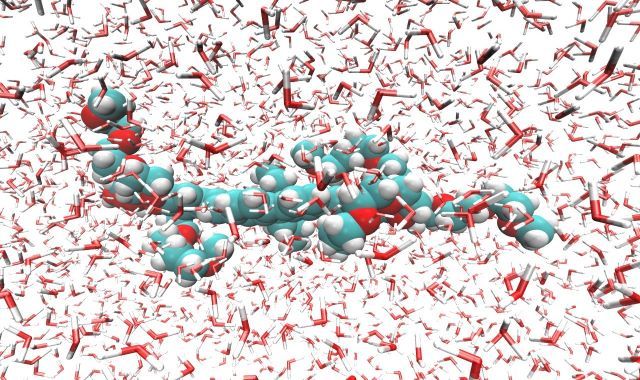
Chemists utilized machine learning methods to identify a potential candidate drug. The authors of the study developed multiple models to find active inhibitors of CDK 2. Additionally, they built a molecular model using the molecular docking method, which can identify the most favorable molecular orientation for forming a stable complex.

Using machine learning models, the team identified 25 potential active CDK 2 inhibitors with an accuracy of 98%. Chemists then tested each of the identified inhibitors using molecular docking. Out of the 25, three substances proved to work better than the rest. For the top three, a computer simulation was created using the molecular dynamics method and compared with the reference compound, dalpiciclib. The results showed that all three of the chosen inhibitors were more stable and more compact than the reference compound.

"Compared to the control drug dalpiciclib, the three calculated compounds showed more stable behavior and compactness. Despite the promising results, our study has several limitations. We need in-depth clinical trials in vitro and in vivo to confirm inhibitory activity and potential therapeutic efficacy. In addition, when developing drugs, it will be necessary to study the effect of compounds on off-target interactions and their toxicity," Alexander Novikov, Ph.D. in Chemistry, senior researcher at the Joint Institute of Chemical Research of RUDN University.

The research concludes that Russian chemists have utilized machine learning and molecular modeling effectively to detect new potential anticancer drugs. This is a significant breakthrough in cancer research that could save countless lives by leading to the development of new treatments. The research also exemplifies the power of combining modern technology with traditional scientific methods, demonstrating the potential of machine learning and molecular modeling to revolutionize the field of medicine.

Illustration of the structure of the nanozymes obtained, with details on how the tyrosine amino acids (in red) coordinate the metal ions (in orange).

Unlock the full potential of CO2 capture with minimal molecules, the revolutionary solution to creating a greener future

Researchers at the Universitat Autonoma de Barcelona (UAB) have developed enzymes capable of capturing carbon dioxide (CO2) emitted in industrial processes and other environmental remediation processes. These enzymes are based on artificial molecular structures formed by peptides of only seven amino acids. The new molecules can also act as metalloenzymes, which opens up new possibilities in biotechnology research. Furthermore, the study provides a new contribution to the origin of catalytic activity at the beginning of life.

The study was coordinated by Salvador Ventura, and Susanna Navarro was the first author. Both are researchers at the Institute of Biotechnology and Biomedicine and the UAB Department of Biochemistry and Molecular Biology. They collaborated with researchers from the UAB Department of Chemistry and the Research Centre bioGUNE.

In the study, the researchers used a combination of experiments and simulations, including spectrophotometry, fluorescence, electron microscopy, electron diffraction, and supercomputational modeling.

In 2018, researchers at UAB successfully created short molecules that can self-assemble. These molecules were inspired by the natural ability of amyloid fibrils to self-assemble and were based on a specific sequencing of prion proteins. These artificial amyloids demonstrate catalytic activities and have several advantages over natural enzymes, including modularity, flexibility, stability, and ease of use. Recently, researchers discovered that these molecules can effectively bind to metal ions and act as storage elements for metal and metalloenzymes.

“These peptides were particular, since they did not contain the typical amino acids, such as histidine, which is often considered essential for the coordination of metal ions in enzymes, and which were thought to be essential for catalytic activity. In contrast, they were enriched with residues from tyrosine, an element which although less known in this context, can also have the unique capacity of binding to metal ions if it finds itself in the correct structural context. Tyrosine’s ability to do so is what we used to create our nanozymes,” Salvador Ventura points out.

The results of the study have wide-ranging applications. Firstly, nanozymes exhibit excellent stability and can be employed for environmental remediation purposes, including wastewater treatment and decontamination of soils, due to their remarkable ability to sequester metal ions. Secondly, they can act as metalloenzymes, catalyzing reactions in conditions where current enzymes would be incapable of functioning due to their instability. This creates exciting new possibilities for biotechnology research, such as catalyzing reactions in extreme temperatures and pH values.

Researchers have developed a minimalistic variant of a carbonic anhydrase enzyme that can efficiently store CO2 emitted by greenhouse gases. They are convinced that their enzyme is highly capable and can be produced at a much lower cost than natural enzymes.

Researchers have developed new nanozymes by exploring the catalytic activity of short, low-complexity peptides that self-assemble into structures similar to amyloids. This hypothesis suggests that such structures acted as the primal ancestral enzymes, playing a vital role in the origin of life.

“Showing that these molecules have catalytic action without the need for conventional histidine-based coordination represents a significant change in how we understand the origin of catalytic activity at the start of life. We now know that this activity can be achieved if the ancestral peptides contain tyrosine. Therefore, we suggest that it is highly probable that the ancestral enzymes based on amyloids also used this second amino acid in their chemical reactions,” Salvador Ventura concludes.

The potential of minimal molecules in capturing CO2 is a promising development in the battle against climate change. By leveraging the unique properties of these molecules, we can create cost-effective solutions to reduce CO2 emissions and safeguard our planet. With further research and development, minimal molecules can become a potent tool in combating global warming and the consequences of climate change. With the appropriate resources and commitment, we can build a greener, cleaner, and more sustainable future for generations to come.

Herbivorous parrotfish feeding in the shallows on Palmyra Atoll Credit: Brian Zgliczynski

Researchers in Bangor show how human activities are contributing to the destruction of communities of reef fish

A recent study has provided evidence that supports one of the ecological theories developed in the 1950s and 1960s. This theory has been used to predict how different species are distributed in various environments. The study raises questions about whether these models need to be updated to account for the impact of humans on natural systems. The coral reef zonation theory is one of the earliest examples of these models, and it explains how different types of fish and corals are found at different depths in coral reefs. The accuracy of these theories has been previously tested on a small scale, and they have proven to be reliable across a wide range of variables such as food supply and temperature.

Modern supercomputing capabilities now allow testing theories at larger scales.

Scientists from Bangor University and the US Government National Oceanic and Atmospheric Administration (NOAA), led by Dr. Laura Richardson, validated the depth zonation model on coral reefs. They collected data from 5525 surveys at 35 Pacific Ocean islands to determine the distribution of different fish species according to depth. The results showed that the model is accurate but only on uninhabited islands where there is no human interference.

However, the pattern was not as clear and predictable on islands and reefs with human habitation. The findings suggest that traditional models of the natural world may no longer be valid due to increasing human impact.

Dr. Laura Richardson of Bangor University’s School of Ocean Sciences, the lead author of the study, suggests that we need to revise our understanding of the natural world in light of these findings.

“Science is cumulative, building on past work. Now that we have greater computing capabilities, we should be testing these widely accepted but spatially under-validated theories at scale. Moreover, the intervening years have seen human impacts on the environment increase to such an extent that these models may no longer predict the ecological distribution patterns we see today.

“This leads to more questions, both about the usefulness of models which represented a world less impacted by human activity, and about how to quantify or model our impact on the natural environment.”

“The results show that now is the time to consider whether and how to include human impacts into our understanding of the natural world today,” said Dr. Richardson.

The study concludes that human activities at a local level are significantly and adversely affecting the depth-dependent zonation of tropical reef fish communities. This has resulted in a decline in the abundance and diversity of fish species, leading to an overall decline in the health of the reef ecosystem. This trend is worrying and emphasizes the need for increased conservation measures to safeguard these delicate ecosystems.

Climate change intensifies extreme heat in the soil Photo: André Künzelmann / UFZ

Uncovering the impact of climate change: Extreme heat in the soil

Soil temperatures have been often ignored for a long time, and there is hardly any reliable data available about it, unlike air temperatures near the surface. Measuring soil temperature is more complex, which resulted in a lack of attention. However, a research team led by the Helmholtz Centre for Environmental Research (UFZ) in Germany has discovered that soil and air temperatures can differ and climate change has a much greater impact on the intensity and frequency of heat extremes in the soil than in the air. This is particularly true in Central Europe, according to a recent study by scientists.

In a recent study, a team of researchers led by Dr Almudena García-García from UFZ collected data from various sources, including meteorological measuring stations, remote sensing satellites, the ERA5-Land data reanalysis set, and supercomputing simulations of Earth system models. The team used this data to calculate the TX7d index, which reflects the intensity of heat extremes by averaging the daily maximum temperature in the hottest week of the year. The index was calculated for the 10-cm-thick upper soil layer and the near-surface air at a height of up to 2 m for the years 1996 to 2021. The researchers found that at two-thirds of the 118 meteorological measuring stations evaluated, the trend in heat extremes is stronger in the soil than in the air. This suggests that heat extremes develop much faster in the soil than in the air, especially in Germany, Italy, and southern France. According to station data, the intensity of heat extremes in Central Europe is increasing 0.7°C/decade faster in the soil than in the air.

The research team also looked at the frequency of heat extremes in the soil using the TX90p index. This index considers the percentage of days per month when the daily maximum temperature was higher than the statistical limit between 1996 and 2021. The calculations showed that the number of days with heat extremes is increasing twice as fast in the soil as in the air.

"For example, if there are currently high temperatures in the soil and air on 10% of the days in a month, a decade later, there will be high temperatures in the air on 15% of the days and high temperatures in the soil on 20%", says García-García. Soil moisture is a key factor that affects the exchange of heat between the air and soil. The amount of soil moisture depends on the type of land cover. Trees in forests can draw water from deep in the soil with their roots, thus reducing water loss through evaporation during the summer. However, crops and grasslands can only access water from the soil surface. It's worth noting that soil temperature can rise much faster than air temperature, causing additional heat to be released into the lower atmosphere if the soil temperature is higher than that of the air. As a result, atmospheric temperatures are likely to increase.

"Soil temperature acts as a factor in the feedback between soil moisture and temperature and can thus intensify heat periods in certain regions", explains Dr. Jian Peng, co-author and head of the UFZ Remote Sensing Department. This feedback affects agriculture, ecosystems, and carbon storage. "In view of these results, studies on the effects of heat extremes, which consider mainly air temperatures but have underestimated the factor of heat extremes in the soil, would have to be re-evaluated", he says.

The research team used Earth system supercomputer models to investigate how extreme soil temperatures could amplify heat waves in the atmosphere, based on different global climate scenarios. They discovered that if the 2-degree or 3-degree scenario occurs, Central Europe will be more severely impacted than with a 1.5-degree warming. For instance, there could be 8% more hot days when soil releases heat into the atmosphere, intensifying periods of hot weather in the air. García-García mentioned that this can imply that soils will play a more crucial role in the development of heat extremes.

To conclude, climate change is increasing extreme heat in the soil, which can have severe implications for soil health, and the plants and animals that rely on it. This emphasizes the significance of reducing emissions and taking action to mitigate the effects of climate change to protect our soils and the ecosystems they support.