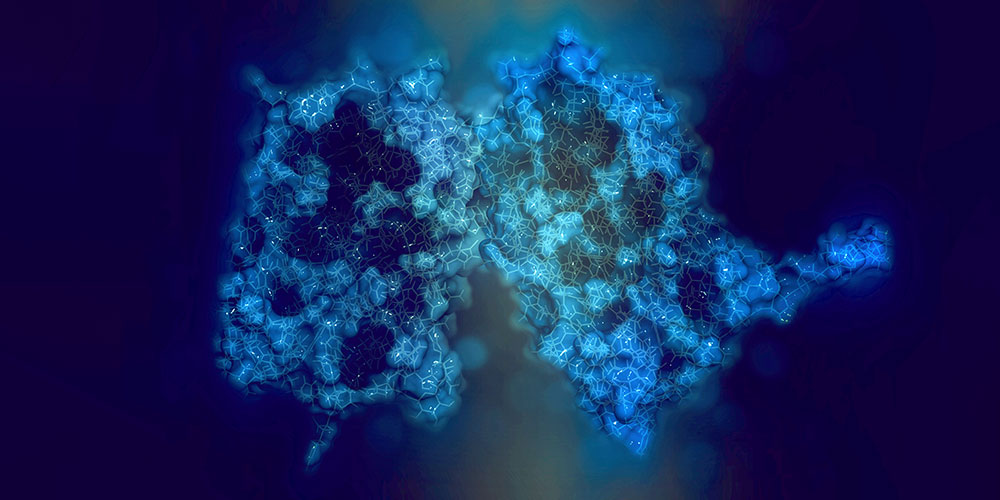
AI drug discovery models: Physics falls short

In a thought-provoking twist for computational chemistry and biomedicine, researchers at the University of Basel (Switzerland) have uncovered that even the most advanced AI models used for drug design may not truly understand the physics of molecular binding; they appear to be pattern-matching rather than reasoning.

When learning isn’t the same as understanding

The study, reported today, describes how deep-learning "co-folding" models, systems designed to predict how a protein and a potential drug molecule will fit together, fail to uphold basic physical laws when deliberately tested under challenging conditions.
 
In one striking experiment, researchers mutated or blocked binding sites on proteins, or edited ligands so they would no longer bind. Yet, AI models frequently predicted a binding pose anyway, as though the disruption had not occurred. In more than half the cases, the AI output ignored the alterations.
 
The authors argue that these models rely on statistical correlations, the shapes and sequence patterns they’ve observed in training, rather than truly modeling the underlying physics of electrostatics, steric factors (the crowding of atoms), hydrogen bonds, and so on.

Why this matters for drug discovery

The implications are significant. The promise of AI in drug discovery is enormous finding new molecules more quickly, predicting how they will bind, and shortening the time to a viable therapeutic. However, as the Basel team notes, if the model doesn't truly understand what makes a ligand bind to a protein, predictions for novel, unseen targets (a key objective) may be unreliable.
 
As Prof. Markus Lill of the University of Basel states, "When they see something completely new, they quickly fall short, but that is precisely where the key to new drugs lies."
 
In other words, models trained on known protein-ligand pairs may perform well "within sample," but when faced with novel challenges, they may revert to "safe guesses" rather than principled predictions. This puts a caveat on many current hype narratives surrounding AI drug design.
 
Key findings include:
  • The deep-learning co-folding models were exposed to adversarial examples, including mutating binding sites, altering ligand charge distributions, and blocking binding pockets.
  • Despite physically implausible or impossible binding configurations (for instance, ligand charged the wrong way, binding site residues replaced by sterically blocking amino acids), the models still often predicted good binding poses.
  • From this, the authors conclude these models do not reliably respect physical constraints (e.g., electrostatics, hydrogen‐bonding networks, steric hindrance), and they fail to generalize when faced with new types of protein/ligand systems.
  • The paper argues for integrating physical and chemical priors into future models, making sure that machine‐learning models are not simply “black-box” pattern matchers, but respect the underlying molecular science.

A cautious but curious tone on where to go next

The news from Basel isn’t a refutation of AI in drug research; rather, it is a clarion call for more nuance and care. AI models have already changed what’s possible: predicting protein folds, accelerating docking predictions, and broadly expanding the realm of computational chemistry. Yet this research suggests there’s still an important gap between “predicting what we know” and “reasoning about what we don’t know.”
Going forward, several directions are ripe:
  • Hybrid modeling: combining data‐driven deep learning with traditional physics‐based modeling (electrostatics, molecular mechanics, quantum effects) might strengthen reliability.
  • Benchmarking on novel/rare systems: rather than just “hold‐out” samples similar to the training data, models should be challenged with radically new proteins or ligands to test generalization.
  • Transparent AI: understanding not just the output but the reasoning of models (why did they predict binding despite physically implausible input?).
  • Experimental validation remains crucial: even the most sophisticated prediction needs lab and computational cross-checks that consider real chemistry and physics.

Bottom line

In summary, the study conducted by the University of Basel presents a compelling assessment: while current AI models demonstrate remarkable capabilities, they may primarily rely on patterns derived from historical data rather than accurately simulating molecular interactions. This disparity is particularly significant in drug discovery, where novel targets and unforeseen chemical phenomena are commonplace. Therefore, bridging this gap is essential. Moving forward, a focus on integrating machine learning with physics-based insights holds the key to advancing the development of innovative therapeutics.
Supercomputers unlock the chemistry of gecko binding: Vienna team breaks new ground in modeling large molecules

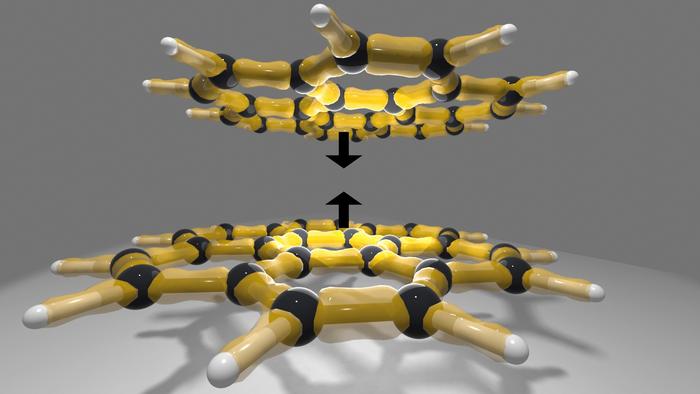
Scientists at the Vienna University of Technology (TU Wien) have developed a high-precision computational approach to enhance the understanding of how large molecules interact, specifically through the weak but pervasive van der Waals forces that enable geckos to adhere to surfaces. This breakthrough is anticipated to drive advancements in materials science, pharmaceuticals, and energy storage by providing greater reliability in predicting molecular behavior.

A puzzle solved

For many years, researchers in quantum chemistry have relied on two prominent computational methods: the "gold standard" coupled-cluster theory, specifically CCSD(T), and the stochastic diffusion quantum Monte Carlo (DMC) method. While both methods have provided near-benchmark accuracy for small molecules, discrepancies in predicted interaction energies emerged when applied to large, highly polarizable molecular systems.
 
The TU Wien team, led by Prof. Andreas Grüneis, along with Tobias Schäfer, Andreas Irmler, and Alejandro Gallo, investigated this divergence. They identified that CCSD(T) systematically overestimated binding energies in large molecular complexes, predicting stronger molecular interactions than were actually present.
 
Their new computational variant, designated CCSD(cT), incorporates selected higher-order corrections to the treatment of triple particle-hole excitations, which are significant for large, polarizable systems. This refinement effectively mitigates over-binding and aligns the computed values with the DMC results. The authors demonstrate in their study that CCSD(cT) achieves "chemical accuracy" (within approximately 1 kcal/mol) even for complexes comprising over 100 atoms.

The super-computational method: what makes it special

The key to the breakthrough isn’t simply more powerful hardware, but a clever adaptation of computation techniques and basis sets that fully exploit today’s supercomputing infrastructure. The authors report three major enablers:
  1. Massive parallelization – The workflow was implemented on high-performance computing (HPC) clusters using up to 50 compute nodes (each with 128 cores) for their largest tasks. The ability to distribute the workload allowed the team to avoid many of the local‐correlation approximations that earlier coupled-cluster calculations used to save time but at the cost of accuracy.
  2. Plane-wave basis sets – Instead of the conventional Gaussian-type atom-centered orbitals, the team employed a plane-wave basis set (commonly used in solid-state physics) for large molecular complexes, along with natural‐orbital truncation and singular‐value decomposed Coulomb integral factorization. These choices allowed unbiased and systematically improvable estimates for the interaction energies and reduced basis‐set error.
  3. Refined triple-excitation correction (cT) – The heart of the improvement is the correction to CCSD(T)’s (T) approximation. Summary: (T) neglects certain diagrams—specifically terms like ([ [\hat V, \hat T_2 ], \hat T_2 ]), which are small for small, weakly polarizable molecules, but become significant when molecules are large and very polarizable. By including these terms in CCSD(cT), the team corrected the systematic over-binding of CCSD(T).
The method combines computational power with refined theory, effectively merging supercomputing and quantum chemistry. This "super-computational method" enables the reliable analysis of molecular systems that were previously too complex for theoretical models.

Why this matters: optimistic outlook

The implications are far-reaching:
  • Materials science & energy: Many next-generation materials, hydrogen storage media, novel catalysts, 2D materials, surfaces, rely on noncovalent interactions between large molecular or extended systems. Having accurate benchmark interaction energies means better design of materials from first principles. The TU Wien team note the importance for hydrogen binding energy prediction, drug crystallization, etc.
  • Pharmaceuticals & biomolecules: Large molecules with many atoms—think proteins, drug–target systems, and crystals—are now becoming accessible to reliable computational modeling. That means faster, smarter virtual screening, better understanding of how drugs bind, how crystals form, and more.
  • AI and machine learning models: Accurate benchmark data is the lifeblood of machine learning in chemical and materials modelling. The new method generates high‐quality reference data for large molecules, which can then train ML models for faster predictions down the line. (“Our results show that even well-established methods must be continuously re-examined to keep pace…” says the TU Wien release.
  • Science advancing: Perhaps most exciting is the idea that this demonstrates a new frontier: we are expanding the domain of accuracy in many-electron theory to ever larger systems. As the authors put it, “we are witnessing an unremitting expansion of the frontiers of accurate electronic structure theories to ever larger systems … which … has the potential to transform the paradigm of modern computational materials science.”
In short, the method opens doors. With ever-growing computational power and clever theoretical innovation, the old boundary of “accurate only for small molecules” is being lifted. That means more realistic modelling of real‐world systems, faster innovation in materials and biotech, and a hopeful horizon for computational science.

Looking ahead

Of course, challenges remain. The computations reported still required significant supercomputing resources (e.g., ~100k CPU hours for the benchmark coronene dimer), and the authors note that full canonical CCSD(cT) for still larger systems is not yet feasible—they use a fitted approximation (CCSD(cT)-fit) for the largest complexes they studied.
 
But the path forward is clear: local correlation approaches and low-scaling methods can inherit the improvements of CCSD(cT), bringing accuracy to more systems at lower cost. As the paper states, “The more accurate CCSD(cT) approximation can directly be transferred to computationally efficient low-scaling and local correlation approaches, which will substantially advance…”
 
In an optimistic note, the “gold standard” itself has been improved. The TU Wien team shows that even widely-trusted methods must evolve—and by making that evolution, they are advancing the entire field. As we explore ever more complex molecular systems, from new energy materials to advanced drugs, having reliable computational methods is not just helpful; it is essential. With this breakthrough, the future of computational chemistry and materials science looks brighter than ever.
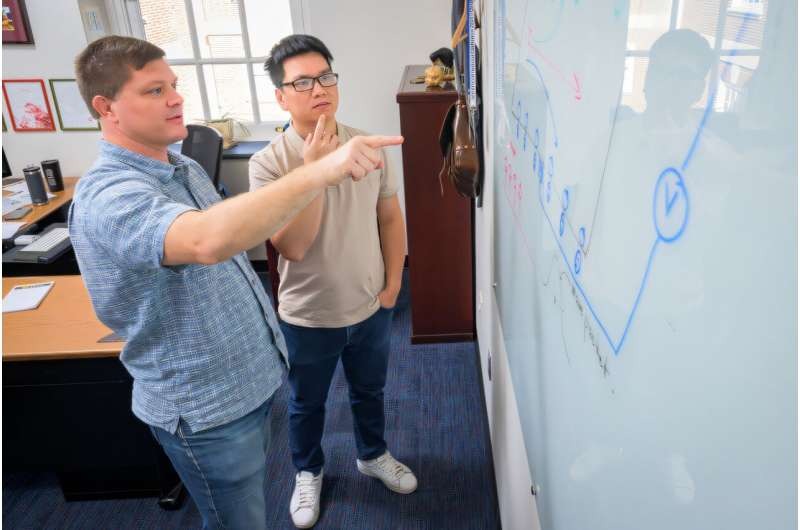
A new theoretical study led by University of Delaware engineers reveals that magnons, a type of magnetic spin wave, can produce detectable electric signals. Pictured, Matt Doty, professor in the Department of Materials Science and Engineering, and postdoctoral researcher D. Quang To discuss their findings.

Harnessing magnetism for faster computing

Envision a future where data transmission within computers occurs not only through electrons traversing wires, but also through waves that shimmer through the magnetic properties of materials. These waves carry information with significantly reduced waste, heat and offer increased potential. This intriguing prospect stems from the University of Delaware (UD) labs, where engineers have developed a novel method to detect and utilize magnetic waves for the next generation of high-speed computing.
 
Contemporary supercomputers, characterized by their extensive infrastructure processing climate models, genomic data, AI algorithms, and cryptographic tasks, are constrained by a prevalent bottleneck: the movement of electrons through wires, which generates resistance, heat, and ultimately, physical limitations. As explained by UD researchers, a significant portion of this delay arises from the continuous interaction between electric and magnetic subsystems, involving the magnetic storage of data and its electrical conveyance, a back-and-forth process.
 
A recent theoretical study demonstrates that magnetic waves, specifically magnons, which are collective oscillations of electron spin, can generate measurable electrical signals in antiferromagnetic materials. The key finding is that in these materials, the electron spins alternate direction (resulting in zero total magnetization); however, the wave-like fluctuations or wobbling of these spins can induce electric polarization. In essence, altering the magnetic properties results in an electrical response.
 
The significance of this research for supercomputing lies in the pursuit of ultra-fast and energy-efficient computing, exemplified by supercomputers and future quantum-hybrid systems. The ability to transfer and process information with minimal heat generation and maximal speed is paramount. The University of Delaware's (UD) findings present three key advantages: reduced energy waste through magnon-based spin orientation transmission, avoiding the resistance and heat losses inherent in conventional wiring; ultra-fast propagation of magnons in antiferromagnetic materials, achieving terahertz frequencies, which is significantly faster than in ferromagnets, providing substantial speed enhancements within processors and between components; and direct magneto-electric coupling, where a magnon's orbital angular momentum interacts with atoms, inducing electric polarization, thereby enabling the control of magnetic waves through electric or optical fields, creating faster, reconfigurable logic channels based on spin waves. In essence, the potential exists to replace electron-based wired systems with "spin-waves" transmitted via magnetic channels, resulting in faster, cooler, and more compact designs. For supercomputing, this could lead to denser rack configurations, increased computational capacity per watt, and novel architectures that integrate logic and memory more seamlessly.
 
The study utilized computer simulations, led by Matthew Doty from the University of Delaware's Materials Science & Engineering Department, to investigate magnon behavior in antiferromagnets under a temperature gradient. The research examined how the orbital angular momentum (a circular spin-wave motion) of magnons interacts with the atomic structure, generating electric polarization.
 
The model demonstrates that when a temperature difference exists across the material, causing magnons to flow, the orbital angular momentum of these magnons interacts with the material's atoms, producing a measurable voltage. This voltage represents the electrical signal generated by pure spin-wave propagation. Future research will focus on experimental validation of the simulations and exploration of the potential for light or electric fields to control magnon transport. This work is also being integrated within the Center for Hybrid, Active and Responsive Materials (CHARM) at UD, with the aim of developing hybrid quantum materials for terahertz applications.

Looking Ahead: Implications for Supercomputers

While currently in the theoretical and simulation stages, this research presents intriguing questions regarding the potential evolution of supercomputers:
  • Could future computational nodes transmit information via magnon waveguides, instead of copper or optical wires? This could lead to reduced cooling requirements and simplified wiring.
  • Could logic and memory become more intimately integrated, with magnetic channels performing computation and data storage simultaneously?
  • Might this facilitate terahertz-clocked compute fabrics, where internal signaling occurs at orders of magnitude greater speeds than current gigahertz semiconductor circuits?
How will manufacturing challenges be addressed, such as creating antiferromagnetic materials, integrating spin-wave channels with conventional electronics, and scaling to millions of such channels?
 
For the supercomputing field, where every fraction of a second and every watt of power is critical, this research is akin to discovering a new data highway, one that could bypass current congested routes. This does not imply that the current "silicon-electron wire" paradigm will disappear overnight, but it does suggest that a paradigm shift may be forthcoming.

Final Thoughts

There is a compelling metaphor in the research: that a magnon is "just like that: a wave" traveling down a slinky of spins. It is both playful and imaginative, yet rooted in rigorous simulation and physics. In high-end computing, where imagination often precedes engineering, the question now is: how rapidly can this playfulness be translated into prototypes, chips, and novel architectures?
 
If engineers successfully transform magnons into usable signal carriers within supercomputers, we may soon discuss "spin-wave supercomputing" with the same level of confidence as we currently use the term "silicon chip." The bottleneck between magnetic storage and electrical processing may finally begin to diminish.
 
This research warrants attention; it is both intriguing and innovative, and it may revolutionize the way we compute.