

Mass General researchers build ML that predicts which patients with melanoma are most likely to experience a cancer recurrence

Most deaths from melanoma—the most lethal form of skin cancer—occur in patients who were initially diagnosed with early-stage melanoma and then later experienced a recurrence that is typically not detected until it has spread or metastasized.

A team led by investigators at Massachusetts General Hospital (MGH) recently developed an artificial intelligence-based method to predict which patients are most likely to experience a recurrence and are therefore expected to benefit from aggressive treatment. The method was validated in a study published in npj Precision Oncology.

Most patients with early-stage melanoma are treated with surgery to remove cancerous cells, but patients with more advanced cancer often receive immune checkpoint inhibitors, which effectively strengthen the immune response against tumor cells but also carry significant side effects.

“There is an urgent need to develop predictive tools to assist in the selection of high-risk patients for whom the benefits of immune checkpoint inhibitors would justify the high rate of morbid and potentially fatal immunologic adverse events observed with this therapeutic class,” says a senior author Yevgeniy R. Semenov, MD, an investigator in the Department of Dermatology at MGH.

“Reliable prediction of melanoma recurrence can enable more precise treatment selection for immunotherapy, reduce progression to metastatic disease, and improve melanoma survival while minimizing exposure to treatment toxicities.”

To help achieve this, Semenov and his colleagues assessed the effectiveness of algorithms based on machine learning, a branch of artificial intelligence, that used data from patient electronic health records to predict melanoma recurrence.

Specifically, the team collected 1,720 early-stage melanomas—1,172 from the Mass General Brigham healthcare system (MGB) and 548 from the Dana-Farber Cancer Institute (DFCI)—and extracted 36 clinical and pathologic features of these cancers from electronic health records to predict patients’ recurrence risk with machine learning algorithms. Algorithms were developed and validated with various MGB and DFCI patient sets, and tumor thickness and rate of cancer cell division were identified as the most predictive features.

“Our comprehensive risk prediction platform using novel machine learning approaches to determine the risk of early-stage melanoma recurrence reached high levels of classification and time to event prediction accuracy,” says Semenov. “Our results suggest that machine learning algorithms can extract predictive signals from clinicopathologic features for early-stage melanoma recurrence prediction, which will enable the identification of patients who may benefit from adjuvant immunotherapy.”

Additional Mass General co-authors include Ahmad Rajeh, Michael R. Collier, Min Seok Choi, Munachimso Amadife, Kimberly Tang, Shijia Zhang, Jordan Phillips, Nora A. Alexander, Yining Hua, Wenxin Chen, Diane, Ho, Stacey Duey, and Genevieve M. Boland.

This work was supported by the Melanoma Research Alliance, the National Institutes of Health, the Department of Defense, and the Dermatology Foundation.
University of Queensland physicists uncover the massive quantum mysteries of black holes

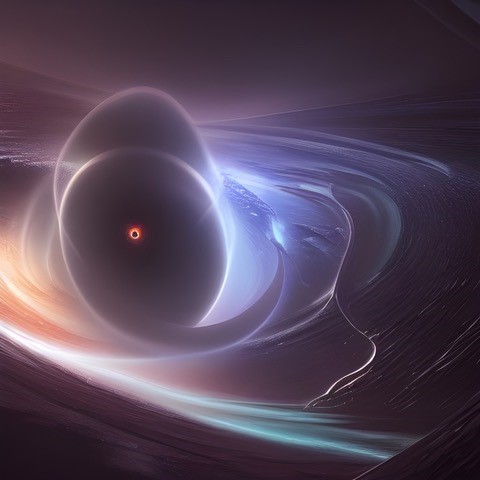
Mass-quantised black hole – recreated using NightCafe Creator AI.Bizarre quantum properties of black holes – including their mind-bending ability to have different masses simultaneously – have been confirmed by University of Queensland physicists in Brisbane, the capital city of the Australian state of Queensland.
A UQ-led team of theoretical physicists, headed by Ph.D. candidate Joshua Foo, ran calculations that reveal surprising black hole quantum phenomena.

“Black holes are an incredibly unique and fascinating feature of our universe,” Mr. Foo said.

“They’re created when gravity squeezes a vast amount of matter incredibly densely into a tiny space, creating so much gravitational pull that even light cannot escape.

“It’s a phenomenon that can be triggered by a dying star.

“But, until now, we haven’t deeply investigated whether black holes display some of the weird and wonderful behaviors of quantum physics.

“One such behavior is superposition, where particles on a quantum scale can exist in multiple states at the same time.

“This is most commonly illustrated by Schrödinger’s cat, which can be both dead and alive simultaneously.

“But, for black holes, we wanted to see whether they could have wildly different masses at the same time, and it turns out they do.

“Imagine you’re both broad and tall, as well as short and skinny at the same time – it’s a situation that is intuitively confusing since we’re anchored in the world of traditional physics.

“But this is the reality for quantum black holes.”

To reveal this, the team developed a mathematical framework allowing us to “place” a particle outside a theoretical mass-superposed black hole.

Mass was looked at specifically, as it is a defining feature of a black hole, and as it is plausible that quantum black holes would naturally have mass superposition.

Research co-supervisor, Dr. Magdalena Zych, said that the research reinforces conjectures raised by pioneers of quantum physics.

“Our work shows that the very early theories of Jacob Bekenstein – an American and Israeli theoretical physicist who made fundamental contributions to the foundation of black hole thermodynamics – were on the money,” she said.

“He postulated that black holes can only have masses that are of certain values, that is, they must fall within certain bands or ratios — this is how energy levels of an atom work, for example.

“Our modeling showed that these superposed masses were, in fact, in certain determined bands or ratios – as predicted by Bekenstein.

“We didn’t assume any such pattern going in, so the fact we found this evidence was quite surprising.

“The universe is revealing to us that it’s always more strange, mysterious, and fascinating than most of us could have ever imagined.”

UZH prof Schaepman-Strub shows that vegetation regulates energy exchange in the Arctic

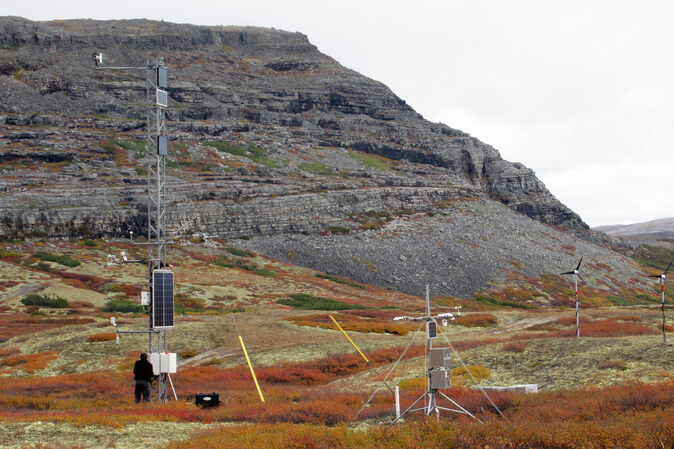
A new measurement station near Umiujaq in Canada, a transition zone from forest to tundra. (Image: Florent Domine, Université Laval and CNRS, Canada)Global warming is changing the Arctic by causing permafrost thaw, glacier melt, droughts, fires, and changes in vegetation. These developments are linked to the energy exchange between land and the atmosphere. Researchers at the University of Zurich, the largest university in Switzerland, have now shown that different plant communities in the tundra play a vital role in this energy exchange but are not considered in climate models.

The heat waves swept across Europe this summer made many people realize how important plants are when it comes to cooling down the environment. But how do the various types of vegetation in the Arctic affect the energy exchange between the Earth’s surface and its atmosphere? This is a highly relevant question since the region has great significance for the climate. The Arctic is warming up at more than twice the rate of the global average leading to thawing permafrost and melting glaciers regionally. Globally, this warming is reflected in consequences far away from the Arctic, for example in cold damage to ecosystems in East Asia.

Similar heat flux differences between glaciers and grassland

An international team led by two researchers from the Department of Evolutionary Biology and Environmental Studies of the University of Zurich (UZH) has now taken a closer look at the energy budget of the land surface in the Arctic. According to their study, the Arctic’s diverse vegetation, which is disregarded in climate models, is one of the key factors in the energy exchange between the Earth’s land surface and the atmosphere. “Remarkably, in summer the difference in heat flux between two types of vegetation – such as a landscape dominated by lichens and mosses and one with shrubs – is about the same as between the surface of glaciers and green grasslands,” says postdoc Jacqueline Oehri, first author of the study.

Vegetation types linked to data from 64 measuring stations

Arctic vegetation is highly diverse and ranges from dry grasslands and wetlands to scrubland dominated by dwarf shrubs as well as barrens with mosses and lichens. The researchers linked this vegetation diversity to all available energy exchange data collected by 64 measuring stations in the Arctic between 1994 and 2021. Their focus was on the summer months between June and August, during which sunlight, and thus energy absorption, is particularly high. Depending on the type of vegetation, either the surface or the air is warmed to varying degrees. In addition, with increasing, shrub density land warms up earlier after winter. “The shrubs’ dark branches emerge from under the snow early, absorb sunlight and pass it on to the surface long before the snow melts away,” explains Oehri.

Cooling vegetation can preserve permafrost in the tundra

“Our findings on the energy flow in the Arctic are extremely relevant since the preservation of permafrost depends to a large extent on the heat flux into the ground,” says UZH professor Gabriela Schaepman-Strub. The study’s data make it possible to incorporate the effects of different plant communities and their distribution into climate predictions. Researchers can thus use improved climate models to calculate whether, and to which extent tundra vegetation in the Arctic plays a role in cooling the land surface.

Precision models require additional measuring stations

“We now know which plant communities have a particularly pronounced cooling or warming effect through energy exchange. This enables us to determine how changes in plant communities, which are occurring in many regions in the Arctic, are affecting permafrost and the climate,” says Schaepman-Strub. This requires improvements in data collection, in particular. Although the Arctic is changing rapidly and has a major impact on the climate dynamics of the entire planet, there are only a few reliable measuring stations in this region. In addition to calling for current stations to remain in operation, the study authors believe new stations are needed in those Arctic landscape types that could only be partially analyzed due to incomplete data.