

Dutch researchers show how cell-cell signaling plays a key role in the thickening of arteries due to high blood pressure

Arteries can become thicker due to high blood pressure. However, the cause of this thickening is unclear. Eindhoven University of Technology, TU/e, researchers in the Netherlands, along with colleagues from Trinity College Dublin in Ireland have developed a new computer model to study arterial thickening in detail. The model shows that both mechanical changes in the artery due to higher blood pressure and cell communication involving so-called vascular smooth muscle cells could be critical for arterial thickening. The same model could be used to guide future approaches to therapeutic and regenerative treatments. 
Source: Shutterstock.

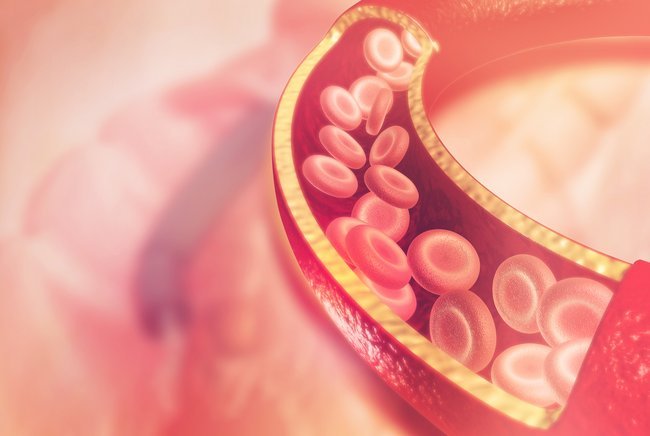
The growth and changing of arteries in the body depend on many factors, such as blood pressure. Arteries are known to become thicker due to higher blood pressure.

“When the blood pressure increases, the artery stretches more and experiences higher forces. This leads to changes in the mechanics of the artery, and in response, the artery gets thicker,” says Jordy van Asten, a Ph.D. researcher in the department of Biomedical Engineering and the Institute for Complex Molecular Systems (ICMS). “But other factors might be important too, such as how the artery cells talk to each other.”

To gain a better understanding of the mechanisms underlying arterial thickening, van Asten along with fellow TU/e researchers co-first author Tommaso Ristori, Frank Baaijens, Cecilia Sahlgren, and Sandra Loerakker, as well as researchers from Trinity College in Ireland developed a computer model to study how the combination of stretching of the artery and cell signaling affects arterial thickening.

The significant mechanical challenge

One significant challenge for the researchers when developing the model was the need to capture the deformations of an artery when subject to high blood pressure.

“Arteries are pre-stretched, meaning that even if the load due to high blood pressure is removed, the arteries are still not in a fully relaxed state,” notes van Asten. “Including this in the model was difficult, and we achieved this by using a finite element analysis of the stretches in healthy in-vivo or living native arteries.”

Also, the researchers had to estimate the right values of the material properties of the artery tissue that best capture the mechanical behavior. “Arriving at these properties involved a combination of assumptions based on experiments and fits from previous experimental studies,” says van Asten.

Importance of cell chatter

Capturing the right mechanical behavior of the artery is just one part of the computational puzzle. The other part relates to how cell-cell signaling is affected by the mechanical changes and how this could be driving the growth and remodeling of the artery. So, van Asten, Ristori, and their colleagues looked at the cell-cell Notch signaling or communication pathway between vascular smooth muscle cells (VSMCs), which is known to play a key role in how vascular tissue develops and remains stable. And to model this, the researchers used a so-called agent-based model, previously developed by Sandra Loerakker and collaborators in the past.

“Using the model, we have learned how this Notch signaling pathway could be involved in the thickening of arteries due to higher blood pressure,” says van Asten. “We have shown higher blood pressure decreases the chatter among VSMCs which was predicted to change their behavior and, consequently, there is less growth or thickening of the artery.”

Besides high blood pressure, this finding on cell-cell communication (and artery growth) could be applied to other areas of research, such as tissue engineering. van Asten: “A lot of researchers are trying to create living, functional tissue (such as arteries) that could be used to replace diseased tissue in the body.”

Future hopes

In tissue engineering, tissues grow over time, either in the lab or inside the body. Extra control over the growth process would allow researchers to grow more precise replacement tissues, and the key to all of this could be cell chatter. “Our new findings on cell-cell communication in tissue as it grows could prove critical for future tissue growth studies,” says van Asten.

And van Asten has great aspirations for tissue engineering in the future. “I hope that tissue engineering continues to advance so that we can reliably produce replacement tissue, perhaps even organs, for patients suffering from cardiovascular diseases. This research is just a small part of the puzzle, and prospects of how it will be used are exciting and motivating for me personally.”

However, it will take several years before the findings of van Asten and his colleagues can be applied to grow new tissues. Van Asten: “First, we need to perform experiments and check if this is a feasible way to grow arteries, and if the resulting arteries are safe for patients.”
German physicists discover unexpected quantum effects in natural double-layer graphene

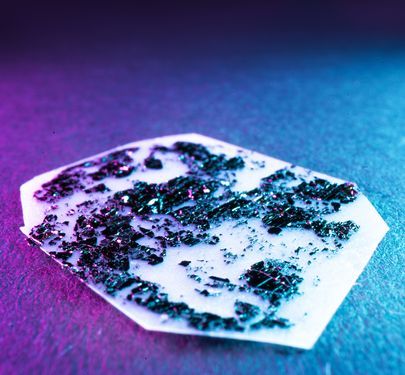
An international research team led by the University of Göttingen in Germany has detected novel quantum effects in high-precision studies of natural double-layer graphene and has interpreted them together with the University of Texas at Dallas using their theoretical work. This research provides new insights into the interaction of the charge carriers and the different phases and contributes to the understanding of the processes involved. The LMU in Munich and the National Institute for Materials Science in Tsukuba, Japan, were also involved in the research. Graphene on a piece of adhesive tape   Photo: Christoph Hohmann (MCQST Cluster)

The novel material graphene, a wafer-thin layer of carbon atoms, was first discovered by a British research team in 2004. Among other unusual properties, graphene is known for its extraordinarily high electrical conductivity. If two individual graphene layers are twisted at a very specific angle to each other, the system even becomes superconducting, i.e. conducts electricity without any resistance, and exhibits other exciting quantum effects such as magnetism. However, the production of such twisted graphene double-layers has so far required increased technical effort.

This novel study used the naturally occurring form of double-layer graphene, where no complex fabrication is required. In the first step, the sample is isolated from a piece of graphite in the laboratory using a simple adhesive tape. To observe quantum mechanical effects, the Göttingen team then applied a high electric field perpendicular to the sample: the electronic structure of the system changes and a strong accumulation of charge carriers with similar energy occurs.

At temperatures just above absolute zero of minus 273.15 degrees Celsius, the electrons in the graphene can interact with each other – and a variety of complex quantum phases emerge completely unexpectedly. For example, the interactions cause the spins of the electrons to align, making the material magnetic without any further external influence. By changing the electric field, researchers can continuously change the strength of the interactions of the charge carriers in the double-layer graphene. Under specific conditions, the electrons can be so restricted in their freedom of movement that they form their electron lattice and can no longer contribute to transporting charge due to their mutual repulsive interaction. The system is then electrically insulating.

"Future research can now focus on investigating further quantum states," said Professor Thomas Weitz and Ph.D. student Anna Seiler, Faculty of Physics at Göttingen University. "In order to access other applications, for example, novel computer systems such as quantum computers, researchers would need to find how these results could be achieved at higher temperatures. However, a major advantage of the current system developed in our new research lies in the simplicity of the fabrication of the materials."

NCKU researchers develop the first dual-mode piezotronics-based force sensor

With the rise of the Internet of Things and Industry 4.0, piezoelectrics, or materials that generate an electric charge when a strain is applied to them, are becoming extremely useful as compact and energy-efficient force sensors. Accordingly, piezotronics has emerged as a new technological frontier with applications in structural health monitoring in civil engineering and human-machine interface devices.

Piezotronic force sensors are typically governed by either a strain-induced “Schottky barrier height (SBH) modulation” or by a “piezo-gating effect” that redistributes the charge carriers in an induced piezoelectric field. However, while SBH-based devices have been well-explored, piezo-gating-based devices remain relatively less understood. This has limited the fabrication of piezo-gated transistors, the basic building block of all electronics. Additionally, the piezo-gating effect is often confused with the “piezoresistive effect” a co-existing phenomenon with a similar response. To harness the full potential of the piezo-gating impact, we, therefore, need to understand it better.

In a new study published in Nano Energy, researchers from National Cheng Kung University (NCKU), Taiwan now report, for the first time, a “dual-mode” piezo-gated thin-film transistor (PGTFT) along with an analytical model explaining its working mechanism. The PGTFT exhibits an unprecedented operation between two modes, namely depletion and accumulation, and a record gauge factor (ratio of relative change in current to mechanical strain) of 2780, indicating its extreme sensitivity.

“PGTFTs relying solely on the piezo-gating effect are essential for developing advanced piezotronic devices. But, most PGTFTs reported so far show indistinct piezo-gating effect through SBH modulation induced by piezoelectric fields, and can detect only one-dimensional strain,” says Prof. Chuan-Pu Liu, the corresponding author of the study.

In their work, the researchers used zinc oxide (ZnO) to fabricate the thin-film transistors owing to the versatile piezoelectric and semiconductor properties of ZnO. The charge carrier concentrations in the ZnO thin films were varied in a controlled manner by changing the gas used during their preparation. The thin films were then fully characterized and used to prepare two distinct PGTFT configurations.

The team tested the current-voltage characteristics of the PGTFTs by subjecting them to strain and analyzed the results both analytically and using numerical simulations. Additionally, they explored the effect of changing carrier concentrations on the operation modes of the PGTFTs to gauge the influence of the piezo-gating effect.

The team found that increased strains reduced the current in the top PGTFT electrode but increased it in the bottom electrode. This happened due to the electrons moving from the top to the bottom in response to the force, creating a depletion at the top and an accumulation of electrons at the bottom. This, in turn, affected the output current and revealed the co-existence of the piezo-gating effect and piezoresistive effect, with the piezo-gating effect being dominant.

Additionally, the team showed, experimentally and analytically, that the gauge factor is highly sensitive to the carrier concentration, showing a 44% enhancement in their design.

Our proposed analytical model explains the workings of the PGTFT perfectly, showing agreement with experiment as well as simulations. These findings will pave the way for the development and application of multi-dimension strain-sensing PGTFTs,” says Prof. Liu. This could lead to novel human-machine interfaces that are compact, cost-effective, and less power-hungry.