Swiss geoscientists confirm the Alps were formed by detaching, uplifting, not bulldozing

For a long time, geoscientists have assumed that the Alps were formed when the Adriatic plate from the south collided with the Eurasian plate in the north. According to the textbooks, the Adriatic plate behaved like a bulldozer, thrusting rock material up in front of it into piles that formed the mountains. Supposedly, their weight subsequently pushed the underlying continental plate downwards, resulting in the formation of a sedimentary basin in the north adjacent to the mountains - the Swiss Molasse Plateau. Over time, while the mountains grew higher the basin floor sank deeper and deeper with the rest of the plate.

A few years ago, however, new geophysical and geological data-led ETH geophysicist Edi Kissling and Fritz Schlunegger, a sediment specialist from the University of Bern, to express doubts about this theory. In light of the new information, the researchers postulated an alternative mechanism for the formation of the Alps. 

The altitude of the Alps has barely changed Central Alps of Switzerland have been lifted to today's height.{module INSIDE STORY}

Kissling and Schlunegger pointed out that the topography and altitude of the Alps have barely changed over the past 30 million years, and yet the trench at the site of the Swiss Plateau has continued to sink and the basin extended further north. This leads the researchers to believe that the formation of the Central Alps and the sinking of the trench are not connected as previously assumed.

They argue that if the Alps and the trench indeed had formed from the impact of two plates pressing together, there would be clear indications that the Alps were steadily growing. That's because, based on the earlier understanding of how the Alps formed, the collision of the plates, the formation of the trench, and the height of the mountain range are all linked.

Furthermore, seismicity observed during the past 40 years within the Swiss Alps and their northern foreland clearly documents extension across the mountain ranges rather than the compression expected for the bulldozing Adria model.

The behavior of the Eurasian plate provides a possible new explanation. Since about 60 Ma ago, the former oceanic part of the Eurasian plate sinks beneath the continental Adriatic microplate in the south. By about 30 Ma ago, this process of subduction is so far advanced that all oceanic lithosphere has been consumed and the continental part of the Eurasian plate enters the subduction zone.

This denotes the beginning of the so-called continent-continent collision with the Adriatic microplate and the European upper, lighter crust separates from the heavier, underlying lithospheric mantle. Because it weighs less, the Earth's crust surges upwards, literally creating the Alps for the first time around 30 Ma ago. While this is happening, the lithospheric mantle sinks further into the Earth's mantle, thus pulling the adjacent part of the plate downwards.

This theory is plausible because the Alps are mainly made up of gneiss and granite and their sedimentary cover rocks like limestone. These crustal rocks are significantly lighter than the Earth's mantle - into which the lower layer of the plate, the lithospheric mantle, plunges after the detachment of the two layers that form the continental plate. "In turn, this creates strong upward forces that lift the Alps out of the ground," Kissling explains. "It was these upward forces that caused the Alps to form, not the bulldozer effect as a result of two continental plates colliding," he says.

The new model confirms the lift hypothesis

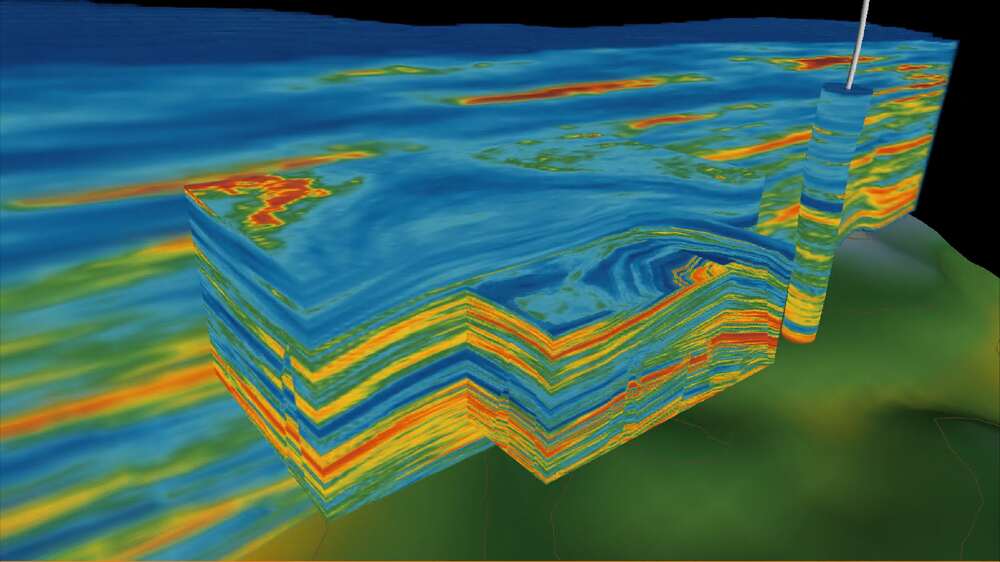
To investigate the lift hypothesis, Luca Dal Zilio, a former doctoral student in ETH geophysics professor Taras Gerya's group, has now teamed up with Kissling and other ETH researchers to develop a new model. Dal Zilio simulated the subduction zone under the Alps: the plate tectonic processes, which took place over millions of years, and the associated earthquakes.

"The big challenge with this model was bridging the time scales. It takes into account lightning-fast shifts that manifest themselves in the form of earthquakes, as well as deformations of the crust and lithospheric mantle over thousands of years," says Dal Zilio, lead author of the study recently published in the journal Geophysical Research Letters.

According to Kissling, the model is an excellent way to simulate the uplifting processes that he and his colleague are postulating. "Our model is dynamic, which gives it a huge advantage," he says, explaining that previous models took a rather rigid or mechanical approach that did not take into account changes in plate behavior. "All of our previous observations agree with this model," he says.

The model is based on physical laws. For instance, the Eurasian plate would appear to subduct southwards. In contrast to the normal model of subduction, however, it doesn't actually move in this direction because the position of the continent remains stable. This forces the subducting lithosphere to retreat northwards, causing the Eurasian plate to exert a suction effect on the relatively small Adriatic plate.

Kissling likens the action to a sinking ship. The resulting suction effect is very strong, he explains. Strong enough to draw in the smaller Adriatic microplate so that it collides with the crust of the Eurasian plate. "So, the mechanism that sets the plates in motion is not, in fact, a pushing effect but a pulling one," he says, concluding that the driving force behind it is simply the pull of gravity on the subducting plate.

Rethinking seismicity

In addition, the model simulates the occurrence of earthquakes, or seismicity, in the Central Alps, the Swiss Plateau, and below the Po Valley. "Our model is the first earthquake simulator for the Swiss Central Alps," says Dal Zilio. The advantage of this earthquake simulator is that it covers a very long period of time, meaning that it can also simulate very strong earthquakes that occur extremely rarely.

"Current seismic models are based on statistics," Dal Zilio says, "whereas our model uses geophysical laws and therefore also takes into account earthquakes that occur only once every few hundreds of years." Current earthquake statistics tend to underestimate such earthquakes. The new simulations, therefore, improve the assessment of earthquake risk in Switzerland.

ASU researchers store information, design uncrackable codes with DNA

For billions of years, Nature has used DNA as a molecular bank vault; a place to store her most coveted secrets: the design blueprints essential to life.

Now, researchers at ASU's Biodesign Institute are exploring the unique information-carrying capacities of DNA, hoping to produce microscopic forms whose ability to encrypt, store and retrieve information rival those of the silicon-based semiconductor memories found in most computers.

If successful, DNA-based storage technologies could one day encode everything from a late quartet of Beethoven to a season of Westworld. The information can be imprinted in digital form in sequence strands of DNA capable of joining together with other DNA segments and self-assembling into a desired target structure, through the base-pairing properties of DNA's four nucleotides.

The technique of DNA origami permits the construction of arbitrary nanostructures in a two-step process. A long segment of single-stranded DNA, whose sequence has been designed to fold into a desired nanostructure through base-pairing, is produced. This is known as the scaffold strand. Step 2 involves the addition of shorter staple strands, which guide the folding and hold the resulting nanostructure together. The method allows the construction of a virtually endless array of forms.

Molecular cryptography with DNA origami nanostructures involves digitally encoding desired information as spot patterns within DNA strands. The encrypted data held in these information strands can subsequently be recovered when complimentary staple strands induce the DNA structure to spontaneously fold into a pre-determined pattern. Hence, the staple strands act like encryption keys. Without them, the information can not be retrieved.

The enormous variability in terms of sequence length and binding location of the staple strands used for message deciphering allows for exceptionally powerful molecular cryptography, resistant to code-breaking. Indeed, fully exploiting the encryption potential of DNA origami would permit an encryption key size of ~1500 bits, a five-fold improvement over the existing Advanced Encryption Standard (AES). Hao Yan, director the Biodesign Center for Molecular Design and Biomimetics is the Milton D. Glick Distinguished Professor at ASU and researcher in the School of Molecular Sciences.{module INSIDE STORY}

The National Science Foundation has recently approved $1.5 million toward the ambitious project, which will leverage the skills of a diverse collection of scientists including researchers in chemistry, biology, physics, materials science, and engineering.

Hao Yan, director of the Biodesign Center for Molecular Design and Biomimetics and a leading figure in the field of structural DNA nanotechnology, is the Principal Investigator of the new project: "It is a truly interdisciplinary pursuit. The project combines chemistry, optics, solid-state physics, electronics, and machine learning," Yan said. (Yan is also the Milton D. Glick Distinguished Professor at ASU and researcher in the School of Molecular Sciences.)

Two notable hurdles exist to the realization of DNA information storage technologies, each of which is addressed in the new project. First, the readout for conventional DNA-based memories has had to rely on expensive, cumbersome, and error-prone methods of DNA sequencing. For the encrypted nanostructures, sapphire-based nanopores will enable rapid readout of the ultrafine nanoscopic patterns on the DNA structures, which is critical to high-security encryption, maximizing temporal readout resolution while minimizing readout noise and resultant errors.

This advance is accomplished by replacing silicon, conventionally used as a basic material in device construction but conductive and prone to high noise, with sapphire, an insulating crystal with low-noise performance. Additionally, this type of nanopore readout has the potential to be deployed as a portable device, similar to a USB dongle, and directly plugged into a computer for decoding into CDs, movies, etc.

The second major obstacle involves the accurate characterization of the resulting DNA nanostructures. This will be accomplished using a method known as DNA-PAINT, a state-of-the-art super-resolution microscopy technique that allows researchers to observe the minute DNA nanoforms well below the classic diffraction limit of light. This advance will improve the encryption throughput by a few orders of magnitude when compared with previously used atomic force microscopy.

In addition to Yan, the project includes co-PIs Rizal Hariadi and Chao Wang. All PIs are members of the Biodesign Center for Molecular Design and Biomimetics at ASU. Co-PI Hariadi is also affiliated with the Department of Physics. Co-PI Wang is from the School of Electrical, Computer & Energy Engineering.

UNIGE scientists show embryos taking shape via buckling

The embryo of an animal first looks like a hollow sphere. Invaginations then appear at different stages of development, which will give rise to the body’s structures (the brain, digestive tract, etc.). According to a hypothesis that dates back more than a century, buckling could be the dominant mechanism that triggers invagination – buckling being a term that describes the lateral deformation of a material under compression. Although this explanation has long won the support of biologists, it has never been subjected to formal proof, mainly because of the difficulty – if not the impossibility – of measuring the tiny forces involved. This gap has finally been filled thanks to a study carried out by a multidisciplinary team of scientists from the University of Geneva (UNIGE). This tour de force, published in the journal Developmental Cell, owes its success to a long collaboration between specialists in biological experimentation, analytical theoretical physics, and supercomputer simulation.

“The basic question underpinning our work is to find out how to shape cellular tissue,” begins Aurélien Roux, a professor in the Department of Biochemistry in UNIGE’s Faculty of Science. Observing embryo development has made it possible to describe several mechanisms that are at work. One of these is apical constriction: a local curvature of the surface of the embryo under the effect of a coordinated deformation of the cells themselves (their “apex” tightens and their “base” relaxes). But, as Professor Roux continues: “This mechanism is by no means powerful enough to explain the appearance of major invaginations during the development of the blastocyst (one of the early stages of the embryo).” A proliferating epithelium encapsulated in a hollow sphere spontaneously invaginates.

A century ago, biologists suggested that buckling is the physical mechanism that generates these deep folds. The same phenomenon is observed when you flatten a sheet of paper and bring the two opposite edges together: the middle of the sheet rises. In the case of embryos, the lateral force comes from cells that, when they proliferate, exert increasing pressure on the surface. Moreover, this surface is confined in a vitelline envelope, which – although it is elastic – prevents any spatial expansion.

Since the description of the phenomenon is quite eloquent and the analogies in nature are legion, the explanation easily won consensus in the biologist community. It has long been unthinkable to measure the forces present on the surface of embryos in order to verify that it really is a question of buckling (which obeys the well-known laws of material physics) and not another mechanism. 

Analytical, IT, and biological approaches

Nevertheless, the Geneva scientists – keen to provide quantitative proof of the phenomenon – conducted a long-term study. Anastasiya Trushko, a researcher in the Department of Biochemistry, and Professor Roux managed to manufacture small envelopes with all the physical properties of the natural vitelline. They also succeeded in growing a monolayer formed of a hundred cells on the inner surface. These small models, less than half a millimeter in diameter, were perfectly controlled under laboratory conditions and were used to recreate the phenomenon of invagination in vitro and to study it under a microscope. The forces involved were determined in particular thanks to small variations in the thickness of the envelope of the artificial embryos.

Meanwhile, Carles Blanch-Mercader and Karsten Kruse, respectively a researcher and professor in UNIGE’s Departments of Biochemistry and Theoretical Physics, used the measurements to show that the relationship between the strength and shape of the artificial embryos was as expected for buckling. With the help of material physics equations, they were able to extract the macroscopic mechanical parameters from the cellular tissues, such as their stiffness.

Finally, in order to link these macroscopic characteristics to biological processes at the cellular level, Aziza Merzouki and Bastien Chopard – respectively a researcher and professor in the Computer Science Department at UNIGE – simulated the development of the embryo by computer, viewing it as a set of independent cells. “The IT approach gives the unique possibility of observing certain aspects of the phenomenon that are normally inaccessible,” explains Bastien. “We can then follow in detail the temporal evolution of the buckling and, above all, understand how the biological processes (proliferation, contractility) at cell level modify the mechanical parameters of the tissue.”

Repeated round trips

There were endless round trips between the three researchers and their teams to determine the correct values for the numerous parameters that come into play and so that the three approaches arrived at the same result, i.e. as close as possible to reality. It took six years of painstaking work to get there.

“By quantifying buckling as precisely as possible, we were able to demonstrate that it is a potential mechanism for explaining the formation of invagination in embryos,” concludes Professor Roux, before adding: “It is likely that other mechanisms, such as apical constriction, initiate the folding and that the buckling accentuates it before finally obtaining the expected result.”