

Peter Dayan to strengthen partnership between University and Max Planck Institute for Biological Cybernetics
The University of Tübingen is to host another Humboldt Professorship. Peter Dayan, one of the world's leading experts in the field of theoretical neuroscience, will soon be conducting research in the Department of Informatics. Dayan recently became director of the Max Planck Institute for Biological Cybernetics in Tübingen, where he is establishing the Department of Computational Neuroscience and is involved in the restructuring of the institute. Potential cooperation with the University, the hospitals and other research institutions in Tübingen were decisive factors in his decision to come to the institute. Now he will also receive the Alexander von Humboldt Professorship to further intensify this cooperation. Previously, he worked at University College London (UCL). The Humboldt Professorship comes with five million euros over five years. It is Germany’s richest research prize.
Dayan’s research takes in the overlapping fields of neuroscience, medicine and machine learning. His research interests include the question of how the brain makes decisions. Using theoretical models, he has investigated various forms of learning, including reinforcement learning, in which the brain exploits information about previous positive and negative experiences to decide what to do next. Among other things, he analyzed how neuromodulators – chemical messengers such as dopamine, serotonin and acetylcholine – are involved in the decision-making process. 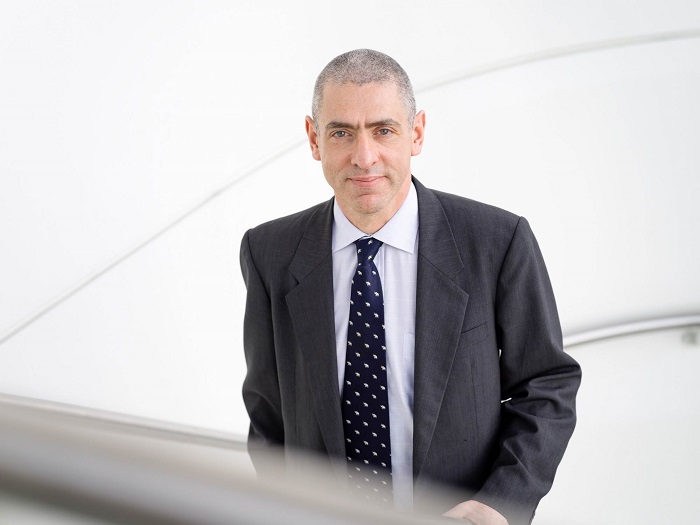 {module In-article}
Dayan also investigates how different forms of dysfunctional decision-making are associated with conditions such as depression, addiction, anxiety and personality disorders. He combines the psychological and neural view of such diseases and hopes to gain insights into their causes and possible treatment.
Dayan has developed statistical and programming methods to simulate the brain’s decision-making processes. He has thus helped lay the foundations for the development of artificial neural networks. The 53-year-old will also contribute his knowledge and experience to Tübingen's research on artificial intelligence and machine learning.
"Peter Dayan's fields fit perfectly into Tübingen's research landscape," says Professor Bernd Engler, President of the University of Tübingen. "He combines several of our existing research priorities: neurosciences, clinical research and research on machine learning. His professorship in informatics strengthens the University's cooperation with the Max Planck Campus and other non-university research institutions."
"I am profoundly honoured to receive this professorship. One cannot but be humbled by Alexander von Humboldt's polymathic achievements, and it is a particular delight to be able to help celebrate the 250th year of his birth,” says Dayan. ”I am thrilled to get this opportunity to study both normal and dysfunctional learning and decision-making in a broad and deep way; and am delighted to do so within the rich intellectual environments of the University of Tübingen and the Max Planck Institute for Biological Cybernetics."
The Humboldt Professorship is a bridge to Germany for top international researchers. The award is presented to academics who have already established themselves abroad in their field of research and who declare their willingness to conduct research in Germany for at least five years. Universities nominate the candidates, who are then selected by the Alexander von Humboldt Foundation. Dayan is the fourth Humboldt Professor at the University of Tübingen. Other winners of the award are linguist Professor Rolf Harald Baayen, plant geneticist Professor Marja Timmermans and Geo- and Environmental researcher Professor Lars T. Angenent.
The official award ceremony will take place in May 2020, along with the other prize winners of 2019.