

Dutch Physicist Ge's measurements pave the way to finding Majoranas

Dutch Physicist Ge's measurements pave the way to finding Majoranas

Fifteen years ago, an alternative technique to look for the elusive Majorana particles was conceived theoretically. But no one experimented, until now. Physicist Jianfeng Ge and his colleagues from the Allan lab of the Leiden Institute of Physics in Leiden, Netherlands have now successfully carried out the first measurements. 

There are a few ways in which physicists can look for Majorana quasiparticles. The main approach is based on conductivity measurements, but that hasn’t provided the definitive results scientists hoped for. Therefore, Ge looked for a new approach. "Back when I was at Harvard, I talked to my colleague Eugene Demler about shot noise measurements that should be able to identify Majorana. He had theorized this fifteen years ago, but no one ever tried it. I thought it was promising so I convinced Milan Allan from the Quantum Matter group to do it. And now we have our first results."

The hunt for exotic Majorana particles

Majoranas are hypothetical particles that are their antiparticles. This makes them different from any of the particles we already know, and finding them could lead to discoveries in physics. Ge is looking for Majorana quasiparticles in quantum matter. This is a collection of electrons that behaves similarly to a Majorana particle. One of the reasons scientists want to find Majoranas is their potential to revolutionize quantum supercomputing. The qubits that are currently used in quantum computers are not very stable and prone to errors. Majorana qubits could be the long-sought cornerstone for fault-tolerant quantum supercomputers.

Paving the way for ultimate proof of Majoranas

The Majorana particles are expected to live in the vortices of an iron-based superconductor that Ge studies. "These vortices are only a few nanometers in size. Only in recent years, technology has advanced to the point where we can measure at this small scale," he explains. "We are the first ones in the world to do this experiment. I find that very exciting.’ The results are very promising at this stage. "We nailed down the origin of the quasiparticles within two possible explanations, one of which is Majorana. These measurements pave the way for ultimate proof of Majoranas. We learned a lot and know how to improve the setup for future measurements." Jacky Ge
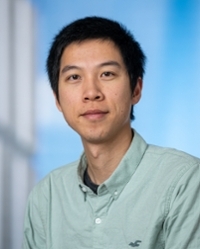
"I share the enthusiasm about the potential for quantum computing but it is not what excites me most about this research," Ge says. "What drives me is curiosity. I want to understand the fundamental principles of the physics itself. It will be a long journey to find the ultimate proof for Majorana particles, let alone develop applications like a quantum computer. But with this experiment, we know what to do next. It will not be easy and take a lot of technical instrument development, but I am proud that we are one step closer to finding Majoranas."


IMAGE CREDIT: ELEANOR TAYLOR

Hopkins-led team says better climate modeling data can help Baltimore weather a hotter, stormier future

If you were to stand at the intersection of Maryland Avenue and West 24th Street in Baltimore's Old Goucher neighborhood and travel back in time for 10 years, you would probably be shocked at the transformation. Back then, pavement blanketed the neighborhood. Of the few trees growing along streets, many were sickly or misshapen. Concrete, asphalt, and buildings soaked up the sun's rays in summer to create a sweltering heat island, sending temperatures soaring up to 10 degrees above those of surrounding areas. Heat is a "silent killer," researchers say and can be especially dangerous for older and vulnerable people who are unable to escape into air-conditioned spaces. Old Goucher had a particularly susceptible population: people who came to be treated at the area's methadone clinics. IMAGE CREDIT: ELEANOR TAYLOR

Today, Old Goucher is verdant—an increasingly lush oasis amid the concrete jungle. Streets are lined with trees and understory vegetation. Islands of soil have been carved out of sidewalks. Along one block, more than 100 tons of asphalt and concrete were jackhammered and trucked away, replaced by an exuberant if somewhat unruly garden. When people enter the neighborhood, "they feel better," says Kelly Cross, a resident, and president of the Old Goucher Community Association. "It feels somehow different. They can't put their finger on it. But we know why."

Cross and his husband, Mateusz Rozanski, who moved here in 2012, have catalyzed much of the change. They simply wanted to make their neighborhood more livable, and they say the greening has helped attract new coffee shops, bars, and restaurants.

But in the era of global climate change, their work is about to take on much broader significance. Old Goucher has become a key site for one of the best-funded equity-focused urban climate research efforts ever undertaken.

In spring 2022, the U.S. Department of Energy surprised and thrilled climate scientists with a call for proposals for a new and ambitious Urban Integrated Field Laboratories (UIFL) program to deploy the power of modeling and measurement on behalf of climate-stressed cities. Ben Zaitchik, a researcher in the Johns Hopkins Department of Earth and Planetary Sciences, emailed colleagues at universities and agencies around the region and pulled together a team. The researchers proposed something unusual: a climate research project that would evolve in conversation with local community members. "I thought there was a zero percent chance we would win" one of the coveted awards, Zaitchik says.

But the proposal did win, alongside those from three other cities, out of dozens of entries. The team will have a tidy sum—nearly $25 million—to create what Zaitchik hopes will be "the most meaningful urban environmental monitoring system in the world." Zaitchik plans to blanket selected Baltimore neighborhoods, including Old Goucher, with sophisticated instruments to measure temperature and flows of gases, wind, moisture, and heat to create an unprecedented urban climate data set. Researchers in Chicago; Beaumont and Port Arthur, Texas; and Phoenix will similarly be instrumenting their cities.

The task is urgent. Cities around the country and the world are swiftly warming while humanity is rapidly urbanizing. Yet city planners and officials lack data and models to help them protect residents from this warming and its increasingly severe impacts on health and well-being. As a result, cities often have poor visibility into the climate future, putting in place measures that might not have the desired benefits or that could in some cases make things even worse.

"We really need to get it right, now," Zaitchik says. "The investment choices that we make, and the way we deliver on them for cities in the coming five to 10 years, are really going to be determinative for the future of some of these communities."

At the same time that it seeks to aid cities, the Energy Department wants the four program sites to generate data that will help it answer a separate but related question: How do cities affect the climate? Dense urban mosaics of buildings, streets, and green spaces heat and cool the air and change moisture and wind in complex ways that affect not just cities themselves but also surrounding areas. But cities have thus far been a major blind spot for the massive supercomputer models that researchers use to forecast the future of the global climate.

Meeting these science goals will be hard enough. But Zaitchik's team has designed its project to do something arguably even more ambitious: engage Baltimore community members to shape their climate-related priorities and guide their work. The project will be steered by a committee composed of city officials and community leaders like Cross and Rozanski.

While community-based research has deep roots in public health and social science, it is much less common in physical science fields, such as climate studies, where researchers typically design projects around questions they and their funders are interested in. It's also a departure for the Energy Department, says Jennifer Arrigo, an official who oversees the UIFL program. Co-production of research between scientists and communities "is something new for us." But if it succeeds, it could pay off big for Baltimore, the nation, and the world.

Mass General Brigham shows how ChatGPT 4 excels at picking the right imaging tests

A groundbreaking study has revealed that ChatGPT can effectively aid in clinical decision-making, specifically in selecting the appropriate radiological imaging tests for breast cancer screening and breast pain diagnosis. This marks a significant advancement in AI technology.

A new study by investigators from Mass General Brigham has found that artificial intelligence (AI) language models like ChatGPT can accurately identify appropriate imaging services for two important clinical presentations: breast cancer screening and breast pain. Their results suggest that large language models have the potential to assist decision-making for primary care doctors and referring providers in evaluating patients and ordering imaging tests for breast pain and breast cancer screenings. Their results are published in the Journal of the American College of Radiology

"In this scenario, ChatGPT's abilities were impressive," said corresponding author Marc D. Succi, MD, associate chair of Innovation and Commercialization at Mass General Brigham Radiology and executive director of the MESH Incubator. "I see it acting like a bridge between the referring healthcare professional and the expert radiologist — stepping in as a trained consultant to recommend the right imaging test at the point of care, without delay. This could reduce administrative time on both referring and consulting physicians in making these evidence-backed decisions, optimize workflow, reduce burnout, and reduce patient confusion and wait times."

ChatGPT is a large language model (LLM) built on data from the internet to answer questions in a human-like way. Since ChatGPT was introduced in November 2022, researchers worldwide are diving into learning how these AI tools can be used in medical scenarios. Published as a preprint on February 7, 2023, this study is the first of its kind to test ChatGPT's clinical decision-making abilities, and the first to test GPT 4 as opposed to older iterations. 

When a primary care doctor orders specialized testing, say for a patient who complains of breast pain, they may not know the best imaging test to choose. It might be an MRI, an ultrasound, a mammogram, or another imaging test. Radiologists generally follow the American College of Radiology's Appropriateness Criteria to make these decisions. These evidence-backed guidelines are well-known to specialists but less known to non-specialists who may need to pick the best imaging test during a patient’s visit. This can confuse the patient's side and can lead to patients getting tests they don't need or getting the wrong tests. 

The researchers asked OpenAI's ChatGPT 3.5 and 4 to help them decide what imaging tests to use for 21 made-up patient scenarios involving the need for breast cancer screening or the reporting of breast pain using the appropriateness criteria. 

They asked the AI in an open-ended way and by giving ChatGPT a list of options. They tested ChatGPT 3.5 as well as ChatGPT 4, a newer, more advanced version. ChatGPT 4 outperformed 3.5, especially when given the available imaging options. For example, when asked about breast cancer screenings, and given multiple choice imaging options, ChatGPT 3.5 answered an average of 88.9% of prompts correctly, and ChatGPT 4 got about 98.4% right.

"This study doesn't compare ChatGPT to existing radiologists because the existing gold standard is a set of guidelines from the American College of Radiology, which is the comparison we performed,” Succi said. “This is purely an additive study, so we are not arguing that the AI is better than your doctor at choosing an imaging test but can be an excellent adjunct to optimize a doctor’s time on non-interpretive tasks."

Integrating AI into medical decision-making could happen at the point of care. When a primary care doctor enters data into an electronic health record, the program could alert them to the best imaging options — providing an answer to the patient about what to expect when they go for the test and suggesting to the doctor the right test to order. 

Researchers added that a more advanced medical AI could be created using datasets from hospitals and other research institutions to make it more specific to health-focused applications. 

"We may be able to finetune ChatGPT with different patient and therapeutic data and knowledge sets to tailor it to specific patient populations," Succi said. "At Mass General Brigham, we have specialized centers of excellence where we care for patients with some of the most complex and rare diseases. We can leverage our experience and lessons learned from caring for these patient cases to train a model to provide support for rare and complex diagnoses and then make that model available to centers around the world, especially centers that may treat these conditions less frequently."

But before any AI would be involved in medical decision-making, it would need to be extensively tested for bias, and privacy concerns, and approved for use in medical settings. New regulations around medical AI could also play a big role in what makes it into patient care interactions.