SwRI researchers evaluate impact of wastewater systems on Edwards Aquifer

The study supports the City of San Antonio's aquifer protection efforts

Southwest Research Institute developed an integrated hydrologic supercomputer model to evaluate the impact of different types of wastewater disposal facilities on the Edwards Aquifer, the primary water source for San Antonio and its surrounding communities. The research results will guide authorities on what actions to take to protect the quality and quantity of water entering the aquifer.

The two-year study, which concluded in July, was funded through the City of San Antonio's Edwards Aquifer Protection Plan (EAPP) under the direction of the San Antonio River Authority. The tax-funded EAPP identifies and protects land and water crucial to the well-being of the aquifer. SwRI researchers selected the nearly 25-square-mile Helotes Creek Watershed in northwest Bexar County as the study area. They combined surface and groundwater data, including streamflow and groundwater elevations, along with climate, soil, and topographic input to create an integrated model of the watershed. SwRI researchers selected the Helotes Creek Watershed in northwest Bexar County to study how different wastewater treatment scenarios could affect the Edwards Aquifer.{module INSIDE STORY}
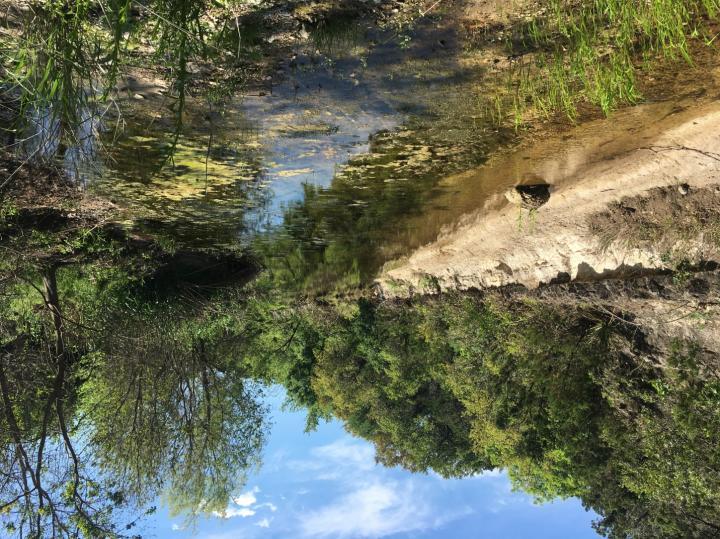
"We chose the Helotes Creek Watershed because it is entirely in the contributing and recharge zones of the Edwards Aquifer. Rainfall and bodies of water over these key zones replenish the aquifer," said SwRI's Mauricio Flores, who helped lead the project. "Our findings are intended to provide insight on which wastewater practices offer the best protection for the aquifer when considering new development in these critical zones."

SwRI's Water Resources group constructed a base case model, replicating what is happening now with septic systems already located in the watershed area. Starting with that data, they evaluated what would happen if they added wastewater disposal facilities to the region. Scenarios evaluated included additional septic or onsite sewage systems, facilities that reuse wastewater for irrigation, and systems that dispose of wastewater in nearby creeks or rivers.

"We considered a range of hypothetical scenarios. The size and capacity of the hypothesized wastewater facilities were consistent with possible residential development in the Helotes Creek Watershed area," said Dr. Ronald Green, SwRI technical advisor, and project manager. "Our results predicted that installing additional wastewater systems in the region, regardless of type, would increase the amount of wastewater discharged to the environment and significantly degrade the watershed and the quality of water recharging the Edwards Aquifer."

The Helotes Creek Watershed study was the first of its kind in this area. The findings are applicable to most watersheds in the aquifer's contributing and recharge zones. However, SwRI researchers recommend expanding the study to the outside of Bexar County to demonstrate how development and increased wastewater disposal would impact these areas.

"The results of the study not only highlight the impact development could have on the aquifer, but can also be used to prioritize the protection of land, rivers, and streams that recharge the aquifer," said Flores. "Our findings show this type of research is vital to protecting important water resources."

The City of San Antonio is conducting additional EAPP-funded research aimed at protecting the aquifer. An official city report, which will include the SwRI study, is expected in 2023.

UK deploys public health systems to decode COVID-19

Existing public health monitoring systems in the UK could improve understanding of the risk factors associated with severe COVID-19

Research published in the journal Microbial Genomics describes how national surveillance systems can be linked with the UK Biobank. This pooled data could then be used to understand how genetics and other epidemiological factors impact the risk of developing severe infection.

The UK Biobank (UKB) is an international health resource that enables researchers to understand the genetic and lifestyle determinants of common diseases. The researchers linked UKB with Public Health England's Second-Generation Surveillance System (SGSS), a centralized microbiology database used for national disease surveillance in England. SGSS holds data collected in clinical diagnostic laboratories in England, including test results for SARS-CoV-2. 37 covid19 14bb9{module INSIDE STORY}

Large cohorts such as UKB are a useful resource for understanding how a disease behaves in different groups, according to Dr. Danny Wilson, Associate Professor at the Big Data Institute, University of Oxford (UK). He said: "Large datasets are helpful for detecting risk factors, including those that have modest effects or vary from person-to-person, and for providing a sound footing for conclusions by reducing statistical noise. These discoveries help scientists better understand the disease and could inspire efforts aimed at improving treatment."

By linking the two systems, researchers hope to facilitate research into the risk factors for severe COVID-19. Repurposing public health systems in this way can provide near-to-real-time data on SARS-CoV-2, and allow researchers to understand the spread, testing, and disease characteristics of the virus.

This new super computerized system will provide the weekly linkage of test results to UKB and other cohorts. The UK Biobank database consists of around 500,000 men and women in the UK, aged 50+. This group is particularly appropriate for the study of COVID-19, as the severity of the disease increases with age. Further data is also being released by UKB, according to Dr. Wilson: "UK Biobank is releasing, or have released other data relevant to COVID-19, like mortality records, and they plan to release hospital episode statistics and primary care data soon too".

Their data provides an in-depth analysis of disease severity, symptoms, and risk in people from the UKB database. Researchers hope that this data can reveal additional risk factors for severe infection and improve understanding of the disease. "By providing information about COVID-19 to large cohorts including UK Biobank, INTERVAL, COMPARE, Genes & Health, Genomics England and the National Institute for Health Research (NIHR) Biorepository, this work facilitates research into lifestyle, medical and genetic risk factors," said Dr. Wilson.

Fritzner's AI work revolutionizes sea ice warnings in Norway

For vessels that journey into the polar seas, keeping control of the spread of sea ice is critical, which means that large resources are spent to collect data and determine future developments to provide reliable sea ice warnings.

- As of now, large resources are needed to create these ice warnings, and most of them are made by The Norwegian Meteorological Institute and similar centers, Sindre Markus Fritzner tells us, who is a Doctoral Research Fellow at UiT The Arctic University of Norway.

He is employed at the Department of Physics and Technology and has recently submitted a doctoral thesis where he has looked at the option of using artificial intelligence to make ice warnings faster, better, and more accessible than they are today.

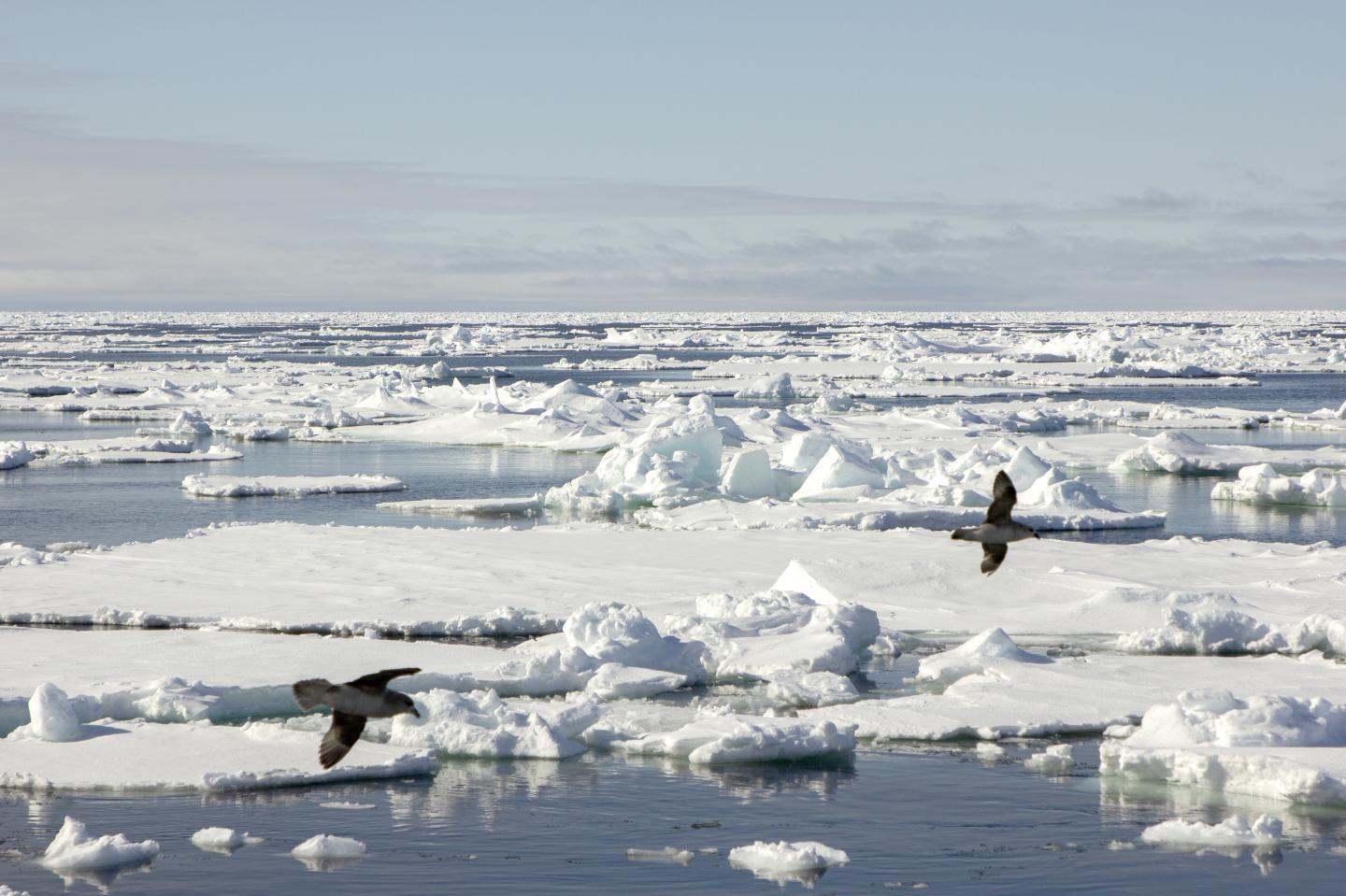
In need of supercomputers CAPTION Sea ice in the polar sea.  CREDIT Jørn Berger-Nyvoll, UiT{module SOCIAL LOGIN}

The ice warnings used today are traditionally based on dynamic computer models that are fed with satellite observations of the ice cover, and whatever updated data can be gathered about ice thickness and snow depth. This generates considerable amounts of data, which then needs to be processed by powerful supercomputers to provide calculations.

- Dynamic models are physical models and require a lot of data to be processed. If you are going to make warnings about future events, you need to use a supercomputer, Fritzner explains.

This is a limited and costly resource, which makes these warnings impossible to do without access to the right resources.

Artificial intelligence makes calculations accessible on a regular laptop

Fritzner has looked at how artificial intelligence can be used to provide these sea ice warnings faster, better, and cheaper than ever - on a regular laptop.

Machine learning is a specialized field within artificial intelligence, where statistical methods are used to let computers find patterns and coherences in large sets of data. The machine learns instead of being programmed, and it all comes down to developing algorithms that enable computers to learn from and make calculations, based on empirical data.

In Fritzner's work, for example, he has loaded in data to see how one specific week will unfold, and then data for how it will look one week later on.

- Thus, it is the coherence in the development between these weeks that the machines learn itself, and in this way it can predict how it evolves, Fritzner says.

When fully developed, such an algorithm will demand far less computing power than the traditional physical model.

- If you use artificial intelligence and have a fully trained model, you can run such a calculation on a regular laptop, Fritzner says.

Every vessel can make calculations on their own

This opens up for several fields of usage, one of them being more precise weather reports in The High North. Fritzner also points out that this can be used by the shipping industry that operate close to the marginal ice zone, and that this is a form of traffic that will only increase.

- One example is cruise traffic, where it will be very important for the cruise vessels to know where the ice is, and where it will move in the next couple of days, Fritzner says.

As it stands, high-resolution models can not be run on the vessel. They have to contact The Norwegian Meteorological Institute, who then needs to run the model on a supercomputer before they transmit the data back to the vessel.

- If you are on a vessel in The Barents Sea, you are dependent on being connected to a network to download the warnings from The Norwegian Meteorological Institute.

If equipped with the right program and artificial intelligence, this can be done from the vessel itself, with nearly no computing power required at all, Fritzner says.

More development needed

Although the research so far looks promising, the results are still not as good as the traditional methods, but the evolution of machine learning/artificial intelligence is reaching full steam, and Fritzner has no doubts about its potential.

- The experiences so far are good, but not perfect. What I observed when comparing machine learning and the traditional physical models was that they were much faster, and as long as the changes in the ice were small, the machine learning functioned quite well. When the changes were greater, with a lot of melting, the models struggled more than the physical models, Fritzner explains.

He points to the challenge of the models running on artificial intelligence only relying on historical data, while the physical models constantly are adapted to large geophysical changes like increased melting and rapid changes to the weather.

In his experiments, Fritzner used data like temperature, the concentration of sea ice, and sea temperature. He believes the preciseness can be increased by adding more data to the model so that it has a larger set of data for the warnings it provides.

- Especially if you add wind and ice thickness, the machine learning will work much better, he says.

He believes further research and development will release the great potential that lies in this form of machine learning.