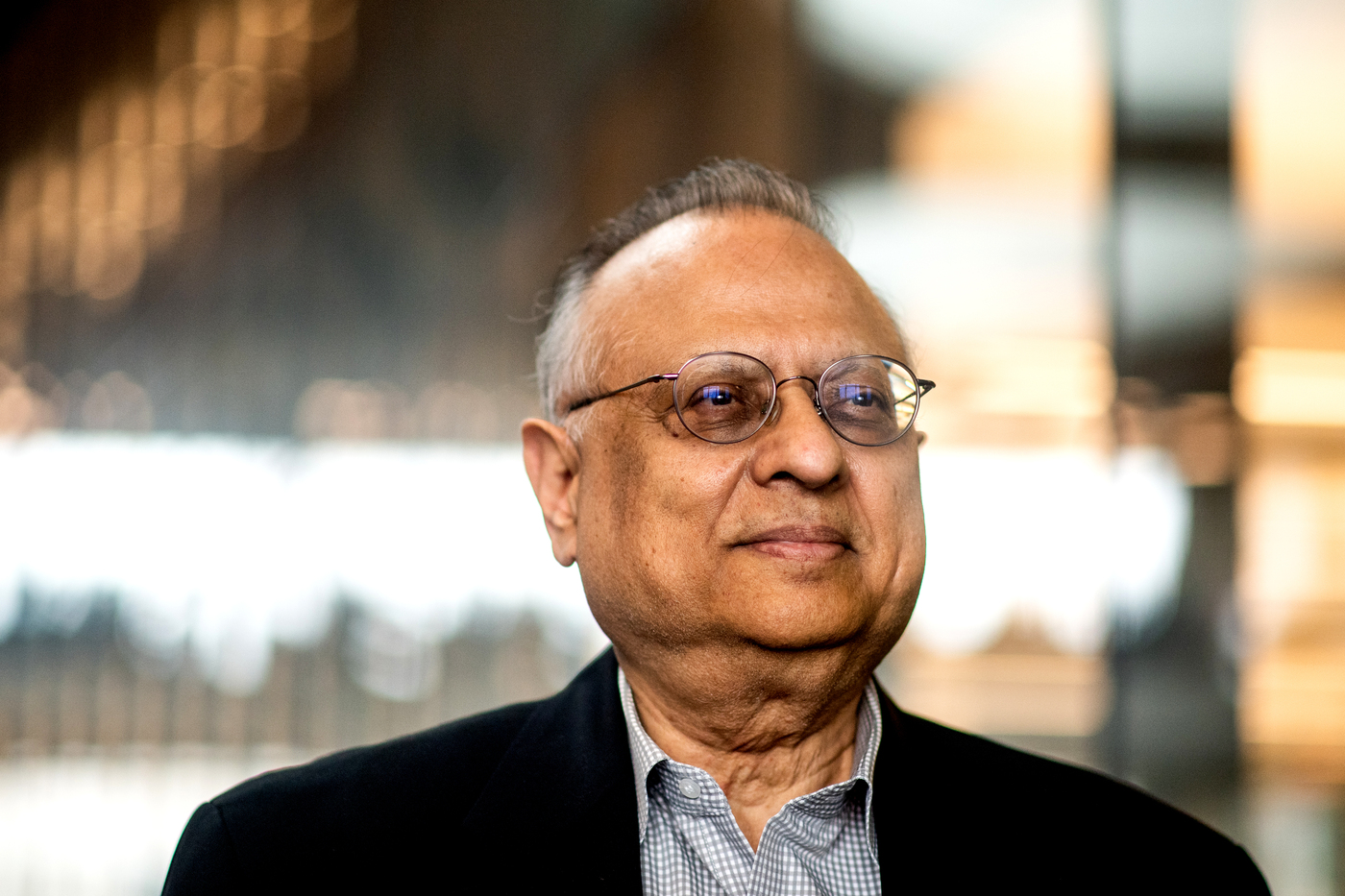
OU meteorologist's cloud research recognized by National Science Foundation

Most people associate clouds with precipitation like rain or snow, but clouds influence many atmospheric processes. Cloud formation is affected by turbulence, which creates fluctuations in wind speed, wind direction, temperature, humidity, and the concentration of water droplets in the air. However, those interactions are currently difficult to study.low-res_2022-02-14-22-05-35-jp_355e1_2b2e5.jpg

Scott Salesky, an assistant professor of meteorology in the College of Atmospheric and Geographic Sciences at the University of Oklahoma, is leading research that will improve the way clouds are represented in weather and climate models. The five-year project is funded by a $763,930 Faculty Early Career Development (CAREER) Award from the National Science Foundation.

“Clouds have a very important influence on Earth’s climate,” said Salesky. “There’s a lot of focus on the role of greenhouse gases in climate, but clouds are also very important. Clouds can reflect solar radiation, and changes in cloud cover could be as important to climate as increases in greenhouse gases.

“The interesting thing about clouds is that there are a lot of processes that happen at different spatial scales that are all coupled together,” he added. “At very small scales, you have cloud droplets forming and growing, and they can interact with turbulence which can impact large-scale cloud properties, such as clouds’ lifetimes, how much sunlight they reflect (what we call albedo), and also the sizes of the droplets in the clouds, which can determine how quickly it might precipitate.”

This project will use simulations of small-scale interactions between millions of cloud droplets and turbulence and will allow the researchers to track the droplets’ positions, movements and sizes as they interact to form, grow and evaporate. 

“When you run a weather or climate model, none of those small-scale processes are going to be resolved, so we’re learning how to accurately represent this small-scale droplet formation and growth and how it’s impacted by turbulence in large-scale weather and climate models,” Salesky said. “From this very small-scale information, we’re going to better understand interactions between turbulence and what we call the microphysics – droplet formation, growth, and evaporation.”

In the later stages of the project, Salesky plans to use the simulations he develops to improve meteorologists’ basic understanding of interactions between turbulence and clouds and to understand how to better model cloud processes in weather and climate models.

The project also supports an educational component to increase graduate student enrollment in atmospheric sciences from students in other STEM fields and to develop lesson plans that connect engineering and physics concepts with atmospheric science.

“The majority of applicants to the meteorology graduate program have a bachelor’s degree in meteorology,” Salesky said. “We want to engage with students from physics, engineering, and other backgrounds to bring their experience with concepts like fluid dynamics to broaden the expertise in our field.”

Salesky is working with faculty partners at Cameron University in Lawton, the University of Science and Arts of Oklahoma in Chickasha, and the University of Central Oklahoma in Edmond to test lesson plans he will develop that teach physics concepts in a meteorological context. The faculty partners will then provide feedback on the lesson plans so that final versions can be made publicly available through the K20 LEARN Repository at OU’s K20 Center, a statewide research and development center. The collaboration with the Oklahoma universities will also support undergraduate research opportunities for students from the three schools to gain experience in atmospheric science research at OU.

Berrien Moore, dean of the College of Atmospheric and Geographic Sciences at OU, said, “Professor Salesky’s receipt of an NSF Career Award sounds and is highly technical and quite advanced. It is also very important in subject matter and extraordinary achievement for a young scientist.

“Not only will Scott advance important science, but he is also going to increase engagement of undergraduates from physics and other STEM fields in atmospheric science,” he added. “Both his scientific research and his teaching are focused on the future, and for that, we are both proud and thankful.”

Goethe University Frankfurt identifies materials that have fast properties for spintronics

While modern computers are already very fast, they also consume vast amounts of electricity. For some years now a new technology has been much talked about, which although it is still in its infancy could one day revolutionize computer technology – spintronics. The word is a portmanteau meaning “spin” and “electronics”, because with these components electrons no longer flow through computer chips, but the spin of the electrons serves as the information carrier. A team of researchers with staff from Goethe University Frankfurt has now identified materials that have surprisingly fast properties for spintronics. Researchers at Goethe University develop novel materials to minimize power consumption of electronic elements. Photo: raigvi/Shutterstock

“You have to imagine the electron spins as if they were tiny magnetic needles which are attached to the atoms of a crystal lattice and which communicate with one another,” says Cornelius Krellner, Professor for Experimental Physics at Goethe University Frankfurt. How these magnetic needles react with one another fundamentally depends on the properties of the material. To date ferromagnetic materials have been examined in spintronics above all; with these materials – similarly to iron magnets – the magnetic needles prefer to point in one direction. In recent years, however, the focus has been placed on so-called antiferromagnets to a greater degree, because these materials are said to allow for even faster and more efficient switchability than other spintronic materials.

With antiferromagnetic, the neighboring magnetic needles always point in opposite directions. If an atomic magnetic needle is pushed in one direction, the neighboring needle turns to face in the opposite direction. This in turn causes the next but one neighbor to point in the same direction as the first needle again. “As this interplay takes place very quickly and with virtually no friction loss, it offers considerable potential for entirely new forms of electronic componentry,” explains Krellner.

Above all crystals with atoms from the group of rare earth are regarded as interesting candidates for spintronics as these comparatively heavy atoms have strong magnetic moments – chemists call the corresponding states of the electrons 4f orbitals. Among the rare-earth metals – some of which are neither rare nor expensive – are elements such as praseodymium and neodymium, which are also used in magnet technology. The research team has now studied seven materials with differing rare-earth atoms in total, from praseodymium to holmium.

The problem in the development of spintronic materials is that perfectly designed crystals are required for such components as the smallest discrepancies immediately hurt the overall magnetic order in the material. This is where the expertise in Frankfurt came into play. “The rare earth melts at about 1000 degrees Celsius, but the rhodium that is also needed for the crystal does not melt until about 2000 degrees Celsius,” says Krellner. “This is why customary crystallization methods do not function here.”

Instead, the scientists used hot indium as a solvent. The rare earth, as well as the rhodium and silicon that are required, dissolve in this at about 1500 degrees Celsius. The graphite crucible was kept at this temperature for about a week and then gently cooled. As a result, the desired crystals grew in the form of thin disks with an edge length of two to three millimeters. These were then studied by the team with the aid of X-rays produced on the Berlin synchrotron BESSY II and the Swiss Light Source of the Paul Scherrer Institute in Switzerland.

“The most important finding is that in the crystals which we have grown the rare-earth atoms react magnetically with one another very quickly and that the strength of these reactions can be specifically adjusted through the choice of atoms,” says Krellner. This opens up the path for further optimization – ultimately spintronics is still purely fundamental research and years away from the production of commercial components.

There are still a great many problems to be solved on the path to market maturity, however. Thus, the crystals – which are produced in blazing heat – only deliver convincing magnetic properties at temperatures of less than minus 170 degrees Celsius. “We suspect that the operating temperatures can be raised significantly by adding iron atoms or similar elements,” says Krellner. “But it remains to be seen whether the magnetic properties are then just as positive.” Thanks to the new results the researchers now have a better idea of where it makes sense to change parameters, however.

China applies mesoscale drag to improve the CFD model for simulating the flue gas desulfurization process in powder-particle spouted beds

Sulfur dioxide is the main source of air pollution and easily forms a haze deteriorating the air quality. Therefore, various studies on the reduction of sulfide emissions generated during fossil combustion have been performed. Among them, the semi-dry flue gas desulfurization technology in powder-particle spouted beds (PPSBs) is considered a reliable and effective desulfurization method. Schematic diagram of desulfurization mechanism in powder-particle spouted bed  CREDIT Feng Wu

With the development of computational fluid dynamics (CFD) methods, an increasing number of researchers conducted numerical simulations of the desulfurization of semi-dry flue gas in a spouted bed. Such a bed involves a multiphase flow and heat and mass transfer, including a gas-solid two-phase flow, a water vaporization process, and a desulfurization reaction. However, the current homogeneous drag models (such as the Gidaspow and Wen-Yu ones) used in simulations did not consider the influence of the mesoscale structure during drag coefficient calculations, resulting in a severe overestimation of the drag, which hurt simulation accuracy. To solve this problem, Feng Wu and his team modified the heterogeneous gas-solid drag model and applied it to the simulation of the two-dimensional spouted bed. The relevant work was published online in Frontiers of Chemical Science and Engineering on December 9, 2021.

In this study, by simulating and analyzing the gas-solid two-phase flow coupled water vaporization and desulfurization process of the spouted bed, they found that the adjusted mesoscale drag model can accurately and effectively describe the semi-dry flue gas desulfurization process in the spouted bed. There is a structure-activity relationship between the drag model and the heat transfer, mass transfer, and desulfurization reaction.

The obtained results revealed that the particle velocity simulated by the modified mesoscale model is more consistent with the experimental data. The spout morphology simulated by the adjusted mesoscale drag model was unstable and discontinuous bubbling spout unlike the stable continuous spout obtained using the Gidaspow model. The bubbling spout state conforms to physical reality.

The water distribution in the spouted bed simulated by the EMMS drag model was uniform, and its water vaporization rate was larger than that determined by the Gidaspow drag model. The mass fraction of water in the gas at the outlet obtained by the heterogeneous drag model was 1.5 times greater than estimated by the homogeneous drag model during the simulation of water vaporization.

For the desulfurization reaction, the experimental desulfurization efficiency was 75.03%, while the simulated desulfurization efficiencies obtained by the Gidaspow and adjusted mesoscale drag models were 47.63% and 75.08%, respectively, indicating much higher accuracy of the latter technique.

Feng Wu and his team will further expand the adjusted mesoscale drag model to three dimensions to obtain more relationships between drag models and heat and mass transfer.

Stanford researchers showcase a new level of control over how atoms interact

In a new study, Stanford researchers demonstrate how to manipulate atoms so they interact with an unprecedented degree of control. Using precisely delivered light and magnetic fields, the researchers programmed a straight line of atoms into treelike shapes, a twisted loop called a Möbius strip, and other patterns. From left, Eric Cooper, Philipp Kunkel, Avikar Periwal and Monika Schleier-Smith. (Image credit: Khoi Huynh)

These shapes were produced not by physically moving the atoms, but by controlling the way atoms exchange particles and “sync up” to share certain properties. By carefully manipulating these interactions, researchers can generate a vast range of geometries. Importantly, they found that atoms at the far ends of the straight line could be programmed to interact just as strongly as the atoms located right next to each other at the center of the line. To the researchers’ knowledge, the ability to program nonlocal interactions to this degree, irrespective of the atoms’ actual spatial locations, had never been demonstrated before.

The findings could prove a key step forward in the development of advanced technologies for computation and simulation based on the laws of quantum mechanics – the mathematical description of how particles move and interact on the atomic scale.

“In this paper, we’ve demonstrated a whole new level of control over the programmability of interactions in a quantum mechanical system,” said study senior author Monika Schleier-Smith, the Nina C. Crocker Faculty Scholar and associate professor in the Department of Physics in Stanford’s School of Humanities and Sciences. “It’s an important milestone that we’ve long been working towards, while at the same time it’s a starting point for new opportunities.”

Two graduate students, Avikar Periwal and Eric Cooper, as well as a postdoctoral scholar, Philipp Kunkel, are co-led authors of the paper. Periwal, Cooper, and Kunkel are researchers in Schleier-Smith’s lab at Stanford.

“Avikar, Eric, and Philipp worked tremendously well together as a team in running the experiments, devising clever ways of analyzing and visualizing the data, and developing the theoretical models,” said Schleier-Smith. “We’re all very excited about these results.”

“We chose some simple geometries, like rings and disconnected chains, just as a proof of principle, but we also formed more complex geometries including ladder-like structures and treelike interactions, which have applications to open problems in physics,” Periwal, Cooper, and Kunkel said in a group statement.

Syncing up atoms on command

Periwal, Cooper, Kunkel, and colleagues performed experiments for the study on apparatuses known as optical tables, a pair of which dominate the floor space in Schleier-Smith’s lab. The tables are inset with intricate arrays of electronic components strung together by multicolored wires. At the heart of one optical table is a vacuum chamber, consisting of a metallic cylinder studded with porthole windows. A pump expels all air from this chamber so that no other atoms can disturb the small bunches of rubidium atoms carefully placed inside it. The Stanford researchers beamed lasers into this airless chamber to trap the rubidium atoms, slowing the atoms’ movement and cooling them down to within whiskers of absolute zero – the lowest temperature theoretically possible where particle movement comes to a virtual standstill. The extremely cold realm just above absolute zero is where quantum mechanical effects can dominate over those of classical physics, and thus where the atoms can be quantum mechanically manipulated.

Shining light through the bunches of atoms in this way also serves as a means of getting the atoms to “talk” to each other. As the light strikes each atom, it conveys information between them, generating patterns called “correlations” wherein every atom shares a certain desired quantum mechanical property. An example of a quantum mechanical property is the total angular momentum, known as the spin of an atom and which can have values of, for example, +1, 0, or –1.

Researchers at Stanford and elsewhere have correlated atomic networks before using systems of laser-cooled atoms, but, until recently, only two basic kinds of atomic networks could be made. In one, called an all-to-all network, every atom talks to every other atom. The second kind of network operates on what’s known as the nearest neighbor principle, where laser-suspended atoms interact most strongly with adjacent atoms.

In this new study, the Stanford researchers debut a far more dynamic method that conveys information over specific distances between discrete groups of atoms. This way, spatial location does not matter, and a vastly richer set of correlations can be programmed.

“With an all-to-all network, it’s like I’m sending a worldwide bulletin to everyone, while in a nearest-neighbor network, it’s like I’m only talking to the person who lives next door,” said Schleier-Smith. “With the programmability that we have now demonstrated in our lab, it’s like I’m picking up a phone and dialing the exact person I want to talk to located anywhere in the world.”

The researchers succeeded in creating these nonlocal interactions and correlations by controlling the frequencies of light shone at the trapped bunches of rubidium atoms and varying the strength of an applied magnetic field in the optical table. As the magnetic field strengthened in intensity from one end of the vacuum chamber to the other, it caused each bunch of atoms along the line to spin a bit faster than the prior, neighboring bunch. Although each atomic bunch had a unique rotation rate, every so often, certain bunches would nonetheless periodically arrive at the same orientation – rather like how a row of clocks with progressively faster-spinning hands will still momentarily read off the same times. The researchers used light to selectively enable and measure interactions between these momentarily synced-up atomic clouds. Overall, using a straight line of 18 clouds of atoms, the researchers could generate interactions between clouds at any specified set of distances along the line.

“The ability to generate and control these kinds of nonlocal interactions is powerful,” Schleier-Smith added. “It fundamentally changes the way information can travel and the quantum systems we can engineer.”

Benefitting from versatile control

One of the many applications of the Stanford team’s work is the crafting of optimization algorithms for quantum computers – machines that rely on the laws of quantum mechanics for crunching numbers. Quantum computing has applications in artificial intelligence, machine learning, cybersecurity, financial modeling, drug development, climate change forecasting, logistics, and scheduling optimization. For example, quantum computer-tailored algorithms could efficiently solve scheduling problems by finding the shortest possible routes for deliveries, or optimal scheduling of university classes so the greatest number of students can attend.

Another highly promising application is testing out theories of quantum gravity. The treelike shapes in this study were expressly designed for this purpose – they serve as basic models of space-time curved by a hypothetical new concept of gravity based on quantum mechanical principles that would revamp our understanding of gravity as described in Albert Einstein’s theory of relativity. A similar approach can also be applied to investigate the light-trapping, ultra-dense cosmic objects called black holes.

Schleier-Smith and colleagues are now working on showing that their experiments can produce quantum entanglement, where quantum states among atoms are correlated in a manner that can be harnessed for applications ranging from ultraprecise sensors to quantum computation.

“We made a lot of progress with this study and we’re looking to build on it,” said Schleier-Smith. “Our work demonstrates a new level of control that can help bridge the gap, in several areas of physics, between elegant theoretical ideas and actual experiments.”

Nixu appoints Teemu Salmi as new CEO to lead the next phase of growth strategy

Nixu’s Board of Directors has appointed Teemu Salmi (49) as the new CEO of Nixu Corporation. Salmi is currently serving as CIO, Head of IT & Digitalisation, and a member of the Group Leadership Team at Stora Enso. Salmi will assume his new position at the latest on September 1, 2022.

Teemu Salmi has over twenty years of experience in senior and executive leadership positions in the IT, telecom, and forest industries. He worked for 17 years at Ericsson in the various cloud business, services business, and IT leadership positions. He joined Stora Enso in 2017 and has, in addition to his CIO and Head of IT & Digitalisation role, served as Managing Director of an intelligent packaging growth company, owned by Stora Enso. Teemu Salmi is a Swedish citizen. He was given the CIO of the Year award in 2020 in Finland for his accomplishments.

“I am very pleased to welcome Teemu to Nixu. He has excellent leadership skills, broad international experience, and a deep understanding of digitalization, business transformation as well as services business. Those will be valuable assets to our company. We are now ready to focus on the next phase of our growth journey, and develop our international company to its full potential to keep the digital society running with cybersecurity services,” remarks Kimmo Rasila, Chair of the Board of Directors at Nixu.

“With the fast digitalization of the society and ever-increasing cyber threats, there is a huge demand for a holistic and trusted cybersecurity partner. I look forward to joining Nixu and strengthening its position in the international cybersecurity market in close collaboration with our employees, clients, and partners,” says Teemu Salmi, new CEO of Nixu.

Nixu’s Board of Directors has appointed Valtteri Peltomäki, Business Area Lead Client Experience and a member of Nixu Corporate Leadership team, as Interim CEO starting from March 1, 2022, until Teemu Salmi will assume his position. Current CEO Petri Kairinen will, until his earlier communicated departure from Nixu, continue supporting Valtteri Peltomäki in his new role.