

SUPERCOMPUTING NEWS SUPERCOMPUTING NEWS
    • MEDIA KIT
    • MOST READ
    • RSS FEED
    • ACADEMIA
    • AEROSPACE
    • APPLICATIONS
    • ASTRONOMY
    • AUTOMOTIVE
    • BIG DATA
    • BIOLOGY
    • CHEMISTRY
    • CLIENTS
    • CLOUD
    • DEFENSE
    • DEVELOPER TOOLS
    • EARTH SCIENCES
    • ECONOMICS
    • ENGINEERING
    • ENTERTAINMENT
    • GAMING
    • GOVERNMENT
    • HEALTH
    • OIL & GAS
    • INDUSTRY
    • INTERCONNECTS
    • MANUFACTURING
    • MIDDLEWARE
    • MOVIES
    • NETWORKS
    • PHYSICS
    • PROCESSORS
    • RETAIL
    • SCIENCE
    • STORAGE
    • SYSTEMS
    • VISUALIZATION
    • AcyMailing subscription form

    • ADD YOUR VIDEOS
    • MANAGE VIDEOS
    • CONVERSATION INBOX
    • SOCIAL ADVERTISER
    • SOCIAL NETWORK VIDEOS
    • SURVEYS
    • GROUPS
    • PAGES
    • MARKETPLACE LISTINGS
    • APPLICATIONS BROWSER
    • PRIVACY CONFIRM REQUEST
    • PRIVACY CREATE REQUEST
    • LEADERBOARD
    • POINTS LISTING
      • BADGES
    • TRADE SHOWS
Sign In
Tyler O'Neal, Staff Editor ACADEMIA May 24, 2022, 9:18 am

Hubble reaches a new milestone in the mystery of the Universe's expansion rate

Completing a nearly 30-year marathon, NASA's Hubble Space Telescope has calibrated more than 40 "milepost markers" of space and time to help scientists precisely measure the expansion rate of the universe – a quest with a plot twist.

The pursuit of the universe's expansion rate began in the 1920s with measurements by astronomers Edwin P. Hubble and Georges Lemaître. In 1998, this led to the discovery of "dark energy," a mysterious repulsive force accelerating the universe's expansion. In recent years, thanks to data from Hubble and other telescopes, astronomers found another twist: a discrepancy between the expansion rate as measured in the local universe compared to independent observations from right after the big bang, which predict a different expansion value.

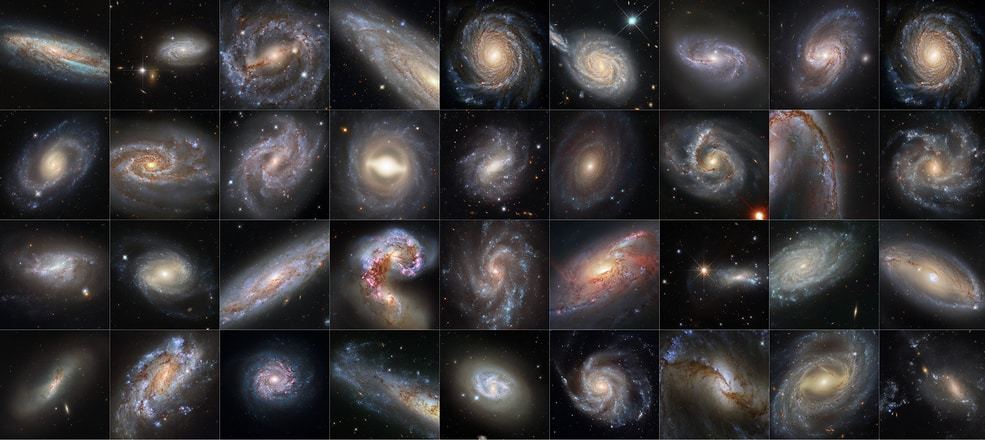
The cause of this discrepancy remains a mystery. But Hubble data, encompassing a variety of cosmic objects that serve as distance markers, support the idea that something weird is going on, possibly involving brand new physics. This collection of 36 images from NASA's Hubble Space Telescope features galaxies that are all hosts to both Cepheid variables and supernovae. These two celestial phenomena are both crucial tools used by astronomers to determine astronomical distance, and have been used to refine our measurement of the Hubble constant, the expansion rate of the universe.  The galaxies shown in this photo (from top row, left to bottom row, right) are: NGC 7541, NGC 3021, NGC 5643, NGC 3254, NGC 3147, NGC 105, NGC 2608, NGC 3583, NGC 3147, Mrk 1337, NGC 5861, NGC 2525, NGC 1015, UGC 9391, NGC 691, NGC 7678, NGC 2442, NGC 5468, NGC 5917, NGC 4639, NGC 3972, The Antennae Galaxies, NGC 5584, M106, NGC 7250, NGC 3370, NGC 5728, NGC 4424, NGC 1559, NGC 3982, NGC 1448, NGC 4680, M101, NGC 1365, NGC 7329, and NGC 3447. Credits: NASA, ESA, Adam G. Riess (STScI, JHU)
"You are getting the most precise measurement of the expansion rate for the universe from the gold standard of telescopes and cosmic mile markers," said Nobel Laureate Adam Riess of the Space Telescope Science Institute (STScI) and the Johns Hopkins University in Baltimore, Maryland.

Riess leads a scientific collaboration investigating the universe's expansion rate called SH0ES, which stands for Supernova, H0, for the Equation of State of Dark Energy. "This is what the Hubble Space Telescope was built to do, using the best techniques we know to do it. This is likely Hubble's magnum opus because it would take another 30 years of Hubble's life to even double this sample size," Riess said.

Riess's team's paper, to be published in the Special Focus issue of The Astrophysical Journal reports on completing the biggest and likely last major update on the Hubble constant. The new results more than double the prior sample of cosmic distance markers. His team also reanalyzed all of the prior data, with the whole dataset now including over 1,000 Hubble orbits.

When NASA conceived of a large space telescope in the 1970s, one of the primary justifications for the expense and extraordinary technical effort was to be able to resolve Cepheids, stars that brighten and dim periodically, seen inside our Milky Way and external galaxies. Cepheids have long been the gold standard of cosmic mile markers since their utility was discovered by astronomer Henrietta Swan Leavitt in 1912. To calculate much greater distances, astronomers use exploding stars called Type Ia supernovae.

Combined, these objects built a "cosmic distance ladder" across the universe and are essential to measuring the expansion rate of the universe, called the Hubble constant after Edwin Hubble. That value is critical to estimating the age of the universe and provides a basic test of our understanding of the universe.

Starting right after Hubble's launch in 1990, the first set of observations of Cepheid stars to refine the Hubble constant was undertaken by two teams: the HST Key Project led by Wendy Freedman, Robert Kennicutt, Jeremy Mould, and Marc Aaronson, and another by Allan Sandage and collaborators, that used Cepheids as milepost markers to refine the distance measurement to nearby galaxies. By the early 2000s, the teams declared "mission accomplished" by reaching an accuracy of 10 percent for the Hubble constant, 72 plus or minus 8 kilometers per second per megaparsec.

In 2005 and again in 2009, the addition of powerful new cameras on board the Hubble telescope launched "Generation 2" of the Hubble constant research as teams set out to refine the value to an accuracy of just one percent. This was inaugurated by the SH0ES program. Several teams of astronomers using Hubble, including SH0ES, have converged on a Hubble constant value of 73 plus or minus 1 kilometer per second per megaparsec. While other approaches have been used to investigate the Hubble constant question, different teams have come up with values close to the same number.

The SH0ES team includes long-time leaders Dr. Wenlong Yuan of Johns Hopkins University, Dr. Lucas Macri of Texas A&M University, Dr. Stefano Casertano of STScI, and Dr. Dan Scolnic of Duke University. The project was designed to bracket the universe by matching the precision of the Hubble constant inferred from studying the cosmic microwave background radiation left over from the dawn of the universe.

"The Hubble constant is a very special number. It can be used to thread a needle from the past to the present for an end-to-end test of our understanding of the universe. This took a phenomenal amount of detailed work," said Dr. Licia Verde, a cosmologist at ICREA and the ICC-University of Barcelona, speaking about the SH0ES team's work.

The team measured 42 of the supernova milepost markers with Hubble. Because they are seen exploding at a rate of about one per year, Hubble has, for all practical purposes, logged as many supernovae as possible for measuring the universe's expansion. Riess said, "We have a complete sample of all the supernovae accessible to the Hubble telescope seen in the last 40 years." Like the lyrics from the song "Kansas City," from the Broadway musical Oklahoma, Hubble has "gone about as fur as it c'n go!"

Weird Physics?

The expansion rate of the universe was predicted to be slower than what Hubble sees. By combining the Standard Cosmological Model of the Universe and measurements by the European Space Agency's Planck mission (which observed the relic cosmic microwave background from 13.8 billion years ago), astronomers predict a lower value for the Hubble constant: 67.5 plus or minus 0.5 kilometers per second per megaparsec, compared to the SH0ES team's estimate of 73.

Given the large Hubble sample size, there is only a one-in-a-million chance astronomers are wrong due to an unlucky draw, said Riess, a common threshold for taking a problem seriously in physics. This finding is untangling what was becoming a nice and tidy picture of the universe's dynamical evolution. Astronomers are at a loss for an explanation of the disconnect between the expansion rate of the local universe versus the primeval universe, but the answer might involve additional physics of the universe.

Such confounding findings have made life more exciting for cosmologists like Riess. Thirty years ago they started to measure the Hubble constant to benchmark the universe, but now it has become something even more interesting. "Actually, I don't care what the expansion value is specifically, but I like to use it to learn about the universe," Riess added.

NASA's new Webb Space Telescope will extend Hubble's work by showing these cosmic milepost markers at greater distances or sharper resolution than what Hubble can see.
Liverpool opens new facility to support innovation

Tyler O'Neal, Staff Editor ACADEMIA May 24, 2022, 7:13 am

The Digital Innovation Facility, a new multi-million facility to support the growth of academic-industry collaborations in emerging digital technologies, officially opens at the University of Liverpool New facility to support emerging digital technologies

The University of Liverpool’s Digital Innovation Facility (DIF), a £12.7 million Centre of Excellence in emerging digital technologies, was officially opened by the Mayor of the Liverpool City Region, Steve Rotheram, alongside tech entrepreneur and visiting Professor at the University of Liverpool, Sir Robin Saxby.

Located on the University city center campus, the DIF provides a purpose-built environment to support collaborations and partnerships between academics, industry, and organizations in the research areas of computer and data science, robotics, and engineering where the University has world-class research capabilities.

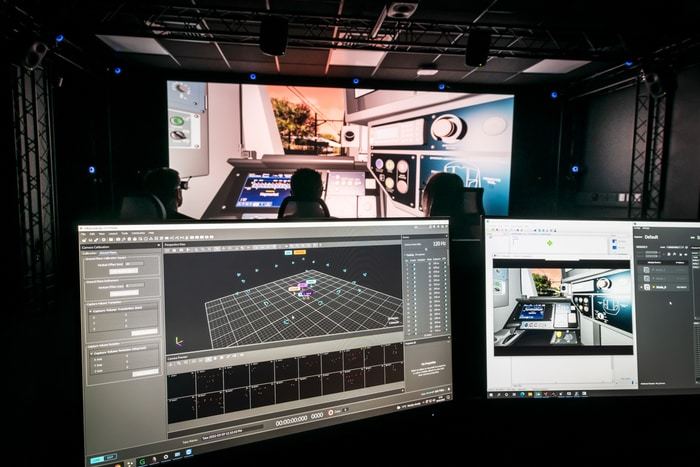
The 1500 M2 facility includes state-of-the-art laboratories featuring cutting-edge equipment and highly skilled support to facilitate enhanced access for businesses and organizations that wish to collaborate with University experts across multiple technology areas including visualization, robotics, artificial intelligence, data science, simulation, and modeling. 

Specialist labs in the DIF include a Mixed Reality Lab containing the latest in VR technology and equipment, an Extreme Environment Lab that simulates real-world hazardous conditions for testing robotics and autonomous systems, and an Immersive Laboratory that focuses on developing sensory technologies in areas of smell and touch for future “Tactile Internet” applications.

The DIF is co-funded by the University of Liverpool and Liverpool City Region Combined Authority’s Local Growth Fund.

The University is a hub for digital research and innovation and Digital is one of its key research themes. In the 2021 Research Excellence Framework, the University’s Engineering research was rated as 6th in the UK for outstanding (4*) impact, and Computer Science and Informatics research were rated as 5th in the UK for world-leading 4* research outputs and 100% of its research environment rated as world-leading (4*) or internationally excellent (3*).

Steve Rotheram, Mayor of the Liverpool City Region, said: “The pandemic accelerated the move towards a more digital world and proved just how important connectivity and technology will increasingly be in all our lives.

“For me, it’s a no-brainer for us to invest in projects that marry intelligent businesses with local research excellence and help develop this into practical and lucrative new applications. Our region is home to world-class clusters of research, development, and innovation. I truly believe that we have all the assets, capabilities – and the political will – to make our region the country’s innovation engine. The Digital Innovation Facility is a perfect example of that in a microcosm.

“It isn’t just a means of generating economic growth for our region either – but a duty we have to our residents to help deliver well-paid jobs and improved public services. This is a £12.7m investment that will help us do just that.”

Professor Dame Janet Beer, Vice-Chancellor of the University of Liverpool said: “The Digital Innovation Facility is an incredible asset, and we know it will have a significant positive impact on the city region and the North of England as a whole. The recent Research Excellence Framework highlighted our strengths and expertise in the areas of computer science, robotics, and engineering and this facility will help businesses and industries access this expertise to lead the way in digital technologies, resulting in further collaborations, inward investment, and economic growth."

Sir Robin Saxby, technology entrepreneur and visiting Professor at the University of Liverpool, said: “I am delighted to be here with local leaders at the opening of the Digital Innovation Facility at the University of Liverpool.  This world-leading facility and team will play a key role in the region’s research and innovation capabilities, facilitating industry and academic collaboration in digital technologies with huge potential and opportunities across many sectors including data analysis, AI, robotics, health care, and climate change. Liverpool's global reach and connectivity will also stimulate what happens here.“

Dr. Andy Levers, Director of the DIF and Executive Director of the Institute for Digital Engineering and Autonomous Systems, said: “Through the DIF we have created a dedicated hub to facilitate access to our world-leading facilities, expertise, and support so that business, industry and other organizations can benefit from the exciting advances in computing, robotics, artificial intelligence, and virtual engineering and maximize the possibilities and impact of these emerging technologies.”

The DIF is a key addition to the science and technology facilities in Liverpool’s Knowledge Quarter.

Planets of binary stars as possible homes for alien life

Tyler O'Neal, Staff Editor ACADEMIA May 23, 2022, 1:00 pm

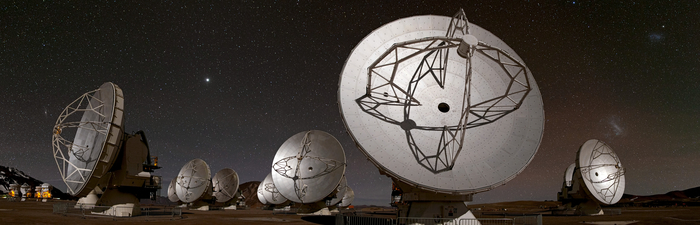
Nearly half of Sun-size stars are binary. According to University of Copenhagen research, planetary systems around binary stars may be very different from those around single stars. This points to new targets in the search for extraterrestrial life forms. ALMA's world at night  CREDIT ESO/B. Tafreshi (twanight.org)

Since the only known planet with life, the Earth, orbits the Sun, planetary systems around stars of similar size are obvious targets for astronomers trying to locate extraterrestrial life. Nearly every second star in that category is a binary star. A new result from research at the University of Copenhagen indicates that planetary systems are formed in a very different way around binary stars than around single stars such as the Sun.

“The result is exciting since the search for extraterrestrial life will be equipped with several new, extremely powerful instruments within the coming years. This enhances the significance of understanding how planets are formed around different types of stars. Such results may pinpoint places which would be especially interesting to probe for the existence of life,” says Professor Jes Kristian Jørgensen, Niels Bohr Institute, University of Copenhagen, heading the project.

Bursts shape the planetary system

The discovery has been made based on observations made by the ALMA telescopes in Chile of a young binary star about 1,000 lightyears from Earth. The binary star system, NGC 1333-IRAS2A, is surrounded by a disc consisting of gas and dust. The observations can only provide researchers with a snapshot from a point in the evolution of the binary star system. However, the team has complemented the observations with supercomputer simulations reaching both backward and forwards in time.

{media id=282,layout=solo}

“The observations allow us to zoom in on the stars and study how dust and gas move towards the disc. The simulations will tell us which physics are at play, and how the stars have evolved up till the snapshot we observe, and their future evolution,” explains Postdoc Rajika L. Kuruwita, Niels Bohr Institute.

Notably, the movement of gas and dust does not follow a continuous pattern. At some points in time – typically for relatively short periods of ten to one hundred years every thousand years – the movement becomes very strong. The binary star becomes ten to one hundred times brighter until it returns to its regular state.

Presumably, the cyclic pattern can be explained by the duality of the binary star. The two stars encircle each other, and at given intervals, their joint gravity will affect the surrounding gas and dust disc in a way that causes huge amounts of material to fall towards the star.

“The falling material will trigger significant heating. The heat will make the star much brighter than usual,” says Rajika L. Kuruwita, adding:

“These bursts will tear the gas and dust disc apart. While the disc will build up again, the bursts may still influence the structure of the later planetary system.”

Comets carry building blocks for life

The observed stellar system is still too young for planets to have formed. The team hopes to obtain more observational time at ALMA, allowing us to investigate the formation of planetary systems.

Not only planets but also comets will be in focus:

“Comets are likely to play a key role in creating possibilities for life to evolve. Comets often have a high content of ice with the presence of organic molecules. It can well be imagined that the organic molecules are preserved in comets during epochs where a planet is barren and that later comet impacts will introduce the molecules to the planet’s surface,” says Jes Kristian Jørgensen.

Understanding the role of the bursts is important in this context:

“The heating caused by the bursts will trigger evaporation of dust grains and the ice surrounding them.  This may alter the chemical composition of the material from which planets are formed.”

Thus, chemistry is a part of the research scope:

“The wavelengths covered by ALMA allow us to see quite complex organic molecules, so molecules with 9-12 atoms and containing carbon. Such molecules can be building blocks for more complex molecules which are key to life as we know it. For example, amino acids which have been found in comets.”

Powerful tools join the search for life in space

ALMA (Atacama Large Millimeter/submillimeter Array) is not a single instrument but 66 telescopes operating in coordination. This allows for a much better resolution than could have been obtained by a single telescope.

Very soon the new James Webb Space Telescope (JWST) will join the search for extraterrestrial life. Near the end of the decade, JWST will be complemented by the ELT (European Large Telescope) and the extremely powerful SKA (Square Kilometer Array) both planned to begin observing in 2027. The ELT will with its 39-meter mirror be the biggest optical telescope in the world and will be poised to observe the atmospheric conditions of exoplanets (planets outside the Solar System, ed.). SKA will consist of thousands of telescopes in South Africa and Australia working in coordination and will have longer wavelengths than ALMA.

”The SKA will allow for observing large organic molecules directly. The James Webb Space Telescope operates in the infrared which is especially well suited for observing molecules in ice. Finally, we continue to have ALMA which is especially well suited for observing molecules in gas form. Combining the different sources will provide a wealth of exciting results,” Jes Kristian Jørgensen concludes.

  1. Jiménez-Osés lab's simulations show additional insights into the SARS-CoV-2 spike protein glycan shield
  2. Keese’s modeling delivers insight into nuclear rocket engine heat transfer; wins the best student paper at NETS conference

Page 63 of 123

  • 58
  • 59
  • 60
  • 61
  • 62
  • 63
  • 64
  • 65
  • 66
  • 67
POPULAR RIGHT NOW
  • Supercomputers uncover a new class of cosmic explosions hidden in plain sight
    Supercomputers uncover a new class of cosmic explosions hidden in plain sight
  • AI supercharges the hunt for stronger magnets: Iowa State researchers launch a new era of intelligent materials discovery
    AI supercharges the hunt for stronger magnets: Iowa State researchers launch a new era of intelligent materials discovery
  • IBM's Historic stock collapse raises questions for the future of enterprise supercomputing
    IBM's Historic stock collapse raises questions for the future of enterprise supercomputing
  • Could a novel dark matter theory simultaneously resolve multiple cosmic enigmas? Supercomputer simulations provide a compelling, albeit currently unverified, potential solution
    Could a novel dark matter theory simultaneously resolve multiple cosmic enigmas? Supercomputer simulations provide a compelling, albeit currently unverified, potential solution
  • Melting icebergs may be reshaping Earth’s greatest ocean current
    Melting icebergs may be reshaping Earth’s greatest ocean current
  • Supercomputers replace ‘bathtub’ flood maps with physics-based digital twins of Britain’s coastline
    Supercomputers replace ‘bathtub’ flood maps with physics-based digital twins of Britain’s coastline
  • Supercomputers push neural quantum simulation beyond previous limits
    Supercomputers push neural quantum simulation beyond previous limits
  • Intel’s AI supercomputing revival: Q2 financial surge signals new era for CPU-powered HPC infrastructure
    Intel’s AI supercomputing revival: Q2 financial surge signals new era for CPU-powered HPC infrastructure
  • AI infrastructure financing fears shake semiconductor sector
    AI infrastructure financing fears shake semiconductor sector
  • AWS supercomputing investment reaches historic scale as Amazon’s AI strategy powers record financial results
    AWS supercomputing investment reaches historic scale as Amazon’s AI strategy powers record financial results
THIS YEAR'S MOST READ
  • Wall Street wants to trade supercomputing power like oil
    Wall Street wants to trade supercomputing power like oil
  • Cosmic ambition at scale: UK’s supercomputer unlocks a 2.5 petabytes universe
    Cosmic ambition at scale: UK’s supercomputer unlocks a 2.5 petabytes universe
  • Hidden order, revealed at scale: Supercomputing, electron ptychography uncover the inner workings of relaxor ferroelectrics
    Hidden order, revealed at scale: Supercomputing, electron ptychography uncover the inner workings of relaxor ferroelectrics
  • Beamforming the future: BeammWave's 6G push signals the rise of orbital-terrestrial wireless networks
    Joakim Axmon
    Joakim Axmon
  • Intel's Q1 results signal supercomputing surge driving Xeon momentum
    Intel's Q1 results signal supercomputing surge driving Xeon momentum
  • When stars fall apart: Supercomputing reveals the hidden physics of black holes
    When stars fall apart: Supercomputing reveals the hidden physics of black holes
  • Multi-layer simulations reveal the hidden supply chain of solar prominences
    Multi-layer simulations reveal the hidden supply chain of solar prominences
  • Japanese scientists decode dolphin speed with supercomputing: Turbulence, vortices, and the hidden physics of propulsion
    Japanese scientists decode dolphin speed with supercomputing: Turbulence, vortices, and the hidden physics of propulsion
  • Cosmic feedback at scale: Supercomputing reveals how quasars regulate the early Universe
    Cosmic feedback at scale: Supercomputing reveals how quasars regulate the early Universe
  • Modeling life at the microscopic scale: A computational breakthrough in oxygen transport
    Modeling life at the microscopic scale: A computational breakthrough in oxygen transport
MOST READ OF ALL-TIME
  • Largest Computational Biology Simulation Mimics The Ribosome
    Details
    112109
    The amino acid (green) slithers into the chemical reaction center, moving through an evolutionarily ancient corridor of the ribosome (purple). The amino acid is delivered to the reaction core by the transfer RNA molecule (yellow).
    The amino acid (green) slithers into the chemical reaction center, moving through an evolutionarily ancient corridor of the ribosome (purple). The amino acid is delivered to the reaction core by the transfer RNA molecule (yellow).
  • Silicon 'neurons' may add a new dimension to chips
    Details
    80997
    Silicon 'neurons' may add a new dimension to chips
  • Linux Networx Accelerators Expected to Drive up to 4x Price/Performance
    Details
    75540
  • Complex Concepts That Really Add Up
    Details
    73641
    Complex Concepts That Really Add Up
  • Blue Sky Studios Donates Animation SuperComputer to Wesleyan
    Details
    68143
    Each rack holds 52 Angstrom Microsystem-brand “blades,” with a memory footprint of 12 or 24 gigabytes each. (Photos by Olivia Bartlett Drake)
    Each rack holds 52 Angstrom Microsystem-brand “blades,” with a memory footprint of 12 or 24 gigabytes each. (Photos by Olivia Bartlett Drake)
  • Humanities, HPC connect at NERSC
    Details
    57950
  • TeraGrid ’09 'Call for Participation'
    Details
    54954
  • Turbulence responsible for black holes' balancing act
    Details
    52316
  • Cray Wins $52 Million SuperComputer Contract
    Details
    50143
  • SDSC Researchers Accurately Predict Protein Docking
    Details
    46084
  • FRONTPAGE
  • LATEST
  • POPULAR
  • REGISTER
  • SOCIAL
  • VIDEO
  • SUBSCRIPTION
  • RSS
  • GUIDELINES
  • PRIVACY
  • TOS
  • ABOUT
  • +1 (816) 799-4488
  • editorial@supercomputingonline.com
© 2001 - 2026 SuperComputingOnline.com, LLC. All rights reserved. This material may not be published, broadcast, rewritten or redistributed without permission.
Sign In
  • FRONT PAGE
  • LATEST
    • MEDIA KIT
    • MOST READ
    • RSS FEED
    • ACADEMIA
    • AEROSPACE
    • APPLICATIONS
    • ASTRONOMY
    • AUTOMOTIVE
    • BIG DATA
    • BIOLOGY
    • CHEMISTRY
    • CLIENTS
    • CLOUD
    • DEFENSE
    • DEVELOPER TOOLS
    • EARTH SCIENCES
    • ECONOMICS
    • ENGINEERING
    • ENTERTAINMENT
    • HEALTH
    • INDUSTRY
    • INTERCONNECTS
    • GAMING
    • GOVERNMENT
    • MANUFACTURING
    • MIDDLEWARE
    • MOVIES
    • NETWORKS
    • OIL & GAS
    • PHYSICS
    • PROCESSORS
    • RETAIL
    • SCIENCE
    • STORAGE
    • SYSTEMS
    • VISUALIZATION
  • VIDEOS
    • ADD YOUR VIDEOS
    • MANAGE VIDEOS
  • COMMUNITY
    • TRADE SHOWS
    • SOCIAL NETWORK VIDEOS
    • SURVEYS
    • APPLICATIONS BROWSER
    • CONVERSATION INBOX
    • SOCIAL ADVERTISER
    • GROUPS
    • MARKETPLACE LISTINGS
    • PAGES
    • LEADERBOARD
    • POINTS LISTING
      • BADGES
    • PRIVACY CONFIRM REQUEST
    • PRIVACY CREATE REQUEST

Hey there! We noticed you’re using an ad blocker.