

Arizona researcher finds slower ocean circulation as the result of climate change could intensify extreme cold weather in the U.S.

Throughout Earth's oceans runs a conveyor belt of water. Its churning is powered by differences in the water's temperature and saltiness, and weather patterns around the world are regulated by its activity.

A pair of researchers studied the Atlantic portion of this worldwide conveyor belt called the Atlantic Meridional Overturning Circulation, or AMOC, and found that winter weather in the United States critically depends on this conveyor belt-like system. As the AMOC slows because of climate change, the U.S. will experience more extreme cold winter weather.

The study, published in the journal Communications Earth & Environment was led by Jianjun Yin, an associate professor in the University of Arizona Department of Geosciences, and co-authored by Ming Zhao, a physical scientist at the National Oceanic and Atmospheric Administration's Geophysical Fluid Dynamics Laboratory.

AMOC works like this: Warm water travels north in the upper Atlantic Ocean and releases heat into the atmosphere at high latitudes. As the water cools, it becomes denser, which causes it to sink into the deep ocean where it flows back south.

"This circulation transports an enormous amount of heat northward in the ocean," Yin said. "The magnitude is on the order of 1 petawatt, or 10 to the 15 power watts. Right now, the energy consumption by the entire world is about 20 terawatts or 10 to 12 power watts. So, 1 petawatt is enough to run about 50 civilizations."

But as the climate warms, so does the ocean surface. At the same time, the Greenland ice sheet experiences melting, which dumps more freshwater into the ocean. Both warming and freshening of the water can reduce surface water density and inhibit the sinking of the water, slowing the AMOC. If the AMOC slows, so does the northward heat transport.

This is important because the equator receives more energy from the sun than the poles. Both the atmosphere and ocean work to transport energy from low latitudes to high latitudes. If the ocean can't transport as much heat northward, then the atmosphere must instead transport more heat through more extreme weather processes at mid-latitudes. When the atmosphere moves heat northward, cold air is displaced from the poles and pushed to lower latitudes, reaching places as far south as the U.S. southern border.

"Think of it as two highways connecting two big cities," Yin said. "If one is shut down, the other one gets more traffic. In the atmosphere, the traffic is the daily weather. So, if the ocean heat transport slows or shuts down, the weather becomes more extreme."

Yin said the study was motivated by the extreme cold weather Texas experienced in February.

"In Houston, the daily temperature dropped to 40 degrees Fahrenheit below the normal," Yin said. "That's the typical range of a summer/winter temperature difference. It made Texas feel like the Arctic. This kind of extreme winter weather happened several times in the U.S. during recent years, so the scientific community has been working to understand the mechanism behind these extreme events."

The crisis in Texas caused widespread and catastrophic power outages, and the National Oceanic and Atmospheric Administration estimated that socioeconomic damages totaled $20 billion. Yin was curious about the role the ocean played in extreme weather events.

Yin and Zhao used a state-of-the-art, high-resolution global climate model to measure the influence of the AMOC on U.S. extreme cold weather.

They ran the model twice, first looking at today's climate with a functioning AMOC. They then adjusted the model by inputting enough freshwater into the high-latitude North Atlantic to shut down the AMOC. The difference revealed the role of the AMOC in extremely cold weather. They found that without the AMOC and its northward heat transport, extremely cold winter weather intensifies in the U.S.

According to recent observational studies, the AMOC has weakened in the past decades. Climate models project it will get even weaker in response to increased greenhouse gases in the atmosphere.

"But there is uncertainty about the magnitude of the weakening because, at this point, we don't know exactly how much the Greenland ice sheet will melt," Yin said. "How much it melts depends on the greenhouse gas emissions."

The researchers also didn't take into account in their model the effects of human-caused global warming, but that's an area of interest for the future, Yin said.

"We just turn off the AMOC (in the model) to look at the response by extreme weather," he said. "Next, we want to factor in the greenhouse gases and look at the combined effects of the AMOC slowdown and global warming on extreme cold weather."

Datadobi launches DQL to scan, interrogate petabyte-scale data lakes

According to the latest research, there will be about 175 zettabytes (ZB) of data worldwide by 2025 compared to 64.2ZB in 2020. Not surprisingly, as a result, 95% of businesses cite the need to manage unstructured data as a problem for their business. 

Both of Datadobi’s products, DobiMigrate and DobiProtect, have been designed to scan large file systems containing billions of files to help organizations harness the power of unstructured data. Each of these scans produces huge lists of file paths and their metadata in a proprietary format to allow performant and storage-efficient handling, analysis, and comparison of the files to enhance unstructured data management.

Historically, these scan files were only used for doing data migration or protection for customers…until now. 

What is Datadobi Query Language? (DQL)

Over the last several months as the COVID-19 pandemic drove digital transformation and increased the amount of unstructured data within networks, enterprises began asking us for access to the scans to analyze and reorganize unstructured data lakes. 

For a customer to dissect the composition of the data, however, it requires some serious data reduction and aggregation in that set of billions of files. This created the need for a tool to query, aggregate, and reduce the amount of information about the data lake so it is consumable by the IT administrator. 

Datadobi has officially developed Datadobi Query Language (DQL) to enhance the file system assessment service to optimize and organize data lakes internally. DQL within the file system assessment service offers complete flexibility around how the software can interrogate the customer data set and enables tremendous data reduction to make it manageable for the customer to handle its multi-petabyte data lake. 

DQL is a query framework that can look for many aspects in a data lake such as: 

  • Identifying cold data sets — data that is infrequently accessed
  • Identifying old data sets —data that was created or modified some time ago
  • Identifying data sets owned by a specific user or group, e.g. by users who no longer work at the company
  • Identifying shares, exports, or directories trees that are homogeneous (cold, old, owner, file types) and can be handled as one data set e.g. to take specific lifecycle actions upon

How DQL Fits into Datadobi’s Existing Products and Services 

As mentioned above, DQL is used to customize Datadobi’s file system assessment service.  

For background, Datadobi created the file system assessment offering last year as a service for customers that can be used before they plan a data migration or reorganization. 

DQL is now an essential part of the file system assessment service because it enables assessments to be customizable. Using the pre-migration service enhanced with DQL, customers can learn to understand what’s on their storage system, and based on the partitioning of their system in data sets, make a plan of what to migrate where. 

On a similar note, DQL is an essential part of Datadobi’s vendor-neutral data mobility engine. DQL sits within the engine technology to scan file systems, move data, analyze the file metadata of large data lakes, and simplify how IT administrators can look at their data and identify logical subsets of data. 

The volume of data is only expected to grow over the next few years. IT administrators need a data management solution that can transform data into digestible material to allow curated decisions on storage options for migration and protection to be made. 

Dutch researcher's simulations reveal how black holes become supermassive

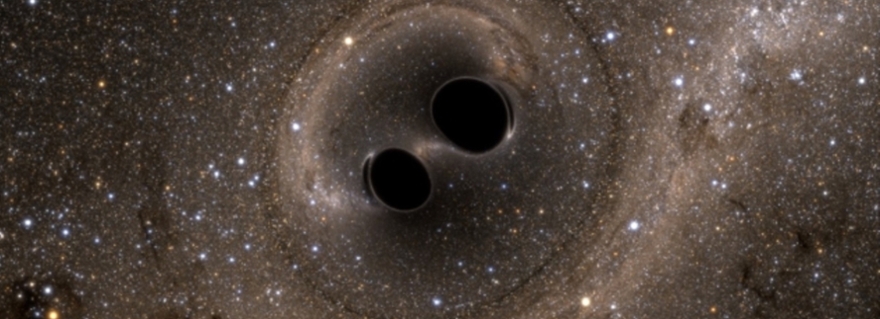
Leiden astronomy Master's student Arend Moerman has received an A+ for his thesis research on the simulation of chaotic interactions of three black holes. The simulations, which he carried out together with his Leiden and Oxford colleagues, show that lighter black holes tend to slingshot each other out into space, while heavier ones tend to merge. The research appeared in the academic journal Physical Review D.

Moerman spent a year investigating the dynamic interactions and collisions between three imaginary black holes. The interactions between three bodies such as stars, planets, or black holes cannot be predicted with an elegant formula. Moerman, therefore, used a supercomputer that calculates what happens for a short time and then uses the result as input for the prediction of the next period. Arend Moerman

Extended with the theory of relativity

The computer code is an extended version of the code used by first author Tjarda Boekholt in 2020 and 2018. The new, extended code also included Einstein's theory of relativity. This is important because the theory of relativity plays a major role, especially in the case of heavy objects such as black holes. 

The researchers varied the masses of the three interacting black holes. Starting with one solar mass, they increased the mass up to a billion times the mass of the sun. 

Tipping point

Around ten million solar masses, there appeared to be a tipping point. In the simulations, black holes that are lighter than about ten million solar masses mostly eject each other through a gravitational slingshot. Black holes that were heavier than this, started to merge. First, two black holes merge. The third follows later. The black holes merge because they lose kinetic energy and that is because they emit gravitational waves. 

"Arend's work has led to a new understanding of how black holes become supermassive," says Simon Portegies Zwart. "In the simulations, we see that heavy black holes no longer endlessly move around each other, but that, if they are heavy enough, they collide pretty much instantly." Black holes.

Following your interests 

Moerman was looking for a graduation subject at the interface of astronomy, mathematics, and computer science. This he found with his supervisor Portegies Zwart. "Programming appealed to me. In the beginning, it was not quite clear what I had to do," said Moerman. "I had to build the theory of relativity into an existing code, but how and what was not yet clear. But that was the fun part: it gave me the freedom to choose and simulate what I found interesting."

From stargazer to star chef

An A+ is wonderful, but Moerman takes most satisfaction from the more tangible result: "A grade is a grade, I am most proud of our research. Nevertheless, the A+ was celebrated extensively with friends. "It was a tough week," he confesses with a laugh. 

Moerman has meanwhile started a second graduation research project. That is about DESHIMA, a Dutch-Japanese spectroscope on-chip. After his master's he would like to pursue a Ph.D. I've seen interesting positions passing by and have even sent out an application. But even if that doesn't work out, there are options: "I'm now working as a sous-chef in a restaurant. If science doesn't work out, I'll switch to being a chef."