SUPERCOMPUTING NEWS SUPERCOMPUTING NEWS
    • MEDIA KIT
    • MOST READ
    • RSS FEED
    • ACADEMIA
    • AEROSPACE
    • APPLICATIONS
    • ASTRONOMY
    • AUTOMOTIVE
    • BIG DATA
    • BIOLOGY
    • CHEMISTRY
    • CLIENTS
    • CLOUD
    • DEFENSE
    • DEVELOPER TOOLS
    • EARTH SCIENCES
    • ECONOMICS
    • ENGINEERING
    • ENTERTAINMENT
    • GAMING
    • GOVERNMENT
    • HEALTH
    • OIL & GAS
    • INDUSTRY
    • INTERCONNECTS
    • MANUFACTURING
    • MIDDLEWARE
    • MOVIES
    • NETWORKS
    • PHYSICS
    • PROCESSORS
    • RETAIL
    • SCIENCE
    • STORAGE
    • SYSTEMS
    • VISUALIZATION
    • AcyMailing subscription form

    • ADD YOUR VIDEOS
    • MANAGE VIDEOS
    • CONVERSATION INBOX
    • SOCIAL ADVERTISER
    • SOCIAL NETWORK VIDEOS
    • SURVEYS
    • GROUPS
    • PAGES
    • MARKETPLACE LISTINGS
    • APPLICATIONS BROWSER
    • PRIVACY CONFIRM REQUEST
    • PRIVACY CREATE REQUEST
    • LEADERBOARD
    • POINTS LISTING
      • BADGES
    • TRADE SHOWS
Sign In
Tyler O'Neal, Staff Editor EARTH SCIENCES March 9, 2021, 9:00 am

Simulations show Earth's deep mantle may have proton rivers made of superionic phases

Pierfranco Demontis said in 1988, "Ice becomes a fast-ion conductor at high pressure and high temperatures," but his prediction was only hypothetical until recently. After 30 years of study, superionic water ice was verified experimentally in 2018. Superionicity may eventually explain the strong magnetic field in giant planetary interiors.

What about Earth, whose interiors are also under extreme pressure and temperature conditions? Although three-quarters of Earth's surface is covered by water, standalone water or ice rarely exists in Earth's interiors. The most common unit of "water" is hydroxyl, which is associated with host minerals to make them hydrous minerals. Here, a research group led by Dr. Qingyang Hu, Dr. Duckyoung Kim, and Dr. Jin Liu from the Center for High-Pressure Science and Technology Advanced Research located in China, discovered that one such hydrous mineral also enters an exotic superionic phase, similar to water ice in giant planets. The results are published in an academic journal.

"In superionic water, hydrogen will get released from oxygen and become liquid-like, and move freely within the solid oxygen lattice. Similarly, we studied a hydrous mineral iron oxide-hydroxide (FeOOH), and the hydrogen atoms move freely in the solid oxygen lattice of FeO2," said Dr. He, who conducted the computational simulation. Earth's mantle might be electrified by superionic minerals

"It developed into the superionic phase above about 1700°C and 800,000 times normal atmospheric pressure. Such pressure and temperature conditions ensure a large portion of Earth's lower mantle can host the superionic hydrous mineral. These deep regions may have rivers made of protons, which flow through the solids." added Dr. Kim.

Guided by their theoretical predictions, the team then tried to verify this predicted superionic phase in hot FeOOH by carrying out high-temperature and high-pressure experiments using a laser-heating technique in a diamond anvil cell.

"It is technically challenging to recognize the motion of H atoms experimentally; however, the evolution of O-H bonding is sensitive to Raman spectroscopy," said Dr. Hu, one of the lead-authors. "So, we tracked the evolution of the O-H bond and captured this exotic state in its ordinary form."

They found that the O-H bonding softens abruptly above 73,000 times normal atmospheric pressure, along with ~ 55% weakening of the O-H Raman peak intensity. These results indicate that some H+ may be delocalized from oxygen and become mobile, thus, weakening the O-H bonding, consistent with simulations. "The softening and weakening of the O-H bonding at high-pressure and room-temperature conditions can only be regarded as a precursor of the superionic state because high temperature is required to increase the mobility beyond the unit cell," explained Dr. Hou.

In superionic materials, there will be an obvious conductivity change, which is robust evidence of superionization. The team measured the electrical-conductivity evolution of the sample at high-temperature and pressure conditions. They observed an abrupt increase in electrical conductivity around 1500-1700°C and 121,000 times normal atmospheric pressure, indicating the diffusive hydrogen had covered the entire solid sample and thus, entered a superionic state.

"The pyrite-type FeO2Hx is just the first example of superionic phases in the deep lower mantle," remarked Dr. Liu, a co-lead author of the work. "It is very likely that hydrogen in the recently-discovered dense hydrogen-bearing oxides that are stable under the deep lower mantle's high P-T conditions, such as dense hydrous phases, may also exhibit superionic behavior."
LIGO, Virgo scientists discover new gravitational wave

Tyler O'Neal, Staff Editor EARTH SCIENCES October 29, 2020, 7:04 pm

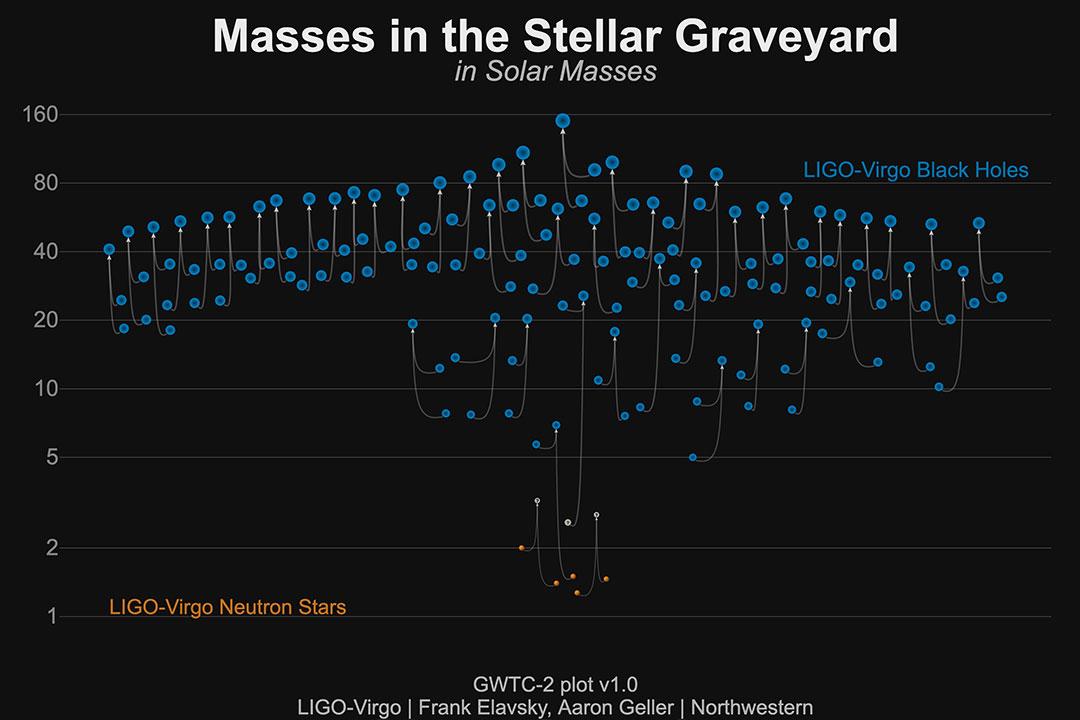
The LIGO Scientific Collaboration and Virgo Collaboration released a catalog of results from the first half of its third observing run (O3a), and scientists have detected more than three times as many gravitational waves as the first two runs combined. Gravitational waves were first detected in 2015 and are ripples in time and space produced by merging black holes and/or neutron stars. Several researchers from the Rochester Institute of Technology's Center for Computational Relativity and Gravitation (CCRG) were heavily involved in analyzing the gravitational waves and understanding their significance.

The catalog details 39 new gravitational wave events detected during O3a, bringing the total to 50, and several of the newly detected binaries have unique properties that expand our understanding of binary black hole formation. O3a uncovered the largest and smallest binary black holes to date, ranging from 150 times the size of our sun to just 3 times larger. O3a also detected the first binary black hole confidently formed from highly asymmetrical black holes as well as several binary black holes with unique spin properties. The LIGO Scientific Collaboration and Virgo Collaboration released a catalog of results from the first half of its third observing run (O3a). This shows the masses of the black holes and neutron stars in the 50 gravitational wave events detected to date.{module INSIDE STORY}

Jacob Lange '18 MS (astrophysical sciences and technology), '20 Ph.D. (astrophysical sciences and technology) worked on the parameter estimation part of the analysis, which identifies important characteristics about each gravitational wave event, including the masses of the black holes or neutron stars involved, their spin, distance from Earth and position in the sky. While he was a Ph.D. student at RIT, he helped develop parameter estimation algorithms that were faster than conventional methods and used for many of the events released in the catalog. Lange, who is now a postdoctoral researcher at Brown University's Institute for Computational and Experimental Research in Mathematics, said that improvements to the sensors and parameter estimation techniques have yielded increasingly unique findings that challenge our understanding of the universe.

"We're seeing much more complex events where nature's really showing us its fascinating side," said Lange. "We'll be able to learn much more interesting physics and astrophysics from these detections. The more we build up this catalog of events, the more we can start making statements about the overall population."

Daniel Wysocki '18 MS (astrophysical sciences and technology), '20 Ph.D. (astrophysical sciences and technology) worked on analyzing the population properties of black holes following O3a. Wysocki, now a postdoctoral researcher at the University of Wisconsin-Milwaukee, said that we are gaining a clearer picture of what typical black holes look like, how many exist, how the population of black holes has changed as the universe evolved, and other important properties.

"This catalog represents a significant increase in sample size from our previous release," said Wysocki. "It's like a census that provides data for people to see if their physical models are consistent with what happens in the universe. This has implications for general relativity, the physics of stars, and the behavior of matter at energies that aren't possible in a terrestrial laboratory. Down the line that can really help us change our understanding of things on Earth."

With incremental improvements coming online in the next several years, new ground and space observatories in the coming decades, and LIGO and Virgo preparing for the fourth observing run, the future is bright for gravitational wave astronomy. Associate Professor Richard O'Shaughnessy, a member of CCRG and the LIGO Scientific Collaboration, said even more discoveries are on the horizon.

"We've learned more about what nature permits," said O'Shaughnessy. "We found more big black holes, smaller siblings of the massive event described in the summer and we found, too, that large black holes can be rapidly spinning. That breaks some theories for how large black holes could form. We see very tantalizing suggestions that some of the merging black holes may have spins misaligned with the orbit."

Speculating about the significance of these observations, O'Shaughnessy said, "Many years ago, I showed that misalignment could clearly identify how merging black holes came to be. We're one step closer to finding a smoking gun."

Russian biophysicists model the effect of antiseptics on bacterial membranes

Tyler O'Neal, Staff Editor EARTH SCIENCES October 28, 2020, 9:16 pm

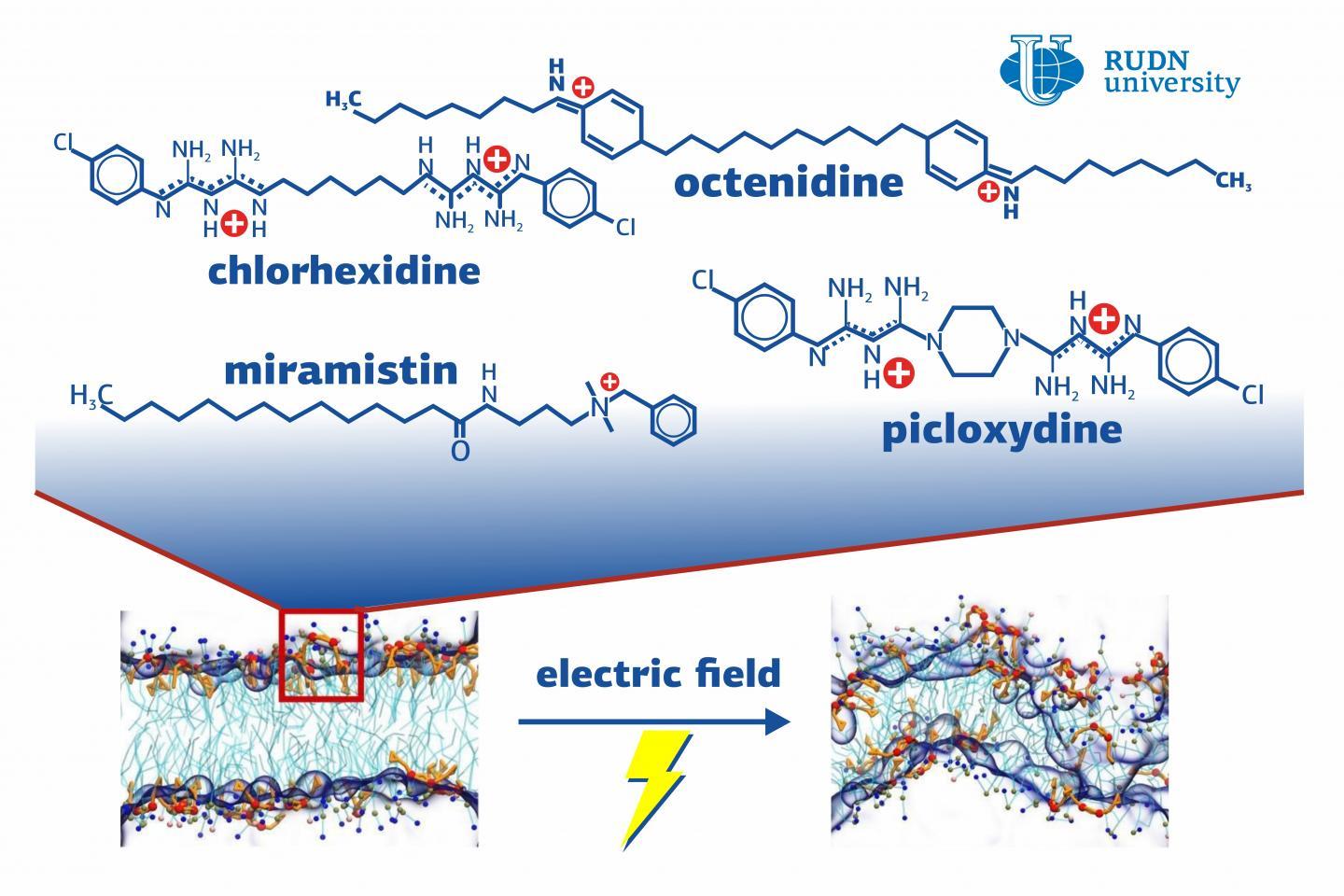
A team of biophysics from leading Russian research and educational institutions (MSU, RUDN University, and the Federal Research and Clinical Center of the Federal Medical-Biological Agency of Russia) developed a supercomputer model that shows the effect of antiseptics on bacterial membranes. The common concepts regarding the mode of action of antiseptics turned out to be incorrect: instead of destroying bacterial membranes, they cause changes in their structure. These changes make the bacteria weaker and more susceptible to adverse external factors. The results of the study were published in The Journal of Physical Chemistry.

Antiseptics are chemical agents that affect the internal processes or external structures of harmful microorganisms causing them to die. For example, alcohols break down important building and regulation blocks of bacteria and viruses. Other antiseptics target the integrity of bacterial membranes. They are effectively used against a wide range of pathogens, but their mode of action remains elusive. Scientists are aware of some general patterns, such as the presence of electrically charged particles in the molecules of antiseptic agents. The team developed a computer model of a bacterial membrane and found out the mechanism of the antiseptic activity. The results of the study can help to combat bacterial resistance.

"Some pathogens, especially those associated with hospital infections, show resistance to antiseptics. It is important to understand the physics behind the interaction of antiseptics and microorganisms to use antiseptics more efficiently and to develop new agents," said professor Ilya Kovalenko, Ph.D., Doctor of Science in Physics and Mathematics, working under Project 5-100 at RUDN University. A team of biophysics from leading Russian research and educational institutions (MSU, RUDN University, and the Federal Research and Clinical Center of the Federal Medical-Biological Agency of Russia) developed a computer model that shows the effect of antiseptics on bacterial membranes. The common concepts regarding the mode of action of antiseptics turned out to be incorrect: instead of destroying bacterial membranes, they cause changes in their structure. These changes make the bacteria weaker and more susceptible to adverse external factors.{module INSIDE STORY}

The scientists developed a model of a bacterial membrane and put the molecules of four antiseptics (miramistin, chlorhexidine, picloxydine, and octenidine) on it. All these substances are cationic antiseptics, i.e. their molecules are positively charged. However, to the researchers' surprise, the antiseptics failed to damage the membrane and just slightly changed its structure. Even when the ratio of antiseptics to membrane lipids was increased from 1/24 to 1/4, the membrane was not destroyed.

The destruction of the membrane took place only when an external electric field (with the intensity of 150 mV/nm) was added to the model. The membrane started to restructure, and pores began to form around the molecules of the antiseptics. Then, water got into them and made them bigger; and eventually, the membrane was torn apart. This was because the membrane became thinner around positively charged molecules: the molecules of the membrane had no charge and therefore were pushed away. An uneven membrane became more susceptible to adverse external factors, which led to the death of the cell.

"We studied the reaction of the model membrane to several cationic antiseptics and found out that structural changes in the membrane in the presence of an electrical field play a key role in the formation of pores. We plan to use this model to predict the effect of existing and new antiseptics on different microorganisms," added professor Ilya Kovalenko, Ph.D., Doctor of Science in Physics and Mathematics, working under Project 5-100 at RUDN University.

  1. American disease transmission models help forecast election outcome
  2. Russian scientists develop ML algo to find binding sites in drug targets

Page 18 of 23

  • 13
  • 14
  • 15
  • 16
  • 17
  • 18
  • 19
  • 20
  • 21
  • 22
POPULAR RIGHT NOW
  • AI supercharges the hunt for stronger magnets: Iowa State researchers launch a new era of intelligent materials discovery
    AI supercharges the hunt for stronger magnets: Iowa State researchers launch a new era of intelligent materials discovery
  • IBM's Historic stock collapse raises questions for the future of enterprise supercomputing
    IBM's Historic stock collapse raises questions for the future of enterprise supercomputing
  • Could a novel dark matter theory simultaneously resolve multiple cosmic enigmas? Supercomputer simulations provide a compelling, albeit currently unverified, potential solution
    Could a novel dark matter theory simultaneously resolve multiple cosmic enigmas? Supercomputer simulations provide a compelling, albeit currently unverified, potential solution
  • Melting icebergs may be reshaping Earth’s greatest ocean current
    Melting icebergs may be reshaping Earth’s greatest ocean current
  • Supercomputers replace ‘bathtub’ flood maps with physics-based digital twins of Britain’s coastline
    Supercomputers replace ‘bathtub’ flood maps with physics-based digital twins of Britain’s coastline
  • Supercomputers push neural quantum simulation beyond previous limits
    Supercomputers push neural quantum simulation beyond previous limits
  • Intel’s AI supercomputing revival: Q2 financial surge signals new era for CPU-powered HPC infrastructure
    Intel’s AI supercomputing revival: Q2 financial surge signals new era for CPU-powered HPC infrastructure
  • AI infrastructure financing fears shake semiconductor sector
    AI infrastructure financing fears shake semiconductor sector
  • AWS supercomputing investment reaches historic scale as Amazon’s AI strategy powers record financial results
    AWS supercomputing investment reaches historic scale as Amazon’s AI strategy powers record financial results
  • Catching the wave of the future: Supercomputers unlock the hidden dynamics of Venus
    Catching the wave of the future: Supercomputers unlock the hidden dynamics of Venus
THIS YEAR'S MOST READ
  • Wall Street wants to trade supercomputing power like oil
    Wall Street wants to trade supercomputing power like oil
  • Beamforming the future: BeammWave's 6G push signals the rise of orbital-terrestrial wireless networks
    Joakim Axmon
    Joakim Axmon
  • Cosmic ambition at scale: UK’s supercomputer unlocks a 2.5 petabytes universe
    Cosmic ambition at scale: UK’s supercomputer unlocks a 2.5 petabytes universe
  • Hidden order, revealed at scale: Supercomputing, electron ptychography uncover the inner workings of relaxor ferroelectrics
    Hidden order, revealed at scale: Supercomputing, electron ptychography uncover the inner workings of relaxor ferroelectrics
  • Intel's Q1 results signal supercomputing surge driving Xeon momentum
    Intel's Q1 results signal supercomputing surge driving Xeon momentum
  • When stars fall apart: Supercomputing reveals the hidden physics of black holes
    When stars fall apart: Supercomputing reveals the hidden physics of black holes
  • Multi-layer simulations reveal the hidden supply chain of solar prominences
    Multi-layer simulations reveal the hidden supply chain of solar prominences
  • Japanese scientists decode dolphin speed with supercomputing: Turbulence, vortices, and the hidden physics of propulsion
    Japanese scientists decode dolphin speed with supercomputing: Turbulence, vortices, and the hidden physics of propulsion
  • Cosmic feedback at scale: Supercomputing reveals how quasars regulate the early Universe
    Cosmic feedback at scale: Supercomputing reveals how quasars regulate the early Universe
  • Modeling life at the microscopic scale: A computational breakthrough in oxygen transport
    Modeling life at the microscopic scale: A computational breakthrough in oxygen transport
MOST READ OF ALL-TIME
  • Largest Computational Biology Simulation Mimics The Ribosome
    Details
    112127
    The amino acid (green) slithers into the chemical reaction center, moving through an evolutionarily ancient corridor of the ribosome (purple). The amino acid is delivered to the reaction core by the transfer RNA molecule (yellow).
    The amino acid (green) slithers into the chemical reaction center, moving through an evolutionarily ancient corridor of the ribosome (purple). The amino acid is delivered to the reaction core by the transfer RNA molecule (yellow).
  • Silicon 'neurons' may add a new dimension to chips
    Details
    81040
    Silicon 'neurons' may add a new dimension to chips
  • Linux Networx Accelerators Expected to Drive up to 4x Price/Performance
    Details
    75563
  • Complex Concepts That Really Add Up
    Details
    73693
    Complex Concepts That Really Add Up
  • Blue Sky Studios Donates Animation SuperComputer to Wesleyan
    Details
    68166
    Each rack holds 52 Angstrom Microsystem-brand “blades,” with a memory footprint of 12 or 24 gigabytes each. (Photos by Olivia Bartlett Drake)
    Each rack holds 52 Angstrom Microsystem-brand “blades,” with a memory footprint of 12 or 24 gigabytes each. (Photos by Olivia Bartlett Drake)
  • Humanities, HPC connect at NERSC
    Details
    57973
  • TeraGrid ’09 'Call for Participation'
    Details
    54976
  • Turbulence responsible for black holes' balancing act
    Details
    52339
  • Cray Wins $52 Million SuperComputer Contract
    Details
    50162
  • SDSC Researchers Accurately Predict Protein Docking
    Details
    46115
  • FRONTPAGE
  • LATEST
  • POPULAR
  • REGISTER
  • SOCIAL
  • VIDEO
  • SUBSCRIPTION
  • RSS
  • GUIDELINES
  • PRIVACY
  • TOS
  • ABOUT
  • +1 (816) 799-4488
  • editorial@supercomputingonline.com
© 2001 - 2026 SuperComputingOnline.com, LLC. All rights reserved. This material may not be published, broadcast, rewritten or redistributed without permission.
Sign In
  • FRONT PAGE
  • LATEST
    • MEDIA KIT
    • MOST READ
    • RSS FEED
    • ACADEMIA
    • AEROSPACE
    • APPLICATIONS
    • ASTRONOMY
    • AUTOMOTIVE
    • BIG DATA
    • BIOLOGY
    • CHEMISTRY
    • CLIENTS
    • CLOUD
    • DEFENSE
    • DEVELOPER TOOLS
    • EARTH SCIENCES
    • ECONOMICS
    • ENGINEERING
    • ENTERTAINMENT
    • HEALTH
    • INDUSTRY
    • INTERCONNECTS
    • GAMING
    • GOVERNMENT
    • MANUFACTURING
    • MIDDLEWARE
    • MOVIES
    • NETWORKS
    • OIL & GAS
    • PHYSICS
    • PROCESSORS
    • RETAIL
    • SCIENCE
    • STORAGE
    • SYSTEMS
    • VISUALIZATION
  • VIDEOS
    • ADD YOUR VIDEOS
    • MANAGE VIDEOS
  • COMMUNITY
    • TRADE SHOWS
    • SOCIAL NETWORK VIDEOS
    • SURVEYS
    • APPLICATIONS BROWSER
    • CONVERSATION INBOX
    • SOCIAL ADVERTISER
    • GROUPS
    • MARKETPLACE LISTINGS
    • PAGES
    • LEADERBOARD
    • POINTS LISTING
      • BADGES
    • PRIVACY CONFIRM REQUEST
    • PRIVACY CREATE REQUEST

Hey there! We noticed you’re using an ad blocker.