China produces a good simulation of heatwave frequency variation by a machine-learning model

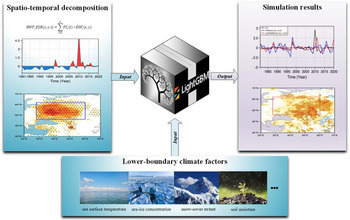
Against the background of global warming, the European region has experienced several severe extreme heatwave events in recent decades, which have had huge socio-economic and environmental impacts. It is therefore important for governments to improve the ability of climate models to predict heatwave events. However, the ability of most climate models in this regard is highly limited at present, mainly because they cannot simulate well the feedback between the atmospheric and boundary-layer physical quantities. Thus, we are still lacking in our understanding of the roles and relative contributions of these processes. It remains a great challenge to improve the ability of models to predict heat waves. Schematic diagram of the use of the LightGBM machine-learning model to simulate the summer heatwave frequency variation in Eastern Europe  CREDIT Ruizhi Zhang and Xiaojing Jia

Recently, the team of Professor Jiaxiao Jing from Zhejiang University simulated the variations in summer heatwave frequency in eastern Europe by using the spatiotemporal decomposition method combined with the LightGBM machine-learning model and analyzed the contributions of multiple climate factors from the lower boundary layer (see figure, below). The results have been published in Atmospheric and Oceanic Science Letters.

“The climate factors selected in the machine-learning model include the sea surface temperature, soil moisture, snow, and sea ice in the previous winter, previous spring, and the simultaneous summer. Our results show that the LightGBM model can simulate well the variation in summer heatwave frequency in eastern Europe, and the SST factor contributes the most to the model simulation”, says Prof. Jia.

In addition, the further study found that the best simulation results were obtained by using the climate factors in the previous winter.

“Clearly, the underlying surface climate factors, especially the sea surface temperature, are very important for improving the climate model’s prediction of the characteristics of summer heat waves in eastern Europe, but its related mechanisms need to be further studied”, adds Prof. Jia.

WHOI scientists link the changing Azores High, the drying Iberian region to anthropogenic climate change

Projected changes in wintertime precipitation make agriculture in the Iberian region some of the most vulnerable in Europe, according to a new study that links the changes to increased anthropogenic greenhouse gases.
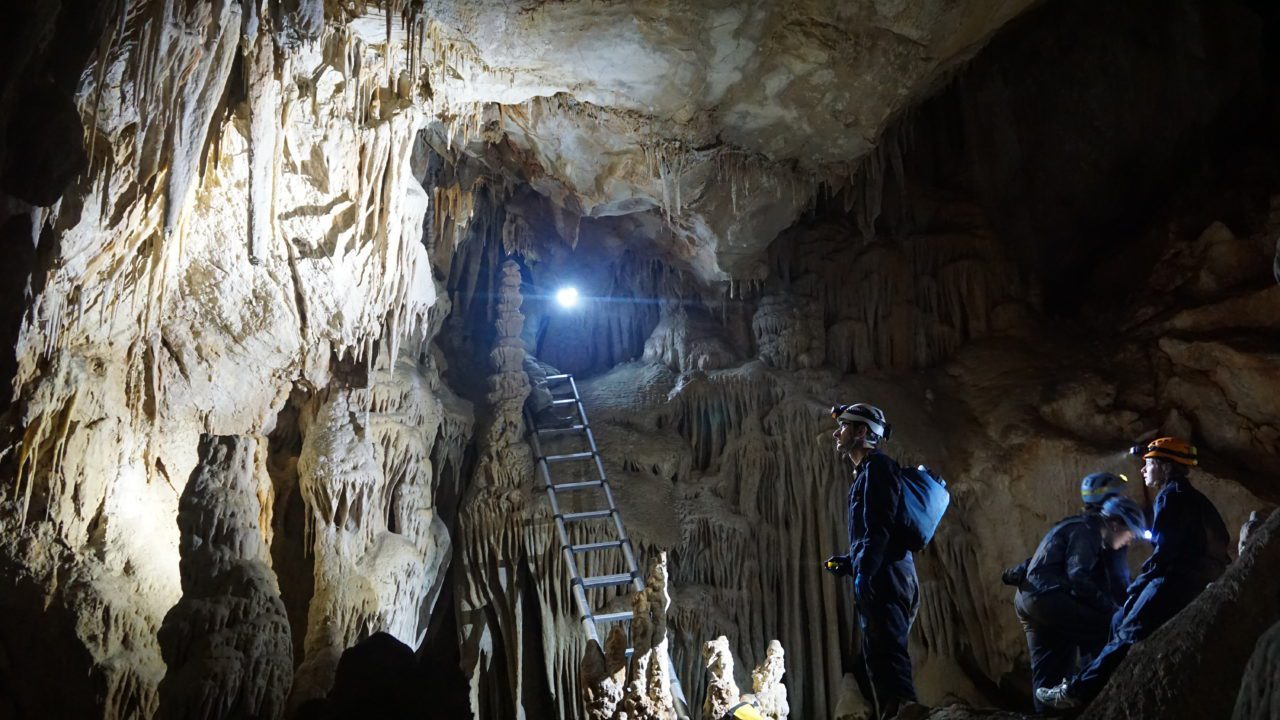
A recent study co-led by WHOI found that the Azores High has expanded dramatically in the past century, resulting from a warming climate due to a rise in anthropogenic greenhouse gas concentrations. Researchers associated with the study collect data inside the Buraca Gloriosa cave in western Portugal, a site of the stalagmite hydroclimate proxy record. Image credit: Diana Thatcher/ © Iowa State University

These changes in precipitation are tied to a subtropical high-pressure system known as the Azores High that is more often significantly larger in the industrial era (since 1850 CE) than in preindustrial times. The extremely large Azores Highs, which extend over the eastern subtropical North Atlantic and Europe during winter, resulting in anomalously dry conditions across the western Mediterranean, including the Iberian Peninsula.

The Azores High “has changed dramatically in the past century,” and “these changes in North Atlantic climate are unprecedented within the last millennium,” according to the findings.

The paper states that the “industrial-era expansion of the Azores High in a warming climate is a result of the anthropogenic increase in atmospheric greenhouse gas concentrations.”

“What we are seeing here with the expansion of the Azores High is bad news for winter rainfall in the Iberian Peninsula. That has severe implications for agriculture and other sectors reliant on water resources,” says paper co-author Caroline Ummenhofer, an associate scientist in the Physical Oceanography Department at the Woods Hole Oceanographic Institution (WHOI).

The researchers used state-of-the-art climate model supercomputer simulations of the last 1200 years to isolate particular effects of volcanic, ozone/aerosols, solar variability, orbital variability, and well-mixed atmospheric greenhouse gas forcings. They found that only simulations with greenhouse gas concentrations included matched the climate record.

Using a set of numerical simulations known as the Last Millennium Ensemble, researchers found that extremely large Azores High areas occurred on average during15 winters in the 20th century compared to roughly 10 winters for all other 100-year periods over the previous millennium. “For the 20th century, this reflects a 50% increase in the frequency of winters with extremely large Azores High that are associated with dry conditions in the Iberian Peninsula – an occurrence rate not seen at any time during the previous 1000 years”, says Ummenhofer. In addition, researchers found that the most recent 25-year period available (1980-2005) averaged 6.5 winters with extremely large Azores High areas, while other 25-year periods since 1850 averaged 2.6 such winters. This makes it 2-3 times more likely now to experience a winter with an extremely large Azores High, compared to what it was between 1850 and 1980.

In addition to using climate model simulations, the research also relied on observations from the stalagmite carbon isotope record of hydroclimate from Buraca Gloriosa cave, Portugal.

“Paleoclimate archives, including speleothems, have provided evidence of unique hydroclimate conditions in Iberia during the last millennium, with relatively dry conditions in the Medieval Climate Anomaly, wet conditions in the Little Ice Age, and a trend toward dry conditions since about 1850 CE. Prior to this study, we hypothesized that the hydroclimate shifts were related to changes in the dynamics of the Azores High system. The modeling aspect of this study corroborates that these unique hydroclimate conditions were likely related to the size, intensity, and mean location of the Azores High system,” says Alan Wanamaker, professor in the Department of Geological and Atmospheric Sciences at Iowa State University.

“Although our previous findings using speleothems hinted at large changes in hydroclimate over the last 1000 years, the ability to diagnose the most likely causes of these shifts is exciting. Recent drying in Portugal is primarily related to greenhouse gas forcing causing an expansion of the Azores High, whereas earlier changes were largely related to the non-stationary behavior and the relative intensity of the Azores High system.”

“Our work is exciting because it uses observations, ensemble modeling, and proxy methods to characterize climate trends,” lead author Nathaniel Cresswell-Clay says. Cresswell-Clay was a guest investigator at WHOI at the time of the research; he is currently a graduate student in atmospheric sciences at the University of Washington. “We leveraged advantages of each data type to provide new insights into how the North Atlantic climate is changing.”


Johannes Gutenberg University produces insight into the pinning effects of skyrmions for non-conventional supercomputing

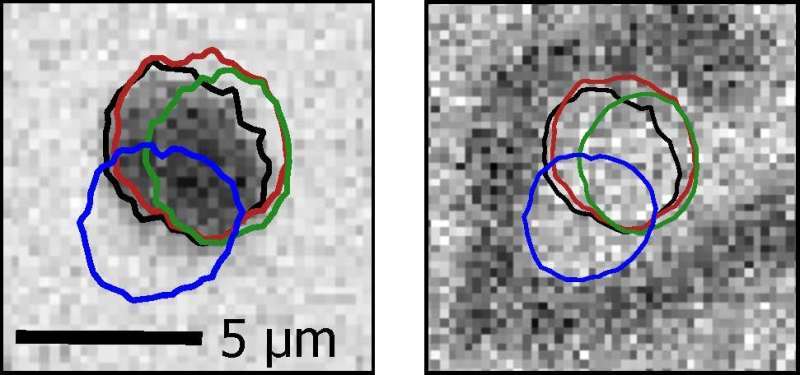
We know hurricanes are mainly from worldwide weather phenomena, but they have started to occur more frequently also in Europe. However, when researchers use an optical Kerr microscope to zoom in on thin films of magnetic material, they see something related happening in the microcosm, given the right conditions: a sort of micro-scale magnetic hurricane. Physicists call these whirlwind-like magnetic structures skyrmions. The idea is to use this phenomenon for data storage or processing devices. For those applications, the motion of the mini-whirlwinds, which themselves act as stand-alone particles or so-called quasi-particles, has to be exploited. The skyrmions can move both due to temperature effects as well as by electrical currents. While more powerful "pushes" are needed for certain applications, random thermal motion is desirable for other ones, such as in non-conventional supercomputing. ©: Raphael Gruber The boundaries of differently shaped skyrmions (left) are found at coinciding positions. And even the boundaries of stripe-like structures (right) match those positions.

Pinning: When skyrmions meet the "obstacle course"

The nanometer-thin material films in which skyrmions can be observed are never perfect. As a result, these little magnetic whirlwinds can get stuck – an effect known as pinning. In most cases, they get so caught up that they are unable to escape. It's like trying to roll a small ball on the surface of an old table covered by scratches and gouges. Its path will be deflected and if there is an indentation large enough, the ball gets stuck. When skyrmions get trapped like this it poses challenges, particularly for applications that rely on the thermal movement of the quasi-particles. Pinning can lead to a complete standstill of this movement.

Understanding the fundamentals of pinning

"I have used a Kerr microscope to study skyrmions of just a micrometer in size – or, to be more precise, their pinning behavior," said Raphael Gruber, a doctoral candidate and member of the research team of Professor Mathias Kläui at Johannes Gutenberg University Mainz (JGU). There are already several theories as to how the effect occurs. Most of them concentrate on looking at skyrmions as a whole; in other words, they focus on the motion of their centers. There even have been a few experimental studies but in the presence of strong pinning where the skyrmions are unable to move at all. "My investigations are based on weak pinning allowing the skyrmions to move a bit and keep hopping until they get caught up somewhere else," Gruber elaborated. His results provide interesting new insights. "Skyrmions do not fall like balls into a hole," the experimental physicist summarized. "What happens is that it sticks to something at its surface." 

Research group leads Professor Mathias Kläui is also delighted by the new findings, which are the result of many years of collaboration with groups from theoretical physics: "Under the aegis of the Skyrmionics Priority Program funded by the German Research Foundation and the Spin+X Collaborative Research Center, we have been investigating the dynamics of spin structures together with our counterparts working in the field of theoretical physics. I am pleased to say that this very productive collaboration, especially also between postgraduates in the active groups, has generated these fascinating results." Dr. Peter Virnau, who heads up a theoretical physics group in Mainz, added: "Skyrmions are a relatively new aspect in my research. My introduction to them was made possible by funding provided by the State of Rhineland-Palatinate through the TopDyn – Dynamics, and Topology Top-Level Research Area at JGU. I am glad our numerical methods could contribute to a better understanding of the experimental data."