

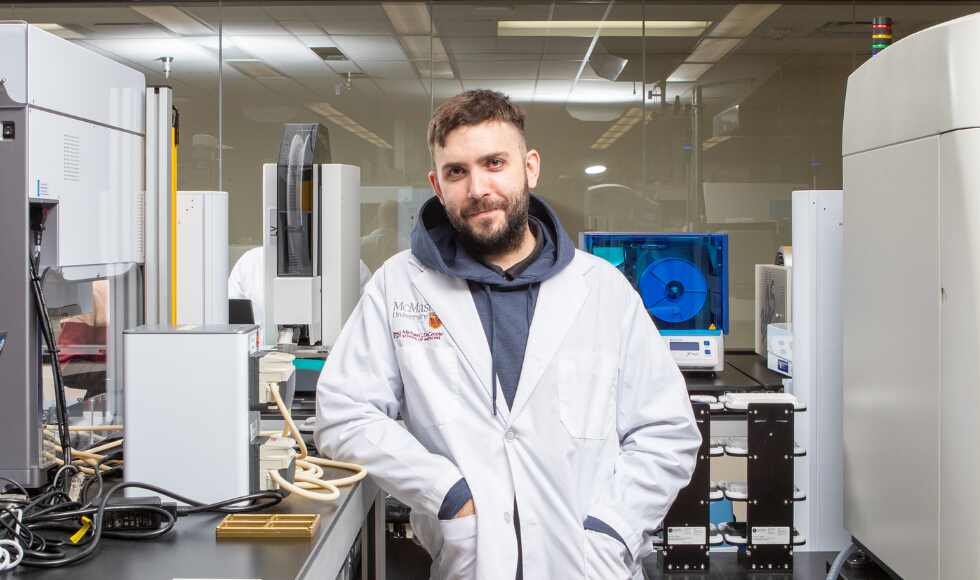
Jonathan Stokes, who is an assistant professor in the Department of Biomedicine & Biochemistry at McMaster University, led a research team that has developed a new AI model called SyntheMol. The model is capable of designing new antibiotics that can halt the spread of Acinetobacter baumannii. A photo of Jonathan Stokes during the research work was taken by Georgia Kirkos at McMaster University.

A glowing ray of hope: AI breakthrough unleashes a new frontier in antibiotic discovery

A groundbreaking collaboration between McMaster University and Stanford University has brought hope in the battle against drug-resistant bacteria. Researchers have developed a revolutionary generative AI model called SyntheMol, which can design billions of powerful and cost-effective antibiotic molecules. This breakthrough is set to transform the landscape of antibiotic discovery, offering optimism in the fight against superbugs. 

The rising threat of antibiotic resistance has created an urgent need for innovative solutions to combat drug-resistant bacteria. Traditional methods have been limited in isolating chemical compounds with potential antimicrobial properties, while also grappling with the challenges of manufacturing and testing new drugs within a reasonable timeframe.

In a recent article, researchers unveiled their novel SyntheMol AI model, designed to tackle the highly dangerous and resilient Acinetobacter baumannii bacteria. This bacteria is identified by the World Health Organization as one of the most perilous antibiotic-resistant bacteria, causing pneumonia, meningitis, and severe wound infections with limited treatment options.

Jonathan Stokes, assistant professor in McMaster's Department of Biomedicine & Biochemistry, emphasizes the urgent need for a robust pipeline of antibiotics, as bacterial evolution swiftly renders existing drugs ineffective. He highlights the indispensable role of AI in discovering new antibiotics efficiently and affordably.

Researchers utilized a generative model to access tens of billions of potential molecules. They leveraged a library of 132,000 molecular fragments and combined them using 13 chemical reactions, creating a wealth of 30 billion two-way combinations. The objective was to design novel molecules with the most potent antibacterial properties against A. baumannii.

Each prospective molecule generated was subjected to another AI model trained to predict its toxicity. Through this rigorous process, the researchers identified six molecules that demonstrated both robust antibacterial activity and non-toxicity, representing remarkable breakthroughs in the fight against A. baumannii.

SyntheMol not only designs novel molecules but also generates the step-by-step synthesis protocols necessary for their creation, bridging the gap between AI-designed molecules and the practical expertise of chemists.

This research was made possible in part by the Weston Family Foundation, the Canadian Institutes of Health Research, and Marnix and Mary Heersink. Their vision and commitment to advancing medical science have played a pivotal role in unleashing the potential of AI to combat the global threat of antibiotic resistance.

The SyntheMol AI model represents a potent weapon in our arsenal against superbugs. With billions of potential molecules waiting to be realized, this transformative technology will unlock a treasure trove of new antibiotics and pave the way for a more efficient and sustainable future in drug development.

While challenges remain, the collaborative efforts of researchers and the power of AI have ignited a beacon of hope in our fight against drug-resistant bacteria. With SyntheMol leading the charge, a brighter future beckons—one in which the resilience of superbugs is matched by the relentless ingenuity of human innovation.
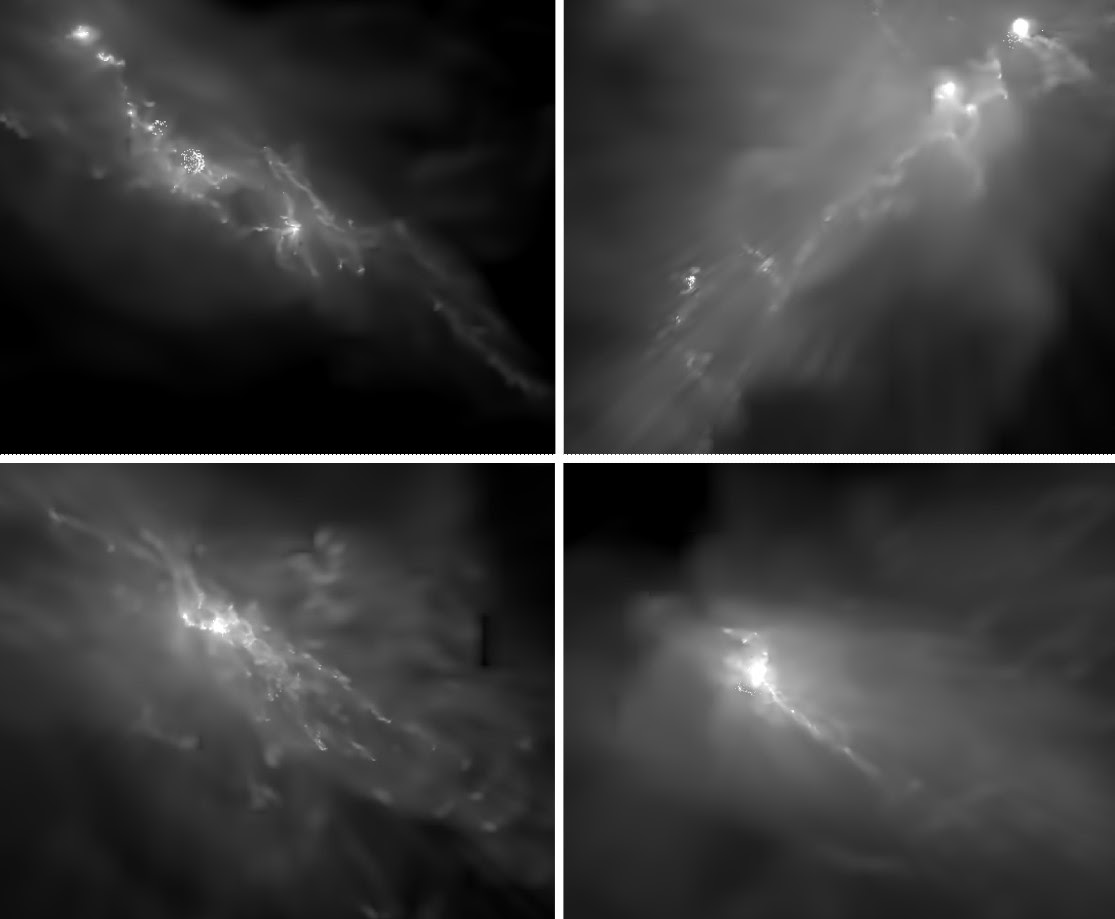
Synthetic images of the first galaxies based on simulations from Chen et al. These galaxies have irregular shapes and multiple bright spots indicating separating star-forming regions. Image Credit: ASIAA/Meng-Yuan Ho

Scientists use supercomputers to study the first galaxies, find out how the universe began

Amidst the infinite expanse of the cosmos, a groundbreaking research study led by Dr. Ke-Jung Chen from the Institute of Astronomy and Astrophysics at Academia Sinica (ASIAA) in Taiwan has embarked upon a journey of discovery, harnessing the power of advanced supercomputers to unravel the captivating story of the formation of the first galaxies. Through high-resolution three-dimensional radiation-hydrodynamics simulations, this cosmic odyssey illuminates the profound influence of the masses of the first stars on the physical properties of these ancient cosmic marvels.

Like celestial beacons, the first stars and galaxies ignited the cosmic dawn, ending the era of cosmic darkness that followed the Big Bang. With the aid of modern cosmology, Dr. Chen's team explores the hierarchical assembly of dark matter, paving the way for the birth of the first stars within mini-dark matter halos. The emergence of these stellar giants triggers a transformative process, shaping the course of cosmic evolution and giving rise to the enigmatic first galaxies.

In their quest to unravel this cosmic enigma, the researchers employed powerful supercomputers, standing as pillars of computational might, to conduct unparalleled high-resolution 3D radiation-hydrodynamics simulations. These simulations incorporated detailed supernova physics, enabling a closer examination of the complex interplay between astrophysical phenomena and the formation of the first galaxies.

The awe-inspiring results of this groundbreaking study reveal that the physical properties of the first galaxies are intricately linked to the masses of the first stars. Supernovae from these massive stellar entities enrich the primordial gas with metals, thereby enabling the formation of low-mass stars. In a stunning departure from the familiar spiral structures of our Milky Way, these ancient galaxies take on irregular shapes, lacking rotational support. Within their core, a captivating dance unfolds, giving birth to hundreds or thousands of second-generation stars—Pop II stars—while the gas within these galaxies becomes enriched with metallicity, reaching about 0.01 times that of the Sun.

The simulations further illuminate that the first stars, while significant, do not dominate the makeup of most first galaxies. The gas within massive halos is typically influenced by metals from other Pop III supernovae during hierarchical assembly, laying the foundation for the emergence of pristine stars.

These first galaxies stand as beacons of the cosmic dawn, guiding astronomers toward a deeper understanding of our cosmic origins. The imminent launch of the James Webb Space Telescope (JWST) and the forthcoming 30-meter-class ground-based telescopes holds the promise of directly detecting these celestial wonders, unveiling even more secrets locked within their ancient cores.

Dr. Chen's research marks a monumental stepping stone on the path to untangling the mysteries of the cosmos, bridging the gap between the demise of the first stars and the emergence of the first galaxies. The blend of visionary science, cutting-edge supercomputing technology, and the insatiable quest for knowledge has propelled humanity ever closer to comprehending the intricacies of the universe.

As we embark on this cosmic odyssey, we are reminded of the vastness of the cosmos and our unquenchable thirst for understanding. Through the lens of Dr. Chen's research, the celestial wonders that lie beyond our reach continue to inspire, beckoning us to seek answers, explore the unknown, and embrace the limitless possibilities that await us in the vast expanse of space.

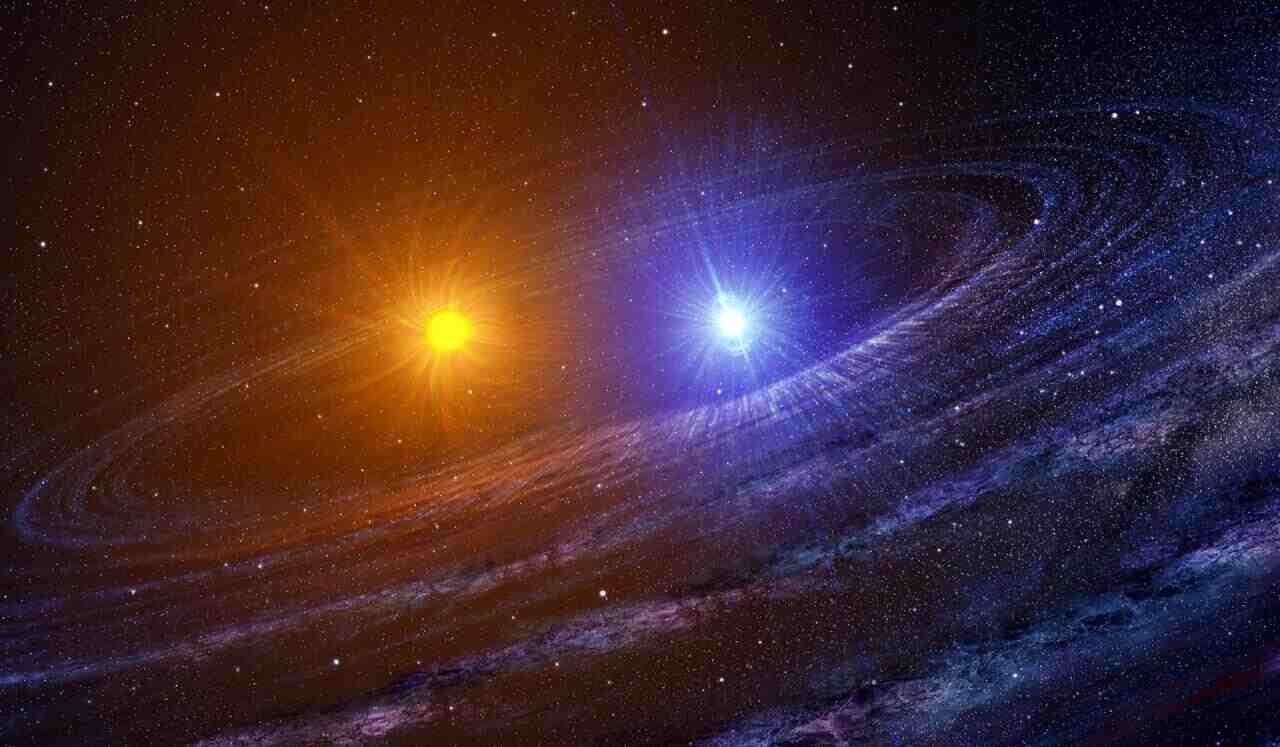
Artistic image of a binary system of a red giant star and a younger companion that can merge to produce a blue supergiant. Credit: Casey Reed, NASA

Unveiling the cosmic spectacle: Blue supergiant stars born from celestial unions

The cosmos is an endless source of fascination and wonder, and a recent study conducted by the Instituto de Astrofísica de Canarias (IAC) sheds new light on blue supergiant stars. These luminous giants have long captivated astronomers, but their origins have remained a mystery - until now. An international team of researchers has discovered that blue supergiant stars are born from the merger of two stellar companions, revealing a stunning celestial dance of stellar evolution.

Using state-of-the-art supercomputer models and precise observations of blue supergiants in the Large Magellanic Cloud, the team at IAC created simulations of stellar mergers. Dr. Athira Menon led the team in this groundbreaking study, unveiling the transformative birth of blue supergiants from the fusion of stellar companions. The team found that stars born from such mergers exhibit unique properties that align closely with the observed characteristics of blue supergiants.

Dr. Artemio Herrero, an essential collaborator in this celestial saga, explains that these findings help explain why blue supergiants inhabit the 'evolutionary gap' in classical stellar physics. Dr. Danny Lennon, another key contributor to the study, emphasizes the significance of these findings in reshaping our understanding of stellar evolution and the galactic ecosystem.

This remarkable discovery not only reveals the elusive origins of blue supergiant stars but also underscores the profound influence of stellar mergers on the morphology of galaxies and their stellar populations. As we gaze up at the celestial expanse, this celestial revelation beckons us to explore further, to dream bigger, and to embrace the beauty and complexity of the cosmos.

As we continue our journey of exploration, the next chapter promises to unveil even more celestial mysteries, probing the explosive fate of blue supergiant stars and their impact on the cosmic landscape. This awe-inspiring discovery reminds us of the boundless wonders that await us in the vast expanse of the cosmos, inviting us to embark on a journey of endless discovery and enlightenment.