Determining the age of stars has been a challenging task for astronomers for a long time. But thanks to NASA's Nancy Grace Roman Space Telescope and convolutional neural networks (CNNs), a breakthrough is on the horizon. This revolutionary approach holds the promise to unlock new insights into the age and evolution of stars, offering a deeper understanding of our Milky Way galaxy.
Unlike humans guessing ages at carnivals, determining the actual age of a star is quite difficult. Once a star like our Sun reaches the mature phase of its life and begins steady nuclear fusion, it changes imperceptibly over billions of years. However, the rotation period of a star is the key to unraveling the cosmic mysteries surrounding stellar populations, which change over time. By precisely measuring the rotation periods of hundreds of thousands of stars, NASA's Roman Space Telescope aims to discover groundbreaking findings after its launch in May 2027.
Stars are born spinning rapidly, and over billions of years, stars with a mass similar to or smaller than that of our Sun gradually slow down. This deceleration is caused by interactions between the stellar wind, a stream of charged particles, and the star's magnetic field. The resulting interactions remove angular momentum, causing the star to spin more slowly, much like an ice skater slowing down when extending their arms.
This phenomenon, known as magnetic braking, is influenced by the strength of the star's magnetic field. Stars with stronger magnetic fields, which usually spin faster, experience a more rapid slowdown. After approximately one billion years, stars with the same mass and age will rotate at the same rate. Thus, by knowing a star's mass and rotation rate, astronomers can estimate its age, enabling an in-depth study of galactic formation and evolution over time.
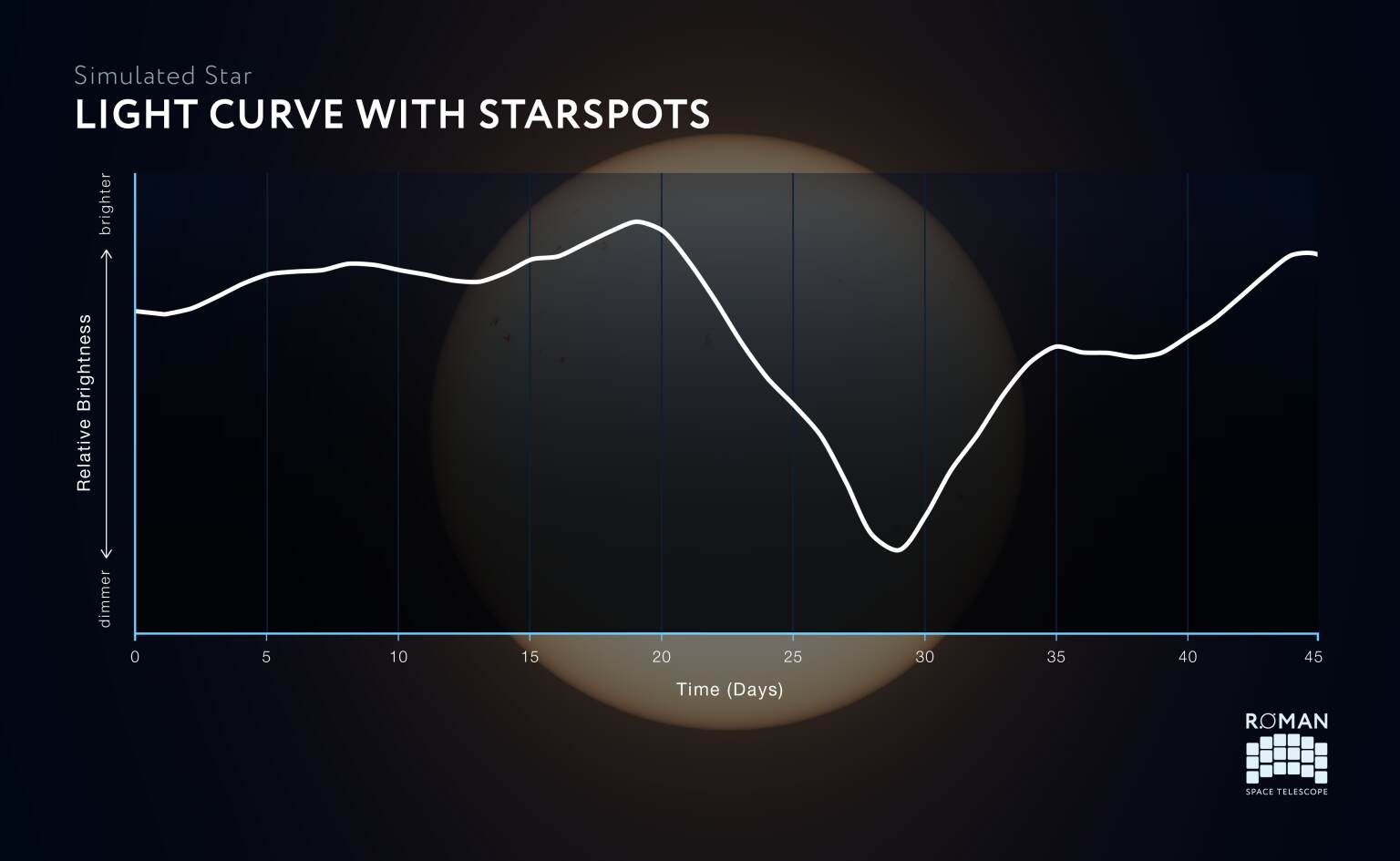
The challenge lies in measuring the rotation rate of distant stars. To overcome this hurdle, astronomers search for changes in a star's brightness caused by starspots. Starspots are cooler, darker patches on a star's surface, similar to sunspots on our Sun. Detecting periodic dimming and brightening as starspots rotate in and out of view allows for the determination of rotation periods, although complications arise when multiple spots are scattered across a star's surface. 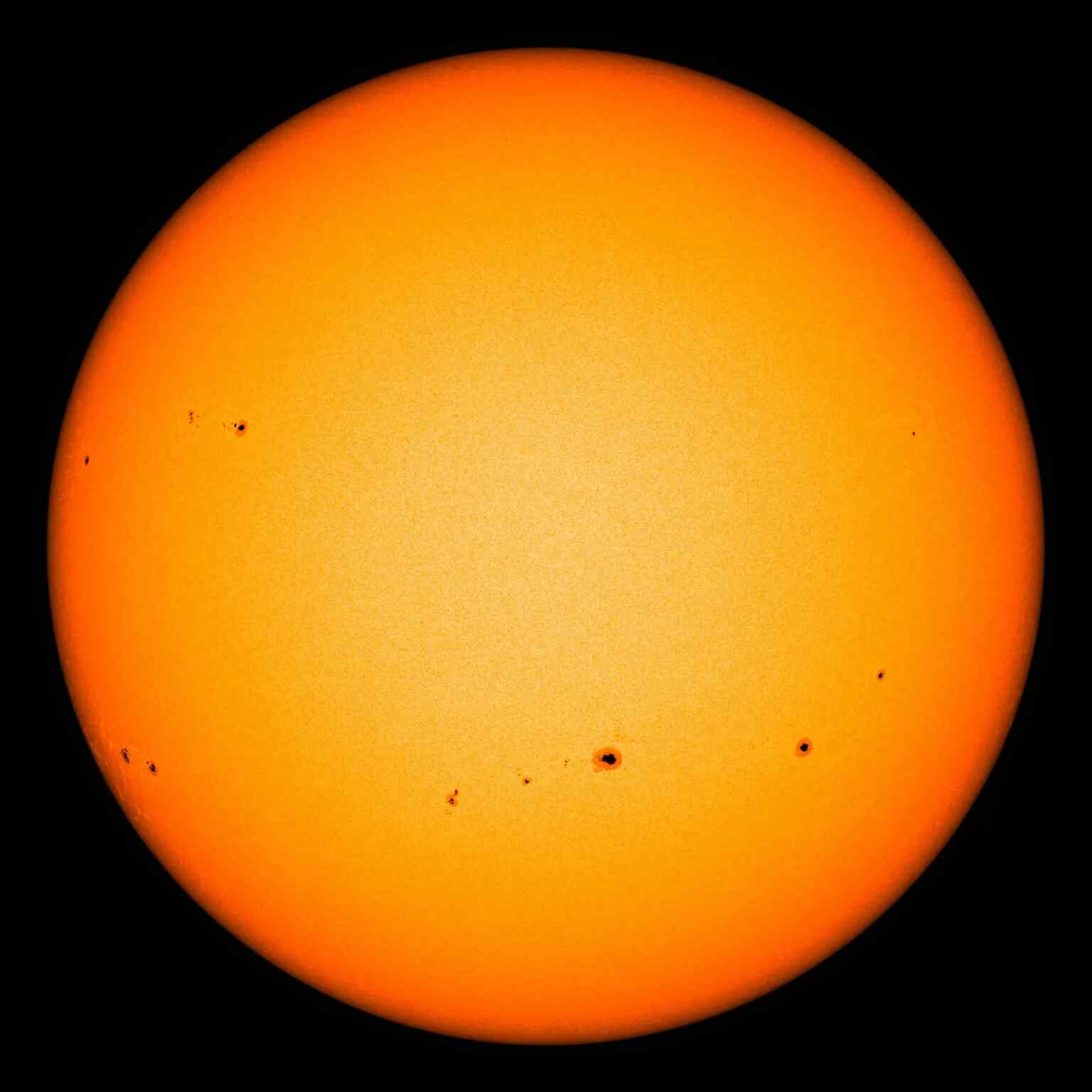
Enter convolutional neural networks, an artificial intelligence technique. A team of astronomers at the University of Florida, supported by NASA's Nancy Grace Roman Space Telescope project, is pioneering techniques to extract rotation periods from a star's brightness measurements over time. They train a convolutional neural network on simulated light curves, which are plots of a star's brightness over time.
Led by University of Florida postdoctoral associate Zachary Claytor, the team developed a program called "Butterpy" that generates simulated light curves based on various variables such as rotation rate, spot numbers, and spot lifetimes. Using the trained neural network, the team successfully analyzed data from NASA's TESS (Transiting Exoplanet Survey Satellite), accurately measuring longer stellar rotation periods that may pose challenges due to systematic effects.
The upcoming Roman Space Telescope will further amplify these efforts. Through its Galactic Bulge Time Domain Survey, which forms one of its core community surveys, Roman will collect data from hundreds of millions of stars, primarily focusing on the crowded region near our galaxy's center. This wealth of information will enable investigations ranging from the search for distant exoplanets to the determination of rotation rates of stars within our galaxy.
The implications of this research extend beyond the frontiers of astronomy. The use of convolutional neural networks showcases the power of artificial intelligence in addressing complex scientific challenges. By harnessing AI, the University of Florida team, in collaboration with NASA, demonstrates the possibilities of interdisciplinary approaches and technological innovation.
The Nancy Grace Roman Space Telescope, managed at NASA's Goddard Space Flight Center, involves participation from NASA's Jet Propulsion Laboratory, Caltech/IPAC, the Space Telescope Science Institute, and scientists from various research institutions. Industrial partners include BAE Systems, Inc., L3Harris Technologies, and Teledyne Scientific & Imaging.
As humanity ventures deeper into the cosmos, the synergy between technology and diverse perspectives brings us closer to unraveling the secrets of the universe. The combination of NASA's Roman Telescope and convolutional neural networks marks a remarkable milestone, fueling hopes for profound discoveries that will reshape our understanding of the age and evolution of stars, as well as the grand tapestry of the cosmos.