

SUPERCOMPUTING NEWS SUPERCOMPUTING NEWS
    • MEDIA KIT
    • MOST READ
    • RSS FEED
    • ACADEMIA
    • AEROSPACE
    • APPLICATIONS
    • ASTRONOMY
    • AUTOMOTIVE
    • BIG DATA
    • BIOLOGY
    • CHEMISTRY
    • CLIENTS
    • CLOUD
    • DEFENSE
    • DEVELOPER TOOLS
    • EARTH SCIENCES
    • ECONOMICS
    • ENGINEERING
    • ENTERTAINMENT
    • GAMING
    • GOVERNMENT
    • HEALTH
    • OIL & GAS
    • INDUSTRY
    • INTERCONNECTS
    • MANUFACTURING
    • MIDDLEWARE
    • MOVIES
    • NETWORKS
    • PHYSICS
    • PROCESSORS
    • RETAIL
    • SCIENCE
    • STORAGE
    • SYSTEMS
    • VISUALIZATION
    • AcyMailing subscription form

    • ADD YOUR VIDEOS
    • MANAGE VIDEOS
    • CONVERSATION INBOX
    • SOCIAL ADVERTISER
    • SOCIAL NETWORK VIDEOS
    • SURVEYS
    • GROUPS
    • PAGES
    • MARKETPLACE LISTINGS
    • APPLICATIONS BROWSER
    • PRIVACY CONFIRM REQUEST
    • PRIVACY CREATE REQUEST
    • LEADERBOARD
    • POINTS LISTING
      • BADGES
    • TRADE SHOWS
Sign In
Tyler O'Neal, Staff Editor SCIENCE January 19, 2022, 5:00 am

UWS builds bleeding-edge AI tech that diagnoses Covid-19 in minutes

Pioneering Artificial Intelligence (AI) technology, developed by experts at the University of the West of Scotland (UWS), is capable of accurately diagnosing Covid-19 in just a few minutes. Webp.net resizeimage 2022 01 19T200736.626 4a989
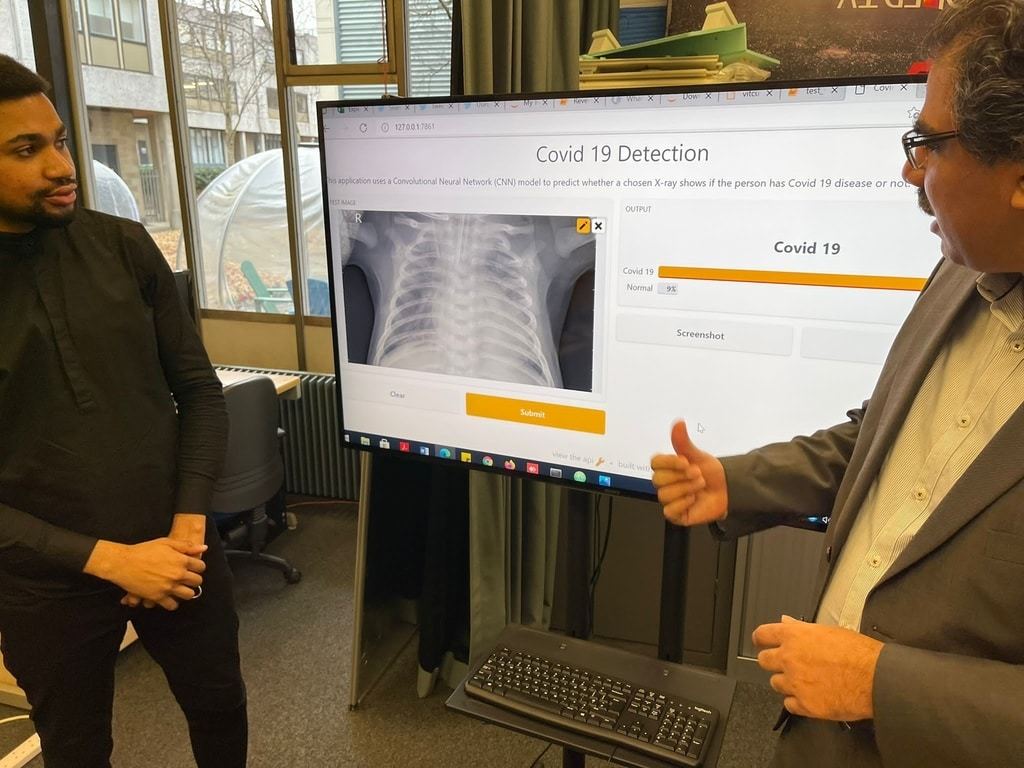
The groundbreaking program can detect the virus far more quickly than a PCR test; which typically takes around 2-hours.
It is hoped that the technology can eventually be used to help relieve strain on hard-pressed Accident and Emergency departments, particularly in countries where PCR tests are not readily available.

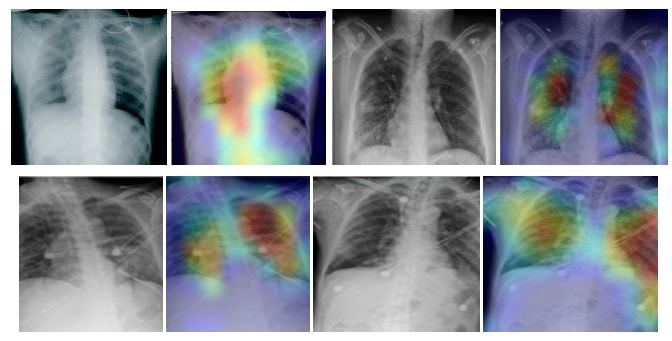
The state-of-the-art technique utilizes x-ray technology, comparing scans to a database of around 3000 images, belonging to patients with Covid-19, healthy individuals, and people with viral pneumonia.

It then uses an AI process known as a deep convolutional neural network, an algorithm typically used to analyze visual imagery, to make a diagnosis. During an extensive testing phase, the technique proved to be more than 98% accurate.

Professor Naeem Ramzan, Director of the Affective and Human Computing for SMART Environments Research Centre at UWS, led the three-person team behind the project, which also involved Gabriel Okolo and Dr. Stamos Katsigiannis. 2fe5bf00 49f7 4db1 8cff c451c6 4b433
He said: “There has long been a need for a quick and reliable tool that can detect Covid-19, and this has become even more true with the upswing of the Omicron variant. 

“Several countries are unable to carry out large numbers of Covid tests because of limited diagnosis tools, but this technique utilizes easily accessible technology to quickly detect the virus.

“Covid-19 symptoms are not visible in x-rays during the early stages of infection, so it is important to note that the technology cannot fully replace PCR tests.

“However, it can still play an important role in curtailing the viruses spread especially when PCR tests are not readily available.

“It could prove to be crucial, and potentially life-saving, when diagnosing severe cases of the virus, helping determine what treatment may be required.” 

Professor Milan Radosavljevic, Vice-Principal of Research, Innovation, and Engagement at UWS, added: “This is potentially game-changing research. It’s another example of the purposeful, impactful work that has gone on at UWS throughout the pandemic, making a genuine difference in the fight against Covid-19.

“I am incredibly proud of the drive and innovation demonstrated by our internationally renowned academics, as they strive to find solutions to urgent global problems.”

The team now plans to expand the study, incorporating a greater database of x-ray images acquired by different models of x-ray machines, to evaluate the suitability of the approach in a clinical setting.

To read the research in full, visit: https://www.mdpi.com/1424-8220/21/17/5702

New AI model helps discover causes of motor neuron disease

Tyler O'Neal, Staff Editor SCIENCE January 18, 2022, 7:00 pm

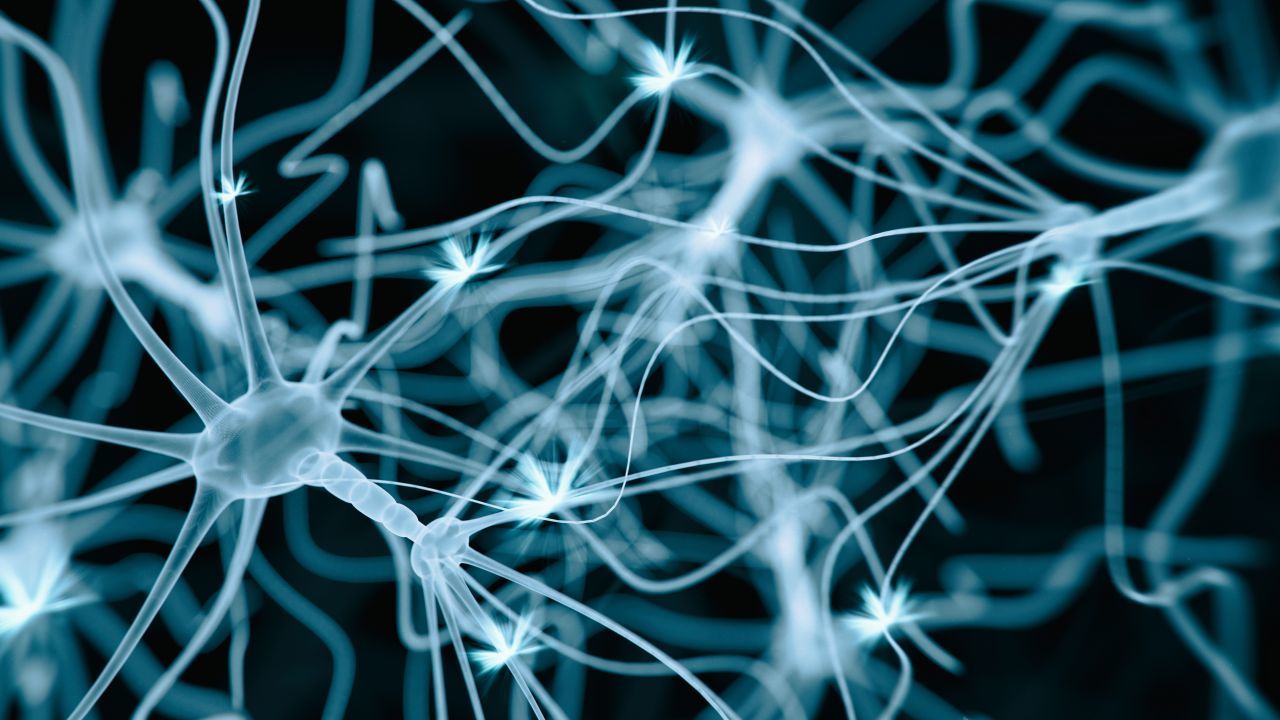
UK scientists have developed a new machine learning model for the discovery of genetic risk factors for diseases such as Motor Neuron Disease (MND). GettyImages 1177118336 10d7b
Designed by researchers from the University of Sheffield in Sheffield, South Yorkshire, England, and the Stanford University School of Medicine in the US, the machine learning tool, named RefMap, has already been utilized by the team to discover 690 risk genes for motor neuron disease, many of which are discoveries.

One of the genes highlighted as a new MND gene, called KANK1, has been shown by the team to produce neurotoxicity in human neurons very similar to that observed in the brains of patients. Although at an early stage, this is potentially a new target for the design of new drugs.

Dr. Johnathan Cooper-Knock, from the University of Sheffield’s Neuroscience Institute, said: “This new tool will help us to understand and profile the genetic basis of MND. Using this model we have already seen a dramatic increase in the number of risk genes for MND, from approximately 15 to 690.

“Each new risk gene discovered is a potential target for the development of new treatments for MND and could also pave the way for genetic testing for families to work out their risk of disease.”

The 690 new genes identified by RefMap lead to a five-fold increase in discovered heritability, a measure that describes how much of the disease is due to a variation in genetic factors.

“RefMap identifies risk genes by integrating genetic and epigenetic data. It is a generic tool and we are applying it to more diseases in the lab,” Sai Zhang, Ph.D., instructor of genetics at the Stanford University School of Medicine said.

Michael Snyder, Ph.D., professor and chair of the department of genetics at the  Stanford School of Medicine and also the corresponding author of this work added: “By doing machine learning for genome analysis, we are discovering more hidden genes for human complex diseases such as MND, which will eventually power personalized treatment and intervention.”
South Korean prof develops Terrain-Aware AI for predicting battle outcomes in StarCraft 2

Tyler O'Neal, Staff Editor SCIENCE January 18, 2022, 5:00 pm

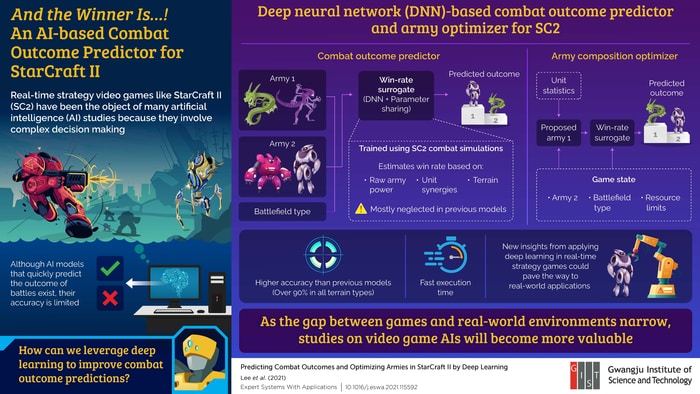
The proposed model leverages deep-learning techniques to consider many complex in-game factors simultaneously and make accurate predictions low res infographics jpg 0974c

As the need for more sophisticated artificial intelligence (AIs) grows, the challenges that they must face along the way have to evolve accordingly. Real-time strategy (RTS) video games, unlike turn-based board games such as chess, can serve as a vast playground for pushing the limits of AI. In particular, StarCraft II (SC2), one of the world’s most popular and skill-demanding RTS games, has already been the object of a few groundbreaking AI-related studies.

In SC2 matches, each player has to build up and command an army of varied units to defeat their opponent using wit and grit. While AI-based systems can excel at many aspects of the game, improving their decision-making regarding when their units should be sent to or relocated during a battle is remarkably difficult. This is because armies can be composed of virtually endless combinations of different units that synergize depending on various factors. In addition, the characteristics of the battlefield (‘terrain’) where the combat takes place can have a decisive impact on the outcome. So far, no study has focused on both of these aspects simultaneously for making AI-based combat outcome predictions—an essential skill for any SC2 player.

In a recent study, a team of scientists from the Gwangju Institute of Science and Technology (GIST) in Korea tackled this issue using a deep learning-based approach. By building and training a deep neural network (DNN) model, the researchers developed a system that could predict the outcome of an SC2 battle by simultaneously considering the detailed composition of the opposing armies and the type of terrain they would fight at. Their paper was made available online on July 24, 2021, and was published in Volume 185 of Expert Systems With Applications on December 15, 2021.

The proposed DNN model leveraged a technique called ‘parameter sharing,’ which allowed it to effectively and precisely analyze the circumstances of the battlefield in a very short time. “Our AI was capable of taking numerous complex factors into consideration to predict the overall combat result. When implemented, such a model would help an AI player make proper decisions with regards to its offensive and defensive strategies,” highlights Professor Chang Wook Ahn, who led the study.

Perfecting the way an AI makes decisions in a complex video game like SC2 will eventually lead to AI-based systems that can assess and correctly tackle difficult situations in the real world. As Prof. Ahn explains: “We believe that the AIs used in gaming and in industry are not that different and that more AI applications will soon become tangible in our daily life. Thus, our continued study in this topic could become one of the cornerstones of the global endeavor to develop AIs that can perceive situations and behave logically.”

Studies on video game AI systems will likely become increasingly valuable as the gap between games and real-world environments narrows, so keep an eye out for further advances in this field!

  1. German Research Foundation funds project at the University of Göttingen to study causality
  2. Agnostiq, Mila partner to bridge quantum supercomputing, ML

Page 54 of 61

  • 49
  • 50
  • 51
  • 52
  • 53
  • 54
  • 55
  • 56
  • 57
  • 58
POPULAR RIGHT NOW
  • Supercomputers replace ‘bathtub’ flood maps with physics-based digital twins of Britain’s coastline
    Supercomputers replace ‘bathtub’ flood maps with physics-based digital twins of Britain’s coastline
  • Supercomputers push neural quantum simulation beyond previous limits
    Supercomputers push neural quantum simulation beyond previous limits
  • Intel’s AI supercomputing revival: Q2 financial surge signals new era for CPU-powered HPC infrastructure
    Intel’s AI supercomputing revival: Q2 financial surge signals new era for CPU-powered HPC infrastructure
  • AWS supercomputing investment reaches historic scale as Amazon’s AI strategy powers record financial results
    AWS supercomputing investment reaches historic scale as Amazon’s AI strategy powers record financial results
  • AI infrastructure financing fears shake semiconductor sector
    AI infrastructure financing fears shake semiconductor sector
  • Catching the wave of the future: Supercomputers unlock the hidden dynamics of Venus
    Catching the wave of the future: Supercomputers unlock the hidden dynamics of Venus
  • NCAR supercomputers run planet scale climate experiments impossible in the real world
    NCAR supercomputers run planet scale climate experiments impossible in the real world
  • AI hunts the cosmos: Machine learning helps astronomers discover the first ‘Wandering’ supermassive black hole caught destroying a star
    AI hunts the cosmos: Machine learning helps astronomers discover the first ‘Wandering’ supermassive black hole caught destroying a star
  • Supercomputing for the masses: Meta's vision of a personal superintelligence for everyone
    Supercomputing for the masses: Meta's vision of a personal superintelligence for everyone
  • NVIDIA helps turn AI compute into a new asset class as Wall Street mobilizes $500 billion
    NVIDIA helps turn AI compute into a new asset class as Wall Street mobilizes $500 billion
THIS YEAR'S MOST READ
  • Wall Street wants to trade supercomputing power like oil
    Wall Street wants to trade supercomputing power like oil
  • Beamforming the future: BeammWave's 6G push signals the rise of orbital-terrestrial wireless networks
    Joakim Axmon
    Joakim Axmon
  • Cosmic ambition at scale: UK’s supercomputer unlocks a 2.5 petabytes universe
    Cosmic ambition at scale: UK’s supercomputer unlocks a 2.5 petabytes universe
  • Hidden order, revealed at scale: Supercomputing, electron ptychography uncover the inner workings of relaxor ferroelectrics
    Hidden order, revealed at scale: Supercomputing, electron ptychography uncover the inner workings of relaxor ferroelectrics
  • Intel's Q1 results signal supercomputing surge driving Xeon momentum
    Intel's Q1 results signal supercomputing surge driving Xeon momentum
  • When stars fall apart: Supercomputing reveals the hidden physics of black holes
    When stars fall apart: Supercomputing reveals the hidden physics of black holes
  • MIT develops computational framework to probe dark matter via gravitational waves
    MIT develops computational framework to probe dark matter via gravitational waves
  • Explainable AI moves into the watershed: FAMU-FSU engineers build predictive framework for real-time E. coli forecasting
    FAMU-FSU College of Engineering Assistant Professor Nasrin Alamdari. (Scott Holstein/FAMU-FSU College of Engineering)
    FAMU-FSU College of Engineering Assistant Professor Nasrin Alamdari. (Scott Holstein/FAMU-FSU College of Engineering)
  • Multi-layer simulations reveal the hidden supply chain of solar prominences
    Multi-layer simulations reveal the hidden supply chain of solar prominences
  • Japanese scientists decode dolphin speed with supercomputing: Turbulence, vortices, and the hidden physics of propulsion
    Japanese scientists decode dolphin speed with supercomputing: Turbulence, vortices, and the hidden physics of propulsion
  • FRONTPAGE
  • LATEST
  • POPULAR
  • REGISTER
  • SOCIAL
  • VIDEO
  • SUBSCRIPTION
  • RSS
  • GUIDELINES
  • PRIVACY
  • TOS
  • ABOUT
  • +1 (816) 799-4488
  • editorial@supercomputingonline.com
© 2001 - 2026 SuperComputingOnline.com, LLC. All rights reserved. This material may not be published, broadcast, rewritten or redistributed without permission.
Sign In
  • FRONT PAGE
  • LATEST
    • MEDIA KIT
    • MOST READ
    • RSS FEED
    • ACADEMIA
    • AEROSPACE
    • APPLICATIONS
    • ASTRONOMY
    • AUTOMOTIVE
    • BIG DATA
    • BIOLOGY
    • CHEMISTRY
    • CLIENTS
    • CLOUD
    • DEFENSE
    • DEVELOPER TOOLS
    • EARTH SCIENCES
    • ECONOMICS
    • ENGINEERING
    • ENTERTAINMENT
    • HEALTH
    • INDUSTRY
    • INTERCONNECTS
    • GAMING
    • GOVERNMENT
    • MANUFACTURING
    • MIDDLEWARE
    • MOVIES
    • NETWORKS
    • OIL & GAS
    • PHYSICS
    • PROCESSORS
    • RETAIL
    • SCIENCE
    • STORAGE
    • SYSTEMS
    • VISUALIZATION
  • VIDEOS
    • ADD YOUR VIDEOS
    • MANAGE VIDEOS
  • COMMUNITY
    • TRADE SHOWS
    • SOCIAL NETWORK VIDEOS
    • SURVEYS
    • APPLICATIONS BROWSER
    • CONVERSATION INBOX
    • SOCIAL ADVERTISER
    • GROUPS
    • MARKETPLACE LISTINGS
    • PAGES
    • LEADERBOARD
    • POINTS LISTING
      • BADGES
    • PRIVACY CONFIRM REQUEST
    • PRIVACY CREATE REQUEST

Hey there! We noticed you’re using an ad blocker.