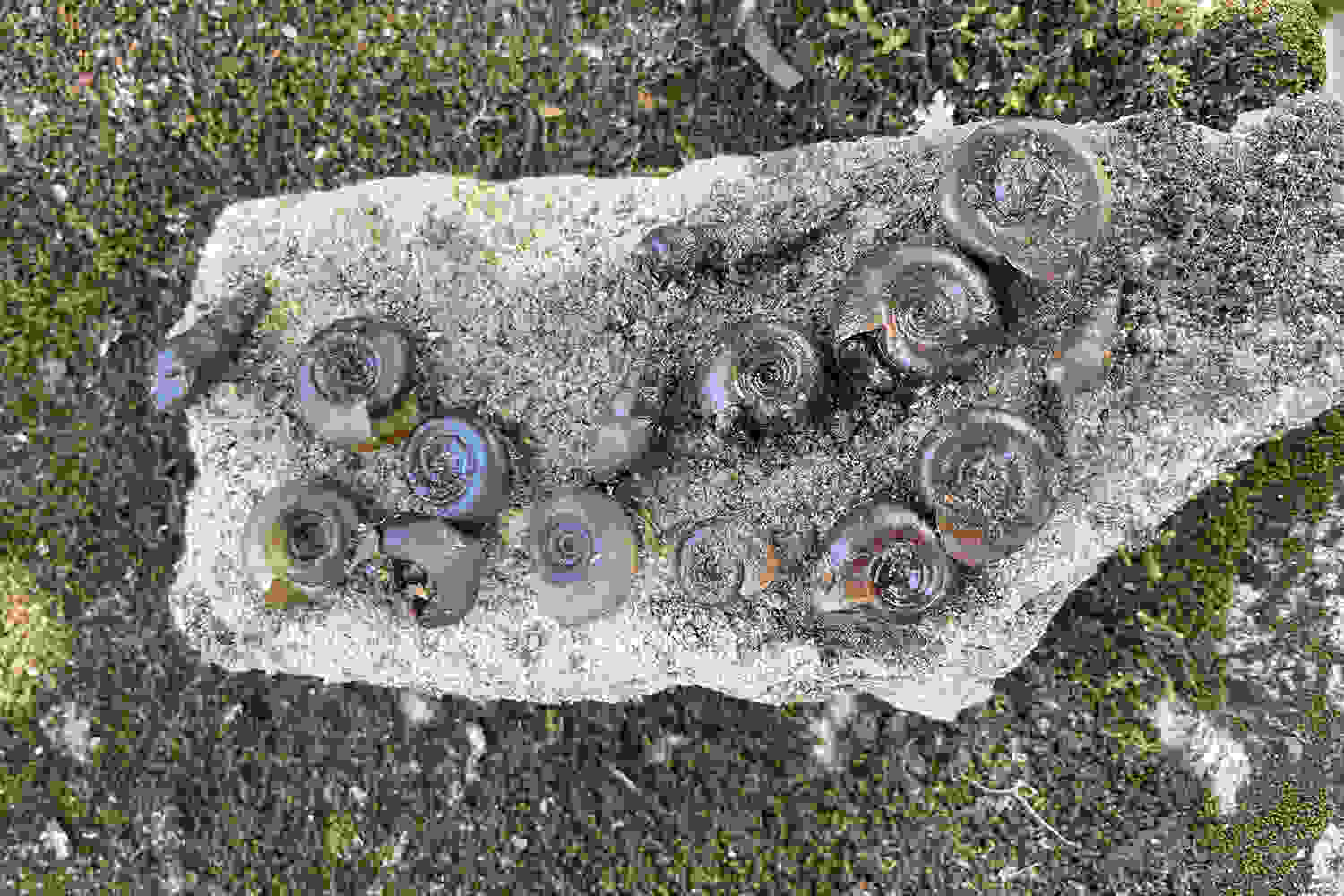
Hubble Spots Spiraling Stars

Nature likes spirals — from the whirlpool of a hurricane, to pinwheel-shaped protoplanetary disks around newborn stars, to the vast realms of spiral galaxies across our universe.Now astronomers are bemused to find young stars that are spiraling into the center of a massive cluster of stars in the Small Magellanic Cloud, a satellite galaxy of the Milky Way.For more information, visit https://nasa...
...

Read more

Simulations aid the Indian Institute of Science in gauging battery performance

A crucial but poorly-studied parameter that dictates battery performance is the migration barrier. It determines the rate at which ions move through an electrode inside the battery, and ultimately the rate at which it charges or discharges. Because it is hard to measure the migration barrier in the lab, researchers typically use different supercomputer simulations and approximations to quickly predict migration barrier values. However, very few of these simulations have been experimentally verified so far.   Schematic of ionic migration in a sample intercalation host framework. Yellow spheres are the moving ions (e.g., Li, Na, Mg), while the other species constituting the structure are indicated by blue and orange spheres. The inset indicates the nominal variation of the potential energy as the ion migrates within the structure, with Em signifying the migration barrier.  CREDIT Reshma Devi

In a new study, researchers at the Indian Institute of Science (IISc) and their collaborators comprehensively analyzed widely-used computational techniques and verified their predictions of the migration barrier values against actual data observed in lab measurements. Based on their analysis, the team proposes a set of robust guidelines to help researchers choose the most accurate computational framework for testing materials that can be used to develop highly efficient batteries in the future.   

Lithium-ion batteries, which power mobile phones and laptops, consist of three major components: a solid negative electrode (anode), a solid positive electrode (cathode), and either a liquid or solid electrolyte that separates them. While charging or discharging, lithium ions migrate across the electrolyte, creating a potential difference. “The electrodes in lithium-ion batteries are not 100% solid. Think of them like a sponge. They have ‘pores’ through which a lithium-ion has to pass,” explains Sai Gautam Gopalakrishnan, Assistant Professor at the Department of Materials Engineering, IISc, and corresponding author of the paper published in npj Computational Materials   

An important parameter that determines the rate at which the lithium ions penetrate these pores is the migration barrier – the energy threshold that the ions need to overcome to traverse through the electrode. “The lower the migration barrier, the faster you can charge or discharge the battery,” says Reshma Devi, a Ph.D. student at the Department of Materials Engineering and the first author of the study.   

“The same migration barrier value is calculated by one group using one computational technique and another group by using another technique. The values may be equivalent, but we cannot know that for sure,” explains Gopalakrishnan.   

Two specific approximations, called Strongly Constrained and Approximately Normed (SCAN) and Generalised Gradient Approximation (GGA), are the most widely used methods to computationally arrive at the migration barrier, but each one has its disadvantages. “We took nine different materials,” Reshma Devi explains. “We checked which of the approximations come closest to the experimental values for each.”   

The team found that the SCAN functional had better numerical accuracy overall, but the GGA calculations were faster. GGA was found to have a reasonable level of accuracy in calculating the migration barrier in certain materials (such as lithium phosphate), and might be a better option if a quick estimation was needed, the researchers suggest.  

Such insights can be valuable for scientists who seek to test new materials for their performance before they are adapted for battery-related applications, says Gopalakrishnan. “Suppose you have an unknown material and if you quickly want to see whether this material is useful in your application, then you can use computations to do that, provided you know which computational approximation gives you the closest values. This is useful when it comes to materials discovery.”   

The team is also working on developing machine learning tools that can help speed up predictions of migration barriers for a diverse range of materials.   

Cosmological thinking meets neuroscience in new theory about brain connections

A collaboration between a former cosmologist and a computational neuroscientist at Janelia generates a new way to identify essential connections between brain cells.

After a career spent probing the mysteries of the universe, a Janelia Research Campus senior scientist is now exploring the mysteries of the human brain and developing new insights into the connections between brain cells.  

Tirthabir Biswas had a successful career as a theoretical high-energy physicist when he came to Janelia on a sabbatical in 2018. Biswas still enjoyed tackling problems about the universe, but the field had lost some of its excitement, with many major questions already answered.

“Neuroscience today is a little like physics a hundred years ago when physics had so much data and they didn’t know what was going on and it was exciting,” says Biswas, who is part of the Fitzgerald Lab. “There is a lot of information in neuroscience and a lot of data, and they understand some specific big circuits, but there is still not an overarching theoretical understanding, and there is an opportunity to make a contribution.”

One of the biggest unanswered questions in neuroscience revolves around connections between brain cells. There are hundreds of times more connections in the human brain than there are stars in the Milky Way, but which brain cells are connected and why remains a mystery. This limits scientists’ ability to precisely treat mental health issues and develop more accurate artificial intelligence.

The challenge of developing a mathematical theory to better understand these connections was a problem Janelia Group Leader James Fitzgerald first posed when Tirthabir Biswas arrived in his lab.

While Fitzgerald was out of town for a few days, Biswas sat down with pen and paper and used his background in high-dimensional geometry to think about the problem – a different approach than that of neuroscientists, who typically rely on calculus and algebra to address mathematical problems. Within days, Biswas had a major insight into the solution and approached Fitzgerald as soon as he returned.

“It seemed this was a very difficult problem, so if I say, ‘I’ve solved the problem,’ he’ll probably think I’m crazy,” Biswas recalls. “But I decided to say it anyway.” Fitzgerald was initially skeptical, but once Biswas finished laying out his work, they both realized he was on to something important. James Fitzgerald

“He had an insight that is really fundamental to how these networks work that people hadn’t had before,” Fitzgerald says. “This insight was enabled by cross-disciplinary thinking. This insight was a flash of brilliance that he had because of how he thinks, and it just translated to this new problem he’s never worked on before.”

Biswas’s idea helped the team develop a new way to identify essential connections between brain cells, which was published on June 29 in Physical Review Research. By analyzing neural networks – mathematical models that mimic brain cells and their connections – they were able to figure out that certain connections in the brain may be more essential than others.

Specifically, they looked at how these networks transform inputs into outputs. For example, an input could be a signal detected by the eye and the output could be the resulting brain activity. They looked at which connection patterns resulted in the same input-output transformation.  

As expected, there were an infinite number of possible connections for each input-output combination. But they also found that certain connections appeared in every model, leading the team to suggest that these necessary connections could be present in real brains. A better understanding of which connections are more essential than others could lead to greater awareness of how real neural networks in the brain perform computations.

The next step is for experimental neuroscientists to test this new mathematical theory to see if it can be used to make predictions about what is happening in the brain. The theory has direct applications to Janelia’s efforts to map the connectome of the fly brain and record brain activity in larval zebrafish. Figuring out underlying theoretical principles in these small animals can be used to understand connections in the human brain, where recording such activity is not yet feasible.

“What we are trying to do is put forward some theoretical ways of understanding what really matters and use these simple brains to test those theories,” Fitzgerald says. “As they are verified in simple brains, the general theory can be used to think about how brain computation works in larger brains.”