NYU modeling predicts mutation hotspots, antibody escapers in SARS-CoV-2 spike protein

The study identifies the structural basis of spike protein mutations with stronger binding and antibody resistance, which may explain the transmissibility of new COVID-19 variants

SARS-CoV-2 has evolved to acquire mutations on the spike protein--the part of the virus that protrudes from its surface and latches onto cells to infect them--that enhance the coronavirus's ability to bind to human cells or evade antibodies. A new study from the Centers for Genomics and Systems Biology at New York University and NYU Abu Dhabi uses computational modeling to assess the biological significance of spike protein mutations, uncovering versions of the virus that bind more tightly or resist antibodies and offering a promising public health surveillance tool.

The study, which appears in the Journal of Molecular Biology, also suggests that these mutations on the spike protein are a key reason for the virus's rapid spread in parts of the world.

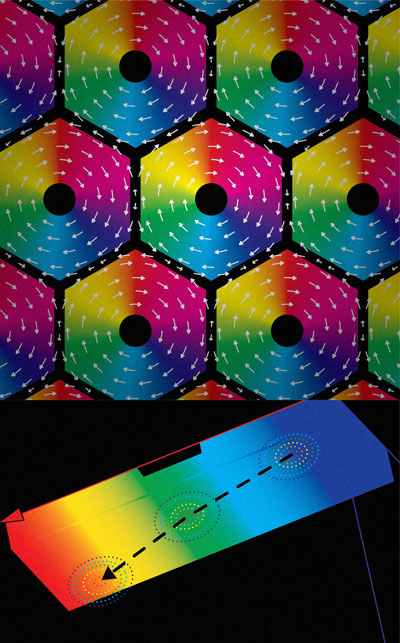
New and more transmissible COVID-19 variants have emerged in recent months, fueling surges of cases in countries like India and Brazil. As a public health measure, rapid surveillance methods are needed to determine the biological effects of variants and to help anticipate emerging infectious viral strains. But monitoring new variants is no small task; genome sequencing shows that the SARS-CoV-2 spike protein alone, for example, has about 5,000 possible variants. Computational modeling shows that mutations on SARS-CoV-2's spike protein that enhance the virus' ability to bind to the ACE2 receptor occur in two clusters or mutation "hotspots."  CREDIT Image courtesy of Hin Hark Gan and Kristin Gunsalus, NYU's Department of Biology

"Screening such a large set of variants poses a tremendous challenge for conventional experimental methods," said Hin Hark Gan, a senior research scientist at NYU's Center for Genomics and Systems Biology and the study's lead author. "An advantage of computer-based modeling is that a hundred mutations can be readily assessed in a few days."

Gan and his colleagues turned to a computational method that models how the SARS-CoV-2 spike protein recognizes the ACE2 receptor--a protein on the surface of many types of cells--to gain entry into host cells. Studies of coronaviruses indicate that spike-ACE2 recognition is the basis for infection.

The researchers focused on screening the mutations located where the spike protein and ACE2 receptor meet. They assessed 1,003 mutation combinations in the spike and ACE2 proteins, including those resulting in the fast-spreading spike variants that have originated in Brazil, South Africa, the U.K., and India.

Their systematic assessment of variants uncovered that spike mutations that bind tightly to the ACE2 receptor occur in two clusters or mutation "hotspots" on the binding interface. These hotspots are located in structurally flexible regions, indicating that mutations that increase binding effectively reprogrammed the spike conformation to enhance its recognition of the ACE2 receptor.

The researchers also looked at single, double, and triple mutations in the critical spike interface region, which make up some of the recently emerged infectious variants. Their modeling analysis suggests the spike variants S477N, N501Y, and S477N + E484K and E484K + N501Y--fast-spreading double mutants found in Brazil, South Africa, the U.S., and the U.K.--have increased binding to the ACE2 receptor relative to the original coronavirus that emerged in Wuhan.

Gan and colleagues observed that the E484K and E484Q mutations found in some recent fast-spreading variants are not only predicted to bind more strongly to ACE2 but have also been shown to confer antibody resistance. Neutralizing antibodies are produced in response to viral infection and target different sites on the spike protein to prevent the virus from invading host cells. This prompted the researchers to look at another factor contributing to viral transmission: antibody resistance of individual spike mutations.

In particular, the variant circulating in India has two mutations in the spike interface region: L452R and E484Q. This variant is not predicted to bind to the ACE2 receptor more tightly than the virus that originated in Wuhan, likely because the individual mutations have opposing effects (the L452R mutation binds less easily while the E484Q mutation binds more easily). Strikingly, however, both of these mutations are strong antibody evaders, a scenario not found in other recent variants.

"As more of antibody target sites become resistant to antibodies due to viral mutations, the efficacy of existing antibodies and vaccines may diminish," added Gan. "This scenario is a likely cause for the rapid spread of the variant in India."

The study not only provides explanations for the coronavirus's rapid spread--both mutations that enhance binding to human cells and help evade antibodies--but also points to a promising predictive tool in the ongoing public health fight against SARS-CoV-2.

"Our computational modeling method can be used as a real-time surveillance tool to screen for emerging infectious COVID-19 variants. It allows for a more timely response to emerging outbreaks and could be used to guide the development of new vaccines," said Kristin C. Gunsalus, professor of biology at NYU, faculty director of bioinformatics at NYU Abu Dhabi, and the study's senior author.

Cornell wins grant to accelerate AI materials discovery for emissions-free driving

Cornell University is partnering in a $36 million grant from the Toyota Research Institute (TRI) for its Accelerated Materials Design and Discovery (AMDD) collaborative university research program, which seeks to use artificial intelligence to discover new materials that could help achieve emissions-free driving.

Carla Gomes, the Ronald C. and Antonia V. Nielsen Professor of Computing and Information Science, is among the lead researchers on the four-year, multi-institution grant.

"AI for scientific discovery is among the most promising but challenging areas of AI," said Gomes, who is also director of Cornell's Institute for Computational Sustainability. "TRI's multidisciplinary approach enables our team to develop new AI approaches for materials discovery. We combine data-driven deep learning with knowledge-driven reasoning and optimization techniques. This approach allows us to inject scientific background knowledge into the discovery and data-analysis process."

AMDD launched in 2017 with the aim of using AI to discover new materials for emissions-free mobility. The total scope of the initial investment was $35 million over four years, across multiple university partners. The new round of funding adds to the initial investment and seeks ongoing collaboration with program partners, including Cornell.

"Our focus on collaboration is what makes our research program unique," said Brian Storey, director of TRI's AMDD program. "Rather than acting strictly as a funding source, TRI has formed deep collaborations with researchers which have led to joint publications as well as co-developed open-source data and software. This collaborative approach is critical to accelerate the development of new materials for battery and fuel cell vehicles, as no single entity can do this alone."

As part of this initiative, Gomes will collaborate closely with John Gregoire, a staff scientist at the California Institute of Technology. The research focuses on using AI for accelerating high-throughput experimentation for materials discovery, and in particular the discovery of new clean energy materials.

"Our research has led to fundamentally new ways of using AI and machine learning methods to explore the vastness of material space," Gomes said. "For example, you can create all kinds of materials by combining elements, such as the ones we find in the periodic table. Part of the issue is which elements you should combine for obtaining certain properties, like semiconductors or catalysts. This exploration involves discovering the combinations of elements and what the synthesis conditions should be."

With the grant, Gomes and collaborators in Cornell Bowers CIS and the College of Engineering will explore material space from hypothesis formulation to the planning, design, and execution of experiments, using semi-autonomous and eventually autonomous systems. If the researchers are successful, Gomes said, at some point, AI could make decisions on the discovery of new materials that will contribute to the efficient and beneficial use of Earth's resources.

German astrophysicists succeed in gaining new insight into the origin of the elements

Europium is the key for understanding the formation of the heavy elements by the fast neutron capture process, the so-called r-process. This is crucial both for the formation of half of the elements heavier than iron and for the total abundance of thorium and uranium in the universe. The EUROPIUM group has combined theoretical astrophysical simulations with observations of the oldest stars in our Galaxy and in dwarf galaxies. The latter are small, dark-matter-dominated galaxies orbiting our Galaxy. Dwarf galaxies are excellent test objects for studying the r-process, as some of the oldest metal-poor stars, those that have existed for 10 to 13 billion years, have exhibited an overabundance of r-process elements. Studies have even postulated that only a single neutron-rich event could be responsible for this enrichment in the smallest dwarf galaxies. The EUROPIUM group has combined theoretical astrophysical simulations with observations of the oldest stars in our galaxy and in dwarf galaxies.

With their discovery, the researchers in Darmstadt and Heidelberg have succeeded in determining the highest europium content ever observed – and they have created a new name for these stars: "europium stars". These stars belong to the dwarf galaxy Fornax – a dwarf spheroidal galaxy with high stellar content. In their publication, the group also reports the first-ever observation of lutetium in a dwarf galaxy and the largest sample of observed zirconium.

The "europium stars" in Fornax were born shortly after an explosive production of heavy elements. Based on the high stellar metal abundance, the extreme r-process event must have occurred as recently as four to five billion years ago. This is a very rare finding, as most europium-rich stars are much older. Therefore, europium stars provide insight into the origin of elements in the universe at a very specific and late time.

Heavy elements are formed by the r-process in the merger of two neutron stars or in the explosive end of massive stars with strong magnetic fields. The EUROPIUM group has analyzed these two high-energy events and performed detailed studies of element production in these environments. However, due to the still large uncertainties in the nuclear physics data, it is not possible to unambiguously assign the heavy elements in the "europium stars" to one of these astrophysical environments. Future experiments in the new accelerator center FAIR at the GSI Helmholtzzentrum für Schwerionenforschung in Darmstadt will significantly reduce these uncertainties.

In addition, the new Hessian cluster project ELEMENTS, in which Professor Arcones is a principal investigator, will uniquely combine supercomputer simulations of neutron star fusion, nucleosynthesis calculations with the latest experimental information and observations to investigate the long-standing question: Where and how are heavy elements produced in the universe?

Chinese researchers achieve quantum information masking experimentally

The research team, led by Academician GUO Guangcan from the University of Science and Technology of China (USTC) of the Chinese Academy of Sciences, collaborating with LI Bo from Shangrao Normal University and CHEN Jingling from Nankai University, achieved the masking of optical quantum information. The researchers concealed quantum information into non-local quantum entangled states. The study was published in the journal Physical Review Letters.

Quantum information masking as one of the new information processing protocols transfers quantum information from a single quantum carrier to the quantum entangled state between multiple carriers avoiding the information decode from a single quantum carrier. Not all the kind of quantum states can achieve masking, but the variety of that helps people to select.

Quantum information masking can be used in a wide situation, not only in actual quantum information tasks such as quantum secret sharing but also in the further understanding of the conservation of quantum information.

In this research, the team realized quantum information masking for the first time based on the linear optics research platform.

Compared with the theoretical value, the fidelity of the entangled state can be 97.7%, meaning that the secure transmission of simple images can be complete for the three-party quantum secret sharing based on quantum information masking.

This study has great significance for theoretical research and the practical application of secure quantum communication. Based on it, the feasibility of quantum information masking as a brand-new quantum information processing protocol is improved.

Groningen physicists use new material for spintronics

Classic computers use binary values (0/1) to perform. By contrast, our brain cells can use more values to operate, making them more energy-efficient than computers. This is why scientists are interested in neuromorphic (brain-like) computing. Physicists from the University of Groningen in the Netherlands have used a complex oxide to create elements comparable to the neurons and synapses in the brain using spins, a magnetic property of electrons. Their results were published on 18 May in the journal Frontiers in Nanotechnology. 

Although computers can do straightforward calculations much faster than humans, our brains outperform silicon machines in tasks like object recognition. Furthermore, our brain uses less energy than computers. Part of this can be explained by the way our brain operates: whereas a computer uses a binary system (with values 0 or 1), brain cells can provide more analog signals with a range of values.

Thin filmsThis is Anouk Goossens, first author of the Frontiers in Nanotechnology paper.

The operation of our brains can be simulated in supercomputers, but the basic architecture still relies on a binary system. That is why scientists look for ways to expand this, creating hardware that is more brain-like but will also interface with normal computers. "One idea is to create magnetic bits that can have intermediate states," says Tamalika Banerjee, Professor of Spintronics of Functional Materials at the Zernike Institute for Advanced Materials, University of Groningen. She works on spintronics, which uses a magnetic property of electrons called 'spin' to transport, manipulate and store information.

In this study, her Ph.D. student Anouk Goossens, first author of the paper, created thin films of a ferromagnetic metal (strontium-ruthenate oxide, SRO) grown on a substrate of strontium titanate oxide. The resulting thin film contained magnetic domains that were perpendicular to the plane of the film. "These can be switched more efficiently than in-plane magnetic domains', explains Goossens. By adapting the growth conditions, it is possible to control the crystal orientation in the SRO. Previously, out-of-plane magnetic domains have been made using other techniques, but these typically require complex layer structures. 

Magnetic anisotropy This is Mina Leiviskä, second author of the Frontiers in Nanotechnology paper.

The magnetic domains can be switched using a current through a platinum electrode on top of the SRO. Goossens: "When the magnetic domains are oriented perfectly perpendicular to the film, this switching is deterministic: the entire domain will switch." However, when the magnetic domains are slightly tilted, the response is probabilistic: not all the domains are the same, and intermediate values occur when only part of the crystals in the domain have switched.

By choosing variants of the substrate on which the SRO is grown, scientists can control its magnetic anisotropy. This allows them to produce two different spintronic devices. 'This magnetic anisotropy is exactly what we wanted', says Goossens. "Probabilistic switching compares to how neurons function, while the deterministic switching is more like a synapse." Schematic of the proposed device structure for neuromorphic spintronic memristors. The write path is between the terminals through the top layer (black dotted line), the read path goes through the device stack (red dotted line). The right side of the figure indicates how the choice of substrate dictates whether the device will show deterministic or probabilistic behaviour.  CREDIT Banerjee group, University of Groningen

The scientists expect that in the future, brain-like computer hardware can be created by combining these different domains in a spintronic device that can be connected to standard silicon-based circuits. Furthermore, probabilistic switching would also allow for stochastic computing, a promising technology that represents continuous values by streams of random bits. Banerjee: "We have found a way to control intermediate states, not just for memory but also for computing."