AI rides into the arena: how code is reimagining rodeo

Edge-AI meets spurs, saddles

Palantir Technologies, together with TWG AI and backed by Teton Ridge, is launching a bold experiment that brings real-time artificial intelligence and computer vision into the dusty, data-scarce world of rodeo. This week, they announced a partnership with NVIDIA to deploy “edge AI” systems at live rodeo venues.
 
Instead of streaming raw video to the cloud and waiting, the new system processes footage on-site, using NVIDIA’s Holoscan infrastructure and powerful RTX PRO 6000 Blackwell GPUs, enabling lightning-fast analytics.
 
In effect, the rodeo arena becomes a living lab. Horses, riders, bulls, all tracked not just by human judges or spectators, but by silicon and algorithms. 
 

From past scores to live feedback

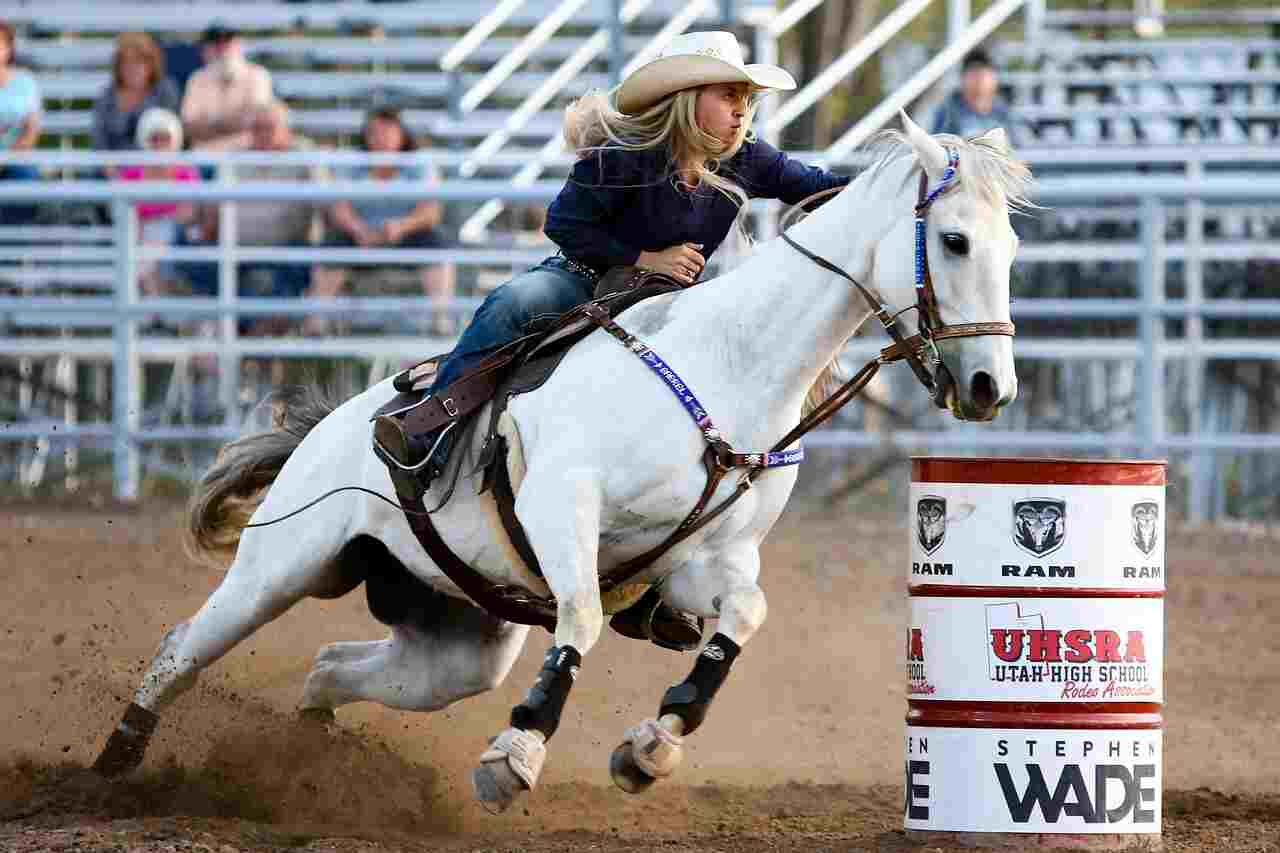
The project isn’t starting from scratch. Teton Ridge and its partners aggregated years of historical data: ride times, animal performance, rider stats across different rodeo disciplines. Using Palantir’s Foundry and AI-Platform (AIP), the collaborators trained computer-vision models to interpret each ride,  detecting motion, evaluating interactions between human and animal athletes, and exposing biomechanical and performance insights invisible to the naked eye.
 
What this means: Instead of relying solely on judges or memory, rodeo organizers and coaches can tap into a data-rich backend that dissects every gallop, pivot, and buck in near real-time.
 
According to reporting in Fast Company, this isn’t just a novelty; it reflects a broader push by Teton Ridge to transform one of America’s oldest sports through AI.

Why AI may change the rodeo game

  • Performance optimization for cowboys and cowgirls
    Algorithms can quantify subtle motion: body posture, reaction time, animal-rider dynamics. Over time, aggregated analytics might highlight training blind spots or ideal riding techniques.
  • Animal-athlete safety & welfare
    Tracking animal behavior and movement could help veterinarians, trainers, and event organizers detect stress or injury risks, giving rodeo a more humane, data-backed side.
  • Enhanced fan experience & broadcasting
    Real-time stats and analytics, delivered as overlays during broadcasts or arena jumbo-trons,  bring rodeo into the 21st century of immersive sports viewing. This aligns with broader trends of AI reshaping sports media and fan engagement.
  • Validating tradition through modern measurement
    Rodeo has always thrived on tradition, intuition, and human judgment. Now AI introduces a layer of objective data, a way to measure excellence and performance beyond lore and anecdotes.

Challenges and questions because reality isn't a clean Git push

This isn't Hollywood. Implementing real-time AI in the rodeo world will bump against real constraints:
  • Edge-AI hardware in dusty, unpredictable arenas may face connectivity, maintenance, or latency challenges. Running GPUs under such conditions isn’t trivial.
  • Data fairness and animal welfare: Introducing analytics could shift the spotlight. Will riders, trainers, or animals be pressured into chasing numbers rather than safety or tradition?
  • Cultural pushback: Rodeo is deeply rooted in heritage; adding algorithmic scrutiny might ruffle feathers among purists who believe in gut, instinct, and human judgment over code.

The long view, rodeo 2.0

Those dusty arenas, once reserved for tradition and adrenaline, may soon host another kind of spectacle, data + performance + insight. With Palantir, TWG AI, and NVIDIA building the infrastructure, and Teton Ridge investing in the vision, rodeo could evolve into one of the first “high-tech frontier sports.”
 
Watching a cowboy ride? Soon, you might also see real-time stats on posture, force, animal response, and analytics dashboards powered by edge AI. Maybe one day you’ll even watch a chatbot co-commentate a bull ride.
 
It’s wild west meets high-tech. And just like that, the future of rodeo looks like code rode sidesaddle with tradition.
Scholars harness supercomputers to peer inside black holes, through code, not telescopes

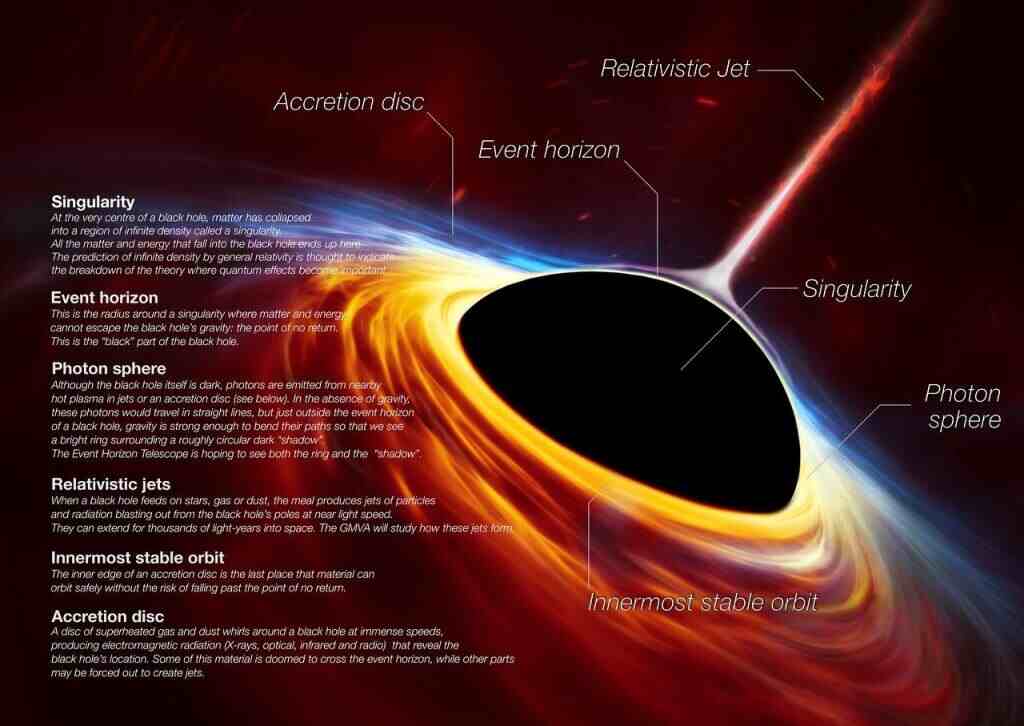
A team of computational astrophysicists has broken new ground, using the planet's most powerful supercomputers to simulate, in full fidelity, how matter spirals into a black hole and lights up in a blaze of radiation. Their results, published on December 3, 2025, by the Institute for Advanced Study (IAS) and the Flatiron Institute, deliver what may be the most detailed, realistic model yet of "luminous black hole accretion."

From Toy Models to Full-Blown Virtual Realities

For decades, astrophysicists have studied black hole accretion, the process by which gas, dust, and other matter fall into black holes, using simplified models. These toy-model approximations treated radiation as if it were a fluid, glossing over the real physics of how light moves through warped spacetime around a black hole.
 
Thanks to a new computational algorithm coupled with access to exascale-class supercomputers,  namely Frontier at Oak Ridge and Aurora at Argonne, the researchers directly solved the full radiation-transport equations under general relativity, without simplifying assumptions.
 
Lead author Lizhong Zhang describes it as "observing" black hole behavior not through telescopes, but through the computer, effectively creating a digital observatory of regions impossible to image directly.
What the Simulations Reveal
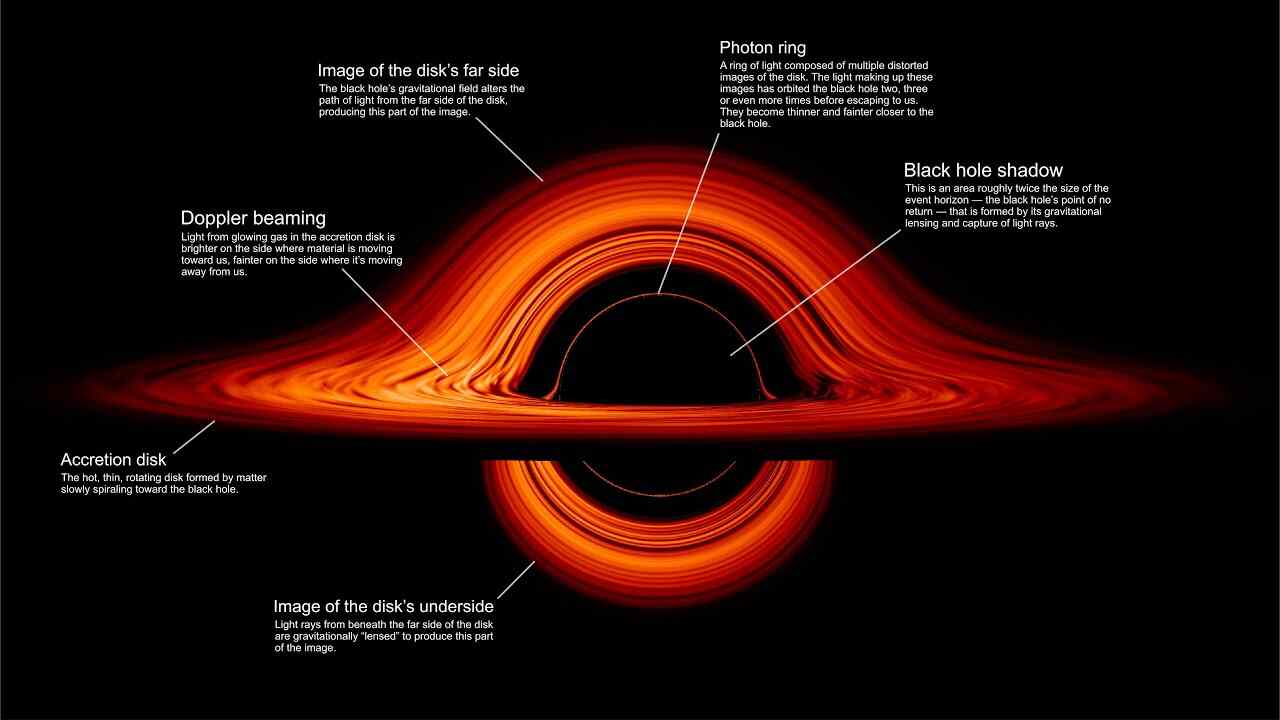
  • The simulations show that, even in a radiation-dominated, highly turbulent environment, matter forms a dense, thin thermal disk near the black hole, embedded inside a magnetically dominated envelope. The envelope appears to stabilize the system, a surprising sign of structural order emerging from chaos.
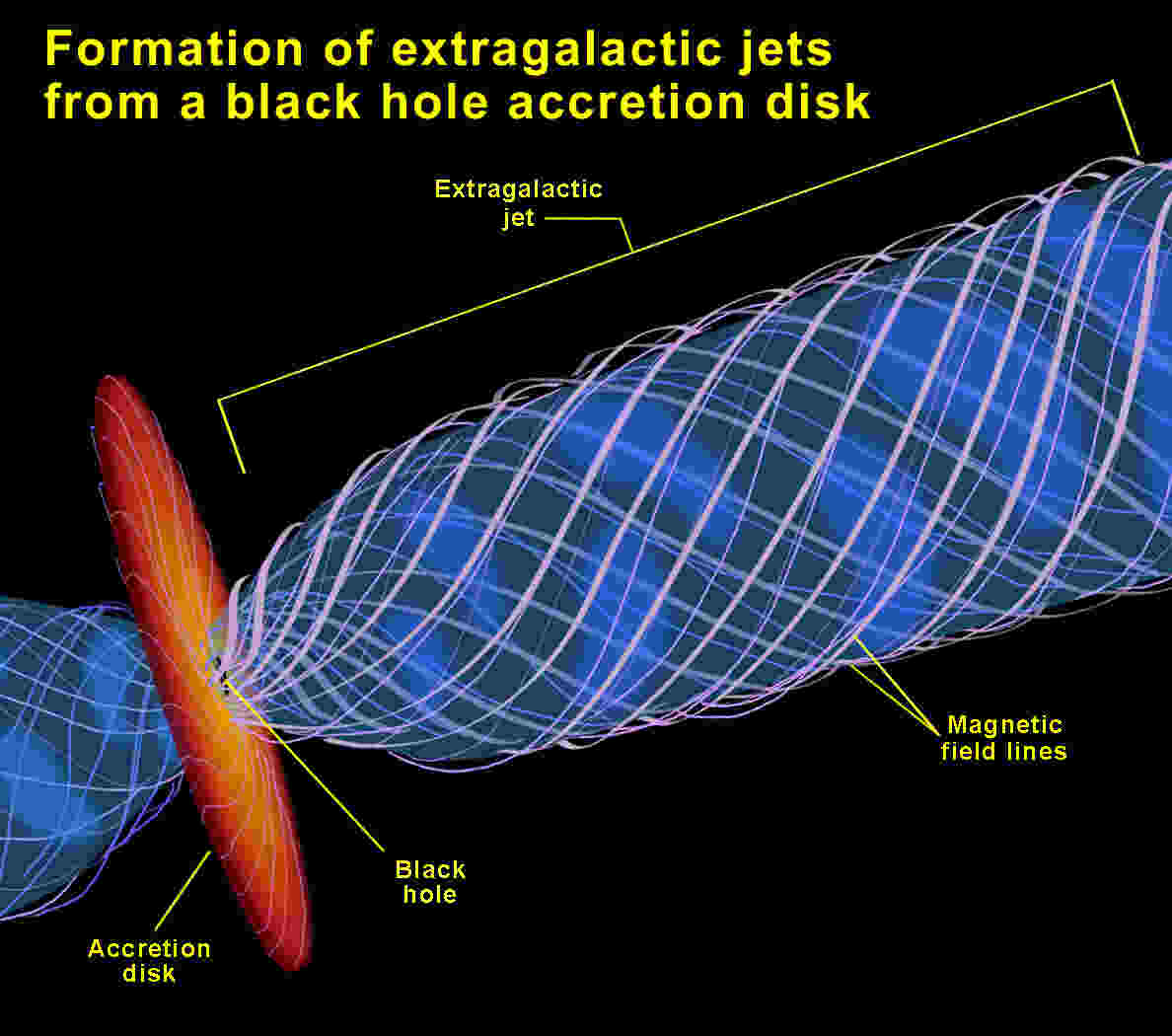
  • Around the disk, the model captures winds and sometimes powerful jets: outflows of matter and energy that match what astronomers see in real systems like ultraluminous X-ray sources and X-ray binaries.
  • When the team compared the simulated radiation spectra to real observations, the match was strong. That suggests the simulation is more than theoretical; it may faithfully represent how black holes behave in nature.

Why Supercomputers Were Critical

Modeling a black hole's accretion in full detail is computationally brutal. Gravity warps spacetime (general relativity), matter behaves under magneto-hydrodynamics (MHD), and radiation interacts with gas, all tightly coupled in nonlinear, dynamic ways. Solving that in 3D over time requires billions of calculations per second and software optimized down to the metal.
 
The combination of cutting-edge algorithm design (led by co-authors such as Christopher White and Patrick Mullen) with the brute force of exascale machines allowed the team to finally do this computation, the kind of problem that would have been intractable a decade ago.

What's Next: Cosmic Simulations Go Big

This is just the first in a series of papers. The team plans to apply their model to a wider range of black hole systems, from stellar-mass holes (a few times the mass of the Sun) to the supermassive giants that lurk at the centers of galaxies.
 
If successful, this work could reshape our understanding of how black holes grow and affect their surroundings, from the jets they shoot out to the winds they drive, and how they light up in X-rays and other wavelengths.

Big Picture: When Code Becomes Our Telescope

We're living in an era where code + supercomputing = cosmic telescope. With enough computational power and smart algorithms, researchers can simulate regions of the universe that not even our most advanced telescopes can resolve. The result is a kind of synthetic observation, a digital microscope turned on the universe's darkest objects.
 
It's a perspective shift: rather than just watching the universe, we're now capable of recreating pieces of it in silico, exploring how extreme gravity, magnetism, and radiation dance together around black holes.
 
The cosmic circus is no longer only for telescopes; now, supercomputers get front-row seats.

Seeing the unseeable: How AI, Supercomputers provide a clearer view of black holes

The world gasped when the first image of the black hole M87 was released in 2019. The hazy ring with a dark core confirmed what Einstein predicted decades prior: black holes cast "shadows" where no light escapes.
 
However, for scientists at the Perimeter Institute for Theoretical Physics (PI) in Canada, this image was merely the starting point. Now, thanks to supercomputing and the rise of artificial intelligence (AI), researchers are uncovering layers of cosmic fog, enabling them not only to see black holes but also to understand their dynamics with unprecedented precision.

From fuzzy ring to data-rich portraits

The tool doing much of this heavy lifting is a machine-learning model developed by PI researcher Avery Broderick and his team. Their system, called ALINet, can generate billions of candidate images, a thousand times faster than traditional methods, enabling scientists to compare real observational data against thousands of theoretical black hole models in a matter of hours.
 
Traditionally, interpreting data from the Event Horizon Telescope (EHT) meant painstakingly reconstructing images, then matching them by hand to models of how black hole plasma behaves. That process could take weeks, even on powerful hardware. Now, with ALINet, what once took a month can be achieved in a day, using a fraction of the computational cores.

Denoising the cosmos, even through the galactic haze

The challenge isn’t just speed. The center of our own galaxy, home to Sagittarius A*, the supermassive black hole at the Milky Way’s heart, lies behind a dense curtain of interstellar gas, dust and turbulent plasma. That material distorts radio waves, blurring and scattering the signals that astronomers receive.
 
Broderick’s team has now trained neural networks to perform “de-scattering,” essentially deblurring cosmic interference and letting scientists peer through the galactic veil. Early results published in 2025 show this can almost completely reverse the scattering at the EHT’s operational wavelength, offering a much clearer view of Sgr A*.

Supercomputing + AI: a combo that changes the game

This isn’t just about pretty pictures. Supermassive black holes, M87*, Sagittarius A*, and many more, are extreme gravitational laboratories. Understanding their behavior helps physicists probe deep questions: how matter behaves under extreme gravity, how space–time warps, how quantum effects might play out in the most intense conditions in the cosmos.
 
In fields beyond imaging, AI + high-performance computing (HPC) is already making waves. Teams have used distributed AI models running on supercomputers to detect gravitational wave signals from colliding black holes, and do so far faster than older methods. The success of such efforts shows that combining AI with raw compute scale isn’t just clever, it’s essential for the next frontier of astrophysics.

Why this matters, and why now

With tools like ALINet, astronomers can now treat black hole observations as data-rich investigations rather than fuzzy guesses. Instead of asking "Does this look like a ring?", scientists can now ask, "What spin, mass, and plasma configuration best matches the data?" They can also get answers rapidly, enabling more frequent updates as new observations come in.
 
For humanity, this means black holes, once relegated to science fiction and unreachable math, are becoming real, measurable entities. AI and supercomputers are turning the unknown into the known.
 
As Broderick puts it, this is "enabling technology," transforming a month-long computational slog into a swift, repeatable analysis. The cosmos just got sharper.