Mathematicians crack a hard problem for fluid equations

The motion of fluids in nature, including the flow of water in our oceans, the formation of tornadoes in our atmosphere, and the flux of air surrounding airplanes, have long been described and simulated by what is known as the Navier–Stokes equations.

Yet, mathematicians do not have a complete understanding of these equations. While they are a useful tool for predicting the flow of fluids, we still do not know if they accurately describe fluids in all possible scenarios. This led the Clay Mathematics Institute of New Hampshire to label the Navier–Stokes equations as one of its seven Millennium Problems: the seven most pressing unsolved problems in all of mathematics.

The Navier–Stokes Equation Millennium Problem asks mathematicians to prove whether "smooth" solutions always exist for the Navier–Stokes equations. Put simply, smoothness refers to whether equations of this type behave in a predictable way that makes sense. Imagine a simulation in which a foot presses the gas pedal of a car, and the car accelerates to 10 miles per hour (mph), then to 20 mph, then to 30 mph, and then to 40 mph. However, if the foot presses the gas pedal and the car accelerates to 50 mph, then to 60 mph, then instantly to an infinite number of miles per hour, you would say there is something wrong with the simulation.

This is what mathematicians hope to determine for the Navier–Stokes equations. Do they always simulate fluids in a way that makes sense, or are there some situations in which they break down?

For an in-depth explanation of this topic, see the blog post "Why global regularity for Navier-Stokes is hard" by Australian mathematician Terence Tao.

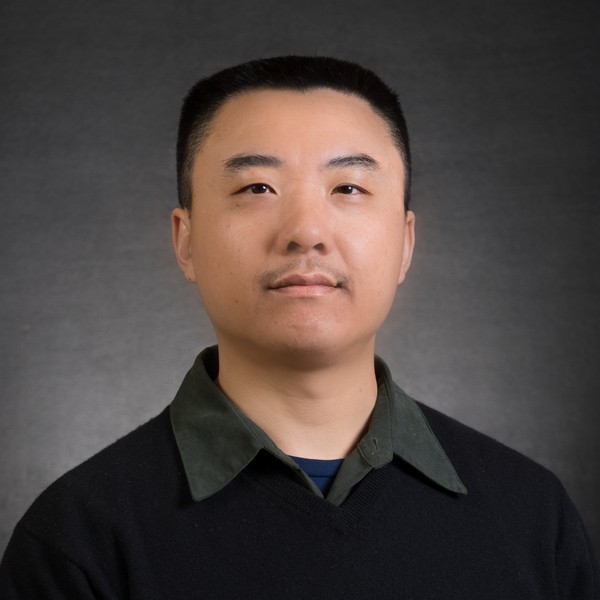
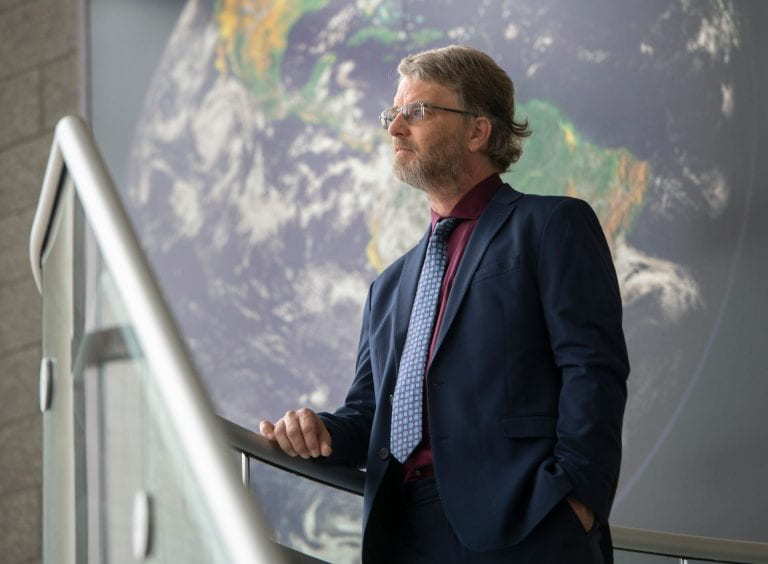
In a paper published on the preprint site arXiv on October 19, Caltech's Thomas Hou, the Charles Lee Powell Professor of Applied and Computational Mathematics, and Jiajie Chen (Ph.D. 22) of New York University's Courant Institute provide proof that resolves a longstanding open problem for the so-called 3D Euler singularity. The 3D Euler equation is a simplification of the Navier–Stokes equations, and a singularity is a point where an equation starts to break down or "blow up," meaning it can suddenly become chaotic without warning (like the simulated car accelerating to an infinite number of miles per hour). The proof is based on a scenario first proposed by Hou and his former postdoc, Guo Luo, in 2014. Thomas Hou Credit: Vicki Chiu/Caltech

Hou's computation with Luo in 2014 discovered a new scenario that showed the first convincing numerical evidence for a 3D Euler blowup, whereas previous attempts to discover a 3D Euler blowup were either inconclusive or not reproducible.

In the latest paper, Hou and Chen show definitive and irrefutable proof of Hou and Luo's work involving 3D Euler equation blowup. "It starts from something that behaves nicely, but then somehow evolves in a way where it becomes catastrophic," Hou says.

"For the first ten years of my work, I believed there was no Euler blow-up," says Hou. After more than a decade of research since Hou has not only proved his former self wrong, he's settled a centuries-old mathematics mystery.

"This breakthrough is a testament to Dr. Hou's tenacity in addressing the Euler problem and the intellectual environment that Caltech nurtures," says Harry A. Atwater, Otis Booth Leadership Chair of the Division of Engineering and Applied Science, Howard Hughes Professor of Applied Physics and Materials Science, and director of the Liquid Sunlight Alliance. "Caltech empowers researchers to apply sustained creative effort on complex problems – even over decades – to achieve extraordinary results."

Jiajie Chen Credit: Briana Ticehurst/CaltechHou and colleagues' combined effort in proving the existence of blowup with the 3D Euler equation is a major breakthrough in its own right but also represents a huge leap forward in tackling the Navier-Stokes Millennium Problem. If the Navier–Stokes equations could also blow up, it would mean something is awry with one of the most fundamental equations used to describe nature.

"The whole framework that we set up for this analysis would be tremendously helpful for Navier–Stokes," Hou says. "I have recently identified a promising blowup candidate for Navier-Stokes. We just need to find the right formulation to prove the blowup of the Navier-Stokes ."

The paper detailing the proof is titled "Stable Nearly Self-Similar Blowup of the 2D Boussinesq and 3D Euler Equations with Smooth Data."

Funding for the research was provided by the National Science Foundation and by the Choi Family Postdoctoral Fund, Choi Family Gift Fund, and the Choi Family Graduate Fellowship Fund.

© Erkki Makkonen/Shutterstock.com

Palmroth relies on supercomputing to protect Earth from space weather

In early September 1859, the Northern Lights could suddenly be seen as far south as the Caribbean. The cause was a geomagnetic solar storm – specifically a coronal mass ejection, now dubbed the Carrington Event, after the astronomer who recorded it.

The solar eruption reached Earth in 17.6 hours, with disturbances lasting for around three days. “Contemporary accounts talk of telegraph equipment either not working, functioning without batteries switched on – thanks to this independent electromagnetic power source, or simply catching fire,” says Palmroth, of the University of Helsinki.

Given our increased dependence on electronics, if a similar magnitude event were to happen today, would the impact be more wide-ranging and long-lasting? “We assume so, but don’t really know, and that’s what I am investigating,” adds Palmroth, a former Chair of the EU’s Space Advisory Group. “The historical records suggest that events of such magnitude can be expected every 100–150 years. I think I’ll witness the next one.”

What causes solar storms?

The sun constantly releases a stream of charged particles into space, both from fast bursts of high-energy but low-density particles from solar flares, or more slowly as plasma clouds, comprising lower-energy but high-density particles.

Earth’s magnetic field deflects these particles to its polar regions, creating the polar aurora – although the impact stretches further. “Even if space is defined as starting at around 100 km from the ground, space weather can have effects back on the ground,” Palmroth explains.

In 2012, NASA’s STEREO satellite observed a Carrington-scale solar eruption; luckily it missed Earth by a couple of days. If it had reached Earth’s magnetosphere, there would have likely been significant disruption to communication, power, and transport networks.

“Such changes to Earth’s magnetic field produce geomagnetically induced currents (GICs), while solar particles impede ionospheric radio signals and increase near-Earth space radiation due to trapped particles,” Palmroth summarises.

Supercharged GICs can create extra direct currents (DCs) in power networks, shutting them down, as happened in Malmö, Sweden, in 2003.

Solar particles disrupt communication signals by creating variable ionospheric density, compromising devices that use high-frequency bandwidths, such as radar. This would also render phone or car GPS navigation unreliable, and cause the loss of satellite time stamps essential to financial services and other industries.

Increased near-Earth space radiation would have a direct impact on satellites used for weather, navigation, and Earth observation. Depending on their orbit, materials could be degraded by radiation exposure or destroyed by direct hits from high-energy charged particles traveling at the speed of light.

“But this is informed speculation,” cautions Palmroth. “While we have many monitoring devices for terrestrial weather, for likely impacts on infrastructure from space weather we rely largely on modeling.”

Forecasting space weather
Thanks to an ERC grant over 15 years ago, Palmroth created a space environment modeling tool designed to take advantage of supercomputers that, at the time, didn’t yet exist. The resulting Vlasiator simulator recently augmented through the PRESTISSIMO project, charts the location, speed, and trajectory of high-energy particles flying through space.

“To begin with, people thought I was crazy. Now we have the world’s most accurate space environment simulator using Europe’s largest supercomputers to visualize phenomena not possible before. Because Vlasiator is open-source, others are using it, including to model other planets,” adds Palmroth.

Palmroth is now assessing likely Earth impacts from space weather, prioritizing two main research questions: how GICs could impact power grids, and how particle flux and energy influence satellites.

Both are difficult to research as they require commercially and politically sensitive information about the configuration of the power grids and satellites, so the team is currently working with Finnish data.

“We know Finland’s power grids can withstand the most likely space weather effects because our transformers accommodate extra DCs better than most European countries,” says Palmroth. “Does that mean that in the worst-case scenario, across Europe only Finland keeps its lights on? We don’t know.”

The CARRINGTON project is cooperating with the Finnish preparedness community to work on risk mitigation. “Against a Carrington-scale event, the question is: What can you do in 17 hours? You need a plan ready,” says Palmroth.

German-born Tobias Dornheim received his doctorate from Kiel University (Germany) in 2018. After a brief postdoctoral stay in Kiel, he joined CASUS in 2019. In early 2022 he was promoted to a Young Investigator Group Leader at CASUS. Dornheim is 32 years old.  Source: HZDR / Michal Bajda
German-born Tobias Dornheim received his doctorate from Kiel University (Germany) in 2018. After a brief postdoctoral stay in Kiel, he joined CASUS in 2019. In early 2022 he was promoted to a Young Investigator Group Leader at CASUS. Dornheim is 32 years old. Source: HZDR / Michal Bajda

German scientist receives prestigious ERC Starting Grant to shatter a computational bottleneck

Employing modern machine learning methods, Young Investigator Dr. Tobias Dornheim aims to tackle one of the fundamental computational bottlenecks in physics, chemistry, and related disciplines: the fermion sign problem

The decision of the European Research Council (ERC) to fund the Starting Grant proposal “Predicting the Extreme” (PREXTREME) is a major success for the Görlitz-based Center for Advanced Systems Understanding CASUS, an institute of the Helmholtz-Zentrum Dresden-Rossendorf (HZDR). Handed in by Dr. Tobias Dornheim, leader of a Young Investigator Group at CASUS, PREXTREME suggests developing a reliable theoretical description of warm dense matter with the help of machine learning (ML) methods. Ideally, Dornheim’s approach will lead to computationally solving the fermion sign problem amounting to a revolution in quantum theory. In any case, the work will result in answers to many fundamental questions about warm dense hydrogen and heavier elements and it will also have a direct impact on applications in material science, astrophysical models, and nuclear fusion. The ERC is granting Dornheim nearly 1.5 million euros to be spent over the next 5 years on scientific staff, technical equipment, and travel.

Electrons, protons, and neutrons are Fermi particles, named after the Italian physicist Enrico Fermi. They make up the matter we see in the world around us. The quantum mechanical behavior of Fermi particles decisively determines the physical and chemical properties of most materials. Computing these properties from the first principles requires adding the contributions of all Fermi particles in the material. Each particle can add both positive and negative terms to this computation that may cancel each other. With each particle, exponentially more combinations of these “signed” terms are necessary for an accurate calculation.

The state-of-the-art Monte-Carlo calculations Tobias Dornheim has brought forth an approach to the accurate result by randomly taking into account most but not all of the terms, a method called Monte-Carlo sampling. Until now, these calculations still can only be executed on the largest supercomputers in the world and only for a few Fermi particles due to the exponential increase in computation time with each particle added. To solve this fermion sign problem, a turn away from the exponential increase of supercomputing power is urgently needed.

In the past, Tobias Dornheim has shown several times that he is capable of finding clever ways around quantum problems. For example, he was part of a team that received the American Physical Society’s John Dawson Award for Excellence in Plasma Physics Research 2021. The award was granted for elegantly combining different, complementary simulation methods resulting in predictions for the collective behavior of many electrons that were more accurate than ever before.

Introducing modern machine learning methods

After many incremental improvements, Dornheim now sets out to make a big splash with PREXTREME. The proposal is based on simulation methods of the path integral Monte Carlo (PIMC) class, and its central idea is a decisive improvement of PIMC simulations of fermions. “Within the granted ERC project, I will combine particularly well-suited PIMC methods with modern ML algorithms,” explains Dornheim. “This will result in PIMC simulations without the exponential compute bottleneck as well as without any uncontrolled approximations. In the end, I hope to enable scientists of many different specializations – not just from warm dense matter research – to find answers to their questions that to date remain unanswered due to the fermion sign problem.”

Warm dense matter (WDM) researchers study matter under conditions such as very high temperatures or pressures commonly found almost everywhere in the universe except for the surface of the earth where they do not occur naturally. Typically, astrophysical objects in our solar system such as the giant planets Jupiter and Saturn as well as outside of our solar systems like exoplanets and brown dwarfs take center stage in WDM research. Besides gaining fundamental insights into astrophysics, such research is also of high importance for technological applications such as nuclear fusion and for developing much-needed new materials such as nanodiamonds.

Scientific excellence in Görlitz

Dornheim joined CASUS as a postdoc in 2019. In early 2022, he there established his own junior research group “Frontiers of Computational Quantum Many-Body Theory”. According to Michael Bussmann, Scientific Head of CASUS, the success is highly deserved: “I congratulate Tobias and am very happy for him. The accolade from the European Research Council recognizes his achievements to date and his scientific vision for the coming years. It also shows that CASUS has been able to attract excellent researchers to Görlitz in a short time, who are at the forefront of international research. To me, this success confirms that our chosen path of excellence, interdisciplinarity, and openness is the right one.”

“Earlier this year, CASUS has become an institute of the HZDR,” recalls Prof. Sebastian M. Schmidt, Scientific Director of the HZDR. “This grant is a clear indication that digital methods and tools will become essential in all classic realms of research from physics to medicine. I am therefore very pleased that with CASUS we have a first-class institute at HZDR working at the frontier of the digitalization of science.”

Since its inception in 2007, the ERC has established itself as a major European funding organization. The ERC Starting Grant scheme is a highly competitive program with a proposal acceptance rate of about 14 percent in 2022. For an early-career researcher, an ERC Starting Grant is arguably the biggest success that can be achieved. This year, the ERC has decided to fund 408 proposals resulting in 636 million euros spent on ambitious young scientists from research areas as diverse as medicine, economics, or engineering. Including Dornheim’s grant, HZDR scientists have so far received six ERC recognitions – three of them are ERC Starting Grants. After the official announcement of the winning proposals by the ERC in late November, the grant agreement preparation is currently ongoing to pave the way for the project to start on March 1st, 2023.

Daniel Gruss. Image source: Lunghammer

Austrian computer scientist Gruss wins grant for research into energy-efficient IT security

Top researchers from Graz University of Technology (TU Graz) in Styria, Austria, will receive highly endowed Starting Grants from the European Research Council in 2022. The research of computer scientist and cybersecurity expert Daniel Gruss and experimental physicist and START Prize winner Marcus Ossiander will receive funding totaling 3.3 million euros over the next five years, the European Research Council announced today.

Of the 408 Starting Grants awarded across the EU, a total of 17 went to researchers from Austrian institutions. Austria is thus in 8th place, ahead of Sweden, Spain, and Denmark, for example. 

Horst Bischof, Vice-Rector for Research and future Rector of TU Graz from autumn 2023: “With Daniel Gruss and Marcus Ossiander, the ERC Starting Grants are not going to strangers, quite the contrary. Both are top researchers in their fields who have already made impressive achievements despite their young ages. Daniel Gruss regularly causes a stir in the world of cybersecurity; Marcus Ossiander is in the process of transferring from Harvard to TU Graz and in this interim phase alone has already acquired an Austrian Science Fund (FWF) START Prize and now the ERC Starting Grant. I extend my warmest congratulations to both of them. TU Graz is particularly proud of such top minds in research.”

Daniel Gruss: Foundations for sustainable security

Daniel Gruss studied computer science at TU Graz from 2008 and dealt early on with the unauthorized tapping of data in his dissertation. In 2018, he was a vital member of an international team of scientists who uncovered the serious hardware security vulnerabilities of Meltdown and Spectre in Intel processors. Since then, he has explored even more IT security vulnerabilities. Gruss holds a tenure track professorship at TU Graz and is a regular speaker at international IT security conferences. He specializes in side-channel attacks in which physical effects allow conclusions to be drawn about protected data. He will now receive the ERC Starting Grant of 1.5 million euros for the “FSSec – Foundations for Sustainable Security” project. “IT already consumes 11 percent of the world’s electricity, with a strong upward trend. The question now is how to increase efficiency without causing security gaps at the same time,” explains Daniel Gruss. So far, energy efficiency has not played a role in safety. But Daniel Gruss wants to change that. For example, using cryptography instead of established error correction methods should help systems achieve a significant gain in efficiency compared to current systems due to the increased security. Just last Friday, November 18, Daniel Gruss was awarded the Promotion Prize of the Austrian State of Styria.

Genomic Data Infrastructure Ireland project supports discovery of genetic causes of disease

Professor Gianpiero Cavalleri, Genomic Data Infrastructure Ireland National Co-Lead, Professor of Human Genetics at RCSI School of Pharmacy and Biomolecular Sciences and Deputy Director of the SFI FutureNeuro Research Centre.RCSI University of Medicine and Health Sciences and FutureNeuro is co-leading, with University College Dublin, the Irish element of a new EU project to support the integration of genomics into healthcare and advance new treatments for patients.

Jointly funded by the European Commission, under the Opens in new window digital Europe Programme, and the Health Research Board (HRB), Genomic Data Infrastructure (GDI) Ireland is part of a consortium of 20 EU Member States with the goal of enabling access to genomics and corresponding clinical data across Europe by creating secure data infrastructure. The project will facilitate a cross-border federated network of national genome collections for biomedical research and personalized medicine solutions.

GDI Ireland National Co-Lead, Professor Gianpiero Cavalleri, Professor of Human Genetics at RCSI and Deputy Director of the Opens in new windowSFI FutureNeuro Research Centre, said: “By realizing this federated analysis system we will enable Irish genomes to be safely and securely analysed alongside similar datasets from other European countries. Such infrastructure can accelerate the discovery of genetic causes of disease and inform the development of much-needed treatments for conditions such as cancer that can have a devastating impact on our lives.”

The Irish GDI hub will establish best practices to manage the Irish genetic data, protecting the security of the personal data contributed by individuals. Work will be informed by the experience and technology developed by European partners.

The GDI project positions Ireland to participate in the ambitious Europe-wide ‘1+ Million Genomes’ initiative, which is driving the development, deployment, and operation of sustainable data-access infrastructures within each participating country.

Commenting on the announcement, Dr. Mairead O’Driscoll, Chief Executive of the Health Research Board, said: “The GDI project brings together national agencies, research organizations, technology providers, and patient organizations in 20 countries. The overarching goal is to design, develop and operationalize a cross-border federated network of national genome collections and other relevant data to advance data-driven personalized medicine for the benefit of European citizens.

“Ireland’s participation in this project will see our researchers, clinicians, patient representatives, experts in data governance, data analysts, and others collaborating on a roadmap for data infrastructure in Ireland and conducting proof-of-concept work using synthetic data.” 

Professor Gianpiero Cavalleri (School of Pharmacy and Biomolecular Sciences, RCSI), and Professor Denis Shields, (University College Dublin), are Co-Directors of the GDI Ireland project with Professor Aedin Culhane (University Limerick) and Professor Markus Helfert (Maynooth University and SFI Empower SPOKE Director) as co-applicants.

The team will be supported by the SFI Centre for Research Training in Genomics Data Science, the Irish Platform for Patient Organisations and Industry (IPPOSI), and Health Research Charities Ireland (HRCI).

Serena Scollen, the European GDI Coordinator also emphasized the importance of having an infrastructure for genomic data. She commented: “Countries will be able to deploy infrastructure to facilitate secure cross-border data access. Ultimately the benefit will be for the citizens of Europe and through shared learnings and improved healthcare, citizens globally.”