Research in AI Could Potentially Help With Early Detection of ASD

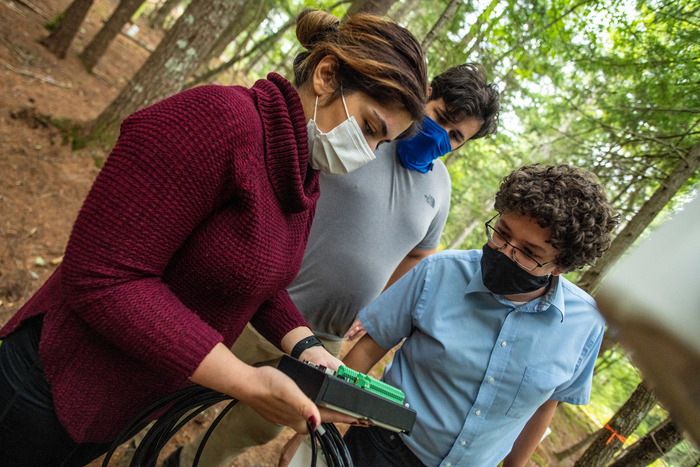
University of Arkansas assistant professor Khoa Luu's children demonstrates AI's ability to read facial expressions.
...

Read more

Chinese researchers demo quantum key distribution between space lab, four ground stations

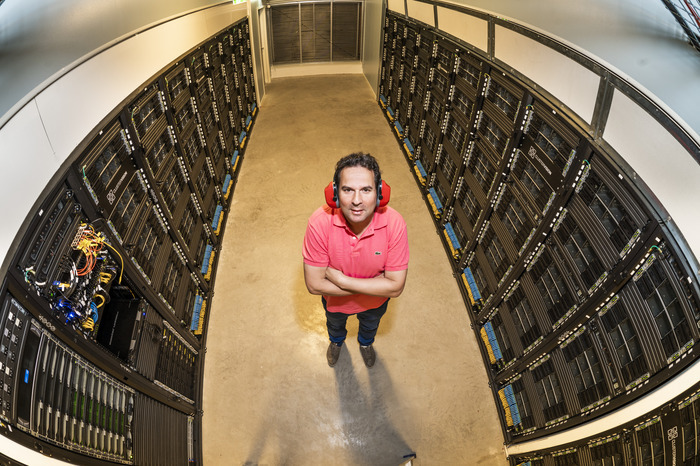
Researchers report an experimental demonstration of a space-to-ground quantum key distribution (QKD) network using a compact QKD terminal aboard the Chinese Space Lab Tiangong-2 and four ground stations. The new QKD system is less than half the weight of the system the researchers developed for the Micius satellite, which was used to perform the world’s first quantum-encrypted virtual teleconference. Researchers experimentally demonstrated a space-to-ground QKD network using a compact QKD terminal aboard the Chinese Space Lab Tiangong-2 and four ground stations.  Image Credit: Cheng-Zhi Peng, University of Science and Technology of China

The demonstration represents an important step toward practical QKD based on constellations of small satellites, a setup considered one of the most promising routes to creating a global quantum communication network.

“QKD offers unconditional security by using single photons to encode information between two distant terminals,” said research team member Cheng-Zhi Peng from the University of Science and Technology of China. “The compact system we developed can reduce the cost of implementing QKD by making it possible to use small satellites.”

Peng and researchers from other institutions in China describe their new system and experimental results in Optica, Optica Publishing Group’s journal for high-impact research. They also found that QKD performance can be boosted by building a network of satellites orbiting at different angles, or inclinations, about the equator.

“Our new work demonstrates the feasibility of a space-ground QKD network based on a compact satellite payload combined with constellations of satellites with different orbit types,” said Peng. “In the near future, this type of QKD system could be used in applications that require high security such as government affairs, diplomacy, and finance.”

Shrinking the QKD system

QKD uses the quantum properties of light to generate secure random keys for encrypting and decrypting data. In previous work, the research group demonstrated satellite-to-ground QKD and satellite-relayed intercontinental quantum networks using the Micius satellite. However, the QKD system used aboard that satellite was bulky and expensive. About the size of a large refrigerator, the system weighed around 130 kg and required 130 W of power. 

As part of China's quantum constellation plan, the researchers sought to develop and demonstrate a more practical space-ground QKD network. To do this, they developed a compact payload that allowed the Tiangong-2 Space Lab to act as a satellite QKD terminal. The QKD payload — consisting of a tracking system, QKD transmitter, and a laser communication transmitter — weighed around 60 kg, required 80 W of power, and measured about the size of two microwave ovens.

“This payload was as integrated as possible to reduce volume, weight, and cost while achieving the high performance necessary to support space-to-ground QKD experiments,” said Peng. “It also had to be very durable to withstand harsh conditions such as the severe vibration experienced during launch and the extreme thermal vacuum environment of space.” 

The researchers performed a total of 19 QKD experiments during which secure keys were successfully distributed between the Space Lab terminal and four ground stations on 15 different days between October 2018 and February 2019. These experiments were conducted at night to avoid the influence of daylight background noise.

The researchers found that the medium (~42°) inclination orbit of the space lab allowed multiple passes over a single ground station in one night, which increased the number of keys that could be generated. They also built a model to compare the performance of satellite-based QKD networks with different orbit types. They found that combining satellites with a medium-inclination orbit like the space lab with a sun-synchronous orbit that travels over the polar regions achieved the best performance.

Next steps

The researchers are now working to improve their QKD system by increasing the speed and performance of the QKD system, reducing cost, and exploring the feasibility of daytime satellite-to-ground QKD transmission. “These improvements would allow a practical quantum constellation to be created by launching multiple low-orbit satellites,” said Peng. “The constellation could be combined with a medium-to-high-orbit quantum satellite and fiber-based QKD networks on the ground to create a space-ground-integrated quantum network.”

Although not part of this work, an even smaller quantum satellite developed by Hefei National Laboratory and University of Science and Technology of China, and other research institutes in China was successfully launched into space on July 27. This satellite, known as a micro/nanosatellite, weighs about a sixth the weight of the Micius satellite and contains a QKD system that is about a third of the size of that demonstrated in the Optica paper. That satellite is designed to carry out real-time satellite-to-ground QKD experiments, representing another important step toward low-cost and practical quantum satellite constellations.

China shows how to predict solar flares in the next 48 hours via deep learning model

Solar flares are solar storm events driven by the magnetic field in the solar activity area. When the flare radiation comes to the Earth's vicinity, the photo-ionization increases the electron density in the D-layer of the ionosphere, causing absorption of high-frequency radio communication, scintillation of satellite communication, and enhanced background noise interference with radar. Statistics and experience show that the larger the flare, the more likely it is to be accompanied by other solar outbursts such as solar proton events, and the more severe the effects on the Earth, thus affecting spaceflight, communication, navigation, power transmission, and other technological systems. Providing forecast information on the likelihood and intensity of flare outbreaks is an important element at the beginning of operational space weather forecasting. The modeling study of solar flare forecasting is a necessary part of accurate flare forecasting and has important application value. In a research paper recently published in Space: Science & Technology, Hong Chen from the College of Science, Huazhong Agricultural University, combined the k-means clustering algorithm and several CNN models to build a warning system that can predict whether solar flare would occur in the next 48 hours. The visualization of four features during the existence of an active region. The x-axis represents time and its unit is a sample, where “0” represents the start time of an active region, and the time gap between adjacent times is 1.5 h. The y-axis represents the value of a feature. The blue lines indicate that there is no solar flare in the next 48 hours, and the yellow lines are the opposite.

First of all, the author introduced the data used in the paper and analyzed them from a statistical point of view to provide a basis for the design of the solar flare warning system. To reduce the effect of projection effect, the center of the active region located within ±30°of the solar disk center was selected. After that, the author labeled the data according to the solar flare data provided by NOAA, including the start and end times of the flares, the number of the active region, the magnitude of the flares, etc. There was a serious imbalance between the number of positive and negative samples in the dataset. To alleviate the imbalance of positive and negative samples, a principle was found to select the events which have positive samples as much as possible. The author visualized the probability density distribution of each feature in all negative samples, all positive samples. It could be easily found that the probability density distributions of the negative samples were all negatively skewed distributions and the characteristics of positive samples were generally larger than those of negative samples. Thus, it was possible to filter out events with positive samples by the feature values of each event.

Afterward, the author built the whole pipeline with a method containing the following two steps: data preprocessing and model training. To conduct data preprocessing, K-means, an unsupervised clustering method, was used to cluster events to decrease events that only include negative samples as much as possible. After k-means clustering, all events were divided into three categories, namely category A, category B, and category C. The author found that the ratio of positive samples in category C is 0.340633 which is much larger than the one of the whole dataset. Therefore, only the data in category C were chosen as input data for the next stage of the algorithm. In the 2nd stage, the neural networks the author used were Resnet18, Resnet34, and Xception, which are commonly used in deep learning. Three-fourths of samples in category C were randomly chosen. In each event were training data for the neural network models and the rest of the samples were regarded as validation data in the process of training the model. To avoid the influence of dimension, the author also standardized the original data. The standardization method was different from those commonly used. According to the standardization calculation formula, if the label of a sample was predicted to be 1 by the neural network, this sample was regarded as a signal of a solar flare that would occur in the next 48 hours. But if it is predicted to be 0, the probability of occurring solar flare in the next 48 hours would be so small that could be ignored.

Then, the author conducted experiments and discussed the results. The author first gave an introduction to the experimental setting and then conducted several ablation experiments and comparisons with different models to verify the improvement of the k-means clustering algorithm and boosting strategy. Besides, the author also made comparisons between the method used in the experiment and other 13 binary classification algorithms commonly used to present its prediction performance. The experimental results showed that the prediction performance of the model which integrated several neural networks was better than the one of a single convolutional neural network. Finally, the prediction results of Resnet18, Resnet34, and Xception were combined by boosting strategy. For all networks, the recall may be unchanged or even reduced greatly after clustering. However, precision was bound to increase significantly. After clustering, although the positive sample rate would be greatly improved, from 5% to 34%, nearly 40% of the information of positive samples would also be lost. The author thought this was the main reason why recall remained unchanged or even decreased. It also meant that the number of positive samples predicted in the experiment was less than the one without clustering, but the probability that a predicted positive sample was a true positive was higher. In contrast with the phenomenon that the prediction performance of other binary classification methods was decreasing or even very poor after clustering, the performance of the author’s method improved by more than 9% after clustering. In conclusion, the two-stage solar flare early warning system consisted of an unsupervised clustering algorithm (k-means) and several CNN models, where the former was to increase the positive sample rate, and the latter integrated the prediction results of the CNN models to improve the prediction performance. The results of the experiment proved the effectiveness of the method.

UK prof builds a model of neutron stars that improves insights gleaned from gravitational waves

The oscillations in binary neutron stars before they merge could have big implications for the insights scientists can glean from gravitational wave detection. A neutron star merger. Credit: NASA's Goddard Space Flight Center/CI Lab

Researchers at the University of Birmingham have demonstrated the way in which these unique vibrations, caused by the interactions between the two stars’ tidal fields as they get close together, affect gravitational-wave observations. The study is published in Physical Review Letters. 

Taking these movements into account could make a huge difference to our understanding of the data taken by the Advanced LIGO and Virgo instruments, set up to detect gravitational waves – ripples in time and space – produced by the merging of black holes and neutron stars.

The researchers aim to have a new model ready for Advanced LIGO’s next observing run and even more advanced models for the next generation of Advanced LIGO instruments, called A+, which are due to begin their first observing run in 2025.

Since the first gravitational waves were detected by the LIGO Scientific Collaboration and Virgo Collaboration in 2016, scientists have been focused on advancing their understanding of the massive collisions that produce these signals, including the physics of a neutron star at supra nuclear densities.

Dr. Geraint Pratten, of the Institute for Gravitational Wave Astronomy at the University of Birmingham, is the lead writer of the paper. He said: “Scientists are now able to get lots of crucial information about neutron stars from the latest gravitational wave detections. Details such as the relationship between the star’s mass and its radius, for example, provide crucial insight into the fundamental physics behind neutron stars. If we neglect these additional effects, our understanding of the structure of the neutron star as a whole can become deeply biased.”

Dr. Patricia Schmidt, a co-author of the paper and Associate Professor at the Institute for Gravitational Wave Astronomy, added: “These refinements are really important. Within single neutron stars, we can start to understand what’s happening deep inside the star’s core, where matter exists at temperatures and densities we cannot produce in ground-based experiments. At this point, we might start to see atoms interacting with each other in ways we have not yet seen – potentially requiring new laws of physics.”

The refinements devised by the team represent the latest contribution from the University of Birmingham to the Advanced LIGO program. Researchers in the University’s Institute for Gravitational Wave Astronomy has been deeply involved in the design and development of the detectors since the program’s earliest stages. Looking ahead, Ph.D. student Natalie Williams is already progressing to work on calculations to further refine and calibrate the new models.

UTSW computational biologist uses ML to help determine structure of a key player in antibiotic resistance

With antibiotic-resistant bacteria on the rise, scientists have been searching for ways to shut down the Type IV secretion system (T4SS), a protein complex on the outer envelope of bacterial cells that helps them to exchange DNA with neighboring bacteria and resist antibiotics.

Now a collaboration between University of Texas Southwestern computational biologist Qian Cong, Ph.D., and molecular biologists at the University of London has elucidated the structure of the T4SS complex, providing a blueprint that could help researchers design drugs that slow the development of antibiotic resistance. The 3D structure of T4SS

“For the first time, we determined the 3D structure of the entire T4SS complex,” said Dr. Cong, Assistant Professor of Biophysics in the Eugene McDermott Center for Human Growth and Development at UTSW.

The team in London was led by Gabriel Waksman, Ph.D., whose lab has been working for more than two decades to understand T4SS, especially how it forms a thin, hollow structure called a pilus, which connects to nearby bacteria to share genes. For this project, his team used cryo-electron microscopy (cryo-EM) – a process that freezes proteins and uses beams of electrons to obtain high-resolution microscopic images – to elucidate the structure of T4SS. This was no small feat since the T4SS complex is larger than 99.6% of all those included to date in the worldwide library of protein structures.

Dr. Cong then used her background in statistics and machine learning to analyze T4SS protein sequences from several bacteria to generate structural predictions, which were compared to the cryo-EM data. Her computational analysis supported the cryo-EM data and suggested a hypothesis about the function of T4SS. While it was already known that T4SS is involved in pilus assembly, she predicted how it occurs. With that prediction in hand, Dr. Waksman’s team was able to make specific mutations within the relevant pieces of the complex and validate Dr. Cong’s hypothesis in live bacteria.

“In addition to the contribution we have made toward the development of drugs to slow the spread of antibiotic resistance genes, this study showcases the power of modern computational methods to validate experimental results and suggest functional insights beyond available experimental data,” said Dr. Cong, a Southwestern Medical Foundation Scholar in Biomedical Research.

Other researchers who contributed to this study include Kévin Macé, Abhinav K. Vadakkepat, Adam Redzej, Natalya Lukoyanova, Clasien Oomen, Nathalie Braun, Marta Ukleja, Fang Lu, Tiago R. D. Costa, and Elena V. Orlova of the Institute of Structural and Molecular Biology, Birkbeck College, University of London; and David Baker of the University of Washington.