SUPERCOMPUTING NEWS SUPERCOMPUTING NEWS
    • MEDIA KIT
    • MOST READ
    • RSS FEED
    • ACADEMIA
    • AEROSPACE
    • APPLICATIONS
    • ASTRONOMY
    • AUTOMOTIVE
    • BIG DATA
    • BIOLOGY
    • CHEMISTRY
    • CLIENTS
    • CLOUD
    • DEFENSE
    • DEVELOPER TOOLS
    • EARTH SCIENCES
    • ECONOMICS
    • ENGINEERING
    • ENTERTAINMENT
    • GAMING
    • GOVERNMENT
    • HEALTH
    • OIL & GAS
    • INDUSTRY
    • INTERCONNECTS
    • MANUFACTURING
    • MIDDLEWARE
    • MOVIES
    • NETWORKS
    • PHYSICS
    • PROCESSORS
    • RETAIL
    • SCIENCE
    • STORAGE
    • SYSTEMS
    • VISUALIZATION
    • AcyMailing subscription form

    • ADD YOUR VIDEOS
    • MANAGE VIDEOS
    • CONVERSATION INBOX
    • SOCIAL ADVERTISER
    • SOCIAL NETWORK VIDEOS
    • SURVEYS
    • GROUPS
    • PAGES
    • MARKETPLACE LISTINGS
    • APPLICATIONS BROWSER
    • PRIVACY CONFIRM REQUEST
    • PRIVACY CREATE REQUEST
    • LEADERBOARD
    • POINTS LISTING
      • BADGES
    • TRADE SHOWS
Sign In
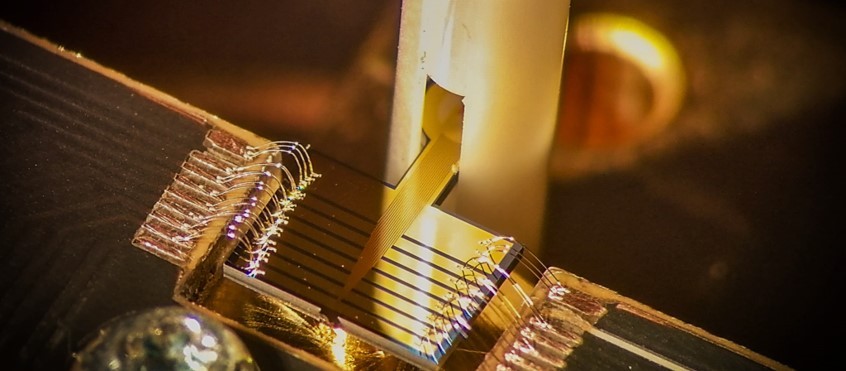
Using these sensors, scientists were able to generate a secret key at a rate of 64 megabits per second over 10 km of fibre optic cable. © M. Perrenoud - G. Resta / UNIGE
Tyler O'Neal, Staff Editor ACADEMIA March 13, 2023, 9:09 am

Swiss team develops single-photon detectors with unprecedented performance to combat spies

How can we combat data theft, which is a real issue for society? Quantum physics has the solution. Its theories make it possible to encode information (a qubit) in single particles of light (a photon) and to circulate them in an optical fiber in a highly secure way. However, the widespread use of this telecommunications technology is hampered in particular by the performance of the single-photon detectors. A team from the University of Geneva (UNIGE), together with the company ID Quantique, has succeeded in increasing their speed by a factor of twenty. This innovation makes it possible to achieve unprecedented performances in quantum key distribution. Using these sensors, scientists were able to generate a secret key at a rate of 64 megabits per second over 10 km of fibre optic cable. © M. Perrenoud - G. Resta / UNIGE

Buying a train ticket, booking a taxi, getting a meal delivered: these are all transactions carried out daily via mobile applications. These are based on payment systems involving an exchange of secret information between the user and the bank. To do this, the bank generates a public key, which is transmitted to their customer, and a private key, which it keeps secret. With the public key, the user can modify the information, make it unreadable and send it to the bank. With the private key, the bank can decipher it.

This system is now threatened by the power of quantum supercomputers. To resolve this, quantum cryptography - or quantum key distribution (QKD) - is the best option. It allows two parties to generate shared secret keys and transmit them via optical fibers in a highly secure way. This is because the laws of quantum mechanics state that measurement affects the state of the system being measured. Thus, if a spy tries to measure the photons to steal the key, the information will be instantly altered and the interception revealed.

Current limitations

One limitation to the application of this system is the speed of the single-photon detectors used to receive the information. In fact, after each detection, the detectors must recover for about 30 nanoseconds, which limits the throughput of the secret keys to about 10 megabits per second. A UNIGE team led by Hugo Zbinden, associate professor in the Department of Applied Physics at the UNIGE Faculty of Science, has succeeded in overcoming this limit by developing a detector with better performance. This work was carried out in collaboration with the team of Félix Bussières from the company ID Quantique, a spin-off of the university.

‘‘Currently, the fastest detectors for our application are superconducting nanowire single-photon detectors,’’ explains Fadri Grünenfelder, a former doctoral student in the Department of Applied Physics at the UNIGE Faculty of Science and first author of the study. ‘‘These devices contain a tiny superconducting wire cooled to -272°C. If a single photon hits it, it heats up and ceases to be superconducting for a short time, thus generating a detectable electrical signal. When the wire becomes cold again, another photon can be detected.’’

Record performance

By integrating not one but fourteen nanowires into their detector, the researchers were able to achieve record detection rates. ‘‘Our detectors can count twenty times faster than a single-wire device,’’ explains Hugo Zbinden. ‘‘If two photons arrive within a short time in these new detectors, they can touch different wires and both be detected. With a single wire, this is impossible’’. The nanowires used are also shorter, which helps to decrease their recovery time.

Using these sensors, scientists were able to generate a secret key at a rate of 64 megabits per second over 10 km of fiber optic cable. This rate is high enough to secure, for example, a videoconference with several participants. This is five times the performance of current technology over this distance. As a bonus, these new detectors are no more complex to produce than the current devices available on the market.

These results open up new perspectives for ultra-secure data transfer, which is crucial for banks, healthcare systems, governments, and the military. They can also be applied in many other fields where light detection is a key element, such as astronomy and medical imaging.

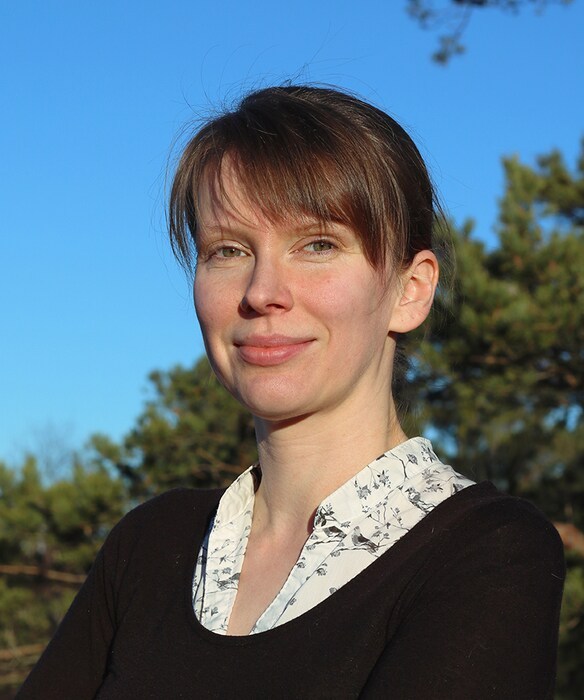
Céline Heuzé
Céline Heuzé

Swedish climatologist Heuzé proposes Arctic climate modeling is too conservative

Tyler O'Neal, Staff Editor ACADEMIA March 13, 2023, 7:00 am

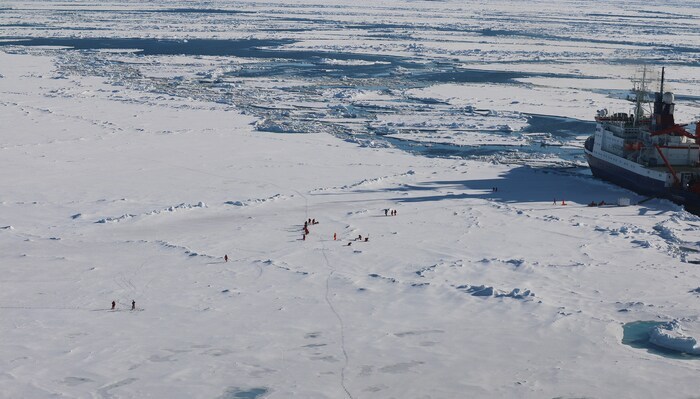
Climate models used by the UN’s IPCC and others to project climate change are not accurately reflecting what the Arctic’s future will be. Researchers at the University of Gothenburg argue that the rate of warming will be much faster than projected. Due to the harsh conditions in Arctic, relatively few observations are made in that part of world.  CREDIT Photo: Céline Heuzé

Due to the Arctic´s sea ice cover and harsh climate, relatively few observations are made in that part of the world. This means that the climate models used for projecting the future of the Arctic have not been calibrated to the same extent as in other parts of the world.

Two recent scientific studies involving researchers from the University of Gothenburg compared the results of the climate models with actual observations. They concluded that the Arctic Ocean's warming will proceed much faster than projected by the climate models.

Climate models underestimate the consequences

“These climate models underestimate the consequences of climate change. In reality, the relatively warm waters in the Arctic regions are even warmer and closer to the sea ice. Consequently, we believe that the Arctic sea ice will melt away faster than projected,” explains Céline Heuzé, a climatologist at the University of Gothenburg in Sweden and lead author of one of the studies.

Warm water flows into the Arctic Ocean via Fram Strait between Greenland and Svalbard. However, the volume of water in these ocean currents and its temperature in the climate models are too low, which is one of the reasons why the climate models’ projections will not be accurate. Even the stratification of the Arctic Ocean is incorrect. The researchers argue that since roughly half of the models project an increase and the other half a decrease in stratification, the consequences of global warming cannot be estimated accurately.

Acquiring complex data in the Arctic must be prioritized

“This is a serious situation. If governments and organizations all over the world are going to rely on these climate models, they must be improved. This is why research and data acquisition in the Arctic ocean must be prioritized. At present, we cannot provide a useful prediction of how quickly the Arctic sea ice is melting,” Céline Heuzé explains.

The Arctic is an essential region for projecting what the future intensity of global warming will be. Its sea ice contributes an albedo effect – a white surface that reflects sunlight away from the planet. If the ice were to disappear, more solar radiation would reach the Earth.

“We need a climate model that is tailored to the Arctic. In general, you can’t use the same model for the entire planet, as conditions vary considerably. A better idea would be to create a specific model for the Arctic that correctly factors in the processes occurring in the Arctic Ocean and surrounding land areas,” Céline Heuzé explains.

LIGO researchers develop early-warning software to nab neutron-star mergers faster

Tyler O'Neal, Staff Editor ACADEMIA March 13, 2023, 5:00 am

On August 17, 2017, around 70 telescopes collectively turned their gaze to a fiery collision between two dead stars that took place millions of light-years away. The telescopes watched the event unfold in a rainbow of wavelengths, from radio waves to visible light to the highest-energy gamma rays. As the pair of ultra-dense neutron stars crashed into each other, they flung debris outward that glowed for days, weeks, and months. Some of the onlooking telescopes spotted gold, platinum, and uranium in the searing blast, confirming that most heavy elements in our universe are forged in this type of cosmic collision.  Shreya Anand

Were that the end of the story, this cosmic event would have been remarkable in itself, but three other detectors were present for the astronomical gathering that day—two belonging to the National Science Foundation-funded LIGO (Laser Interferometer Gravitational-wave Observatory) and one belonging to Europe's Virgo. LIGO and Virgo observe not light waves but gravitational waves, or shivers in space and time produced by massive accelerating objects. As neutron stars spiral together, they generate gravitational waves before they merge and explode with light. It was the LIGO–Virgo gravitational-wave network that alerted the dozens of telescopes around the world that something astonishing was taking place in the skies above. Without LIGO and Virgo, August 17, 2017, would have been a typical day in astronomy.

Since that time, the LIGO–Virgo network has detected only one other neutron star merger; in that case, which occurred in 2019, light-based telescopes were not able to observe the event. (LIGO-Virgo has also detected dozens of binary black hole mergers, but those are not expected to produce light in most instances.) With LIGO–Virgo scheduled to turn back on this May, astronomers are excitedly preparing for more explosive neutron star mergers. One pressing question on the minds of some LIGO team members is: Can they detect these events sooner—perhaps even before the dead stars collide?

To that end, the researchers are developing early-warning software to alert astronomers to neutron star mergers up to seconds or even a full minute before the impact.

"It's a race against time," says Ryan Magee, a Caltech postdoctoral scholar who is co-leading the development of early-warning software along with Surabhi Sachdev (MS '17, Ph.D. '19), a professor at Georgia Tech. "We are missing precious time to understand what happens before and right after these mergers," he says.

Eleven Hours Later, the Source Is Found

Once LIGO detects a likely neutron star collision, the race begins for telescopes on the ground and in space to follow up and pinpoint its location. The LIGO–Virgo network, which consists of three gravitational-wave detectors, helps narrow in on the approximate location where the fireworks are happening while light-based telescopes are required to identify the exact galaxy in which the neutron stars reside.

For the August 17 event, known as GW170817, most of the light-based telescopes were not able to start searching for the source of the gravitational-wave event until nine hours later. The LIGO–Virgo team sent its first alert to the astronomical community 40 minutes after the neutron star collision and the first sky maps, outlining the event's rough location, 4.5 hours after the event. But by that time, the region of interest in the southern skies had dipped below the horizon and out of view of the southern telescopes capable of seeing it. Astronomers would have to anxiously wait until nine hours after the event to begin combing the skies. By about 11 hours after the neutron star collision, several ground-based optical telescopes had at last pinned down the location of the source of the waves: a galaxy called NGC 4993, which lies about 130 million light-years away.

Gearing Up for the Next Run

With 11 hours missing from the story of how neutron stars slam into each other and seed the universe with heavy elements, astronomers are eagerly awaiting more neutron star smashups. For LIGO–Virgo's upcoming run, which will also include observations made by Japan's KAGRA, the detectors have been undergoing a series of upgrades to make them even better at catching gravitational-wave events and thus neutron star mergers. The team expects to detect four to 10 neutron star mergers in the next run and as many as 100 in the fifth observing run of the current advanced detector network, planned to begin in 2027. Future runs with more advanced detectors are planned for the 2030s.

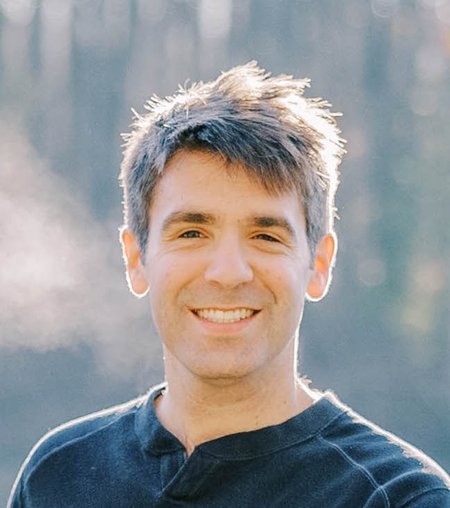
One new feature to be employed at the next run is the early-warning alert system. The specialized software will complement the main software that has been routinely used to detect all the gravitational-wave events so far. Ryan Magee
The main software, also called a search pipeline, looks for weak gravitational-wave signals buried in noisy LIGO data by matching the data to a library of known signals, or waveforms, that represent different types of events, such as a black hole and neutron star mergers. If a match is found and confirmed, an alert is sent to the astronomical community. The early-warning software works in the same way but uses only truncated versions of the waveforms so that it can work faster.

"The detectors are constantly taking new data in an observing run, and we are comparing our waveforms to the data as they come in. If we use truncated waveforms, we don't have to wait for as much data to be collected to do our comparison," Magee says. "The trade-off is that the signal needs to be loud enough to be detected using truncated waveforms. It's important to still run the main pipelines alongside the early-warning pipeline to pick up the weaker signals and get the best final localizations." Magee, Sachdev, and their colleagues are working on an early-warning pipeline called GSTLAL; additional early-warning pipelines for LIGO–Virgo is also in the works.

Before the Fireworks

As neutron stars spiral around each other like a pair of ice dancers, they orbit faster and faster and give off gravitational waves of increasingly higher frequencies. The final dance between neutron stars lasts longer than those between black holes, up to several minutes in the frequency bands LIGO is most sensitive to, and this gives LIGO and Virgo more time to catch the lead-up to the stars' dramatic finale. In the case of GW170817, the pair of mingling neutron stars spent six minutes at the frequency ranges detectable by LIGO–Virgo before the two bodies ultimately coalesced.

The LIGO early-warning software's truncated waveforms are designed to catch snippets of this last dance; in fact, the researchers think the software will eventually catch a neutron star merger up to one minute before the collision. If so, that will give telescopes around the world more time to find and study explosions.

"In the next run, we might be able to catch one of the neutron star mergers 10 seconds ahead of time," says Sachdev. "By the fifth run, we believe we can catch one with a full minute of warning."

For astronomers, one minute is a lot of time. Caltech professor of astronomy Gregg Hallinan, the director of Caltech's Owens Valley Radio Observatory, says that early warnings of imminent neutron star mergers will be particularly important for gamma-ray, X-ray, and radio telescopes because the collisions may burst at these wavelengths right at the very start. "Radio telescope arrays like the Long Wavelength Array at the Owens Valley Radio Observatory (OVRO-LWA) and Caltech's future 2,000-antenna Deep Synoptic Array (DSA-2000) might be able to detect a radio flash that is theorized to occur at the time the neutron stars merge and in some models during the final inspiral before the merger," says Hallinan. "That will teach us about the immediate environments of these massively destructive events. What's more, seeing a radio flash could also help us quickly pin down the location of the mergers."

Shreya Anand, a Caltech graduate student, says that early optical and ultraviolet observations of the mergers can reveal new information about their evolution, such as how elements are formed in the fast-moving material ejected from the collisions. Surabhi Sachdev

Anand, who works in the group of Caltech professor of astronomy Mansi Kasliwal (MS '07, Ph.D. '11), is busy developing software herself, not for early-warning systems but to search the skies for neutron star mergers and other cosmic events once an alert from LIGO is received. Kasliwal's group is currently developing software for the Zwicky Transient Facility (ZTF) and the upcoming Wide-field INfrared Transient ExploreR (WINTER), two survey instruments based at Caltech's Palomar Observatory. ZTF and WINTER can follow up on a LIGO alert to find and observe a neutron star merger. Anand is developing software that would speed up this search.

"Our algorithms figure out how to best cover different patches of sky and for how long to ensure the maximum chance of finding the target," she says. "We are missing interesting physics in the early phases of the mergers. The early-warning software from the LIGO team and the software for our telescope searches will speed up our chances of finding an event early. This will ultimately give us a more complete picture of what is going on."


  1. Cincinnati physicist explores strange metals' potential as superconductors for quantum supercomputing
  2. Yale prof Yao investigates the use of ML for the sustainable development of biomass

Page 41 of 123

  • 36
  • 37
  • 38
  • 39
  • 40
  • 41
  • 42
  • 43
  • 44
  • 45
POPULAR RIGHT NOW
  • Supercomputers uncover a new class of cosmic explosions hidden in plain sight
    Supercomputers uncover a new class of cosmic explosions hidden in plain sight
  • AI supercharges the hunt for stronger magnets: Iowa State researchers launch a new era of intelligent materials discovery
    AI supercharges the hunt for stronger magnets: Iowa State researchers launch a new era of intelligent materials discovery
  • IBM's Historic stock collapse raises questions for the future of enterprise supercomputing
    IBM's Historic stock collapse raises questions for the future of enterprise supercomputing
  • Could a novel dark matter theory simultaneously resolve multiple cosmic enigmas? Supercomputer simulations provide a compelling, albeit currently unverified, potential solution
    Could a novel dark matter theory simultaneously resolve multiple cosmic enigmas? Supercomputer simulations provide a compelling, albeit currently unverified, potential solution
  • Melting icebergs may be reshaping Earth’s greatest ocean current
    Melting icebergs may be reshaping Earth’s greatest ocean current
  • Supercomputers replace ‘bathtub’ flood maps with physics-based digital twins of Britain’s coastline
    Supercomputers replace ‘bathtub’ flood maps with physics-based digital twins of Britain’s coastline
  • Supercomputers push neural quantum simulation beyond previous limits
    Supercomputers push neural quantum simulation beyond previous limits
  • Intel’s AI supercomputing revival: Q2 financial surge signals new era for CPU-powered HPC infrastructure
    Intel’s AI supercomputing revival: Q2 financial surge signals new era for CPU-powered HPC infrastructure
  • AI infrastructure financing fears shake semiconductor sector
    AI infrastructure financing fears shake semiconductor sector
  • AWS supercomputing investment reaches historic scale as Amazon’s AI strategy powers record financial results
    AWS supercomputing investment reaches historic scale as Amazon’s AI strategy powers record financial results
THIS YEAR'S MOST READ
  • Wall Street wants to trade supercomputing power like oil
    Wall Street wants to trade supercomputing power like oil
  • Cosmic ambition at scale: UK’s supercomputer unlocks a 2.5 petabytes universe
    Cosmic ambition at scale: UK’s supercomputer unlocks a 2.5 petabytes universe
  • Hidden order, revealed at scale: Supercomputing, electron ptychography uncover the inner workings of relaxor ferroelectrics
    Hidden order, revealed at scale: Supercomputing, electron ptychography uncover the inner workings of relaxor ferroelectrics
  • Beamforming the future: BeammWave's 6G push signals the rise of orbital-terrestrial wireless networks
    Joakim Axmon
    Joakim Axmon
  • Intel's Q1 results signal supercomputing surge driving Xeon momentum
    Intel's Q1 results signal supercomputing surge driving Xeon momentum
  • When stars fall apart: Supercomputing reveals the hidden physics of black holes
    When stars fall apart: Supercomputing reveals the hidden physics of black holes
  • Multi-layer simulations reveal the hidden supply chain of solar prominences
    Multi-layer simulations reveal the hidden supply chain of solar prominences
  • Japanese scientists decode dolphin speed with supercomputing: Turbulence, vortices, and the hidden physics of propulsion
    Japanese scientists decode dolphin speed with supercomputing: Turbulence, vortices, and the hidden physics of propulsion
  • Cosmic feedback at scale: Supercomputing reveals how quasars regulate the early Universe
    Cosmic feedback at scale: Supercomputing reveals how quasars regulate the early Universe
  • Modeling life at the microscopic scale: A computational breakthrough in oxygen transport
    Modeling life at the microscopic scale: A computational breakthrough in oxygen transport
MOST READ OF ALL-TIME
  • Largest Computational Biology Simulation Mimics The Ribosome
    Details
    112108
    The amino acid (green) slithers into the chemical reaction center, moving through an evolutionarily ancient corridor of the ribosome (purple). The amino acid is delivered to the reaction core by the transfer RNA molecule (yellow).
    The amino acid (green) slithers into the chemical reaction center, moving through an evolutionarily ancient corridor of the ribosome (purple). The amino acid is delivered to the reaction core by the transfer RNA molecule (yellow).
  • Silicon 'neurons' may add a new dimension to chips
    Details
    80995
    Silicon 'neurons' may add a new dimension to chips
  • Linux Networx Accelerators Expected to Drive up to 4x Price/Performance
    Details
    75538
  • Complex Concepts That Really Add Up
    Details
    73639
    Complex Concepts That Really Add Up
  • Blue Sky Studios Donates Animation SuperComputer to Wesleyan
    Details
    68141
    Each rack holds 52 Angstrom Microsystem-brand “blades,” with a memory footprint of 12 or 24 gigabytes each. (Photos by Olivia Bartlett Drake)
    Each rack holds 52 Angstrom Microsystem-brand “blades,” with a memory footprint of 12 or 24 gigabytes each. (Photos by Olivia Bartlett Drake)
  • Humanities, HPC connect at NERSC
    Details
    57948
  • TeraGrid ’09 'Call for Participation'
    Details
    54952
  • Turbulence responsible for black holes' balancing act
    Details
    52313
  • Cray Wins $52 Million SuperComputer Contract
    Details
    50140
  • SDSC Researchers Accurately Predict Protein Docking
    Details
    46082
  • FRONTPAGE
  • LATEST
  • POPULAR
  • REGISTER
  • SOCIAL
  • VIDEO
  • SUBSCRIPTION
  • RSS
  • GUIDELINES
  • PRIVACY
  • TOS
  • ABOUT
  • +1 (816) 799-4488
  • editorial@supercomputingonline.com
© 2001 - 2026 SuperComputingOnline.com, LLC. All rights reserved. This material may not be published, broadcast, rewritten or redistributed without permission.
Sign In
  • FRONT PAGE
  • LATEST
    • MEDIA KIT
    • MOST READ
    • RSS FEED
    • ACADEMIA
    • AEROSPACE
    • APPLICATIONS
    • ASTRONOMY
    • AUTOMOTIVE
    • BIG DATA
    • BIOLOGY
    • CHEMISTRY
    • CLIENTS
    • CLOUD
    • DEFENSE
    • DEVELOPER TOOLS
    • EARTH SCIENCES
    • ECONOMICS
    • ENGINEERING
    • ENTERTAINMENT
    • HEALTH
    • INDUSTRY
    • INTERCONNECTS
    • GAMING
    • GOVERNMENT
    • MANUFACTURING
    • MIDDLEWARE
    • MOVIES
    • NETWORKS
    • OIL & GAS
    • PHYSICS
    • PROCESSORS
    • RETAIL
    • SCIENCE
    • STORAGE
    • SYSTEMS
    • VISUALIZATION
  • VIDEOS
    • ADD YOUR VIDEOS
    • MANAGE VIDEOS
  • COMMUNITY
    • TRADE SHOWS
    • SOCIAL NETWORK VIDEOS
    • SURVEYS
    • APPLICATIONS BROWSER
    • CONVERSATION INBOX
    • SOCIAL ADVERTISER
    • GROUPS
    • MARKETPLACE LISTINGS
    • PAGES
    • LEADERBOARD
    • POINTS LISTING
      • BADGES
    • PRIVACY CONFIRM REQUEST
    • PRIVACY CREATE REQUEST

Hey there! We noticed you’re using an ad blocker.