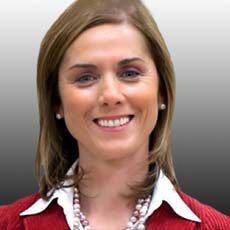
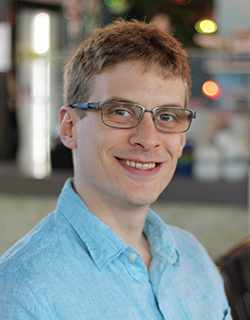
Dr. John-Jose Nunez
Dr. John-Jose Nunez

UBC develops AI model that predicts cancer patient survival by reading doctor's notes

A team of researchers from the University of British Columbia and BC Cancer have developed an artificial intelligence (AI) model that predicts cancer patient survival more accurately and with more readily available data than previous tools.

The model uses natural language processing (NLP) – a branch of AI that understands complex human language – to analyze oncologist notes following a patient’s initial consultation visit—the first step in the cancer journey after diagnosis. By identifying characteristics unique to each patient, the model was shown to predict six-month, 36-month, and 60-month survival with greater than 80 percent accuracy. The findings were published today in JAMA Network Open.

“Predicting cancer survival is an important factor that can be used to improve cancer care,” said lead author Dr. John-Jose Nunez, a psychiatrist and clinical research fellow with the UBC Mood Disorders Centre and BC Cancer. “It might suggest health providers make an earlier referral to support services or offer a more aggressive treatment option upfront. Our hope is that a tool like this could be used to personalize and optimize the care a patient receives right away, giving them the best outcome possible.” Cancer Research AI Artificial Intelligence 1200x700 d57da

Traditionally, cancer survival rates have been calculated retrospectively and categorized by only a few generic factors such as cancer site and tissue type. Despite familiarity with these rates, it can be challenging for oncologists to accurately predict a patient’s survival due to the many complex factors that influence patient outcomes.

The model developed by Dr. Nunez and his collaborators, which includes researchers from BC Cancer and UBC’s departments of computer science and psychiatry, is able to pick up on unique clues within a patient’s initial consultation document to provide a more nuanced assessment. It is also applicable to all cancers, whereas previous models have been limited to certain cancer types.  

“The AI essentially reads the consultation document similar to how a human would read it,” said Dr. Nunez. “These documents have many details like the age of the patient, the type of cancer, underlying health conditions, past substance use, and family histories. The AI combines all this to paint a complete picture of patient outcomes.”

The researchers trained and tested the model using data from 47,625 patients across all six BC Cancer sites located across British Columbia. To protect privacy, all patient data remained stored securely at BC Cancer and was presented anonymously. Unlike chart reviews by human research assistants, the new AI approach has the added benefit of maintaining complete confidentiality of patient records.

“Because the model is trained on B.C. data, that makes it a potentially powerful tool for predicting cancer survival here in the province,” said Dr. Nunez.

In the future, the technology could be applied in cancer clinics across Canada and around the world.

“The great thing about neural NLP models is that they are highly scalable, portable, and don’t require structured data sets,” said Dr. Nunez. “We can quickly train these models using local data to improve performance in a new region. I would suspect that these models provide a good foundation anywhere in the world where patients are able to see an oncologist.”

Dr. Nunez is a recipient of the 2022/23 UBC Institute of Mental Health Marshall Fellowship and is supported by funding from the BC Cancer Foundation. In another stream of work, Dr. Nunez is examining how to facilitate the best-possible psychiatric and counseling care for cancer patients using advanced AI techniques. He envisions a future where AI is integrated into many aspects of the health system to improve patient care.

“I see AI acting almost like a virtual assistant for physicians,” said Dr. Nunez. “As medicine gets more and more advanced, having AI to help sort through and make sense of all the data will help inform physician decisions. Ultimately, this will help improve quality of life and outcomes for patients.”


The poster of the FUGIN (FOREST Unbiased Galactic plane Imaging survey with Nobeyama 45-m telescope) project (https://nro-fugin.github.io/). The upper panel shows the distribution of molecular clouds in the Milky Way Galaxy obtained by the Nobeyama 45-m radio telescope. The lower panel shows infrared observation by the Spitzer Space Telescope.

Osaka Metro uses AI to draw the most accurate map of star birthplaces in the Galaxy

140,000 molecular gas clouds, where stars form, locations predicted

Stars are formed by molecular gas and dust coalescing in space. These molecular gases are so dilute and cold that they are invisible to the human eye, but they do emit faint radio waves that can be observed by radio telescopes.

Observing from Earth, a lot of matter lies ahead and behind these molecular clouds and these overlapping features make it difficult to determine their distance and physical properties such as size and mass. So, even though our Galaxy, the Milky Way, is the only galaxy close enough to make detailed observations of molecular clouds in the whole universe, it has been very difficult to investigate the physical properties of molecular clouds in a cohesive manner from large-scale observations.

A research team led by Dr. Shinji Fujita from the Osaka Metropolitan University Graduate School of Science in Japan, identified about 140,000 molecular clouds in the Milky Way Galaxy, which are areas of star formation, from large-scale data of carbon monoxide molecules, observed in detail by the Nobeyama 45-m radio telescope. Using artificial intelligence, the research team estimated the distance of each of these molecular clouds, determined their size and mass and successfully mapped their distribution, covering the first quadrant of the Galactic plane, in the most detailed manner to date.

“The results not only give a bird's eye view of the Galaxy but will also help in various studies of star formation,” explained Dr. Fujita. “In the future, we would like to expand the scope of observations with the Nobeyama 45-m radio telescope and incorporate radio telescope observation data of the sky in the southern hemisphere, which cannot be observed from Japan, for a complete distribution map of the entire Milky Way.”

This study was financially supported by Grants-in-Aid for Scientific Research (KAKENHI) of the Japanese Society for the Promotion of Science (grant numbers 17H06740 and JP21H00049) and “Young interdisciplinary collaboration project” in the National Institutes of Natural Sciences.

Scheme of the machine learning model based on the feedforward artificial neural network

Russian scientists develop a neural network algorithm that predicts Arrhenius crossover temperature with 90 percent accuracy

A joint paper by the Department of Computational Physics and Modeling of Physical Processes and Udmurt Federal Research Center of the Russian Academy of Sciences saw light in Materials.

The algorithm can help speed up the production of many materials, including metal alloys, and simplify quality control during such production. An algorithm based on a neural network created at KFU makes it possible to accurately calculate the Arrhenius temperature from several physical parameters of the material. (a) Diagram of the root mean square error ξ of estimation of the Arrhenius crossover temperature TA calculated for various combinations of the quantities Tm, Tg, Tg/Tm and m, which were the inputs of the machine learning model. Inset: T(pred)A and T(emp)A are the predicted and empirical Arrhenius crossover temperatures, respectively. (b) Correspondence between the empirical TA and the TA predicted by the machine learning model using the validation data set.

Among the parameters used by the team for modeling were melting temperature, glass transition temperature, and brittleness value. They are used to describe phase transitions and structural changes in liquids during cooling.

Co-author, Associate Professor Bulat Galimzyanov comments, “Many solid materials, such as glass, metals, plastics, initially have the form of melts – they are viscous liquids that solidify at a certain temperature, turning into a solid state. The temperature at which a change in the state of aggregation begins is called the Arrhenius temperature. When approaching it, the atoms of matter begin to move in groups and more slowly than before. This indicates the preparation of the liquid for solidification.”

The algorithm was tested for metallic, silicate, borate, and organic glasses, according to the interviewee, “We found out that for the created neural network, the melting and glass transition temperatures of the material are significant and sufficient characteristics for estimating the Arrhenius temperature. From these two values, the algorithm determined the Arrhenius temperature for all analyzed liquids with an accuracy of more than 90 percent.”

The scientists worked out an equation linking the Arrhenius temperature with the melting temperatures and the glass transition temperature.

“Glass transition and melting temperatures are easily measured in lab conditions. Furthermore, they can be found in the literature. Thus, determining the Arrhenius temperature has now become easier. We can analyze the properties of liquids faster and estimate the characteristics of resulting solid materials more precisely,” concludes Galimzyanov.

The team further plans to adapt the created algorithm to more complex materials, such as polymers.