SUPERCOMPUTING NEWS SUPERCOMPUTING NEWS
    • MEDIA KIT
    • MOST READ
    • RSS FEED
    • ACADEMIA
    • AEROSPACE
    • APPLICATIONS
    • ASTRONOMY
    • AUTOMOTIVE
    • BIG DATA
    • BIOLOGY
    • CHEMISTRY
    • CLIENTS
    • CLOUD
    • DEFENSE
    • DEVELOPER TOOLS
    • EARTH SCIENCES
    • ECONOMICS
    • ENGINEERING
    • ENTERTAINMENT
    • GAMING
    • GOVERNMENT
    • HEALTH
    • OIL & GAS
    • INDUSTRY
    • INTERCONNECTS
    • MANUFACTURING
    • MIDDLEWARE
    • MOVIES
    • NETWORKS
    • PHYSICS
    • PROCESSORS
    • RETAIL
    • SCIENCE
    • STORAGE
    • SYSTEMS
    • VISUALIZATION
    • AcyMailing subscription form

    • ADD YOUR VIDEOS
    • MANAGE VIDEOS
    • CONVERSATION INBOX
    • SOCIAL ADVERTISER
    • SOCIAL NETWORK VIDEOS
    • SURVEYS
    • GROUPS
    • PAGES
    • MARKETPLACE LISTINGS
    • APPLICATIONS BROWSER
    • PRIVACY CONFIRM REQUEST
    • PRIVACY CREATE REQUEST
    • LEADERBOARD
    • POINTS LISTING
      • BADGES
    • TRADE SHOWS
Sign In
Tyler O'Neal, Staff Editor ACADEMIA December 13, 2021, 2:00 pm

Irish physicists unlock secret to synchronization from flashing fireflies to cheering crowds

Physicists from Trinity College Dublin have unlocked the secret that explains how large groups of individual “oscillators” – from flashing fireflies to cheering crowds, and from ticking clocks to clicking metronomes – tend to synchronize when in each other’s company. Fireflies light up the night sky. Although they exhibit random, individual behaviour (when they flash), groups of closely aligned flies will synchronise over time.  CREDIT Rajesh Rajput

Their work, just published in the journal Physical Review Research, provides a mathematical basis for a phenomenon that has perplexed millions – their newly developed equations help explain how individual randomness is seen in the natural world and in electrical and computer systems can give rise to synchronization. 

We have long known that when one clock runs slightly faster than another, physically connecting them can make them tick in time. But making a large assembly of clocks synchronize in this way was thought to be much more difficult – or even impossible if there are too many of them.

The Trinity researcher's work, however, explains that synchronization can occur, even in very large assemblies of clocks.

Dr. Paul Eastham, Naughton Associate Professor in Physics at Trinity, said: “The equations we have developed describe an assembly of laser-like devices – acting as our ‘oscillating clocks’ – and they essentially unlock the secret to synchronization. These same equations describe many other kinds of oscillators, however, showing that synchronization is more readily achieved in many systems than was previously thought. 

“Many things that exhibit repetitive behavior can be considered clocks, from flashing fireflies and applauding crowds to electrical circuits, metronomes, and lasers. Independently they will oscillate at slightly different rates, but when they are formed into an assembly their mutual influences can overcome that variation.”

This discovery has a suite of potential applications, including developing new types of supercomputer technology that uses light signals to process information.

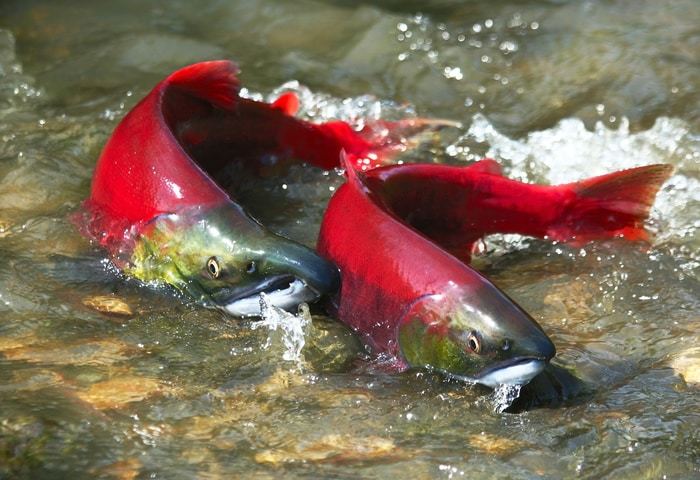
University of Montana's supercomputer models convey melting glaciers will produce new salmon habitat

Tyler O'Neal, Staff Editor ACADEMIA December 13, 2021, 12:00 pm

For decades, climate change has had detrimental impacts on Pacific salmon populations. Spawning streams are overheating and droughts are drying up salmon habitats entirely, impacting many food webs from the Rocky Mountains and Coast Ranges to the Pacific Ocean. While the newly created habitat may be a ray of light for salmon in some locations, climate change continues to pose grave challenges for salmon and other fish populations.

But in a new study involving researchers from the University of Montana’s Flathead Lake Biological Station, scientists discovered warming trends may offer one silver lining, if only for a while: The retreat of glaciers in the Pacific mountains of western North America potentially could produce more than 6,000 kilometers of new Pacific salmon habitat by the year 2100.

“Climate change alters the shape and dynamics of stream ecosystems,” said Diane Whited, an FLBS scientist whose role in the study focused on spatial modeling of potentially accessible stream habitat once glaciers have receded. “This information is crucial for managing the future of salmon habitat and productivity.”

Researchers modeled glacial retreat under different climate change scenarios. To accomplish this, they used supercomputer models to peel back the ice of 46,000 glaciers between southern British Columbia and south-central Alaska to look at how much potential salmon habitat would be created when the underlying bedrock is exposed and new streams flow over the landscape.

According to the team, the desirable stream habitat for salmon is connected to the ocean, maintains a low-gradient slope of 10% or less, and has retreating glaciers at its headwaters. By the end of the study, the researchers found 315 of the glaciers examined could fit those requirements.

Under a moderate climate scenario, the loss or reduction of those glaciers may reveal around 6,150 kilometers of potential new salmon habitat throughout the Pacific mountains of western North America by the year 2100 – a distance nearly equal to the length of the Mississippi River.

The researchers caution that while the newly created habitat may be a ray of light for salmon in some locations, overall climate change poses grave challenges for salmon populations. Additionally, if current warming trends continue, the newly emerging salmon habitats would eventually overheat and ultimately disappear the same way that current salmon habitats are today.

“On one hand, this amount of new salmon habitat will provide local opportunities for some salmon populations,” said SFU spatial analyst Kara Pitman, the lead author of the study. “On the other hand, climate change and other human impacts continue to threaten salmon survival via warming rivers, changes in stream flows, and poor ocean conditions.”

UK's low-cost AI soil sensors could help farmers curb fertilizer use

Tyler O'Neal, Staff Editor ACADEMIA December 13, 2021, 10:00 am

The technology could help growers work out the best time to use fertilizer on their crops and how much is needed, taking into account factors such as the weather and the condition of the soil. This would reduce the expensive and environmentally damaging effects of overfertilizing soil, which releases the greenhouse gas nitrous oxide and can pollute soil and waterways. 

Overfertilisation has so far rendered 12 percent of once-arable land worldwide unusable and the use of nitrogen-based fertilizer has risen by 600 percent in the last 50 years. However, it is difficult for crop growers to precisely tailor their fertilizer use: too much and they risk environmental damage and money wastage; too little and they risk poor crop yields. The researchers behind this new sensing technology say it could provide benefits for both the environment and growers. 

The sensor, named chemically functionalized paper-based electrical gas sensor (chemPEGS), measures levels of ammonium in soil – the compound that is converted to nitrites and nitrates by soil bacteria. Using a type of artificial intelligence called machine learning, it combines this with weather data, time since fertilization, pH, and soil conductivity measurements. It uses these data to predict how much total nitrogen the soil has now and how much it will have up to 12 days in the future, to predict the optimum time for fertilization. 

The research study identifies how this new low-cost solution could help growers yield maximum crops with minimal fertilization, particularly for fertilizer-thirsty crops like wheat. The technology could simultaneously reduce growers’ expenses and environmental harm from nitrogen-based fertilizers – the most widely used fertilizer type. 

Lead researcher Dr. Max Grell, who co-developed the technology at Imperial College London’s Department of Bioengineering in the UK said: “It’s difficult to overstate the problem of overfertilization both environmentally and economically. Yields and resulting income are down year by year, and growers don’t currently have the tools they need to combat this. 

“Our technology could help to tackle this problem by empowering growers to know how much ammonia and nitrate are currently in soil and to predict how much there will be in the future based on weather conditions. This could let them fine-tune fertilization to the specific needs of the soil and crops.” 

Nitrogen pollution 

Excess nitrogen fertilizer releases nitrous oxide into the air, a greenhouse gas 300 times more potent than carbon dioxide and which contributes to the climate crisis. Excess fertilizer can also be washed by rain into waterways where it deprives aquatic life of oxygen, leading to algal blooms and reduced biodiversity. 

However, it remains difficult to precisely tailor levels of fertilization to soil and crop needs. Testing is rare and current ways to measure soil nitrogen involve sending soil samples to laboratories – a lengthy and expensive process whose results are of limited use by the time they reach the grower. 

This new low-cost approach could expedite the process of testing the soil. While chemPEGS only measures ammonium, the machine learning component allows it to predict current levels of nitrate and future levels of nitrate and ammonium in the soil. 

Senior author and principal investigator Dr. Firat Guder, from Imperial’s Department of Bioengineering, said: “Much of our food comes from soil - a non-renewable resource which we’ll lose if we don’t look after it. This, combined with nitrogen pollution from agriculture, presents a conundrum for the planet – one that we hope to help tackle with precision agriculture. 

“Our sensing technology can measure and predict soil nitrogen with enough accuracy to forecast the impact of weather on fertilization planning, and tune timing for crop requirements, which we hope will help to reduce overfertilization while improving crop yields and profits for growers." 

The researchers expect chemPEGS and associated AI technology, which are currently in the prototype stage, to be available for commercialization in three to five years with more testing and manufacturing standardization. 

  1. Novel MD simulation method can accelerate COVID-19 drug discovery
  2. UK scientists solve the grass leaf conundrum

Page 85 of 123

  • 80
  • 81
  • 82
  • 83
  • 84
  • 85
  • 86
  • 87
  • 88
  • 89
POPULAR RIGHT NOW
  • Supercomputers uncover a new class of cosmic explosions hidden in plain sight
    Supercomputers uncover a new class of cosmic explosions hidden in plain sight
  • AI supercharges the hunt for stronger magnets: Iowa State researchers launch a new era of intelligent materials discovery
    AI supercharges the hunt for stronger magnets: Iowa State researchers launch a new era of intelligent materials discovery
  • IBM's Historic stock collapse raises questions for the future of enterprise supercomputing
    IBM's Historic stock collapse raises questions for the future of enterprise supercomputing
  • Could a novel dark matter theory simultaneously resolve multiple cosmic enigmas? Supercomputer simulations provide a compelling, albeit currently unverified, potential solution
    Could a novel dark matter theory simultaneously resolve multiple cosmic enigmas? Supercomputer simulations provide a compelling, albeit currently unverified, potential solution
  • Melting icebergs may be reshaping Earth’s greatest ocean current
    Melting icebergs may be reshaping Earth’s greatest ocean current
  • Supercomputers replace ‘bathtub’ flood maps with physics-based digital twins of Britain’s coastline
    Supercomputers replace ‘bathtub’ flood maps with physics-based digital twins of Britain’s coastline
  • Supercomputers push neural quantum simulation beyond previous limits
    Supercomputers push neural quantum simulation beyond previous limits
  • Intel’s AI supercomputing revival: Q2 financial surge signals new era for CPU-powered HPC infrastructure
    Intel’s AI supercomputing revival: Q2 financial surge signals new era for CPU-powered HPC infrastructure
  • AI infrastructure financing fears shake semiconductor sector
    AI infrastructure financing fears shake semiconductor sector
  • AWS supercomputing investment reaches historic scale as Amazon’s AI strategy powers record financial results
    AWS supercomputing investment reaches historic scale as Amazon’s AI strategy powers record financial results
THIS YEAR'S MOST READ
  • Wall Street wants to trade supercomputing power like oil
    Wall Street wants to trade supercomputing power like oil
  • Cosmic ambition at scale: UK’s supercomputer unlocks a 2.5 petabytes universe
    Cosmic ambition at scale: UK’s supercomputer unlocks a 2.5 petabytes universe
  • Hidden order, revealed at scale: Supercomputing, electron ptychography uncover the inner workings of relaxor ferroelectrics
    Hidden order, revealed at scale: Supercomputing, electron ptychography uncover the inner workings of relaxor ferroelectrics
  • Beamforming the future: BeammWave's 6G push signals the rise of orbital-terrestrial wireless networks
    Joakim Axmon
    Joakim Axmon
  • Intel's Q1 results signal supercomputing surge driving Xeon momentum
    Intel's Q1 results signal supercomputing surge driving Xeon momentum
  • When stars fall apart: Supercomputing reveals the hidden physics of black holes
    When stars fall apart: Supercomputing reveals the hidden physics of black holes
  • Multi-layer simulations reveal the hidden supply chain of solar prominences
    Multi-layer simulations reveal the hidden supply chain of solar prominences
  • Japanese scientists decode dolphin speed with supercomputing: Turbulence, vortices, and the hidden physics of propulsion
    Japanese scientists decode dolphin speed with supercomputing: Turbulence, vortices, and the hidden physics of propulsion
  • Cosmic feedback at scale: Supercomputing reveals how quasars regulate the early Universe
    Cosmic feedback at scale: Supercomputing reveals how quasars regulate the early Universe
  • Modeling life at the microscopic scale: A computational breakthrough in oxygen transport
    Modeling life at the microscopic scale: A computational breakthrough in oxygen transport
MOST READ OF ALL-TIME
  • Largest Computational Biology Simulation Mimics The Ribosome
    Details
    112108
    The amino acid (green) slithers into the chemical reaction center, moving through an evolutionarily ancient corridor of the ribosome (purple). The amino acid is delivered to the reaction core by the transfer RNA molecule (yellow).
    The amino acid (green) slithers into the chemical reaction center, moving through an evolutionarily ancient corridor of the ribosome (purple). The amino acid is delivered to the reaction core by the transfer RNA molecule (yellow).
  • Silicon 'neurons' may add a new dimension to chips
    Details
    80995
    Silicon 'neurons' may add a new dimension to chips
  • Linux Networx Accelerators Expected to Drive up to 4x Price/Performance
    Details
    75538
  • Complex Concepts That Really Add Up
    Details
    73639
    Complex Concepts That Really Add Up
  • Blue Sky Studios Donates Animation SuperComputer to Wesleyan
    Details
    68141
    Each rack holds 52 Angstrom Microsystem-brand “blades,” with a memory footprint of 12 or 24 gigabytes each. (Photos by Olivia Bartlett Drake)
    Each rack holds 52 Angstrom Microsystem-brand “blades,” with a memory footprint of 12 or 24 gigabytes each. (Photos by Olivia Bartlett Drake)
  • Humanities, HPC connect at NERSC
    Details
    57948
  • TeraGrid ’09 'Call for Participation'
    Details
    54952
  • Turbulence responsible for black holes' balancing act
    Details
    52313
  • Cray Wins $52 Million SuperComputer Contract
    Details
    50140
  • SDSC Researchers Accurately Predict Protein Docking
    Details
    46082
  • FRONTPAGE
  • LATEST
  • POPULAR
  • REGISTER
  • SOCIAL
  • VIDEO
  • SUBSCRIPTION
  • RSS
  • GUIDELINES
  • PRIVACY
  • TOS
  • ABOUT
  • +1 (816) 799-4488
  • editorial@supercomputingonline.com
© 2001 - 2026 SuperComputingOnline.com, LLC. All rights reserved. This material may not be published, broadcast, rewritten or redistributed without permission.
Sign In
  • FRONT PAGE
  • LATEST
    • MEDIA KIT
    • MOST READ
    • RSS FEED
    • ACADEMIA
    • AEROSPACE
    • APPLICATIONS
    • ASTRONOMY
    • AUTOMOTIVE
    • BIG DATA
    • BIOLOGY
    • CHEMISTRY
    • CLIENTS
    • CLOUD
    • DEFENSE
    • DEVELOPER TOOLS
    • EARTH SCIENCES
    • ECONOMICS
    • ENGINEERING
    • ENTERTAINMENT
    • HEALTH
    • INDUSTRY
    • INTERCONNECTS
    • GAMING
    • GOVERNMENT
    • MANUFACTURING
    • MIDDLEWARE
    • MOVIES
    • NETWORKS
    • OIL & GAS
    • PHYSICS
    • PROCESSORS
    • RETAIL
    • SCIENCE
    • STORAGE
    • SYSTEMS
    • VISUALIZATION
  • VIDEOS
    • ADD YOUR VIDEOS
    • MANAGE VIDEOS
  • COMMUNITY
    • TRADE SHOWS
    • SOCIAL NETWORK VIDEOS
    • SURVEYS
    • APPLICATIONS BROWSER
    • CONVERSATION INBOX
    • SOCIAL ADVERTISER
    • GROUPS
    • MARKETPLACE LISTINGS
    • PAGES
    • LEADERBOARD
    • POINTS LISTING
      • BADGES
    • PRIVACY CONFIRM REQUEST
    • PRIVACY CREATE REQUEST

Hey there! We noticed you’re using an ad blocker.