

SUPERCOMPUTING NEWS SUPERCOMPUTING NEWS
    • MEDIA KIT
    • MOST READ
    • RSS FEED
    • ACADEMIA
    • AEROSPACE
    • APPLICATIONS
    • ASTRONOMY
    • AUTOMOTIVE
    • BIG DATA
    • BIOLOGY
    • CHEMISTRY
    • CLIENTS
    • CLOUD
    • DEFENSE
    • DEVELOPER TOOLS
    • EARTH SCIENCES
    • ECONOMICS
    • ENGINEERING
    • ENTERTAINMENT
    • GAMING
    • GOVERNMENT
    • HEALTH
    • OIL & GAS
    • INDUSTRY
    • INTERCONNECTS
    • MANUFACTURING
    • MIDDLEWARE
    • MOVIES
    • NETWORKS
    • PHYSICS
    • PROCESSORS
    • RETAIL
    • SCIENCE
    • STORAGE
    • SYSTEMS
    • VISUALIZATION
    • AcyMailing subscription form

    • ADD YOUR VIDEOS
    • MANAGE VIDEOS
    • CONVERSATION INBOX
    • SOCIAL ADVERTISER
    • SOCIAL NETWORK VIDEOS
    • SURVEYS
    • GROUPS
    • PAGES
    • MARKETPLACE LISTINGS
    • APPLICATIONS BROWSER
    • PRIVACY CONFIRM REQUEST
    • PRIVACY CREATE REQUEST
    • LEADERBOARD
    • POINTS LISTING
      • BADGES
    • TRADE SHOWS
Sign In
Tyler O'Neal, Staff Editor ACADEMIA December 3, 2021, 6:00 am

University of Toronto study shows a nearly $1 million productivity boost for some manufacturers' predictive analytics investments

The predictive analytics industry is slated to earn more than $273 billion in 2022. Yet, despite the hype over big data and the forecasting power of tools such as statistical modeling and machine learning, not all firms that sink money into them reap benefits, prompting a research team to probe what makes the difference. Kristina McElheran is an assistant Professor of Strategic Management at the University of Toronto, Scarborough and Rotman School of Management. Her research centres on the use of information technology and data by firms, with an emphasis on strategy, organizational design, and process innovation. Her current focus is on data-driven decision making and how firms and individuals can use data to improve their performance. She is also actively investigating the economic and strategic impacts of Cloud Computing. Her experience includes six years on faculty at the Harvard Business School. She is a Faculty Affiliate at UofT’s Schwartz Reisman Institute for Technology and Society; Digital Fellow at the Digital Economy Lab, Stanford Institute for Human-Centered AI; Visiting Researcher at Harvard Law School on AI, Robotics, and the Future of Work; Fellow at Boston University’s Technology and Policy Research Initiative; and Digital Fellow at MIT’s Initiative on the Digital Economy. Prior to her academic career, she worked for two early-stage technology ventures in Silicon Valley. She currently serves as a Lab Economist at the Creative Destruction Lab, one of Toronto’s premier seed-stage programs for technology startups.
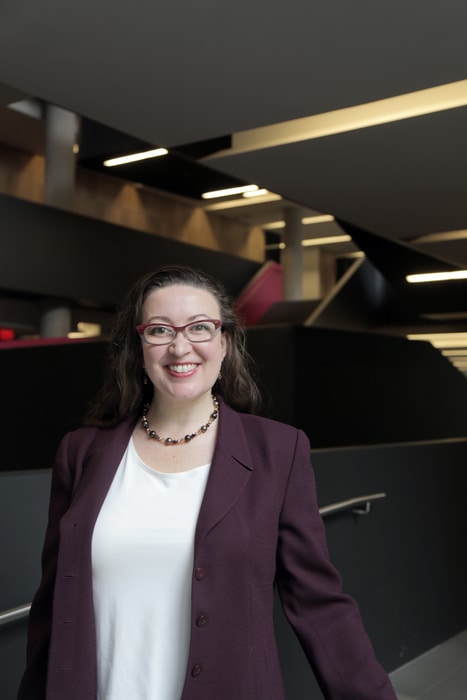
They found that significant and complementary investments in IT capital, an educated workforce, and high-efficiency manufacturing processes were “indispensable” to getting the most out of predictive tools that help firms optimize their performance. Among the 30,000 manufacturers surveyed in the 2015 study, companies with predictive analytics averaged about a $500,000 to $1 million revenue increase. Firms that did not make at least one of these, mutually-reinforcing investments, however, saw little to no benefit. 

“These complements provide the organizational infrastructure to collect, analyze, and respond to predictions based on objective data,” explains Kristina McElheran, an assistant professor of strategic management at the University of Toronto Scarborough and UofT’s Rotman School of Management.  

“IT capital captures investments in data collection and computer hardware that can transmit, store, and analyze data, for example. Educated workers are known to be an essential ingredient for that system. And certain production environments provide richer data due to the processes they use.” 

Prof. McElheran and her co-authors worked with the U.S. Census Bureau to create a survey that was returned by a highly-representative sample of U.S. manufacturing plants for the two survey years, 2010 and 2015. The survey asked about manufacturers’ use of predictive analytics, management practices, availability and use of data in decision-making, and design of their production processes. Results were cross-linked with related data such as company production inputs and outputs. Manufacturers were targeted because they tend to be early innovation adopters. More than three-quarters of responding plants had adopted some form of predictive analytics by 2010, researchers found, although most firms used the tools only annually or monthly. Higher intensity of use was associated with greater productivity gains. 

Government requirements for collecting environmental and safety data also helped to “nudge” some firms into adopting predictive analytics by pushing them to implement necessary infrastructure and train workers to use it. Companies nudged in this way ultimately displayed stronger performance in the researchers’ findings. 

It’s no secret in the management world that IT investments realize better returns when supported by educated workers, and vice versa. What the research shows is that some firms have not yet made that connection in the context of predictive analytics, says Prof. McElheran. 

“We found it puzzling,” she says. “More research is needed to understand the organizational or market frictions that are causing this apparent misalignment, one that is proving to be quite costly in the firms we observe.” 

This is the first study to examine the impact of predictive technologies on productivity in a large sample. The paper was co-written with Erik Brynjolfsson, of Stanford University and Wang Jin at the MIT Initiative on the Digital Economy. 

Massachusetts General Hospital uses deep learning models to identify people at risk of thoracic aortic aneurysm

Tyler O'Neal, Staff Editor ACADEMIA December 2, 2021, 5:00 pm

The results could also lead to new strategies to prevent and treat enlarged aortas.

An abnormally enlarged aorta—also called aortic aneurysm—can tear or rupture and cause sudden cardiac death. Unfortunately, patients often show no signs or symptoms before the aorta, which carries blood from the heart to the rest of the body, fails. A team led by investigators at Massachusetts General Hospital (MGH) recently used a type of artificial intelligence called deep learning to uncover insights into the genetic basis for variation in the aorta’s size. In addition to identifying at-risk individuals, the findings may point to new preventive and therapeutic targets.

The research relied on data from the UK Biobank, a study that performed multiple magnetic resonance imaging tests of the heart and aorta in more than 40,000 people. “There were no aortic measurements provided by the UK Biobank, and we wanted to read the aortic diameter in all of the images collected,” explains lead author James Pirruccello, MD, a cardiologist at MGH and an instructor in medicine at Harvard Medical School. “That is very hard for a human to do because it would take a long time, which motivated our use of deep learning models to do this process at a large scale.”

The researchers trained deep learning models to evaluate the dimensions of the ascending and descending sections of the aorta in 4.6 million cardiac images. They then analyzed the study participants’ genes to identify variations in 82 genetic regions (or loci) linked to the diameter of the ascending aorta and 47 linked to the diameter of the descending aorta. Some of the loci were near genes with known associations with aortic disease.

“When we added up the genetic variants into what’s called a polygenic score, people with a higher score were more likely to be diagnosed with aortic aneurysm by a doctor,” says Pirruccello. “This suggests that, after further development and testing, such a score might one day be useful to help us identify people at high risk of an aneurysm. The genetic loci that we discovered also offer a useful starting point for trying to identify new drug targets for aortic enlargement.”

Pirruccello adds that the findings also provide supportive evidence that deep learning and other machine learning methods can help accelerate scientific analyses of complex biomedical data such as imaging results.

This work was supported by Leducq, the National Institutes of Health, the American Heart Association, the John S. LaDue Memorial Fellowship, a Sarnoff Cardiovascular Research Foundation Scholar Award, the Burroughs Wellcome Fund, the Fredman Fellowship for Aortic Disease, the Toomey Fund for Aortic Dissection Research, Bayer AG, and the Susan Eid Tumor Heterogeneity Initiative.

Vanderbilt engineer Kolouri wins $1M DARPA grant to investigate AI cooperative lifelong learning

Tyler O'Neal, Staff Editor ACADEMIA December 2, 2021, 4:00 pm

A Vanderbilt engineering professor is leading part of an international initiative to create advanced artificial intelligence programs that will enable machines to learn progressively over a lifetime and share those experiences. Researchers hope the technology will allow machines to reuse information, adapt quickly to new conditions, and collaborate by sharing information. Soheil Kolouri

Soheil Kolouri, assistant professor of computer science, in partnership with Hamed Pirsiavash, associate professor of computer science at the University of California, Davis, will lead a research team focusing on continual machine learning mechanisms.

The prototype project, “Information Distillation for Embodied and Articulate Lifelong Learners,” or IDEALL, has received a $1M award from the Defense Advanced Research Projects Agency as part of the agency’s Shared-Experience Lifelong Learning (ShELL) initiative. DARPA wants to develop AI agents that share their experiences and is seeking innovative basic or applied research concepts in lifelong learning.

In addition to leading IDEALL, Kolouri’s team has partnered with Andrea Soltoggio, associate professor of computer science, University of Loughborough, UK, to develop a theoretical framework that allows AI agents to measure tasks’ similarities and continually learn by analogies. Cong Liu, associate professor of computer science at, University of Texas, Dallas, is a member of the Loughborough team.  

The Vanderbilt-UC, Davis team will concentrate on the algorithmic theory and statistical foundation of the learning mechanisms. The UK team will focus on novel bio-inspired neural networks that learn shareable knowledge exploiting neuromodulation and synaptic consolidation mechanisms, and the Texas researchers will focus on the hardware integration and deployment for potential transition to industrial and real-world applications.

The real-world uses of this new technology could include cooperating self-learning autonomous vehicles such as self-driving cars, robotic rescue and exploration systems, distributed monitoring systems to detect emergencies, or cyber security systems of agents that monitor large networks.

Lifelong Learning is a relatively new area of machine learning research in which agents continually learn as they encounter varying conditions and tasks while deployed in the field, acquiring experience and knowledge and improving performance on both novel and previous tasks. This differs from the train-then-deploy process for typical ML systems.

LL is an emerging area of machine learning that differs from the traditional train and then deploy process. In LL, an AI agent must continually learn from the input data stream while preserving and improving its previously acquired knowledge.

“Lifelong learning from the never-ending stream of everchanging data is the key to scaling up AI systems,” said Kolouri. “One of the major roadblocks in achieving LL is the so-called plasticity-stability trade-off, where plasticity refers to the ability to learn from new data, and stability refers to retaining the previously learned knowledge.” A team of undergraduate and graduate students at the Machine Intelligence and Neural Technologies (MINT) Lab directed by Kolouri, in collaboration with computer science associate professor Vladimir Braverman’s group at Johns Hopkins University, is currently studying this phenomenon.

“Today we know the importance of social interactions in the evolution of human intelligence. Artificial General Intelligence (AGI) could not be realized with a single AI agent. Similar to the cognitive revolution in sapiens, a transition is needed from our current single-agent LL to articulate LL machines that can encode information about their surroundings into a compact compositional language and use it for machine-to-machine communication and, maybe more importantly, for thinking, which is a form of self-communication!” said Kolouri. “The ShELL program aims to develop such communicative LL agents that continually learn from their collective experiences.”

“We are very excited to be part of this fast-paced, innovative program and look forward to transitioning our developed tools into medical applications,” Kolouri said.

  1. German scientists pave the way for superconducting spintronic apps where quantum coherence protects spin polarized current flow
  2. Scientists use ASU built supercomputer models to solve a part of the mystery of ultra-rare blood clots linked to adenovirus-based COVID-19 vaccines

Page 93 of 123

  • 88
  • 89
  • 90
  • 91
  • 92
  • 93
  • 94
  • 95
  • 96
  • 97
POPULAR RIGHT NOW
  • Supercomputers uncover a new class of cosmic explosions hidden in plain sight
    Supercomputers uncover a new class of cosmic explosions hidden in plain sight
  • AI supercharges the hunt for stronger magnets: Iowa State researchers launch a new era of intelligent materials discovery
    AI supercharges the hunt for stronger magnets: Iowa State researchers launch a new era of intelligent materials discovery
  • IBM's Historic stock collapse raises questions for the future of enterprise supercomputing
    IBM's Historic stock collapse raises questions for the future of enterprise supercomputing
  • Could a novel dark matter theory simultaneously resolve multiple cosmic enigmas? Supercomputer simulations provide a compelling, albeit currently unverified, potential solution
    Could a novel dark matter theory simultaneously resolve multiple cosmic enigmas? Supercomputer simulations provide a compelling, albeit currently unverified, potential solution
  • Melting icebergs may be reshaping Earth’s greatest ocean current
    Melting icebergs may be reshaping Earth’s greatest ocean current
  • Supercomputers replace ‘bathtub’ flood maps with physics-based digital twins of Britain’s coastline
    Supercomputers replace ‘bathtub’ flood maps with physics-based digital twins of Britain’s coastline
  • Supercomputers push neural quantum simulation beyond previous limits
    Supercomputers push neural quantum simulation beyond previous limits
  • Intel’s AI supercomputing revival: Q2 financial surge signals new era for CPU-powered HPC infrastructure
    Intel’s AI supercomputing revival: Q2 financial surge signals new era for CPU-powered HPC infrastructure
  • AI infrastructure financing fears shake semiconductor sector
    AI infrastructure financing fears shake semiconductor sector
  • AWS supercomputing investment reaches historic scale as Amazon’s AI strategy powers record financial results
    AWS supercomputing investment reaches historic scale as Amazon’s AI strategy powers record financial results
THIS YEAR'S MOST READ
  • Wall Street wants to trade supercomputing power like oil
    Wall Street wants to trade supercomputing power like oil
  • Cosmic ambition at scale: UK’s supercomputer unlocks a 2.5 petabytes universe
    Cosmic ambition at scale: UK’s supercomputer unlocks a 2.5 petabytes universe
  • Hidden order, revealed at scale: Supercomputing, electron ptychography uncover the inner workings of relaxor ferroelectrics
    Hidden order, revealed at scale: Supercomputing, electron ptychography uncover the inner workings of relaxor ferroelectrics
  • Beamforming the future: BeammWave's 6G push signals the rise of orbital-terrestrial wireless networks
    Joakim Axmon
    Joakim Axmon
  • Intel's Q1 results signal supercomputing surge driving Xeon momentum
    Intel's Q1 results signal supercomputing surge driving Xeon momentum
  • When stars fall apart: Supercomputing reveals the hidden physics of black holes
    When stars fall apart: Supercomputing reveals the hidden physics of black holes
  • Multi-layer simulations reveal the hidden supply chain of solar prominences
    Multi-layer simulations reveal the hidden supply chain of solar prominences
  • Japanese scientists decode dolphin speed with supercomputing: Turbulence, vortices, and the hidden physics of propulsion
    Japanese scientists decode dolphin speed with supercomputing: Turbulence, vortices, and the hidden physics of propulsion
  • Cosmic feedback at scale: Supercomputing reveals how quasars regulate the early Universe
    Cosmic feedback at scale: Supercomputing reveals how quasars regulate the early Universe
  • Modeling life at the microscopic scale: A computational breakthrough in oxygen transport
    Modeling life at the microscopic scale: A computational breakthrough in oxygen transport
MOST READ OF ALL-TIME
  • Largest Computational Biology Simulation Mimics The Ribosome
    Details
    112108
    The amino acid (green) slithers into the chemical reaction center, moving through an evolutionarily ancient corridor of the ribosome (purple). The amino acid is delivered to the reaction core by the transfer RNA molecule (yellow).
    The amino acid (green) slithers into the chemical reaction center, moving through an evolutionarily ancient corridor of the ribosome (purple). The amino acid is delivered to the reaction core by the transfer RNA molecule (yellow).
  • Silicon 'neurons' may add a new dimension to chips
    Details
    80994
    Silicon 'neurons' may add a new dimension to chips
  • Linux Networx Accelerators Expected to Drive up to 4x Price/Performance
    Details
    75538
  • Complex Concepts That Really Add Up
    Details
    73637
    Complex Concepts That Really Add Up
  • Blue Sky Studios Donates Animation SuperComputer to Wesleyan
    Details
    68141
    Each rack holds 52 Angstrom Microsystem-brand “blades,” with a memory footprint of 12 or 24 gigabytes each. (Photos by Olivia Bartlett Drake)
    Each rack holds 52 Angstrom Microsystem-brand “blades,” with a memory footprint of 12 or 24 gigabytes each. (Photos by Olivia Bartlett Drake)
  • Humanities, HPC connect at NERSC
    Details
    57947
  • TeraGrid ’09 'Call for Participation'
    Details
    54952
  • Turbulence responsible for black holes' balancing act
    Details
    52312
  • Cray Wins $52 Million SuperComputer Contract
    Details
    50140
  • SDSC Researchers Accurately Predict Protein Docking
    Details
    46080
  • FRONTPAGE
  • LATEST
  • POPULAR
  • REGISTER
  • SOCIAL
  • VIDEO
  • SUBSCRIPTION
  • RSS
  • GUIDELINES
  • PRIVACY
  • TOS
  • ABOUT
  • +1 (816) 799-4488
  • editorial@supercomputingonline.com
© 2001 - 2026 SuperComputingOnline.com, LLC. All rights reserved. This material may not be published, broadcast, rewritten or redistributed without permission.
Sign In
  • FRONT PAGE
  • LATEST
    • MEDIA KIT
    • MOST READ
    • RSS FEED
    • ACADEMIA
    • AEROSPACE
    • APPLICATIONS
    • ASTRONOMY
    • AUTOMOTIVE
    • BIG DATA
    • BIOLOGY
    • CHEMISTRY
    • CLIENTS
    • CLOUD
    • DEFENSE
    • DEVELOPER TOOLS
    • EARTH SCIENCES
    • ECONOMICS
    • ENGINEERING
    • ENTERTAINMENT
    • HEALTH
    • INDUSTRY
    • INTERCONNECTS
    • GAMING
    • GOVERNMENT
    • MANUFACTURING
    • MIDDLEWARE
    • MOVIES
    • NETWORKS
    • OIL & GAS
    • PHYSICS
    • PROCESSORS
    • RETAIL
    • SCIENCE
    • STORAGE
    • SYSTEMS
    • VISUALIZATION
  • VIDEOS
    • ADD YOUR VIDEOS
    • MANAGE VIDEOS
  • COMMUNITY
    • TRADE SHOWS
    • SOCIAL NETWORK VIDEOS
    • SURVEYS
    • APPLICATIONS BROWSER
    • CONVERSATION INBOX
    • SOCIAL ADVERTISER
    • GROUPS
    • MARKETPLACE LISTINGS
    • PAGES
    • LEADERBOARD
    • POINTS LISTING
      • BADGES
    • PRIVACY CONFIRM REQUEST
    • PRIVACY CREATE REQUEST

Hey there! We noticed you’re using an ad blocker.