SUPERCOMPUTING NEWS SUPERCOMPUTING NEWS
    • MEDIA KIT
    • MOST READ
    • RSS FEED
    • ACADEMIA
    • AEROSPACE
    • APPLICATIONS
    • ASTRONOMY
    • AUTOMOTIVE
    • BIG DATA
    • BIOLOGY
    • CHEMISTRY
    • CLIENTS
    • CLOUD
    • DEFENSE
    • DEVELOPER TOOLS
    • EARTH SCIENCES
    • ECONOMICS
    • ENGINEERING
    • ENTERTAINMENT
    • GAMING
    • GOVERNMENT
    • HEALTH
    • OIL & GAS
    • INDUSTRY
    • INTERCONNECTS
    • MANUFACTURING
    • MIDDLEWARE
    • MOVIES
    • NETWORKS
    • PHYSICS
    • PROCESSORS
    • RETAIL
    • SCIENCE
    • STORAGE
    • SYSTEMS
    • VISUALIZATION
    • AcyMailing subscription form

    • ADD YOUR VIDEOS
    • MANAGE VIDEOS
    • CONVERSATION INBOX
    • SOCIAL ADVERTISER
    • SOCIAL NETWORK VIDEOS
    • SURVEYS
    • GROUPS
    • PAGES
    • MARKETPLACE LISTINGS
    • APPLICATIONS BROWSER
    • PRIVACY CONFIRM REQUEST
    • PRIVACY CREATE REQUEST
    • LEADERBOARD
    • POINTS LISTING
      • BADGES
    • TRADE SHOWS
Sign In
Tyler O'Neal, Staff Editor ACADEMIA November 22, 2021, 12:00 pm

Hurricanes are expected to linger over northeast cities, causing greater damage

More storms like hurricane sandy could be in the east coast’s future, potentially costing billions of dollars in damage and economic losses Hurricane Sandy over the Carolinas. Credit: NASA Goddard

By the late 21st century, northeastern U.S. cities will see worsening hurricane outcomes, with storms arriving more quickly but slowing down once they’ve made landfall. As storms linger longer over the East Coast, they will cause greater damage along the heavily populated corridor, according to a new study.

In the new study, climate scientist Andra Garner at Rowan University analyzed more than 35,000 supercomputer-simulated storms. To assess likely storm outcomes in the future, Garner and her collaborators compared where storms formed, how fast they moved and where they ended from the pre-industrial period through the end of the 21st century.

The researchers found that future East Coast hurricanes will likely cause greater damage than storms of the past. The research predicted that a greater number of future hurricanes will form near the East Coast, and those storms will reach the Northeast corridor more quickly. The simulated storms were slow to a crawl as they approach the East Coast, allowing them to produce more wind, rain, floods, and related damage in the Northeast region. The longest-lived tropical storms are predicted to be twice as long as storms today.

The study was published in Earth’s Future, which publishes interdisciplinary research on the past, present, and future of our planet and its inhabitants.

The changes in storm speed will be driven by changes in atmospheric patterns over the Atlantic, prompted by warmer air temperatures. While Garner and her colleagues note that more research remains to be done to fully understand the relationship between a warming climate and changing storm tracks, they noted that potential northward shifts in the region where Northern and Southern Hemisphere trade winds meet or slowing environmental wind speeds could be to blame.

“When you think of a hurricane moving along the East Coast, there are larger scale wind patterns that generally help push them back out to sea,” Garner said. “We see those winds slowing down over time.” Without those winds, the hurricanes can overstay their welcome on the coast.

Garner, whose previous work focused on the devastating East Coast effects of storms like Hurricane Sandy, particularly in the Mid-Atlantic, said the concern raised by the new study is that more storms capable of producing damage levels similar to Sandy are likely.

And the longer storms linger, the worse they can be, she said.

“Think of Hurricane Harvey in 2017 sitting over Texas, and Hurricane Dorian in 2019 over the Bahamas,” she said. “That prolonged exposure can worsen the impacts.”

From 2010 to 2020, U.S. coastlines were hit by 19 tropical cyclones that qualified as billion-dollar disasters, generating approximately $480 billion in damages, adjusted for inflation. If storms sit over coasts for longer stretches, that economic damage is likely to increase as well. For the authors, that provides clear economic motivation to stem rising greenhouse gas emissions.

“The work produced yet more evidence of a dire need to cut emissions of greenhouse gases now to stop the climate warming,” Garner said.

Co-author Benjamin Horton, who specializes in sea-level rise and leads the Earth Observatory of Singapore at Nanyang Technological University, said, “This study suggests that climate change will play a long-term role in increasing the strength of storms along the east coast of the United States and elsewhere. Planning for how to mitigate the impact of major storms must take this into account.”

Columbia engineers build a breakthrough integrated photonics device

Tyler O'Neal, Staff Editor ACADEMIA November 22, 2021, 10:00 am

Over the past several decades, researchers have moved from using electric currents to manipulating light waves in the near-infrared range for telecommunications applications such as high-speed 5G networks, biosensors on a chip, and driverless cars. This research area, known as integrated photonics, is fast evolving, and investigators are now exploring the shorter visible wavelength range to develop a broad variety of emerging applications. These include chip-scale light detection and ranging (LIDAR), augmented/virtual/mixed reality (AR/VR/MR) goggles, holographic displays, quantum information processing chips, and implantable optogenetic probes in the brain.

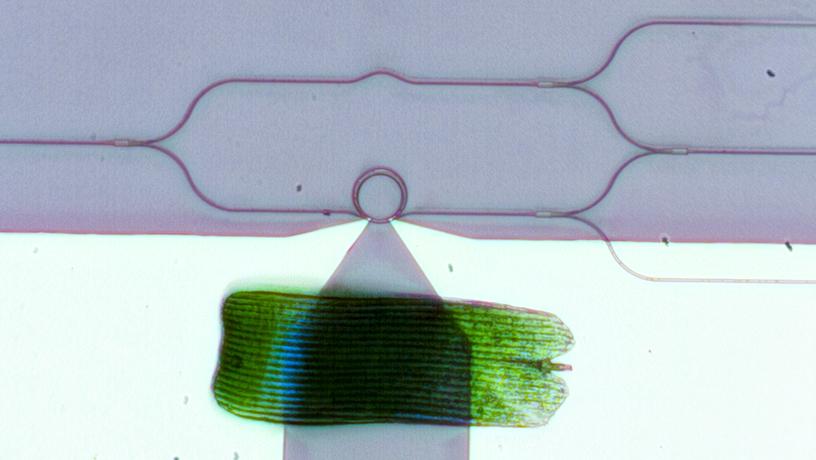
The one device critical to all these applications in the visible range is an optical phase modulator, which controls the phase of a light wave, similar to how the phase of radio waves is modulated in wireless computer networks. With a phase modulator, researchers can build an on-chip optical switch that channels light into different waveguide ports. With a large network of these optical switches, researchers could create sophisticated integrated optical systems that could control light propagating on a tiny chip or light emission from the chip. A visible-spectrum phase modulator (the ring at the center of a radius of 10 microns) is tinier than a butterfly wing scale. Photo credit: Heqing Huang and Cheng-Chia Tsai/Columbia Engineering
But phase modulators in the visible range are very hard to make: there are no materials that are transparent enough in the visible spectrum while also providing large tunability, either through thermo-optical or electro-optical effects. Currently, the two most suitable materials are silicon nitride and lithium niobate. While both are highly transparent in the visible range, neither one provides very much tunability. Visible-spectrum phase modulators based on these materials are thus not only large but also power-hungry: the length of individual waveguide-based modulators ranges from hundreds of microns to several millimeters, and a single modulator consumes tens of milliwatts for phase tuning. Researchers trying to achieve large-scale integration—embedding thousands of devices on a single microchip—have, up to now, been stymied by these bulky, energy-consuming devices.

Today, Columbia Engineering researchers announced that they have found a solution to this problem—they’ve developed a way based on micro-ring resonators to dramatically reduce both the size and the power consumption of a visible-spectrum phase modulator, from one millimeter to 10 microns, and from tens of milliwatts for π phase tuning to below one milliwatt. The study was published today by Nature Photonics.

“Usually the bigger something is, the better. But integrated devices are a notable exception,” said Nanfang Yu, associate professor of applied physics, co-principal investigator (PI) on the team, and an expert in nanophotonics. “It’s really hard to confine light to a spot and manipulate it without losing much of its power. We are excited that in this work we’ve made a breakthrough that will greatly expand the horizon of large-scale visible-spectrum integrated photonics.”

Conventional optical phase modulators operating at visible wavelengths are based on light propagation in waveguides. Yu worked with his colleague Michal Lipson, who is the leading expert on integrated photonics based on silicon nitride, to develop a very different approach.

“The key to our solution was to use an optical resonator and to operate it in the so-called ‘strongly over-coupled’ regime,” said Lipson, co-PI on the team, and Eugene Higgins Professor of Electrical Engineering and professor of applied physics.

Optical resonators are structures with a high degree of symmetry, such as rings that can cycle a beam of light many times and translate tiny refractive index changes to large phase modulation. Resonators can operate under several different conditions and so need to be used carefully. For example, if operating in the “under-coupled” or “critical coupled” regimes, a resonator will only provide a limited phase modulation and, more problematically, introduce a large amplitude variation to the optical signal. The latter is a highly undesirable optical loss because the accumulation of even moderate losses from individual phase modulators will prevent cascading them to form a circuit that has a sufficiently large output signal.

To achieve a complete 2π phase tuning and minimal amplitude variation, the Yu-Lipson team chose to operate a micro-ring in the “strongly over-coupled” regime, a condition in which the coupling strength between the micro-ring and the “bus” waveguide that feeds light into the ring is at least 10 times stronger than the loss of the micro-ring. “The latter is primarily due to optical scattering at the nanoscale roughness on the device sidewalls,” Lipson explained. “You can never fabricate photonic devices with perfectly smooth surfaces.” A visible-spectrum phase modulator (the ring at the center of a radius of 10 microns) is much smaller than a grain of pollen of the morning glory. Photo credit: Heqing Huang and Cheng-Chia Tsai/Columbia Engineering
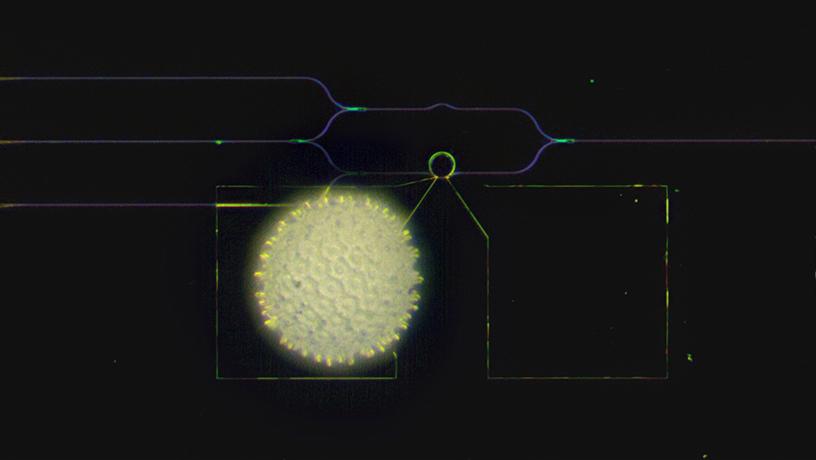
The team developed several strategies to push the devices into the strongly over-coupled regime. The most crucial one was their invention of an adiabatic micro-ring geometry, in which the ring smoothly transitions between a narrow neck and a wide belly, which are at the opposite edges of the ring. The narrow neck of the ring facilitates the exchange of light between the bus waveguide and the micro-ring, thus enhancing the coupling strength. The ring’s wide belly reduces optical loss because the guided light interacts only with the outer sidewall, not the inner sidewall, of the widened portion of the adiabatic micro-ring, substantially reducing optical scattering at the sidewall roughness.

In a comparative study of adiabatic micro-rings and conventional micro-rings with uniform width fabricated side by side on the same chip, the team found that none of the conventional micro-rings satisfied the strong over-coupling condition they suffered very bad optical losses—while 63% of the adiabatic micro-rings kept operating in the strongly over-coupled regime.

“Our best phase modulators operating at the blue and green colors, which are the most difficult portion of the visible spectrum, have a radius of only five microns, consume power of 0.8 mW for π phase tuning, and introduce an amplitude variation of less than 10%,” said Heqing Huang, a graduate student in Yu’s lab and first author of the paper. “No prior work has demonstrated such compact, power-efficient, and low-loss phase modulators at visible wavelengths.”

The devices were designed in Yu’s lab and fabricated in the Columbia Nano Initiative cleanroom, at the Advanced Science Research Center NanoFabrication Facility at the Graduate Center of the City University of New York, and the Cornell NanoScale Science and Technology Facility. Device characterization was conducted in Lipson’s and Yu’s labs.

The researchers note that while they are nowhere near the degree of integration of electronics, their work shrinks the gap between photonic and electronic switches substantially. “If previous modulator technologies only allow for integration of 100 waveguide phase modulators given a certain chip footprint and power budget, now we can do that 100 times better and integrate 10,000 phase shifters on-chip to realize much more sophisticated functions,” said Yu.

The Lipson and Yu labs are now collaborating to demonstrate visible-spectrum LIDAR consisting of large 2D arrays of phase shifters based on adiabatic micro-rings. The design strategies employed for their visible-spectrum thermo-optical devices can be applied to electro-optical modulators to reduce their footprints and drive voltages, and can be adapted in other spectral ranges (e.g., ultraviolet, telecom, mid-infrared, and terahertz) and in other resonator designs beyond micro-rings.

“Thus, our work can inspire future effort where people can implement strong over-coupling in a wide range of resonator-based devices to enhance light-matter interactions, for example, for enhancing optical nonlinearity, for making novel lasers, for observing novel quantum optical effects, while suppressing optical losses at the same time,” Lipson said.


Stuttgart physicists develop a new supercomputer simulation for describing the attachment of a liquid to a surface

Tyler O'Neal, Staff Editor ACADEMIA November 17, 2021, 12:30 pm

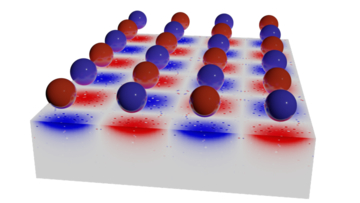
Liquids containing ions or polar molecules are ubiquitous in many applications needed for green technologies such as energy storage, electrochemistry, or catalysis. When such liquids are brought to an interface such as an electrode – or even confined in a porous material –  they exhibit unexpected behavior that goes beyond the effects already known. Recent experiments have shown that the properties of the employed material, which can be insulating or metallic, strongly influence the thermodynamic and dynamic behavior of these fluids. To shed more light on these effects, physicists at the University of Stuttgart, Université Grenoble Alpes, and Sorbonne Université Paris have developed a novel supercomputer simulation strategy using a virtual fluid that allows the electrostatic interactions within any material to be taken into account while being computationally sufficiently efficient to study the properties of fluids at such interfaces. The new method now made it possible for the first time to study the wetting transition at the nanoscale. This depends on whether the ionic liquid encounters a material that has insulating or metallic properties. This breakthrough approach provides a new theoretical framework for predicting the unusual behavior of charged liquids, especially in contact with nanoporous metallic structures, and has direct applications in the fields of energy storage and the environment. Schematic representation of an imperfect metal on which ions and their smeared-out mirror charges are shown Photo: University of Stuttgart / Alexander Schlaich

Despite their key role in physics, chemistry, and biology, the behavior of ionic or dipolar liquids near surfaces – such as a porous material – remains puzzling in many respects. One of the greatest challenges in the theoretical description of such systems is the complexity of the electrostatic interactions. For example, an ion in a perfect metal produces an inverse counter-charge, which corresponds to the negative mirror image. In contrast, no such image charges are induced in a perfect insulator because there are no freely moving electrons. However, any real, i.e., non-idealized material has properties that lie exactly between the two previously mentioned asymptotes. Accordingly, the metallic or insulating nature of the material is expected to have a significant influence on the properties of the adjacent fluid. However, established theoretical approaches reach their limits here, since they assume either perfectly metallic or perfectly insulating materials. To date, there is a gap in the description when it comes to explaining the observed surface properties of real materials in which the mirror charges are sufficiently smeared out.

In their recent investigation, Dr. Alexander Schlaich from the University of Stuttgart et al. presents a new atomic-scale simulation method that allows describing the adsorption of a liquid to a surface while explicitly considering the electron distribution in the metallic material. While common methods consider surfaces made of an insulating material or a perfect metal, they have developed a method that mimics the effects of electrostatic shielding caused by any material between these two extremes. The essential point of this approach is to describe the Coulombic interactions in the metallic material by a "virtual" fluid composed of light and fast charged particles. These create electrostatic shielding by reorganizing in the presence of the fluid. This strategy is particularly easy to implement in any standard atomistic simulation environment and can be easily transferred. In particular, this approach allows the calculation of the capacitive behavior of realistic systems as used in energy storage applications. As part of the SimTech cluster of excellence at the University of Stuttgart, Alexander Schlaich is using such simulations of porous, conductive electrode materials to optimize the efficiency of the next generation of supercapacitors, which can store enormous power density. The wetting behavior of aqueous salt solutions in realistic porous materials is also the focus of his contribution to the Stuttgart Collaborative Research Center 1313 "Interface-driven multi-field processes in porous media – flow, transport, and deformation," which also investigates precipitation and evaporation processes related to soil salinization. The developed methodology is thus relevant for a wide range of systems, as well as for further research at the University of Stuttgart.

  1. CMCC Foundation explores the ML potential for climate change risk assessment
  2. UK review of academic studies finds AI could help clinicians with mechanical ventilation

Page 96 of 123

  • 91
  • 92
  • 93
  • 94
  • 95
  • 96
  • 97
  • 98
  • 99
  • 100
POPULAR RIGHT NOW
  • Supercomputers uncover a new class of cosmic explosions hidden in plain sight
    Supercomputers uncover a new class of cosmic explosions hidden in plain sight
  • AI supercharges the hunt for stronger magnets: Iowa State researchers launch a new era of intelligent materials discovery
    AI supercharges the hunt for stronger magnets: Iowa State researchers launch a new era of intelligent materials discovery
  • IBM's Historic stock collapse raises questions for the future of enterprise supercomputing
    IBM's Historic stock collapse raises questions for the future of enterprise supercomputing
  • Could a novel dark matter theory simultaneously resolve multiple cosmic enigmas? Supercomputer simulations provide a compelling, albeit currently unverified, potential solution
    Could a novel dark matter theory simultaneously resolve multiple cosmic enigmas? Supercomputer simulations provide a compelling, albeit currently unverified, potential solution
  • Melting icebergs may be reshaping Earth’s greatest ocean current
    Melting icebergs may be reshaping Earth’s greatest ocean current
  • Supercomputers replace ‘bathtub’ flood maps with physics-based digital twins of Britain’s coastline
    Supercomputers replace ‘bathtub’ flood maps with physics-based digital twins of Britain’s coastline
  • Supercomputers push neural quantum simulation beyond previous limits
    Supercomputers push neural quantum simulation beyond previous limits
  • Intel’s AI supercomputing revival: Q2 financial surge signals new era for CPU-powered HPC infrastructure
    Intel’s AI supercomputing revival: Q2 financial surge signals new era for CPU-powered HPC infrastructure
  • AI infrastructure financing fears shake semiconductor sector
    AI infrastructure financing fears shake semiconductor sector
  • AWS supercomputing investment reaches historic scale as Amazon’s AI strategy powers record financial results
    AWS supercomputing investment reaches historic scale as Amazon’s AI strategy powers record financial results
THIS YEAR'S MOST READ
  • Wall Street wants to trade supercomputing power like oil
    Wall Street wants to trade supercomputing power like oil
  • Cosmic ambition at scale: UK’s supercomputer unlocks a 2.5 petabytes universe
    Cosmic ambition at scale: UK’s supercomputer unlocks a 2.5 petabytes universe
  • Hidden order, revealed at scale: Supercomputing, electron ptychography uncover the inner workings of relaxor ferroelectrics
    Hidden order, revealed at scale: Supercomputing, electron ptychography uncover the inner workings of relaxor ferroelectrics
  • Beamforming the future: BeammWave's 6G push signals the rise of orbital-terrestrial wireless networks
    Joakim Axmon
    Joakim Axmon
  • Intel's Q1 results signal supercomputing surge driving Xeon momentum
    Intel's Q1 results signal supercomputing surge driving Xeon momentum
  • When stars fall apart: Supercomputing reveals the hidden physics of black holes
    When stars fall apart: Supercomputing reveals the hidden physics of black holes
  • Multi-layer simulations reveal the hidden supply chain of solar prominences
    Multi-layer simulations reveal the hidden supply chain of solar prominences
  • Japanese scientists decode dolphin speed with supercomputing: Turbulence, vortices, and the hidden physics of propulsion
    Japanese scientists decode dolphin speed with supercomputing: Turbulence, vortices, and the hidden physics of propulsion
  • Cosmic feedback at scale: Supercomputing reveals how quasars regulate the early Universe
    Cosmic feedback at scale: Supercomputing reveals how quasars regulate the early Universe
  • Modeling life at the microscopic scale: A computational breakthrough in oxygen transport
    Modeling life at the microscopic scale: A computational breakthrough in oxygen transport
MOST READ OF ALL-TIME
  • Largest Computational Biology Simulation Mimics The Ribosome
    Details
    112108
    The amino acid (green) slithers into the chemical reaction center, moving through an evolutionarily ancient corridor of the ribosome (purple). The amino acid is delivered to the reaction core by the transfer RNA molecule (yellow).
    The amino acid (green) slithers into the chemical reaction center, moving through an evolutionarily ancient corridor of the ribosome (purple). The amino acid is delivered to the reaction core by the transfer RNA molecule (yellow).
  • Silicon 'neurons' may add a new dimension to chips
    Details
    80994
    Silicon 'neurons' may add a new dimension to chips
  • Linux Networx Accelerators Expected to Drive up to 4x Price/Performance
    Details
    75538
  • Complex Concepts That Really Add Up
    Details
    73637
    Complex Concepts That Really Add Up
  • Blue Sky Studios Donates Animation SuperComputer to Wesleyan
    Details
    68141
    Each rack holds 52 Angstrom Microsystem-brand “blades,” with a memory footprint of 12 or 24 gigabytes each. (Photos by Olivia Bartlett Drake)
    Each rack holds 52 Angstrom Microsystem-brand “blades,” with a memory footprint of 12 or 24 gigabytes each. (Photos by Olivia Bartlett Drake)
  • Humanities, HPC connect at NERSC
    Details
    57947
  • TeraGrid ’09 'Call for Participation'
    Details
    54952
  • Turbulence responsible for black holes' balancing act
    Details
    52312
  • Cray Wins $52 Million SuperComputer Contract
    Details
    50140
  • SDSC Researchers Accurately Predict Protein Docking
    Details
    46080
  • FRONTPAGE
  • LATEST
  • POPULAR
  • REGISTER
  • SOCIAL
  • VIDEO
  • SUBSCRIPTION
  • RSS
  • GUIDELINES
  • PRIVACY
  • TOS
  • ABOUT
  • +1 (816) 799-4488
  • editorial@supercomputingonline.com
© 2001 - 2026 SuperComputingOnline.com, LLC. All rights reserved. This material may not be published, broadcast, rewritten or redistributed without permission.
Sign In
  • FRONT PAGE
  • LATEST
    • MEDIA KIT
    • MOST READ
    • RSS FEED
    • ACADEMIA
    • AEROSPACE
    • APPLICATIONS
    • ASTRONOMY
    • AUTOMOTIVE
    • BIG DATA
    • BIOLOGY
    • CHEMISTRY
    • CLIENTS
    • CLOUD
    • DEFENSE
    • DEVELOPER TOOLS
    • EARTH SCIENCES
    • ECONOMICS
    • ENGINEERING
    • ENTERTAINMENT
    • HEALTH
    • INDUSTRY
    • INTERCONNECTS
    • GAMING
    • GOVERNMENT
    • MANUFACTURING
    • MIDDLEWARE
    • MOVIES
    • NETWORKS
    • OIL & GAS
    • PHYSICS
    • PROCESSORS
    • RETAIL
    • SCIENCE
    • STORAGE
    • SYSTEMS
    • VISUALIZATION
  • VIDEOS
    • ADD YOUR VIDEOS
    • MANAGE VIDEOS
  • COMMUNITY
    • TRADE SHOWS
    • SOCIAL NETWORK VIDEOS
    • SURVEYS
    • APPLICATIONS BROWSER
    • CONVERSATION INBOX
    • SOCIAL ADVERTISER
    • GROUPS
    • MARKETPLACE LISTINGS
    • PAGES
    • LEADERBOARD
    • POINTS LISTING
      • BADGES
    • PRIVACY CONFIRM REQUEST
    • PRIVACY CREATE REQUEST

Hey there! We noticed you’re using an ad blocker.