University of Warwick scientists discover dead planets can ‘broadcast’ for up to a billion years

  • Planetary cores orbiting distant white dwarf stars emit radio waves that we can detect from Earth
  • Supercomputer modeling led by University of Warwick determines that cores can survive for as long as a billion years after their stars have burnt up their nuclear fuel
  • Properties that improve the likelihood of survival will guide the search for planetary cores using radio waves
  • Could lead to first major planet found around a white dwarf

Astronomers are planning to hunt for cores of exoplanets around white dwarf stars by ‘tuning in’ to the radio waves that they emit.

In new research led by the University of Warwick, scientists have determined the best candidate white dwarfs to start their search, based upon their likelihood of hosting surviving planetary cores and the strength of the radio signal that we can ‘tune in’ to.

Published in the Monthly Notices of the Royal Astronomical Society, the research led by Dr. Dimitri Veras from the Department of Physics assesses the survivability of planets that orbit stars which have burnt all of their fuel and shed their outer layers, destroying nearby objects and removing the outer layers of planets. They have determined that the cores which result from this destruction may be detectable and could survive for long enough to be found from Earth.

The first exoplanet confirmed to exist was discovered orbiting a pulsar by co-author Professor Alexander Wolszczan from Pennsylvania State University in the 1990s, using a method that detects radio waves emitted from the star. The researchers plan to observe white dwarfs in a similar part of the electromagnetic spectrum in the hope of achieving another breakthrough.

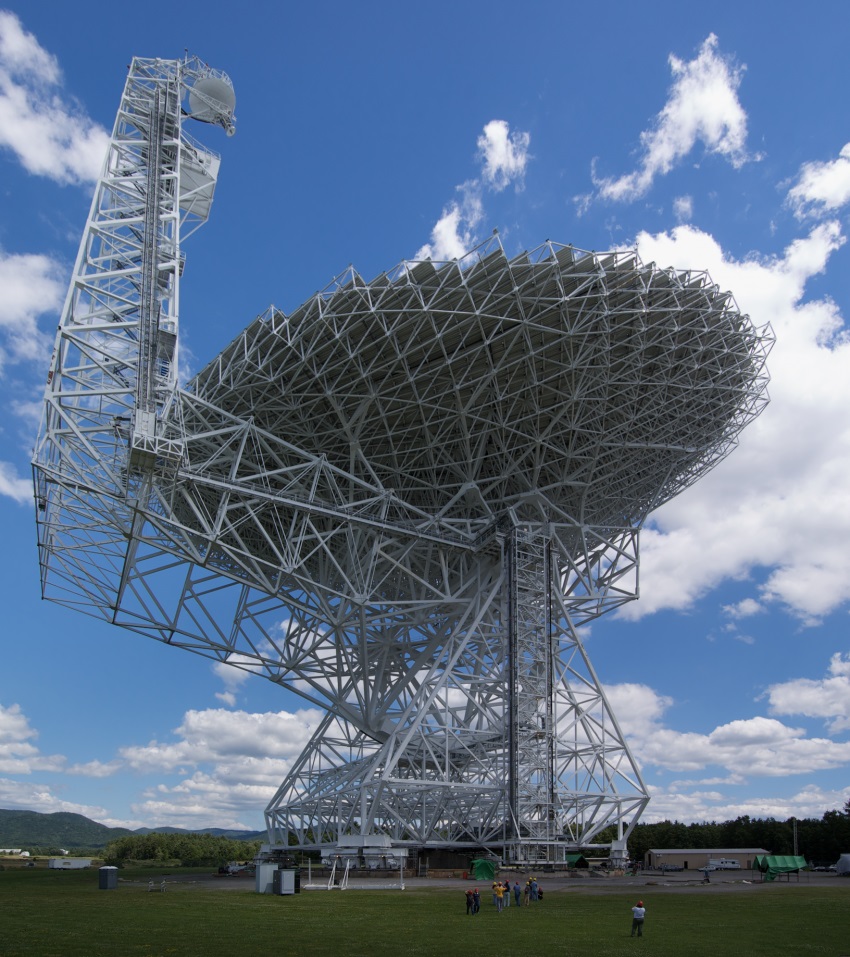
The magnetic field between a white dwarf and an orbiting planetary core can form a unipolar inductor circuit, with the core acting as a conductor due to its metallic constituents. Radiation from that circuit is emitted as radio waves which can then be detected by radio telescopes on Earth. The effect can also be detected from Jupiter and its moon Io, which form a circuit of their own. The Robert C. Byrd Green Bank Telescope, a 100 meter diameter radio telescope located in Green Bank, West Virginia, USA.{module In-article}

However, the scientists needed to determine how long those cores can survive after being stripped of their outer layers. Their supercomputer modeling revealed that in a number of cases, planetary cores can survive for over 100 million years and as long as a billion years.

The astronomers plan to use the results in proposals for observation time on telescopes such as Arecibo in Puerto Rico and the Green Bank Telescope in West Virginia to try to find planetary cores around white dwarfs.

Lead author Dr. Dimitri Veras from the University of Warwick said: “There is a sweet spot for detecting these planetary cores: a core too close to the white dwarf would be destroyed by tidal forces, and a core too far away would not be detectable. Also, if the magnetic field is too strong, it would push the core into the white dwarf, destroying it. Hence, we should only look for planets around those white dwarfs with weaker magnetic fields at a separation between about 3 solar radii and the Mercury-Sun distance.

“Nobody has ever found just the bare core of a major planet before, nor a major planet only through monitoring magnetic signatures, nor a major planet around a white dwarf. Therefore, a discovery here would represent ‘firsts’ in three different senses for planetary systems.”

Professor Alexander Wolszczan from Pennsylvania State University, said: “We will use the results of this work as guidelines for designs of radio searches for planetary cores around white dwarfs. Given the existing evidence for a presence of planetary debris around many of them, we think that our chances for exciting discoveries are quite good.”

Dr Veras added: “A discovery would also help reveal the history of these star systems because for a core to have reached that stage it would have been violently stripped of its atmosphere and mantle at some point and then thrown towards the white dwarf. Such a core might also provide a glimpse into our own distant future, and how the solar system will eventually evolve.”

Stark warning: Loughborough University research identifies deadly hidden weather hazard that has the potential to affect millions of people

  • Researchers identify powerful tropical cyclones followed by deadly heatwaves as a hidden weather hazard with serious consequences
  • A new study reveals that this hazard is already possible for densely populated coastlines in the current climate, but ‘luck’ has meant only a handful of people have been impacted so far
  • Using weather observations and supercomputer modeling, the researchers predict that this hazard could increase rapidly as the climate warms
  • Their results also show that millions of people could be impacted by the ‘tropical cyclone-deadly heat hazard’ as global temperatures continue to rise

NEW research, led by Loughborough University academics, has found that tropical cyclones followed by deadly heat are an emerging weather threat that could put millions of people at risk as global temperatures continue to rise.

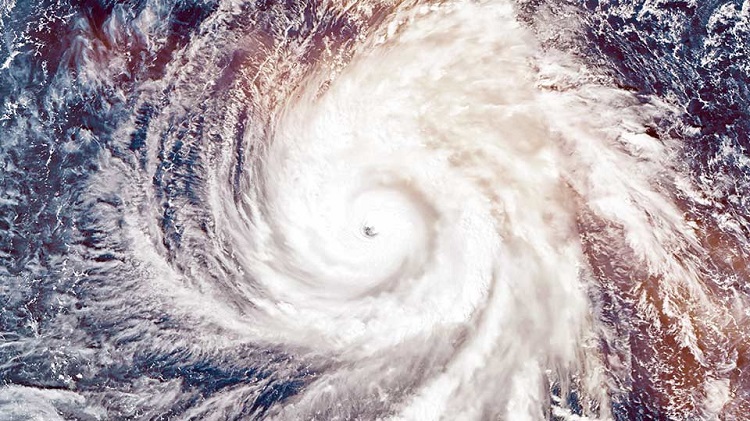
Climate scientist Dr. Tom Matthews and Professor Rob Wilby hope their findings will act as a ‘stark warning’ and raise awareness of the previously hidden hazard so measures can be put in place to protect vulnerable communities. Super Typhoon Yutu, strongest storm on Earth in 2018. Satellite view. Elements of this image furnished by NASA. Source: Getty Images.{module In-article}

Until now, little was known about the possibility of deadly heatwaves – which have temperatures that feel like 40.6°C and above – following major tropical cyclones (rapidly rotating, very intense storm systems that form over tropical oceans and have winds of hurricane force).

Dr. Matthews and Professor Wilby, in collaboration with Dr. Conor Murphy, of Maynooth University, examined the tropical cyclone-deadly heat connection as it has serious potential consequences.   

Mega-electricity blackouts have been known to follow powerful tropical cyclones as with the 2013 Typhoon Haiyan (Philippines), 2017 Hurricane Maria (Puerto Rico) and 2012 Typhoon Bopha (Philippines). These events incurred between 3.2 and 6.1 billion customer hours of lost supply over one or two months.

With around 1.6 billion units in operation, air conditioning reduces vulnerability to extreme heat so populations with a heavy reliance on the units may become highly exposed in the event of power failure.

The threat may also extend beyond those with loss of air conditioning as cyclones can leave millions of people without a home and relief housing may not provide a safe refuge from extreme heat.

Dr. Matthews, Professor Wilby, and Dr. Murphy worked together to assess how likely tropical cyclone-heat events are and were in the recent climate and how this likelihood may change as the earth continues to warm.

They used supercomputer models to generate future possible climates and predict extreme weather events occurring in worlds 1.5°C, 2°C and 4°C warmer than pre-industrial times (a time period used as a baseline as it is before fossil fuels were burnt on a large scale, seriously altering the climate).

They also used observational records from 1979-2017 to see how hot and humid temperatures have been in the wake of previous major landfalling tropical cyclones. 

The team found that the tropical cyclone-heat hazard is already possible along some of the world's most densely populated coastlines in our current climate, but only an estimated 1,000 people have been affected over the last 30 years and mainly in remote northwest Australia.

However, their results revealed that the probability of the tropical cyclone-heat hazard will increase rapidly as the climate warms.

This is because relatively small changes in the earth’s average temperature lead to large increases in the frequency of dangerous humid heat in areas relatively close to the equator, where tropical cyclones occur.

If the climate warms further, the rise in humid heat means potentially deadly heatwaves are more likely to occur in these locations in late summer – the time when tropical cyclones are most likely to strike. Pictured: Maps of predicted tropical cyclone-deadly heat hazard tracks for different climates. The red lines show the predicted tropical cyclone tracks that have at least a 50% chance of being followed by a deadly heatwave in different climate scenarios (except in panel (a) where the blue dotted lines are the predicted tracks and the red lines are areas the hazard actually impacted). E[N] is the expected number of tropical cyclone-heat hazards in a 30-year-period. (a) shows tracks in the current climate then how it changes with (b) a 1.5°C rise, (c) a 2°C rise and (d) a 4°C rise.{module In-article}

Previous research has found that the earth is likely to warm by more than 2 °C this century, though the Paris climate agreement looks to “keep a global temperature rise this century well below 2°C above preindustrial levels and to pursue efforts to limit the temperature increase even further to 1.5°C”.

Through their analysis, the researchers concluded that if temperatures were sustained at 2°C above pre-industrial levels for 30 years, the number of people affected by this hazard would rise to over 2 million.

For the 1.5°C warming, the figure is 1.2 million and it reaches almost 12 million if the earth’s climate were to warm to 4°C above pre-industrial temperatures (and under this scenario, the researchers expect the hazard to be an annual occurrence).

The team says the hazard could impact coastlines around the world that sit close to the equator, including the Gulf of Mexico, the Philippines, the Bay of Bengal (India), and northwest Australia.

They say what is even more concerning is the fact the number of people affected will likely be much bigger than their predictions as their projections do not factor in population growth or potential changes to the cyclones themselves.

The team’s results have been published yesterday (Monday 22 July) in Nature Climate Change, a monthly peer-reviewed scientific journal, in a paper titled ‘An emerging tropical cyclone-deadly heat compound hazard’.

Dr Matthews commented: “Our results present a simple but stark warning: with no change in tropical cyclones but plausible rises in global temperatures, potentially deadly heatwaves are more likely to follow tropical cyclones and eventually strike vulnerable populations.

“Although a tropical cyclone–heat event has not yet impacted a heavily populated coastline, the likelihood is growing, and it is down to luck that more people haven’t been affected so far.

“The absence of experience in dealing with such a compound hazard places those exposed communities at even greater risk.

“By drawing attention to this emergent hazard, we trust that our study will stimulate further research and adaptation planning to protect those at growing risk from a tropical cyclone–heat compound event.”

Queensland University of Technology's Wu develops jump test tool to predict athletic performance

Researchers studying the impact of fatigue on athletic performance have developed prototype software that can enable coaches to predict when elite athletes will be too fatigued to perform at their best.

At the Queensland University of Technology, QUT's Dr. Paul Wu led the study published today in the journal PLOS One.

The research, which applies the tools of statistics to physiology research, provides new insights for athletes and their coaches into how best to manage and predict fatigue levels.

The software algorithm enables coaches to conduct a simple test of an athlete's energy and performance levels and make predictions about how their level of fatigue could impact on their performance. Dr Paul Wu{module In-article}

"This is a tool to assist coaches," Dr. Wu said.

"Let's say you have a game tomorrow and the model predicts you're going to be very fatigued, that might change the coach's strategy.

"Having that knowledge ahead of time can be helpful."

The information could also enable coaches to personalize the training for individual athletes depending on their predicted fatigue levels as a result of different types of training.

The researchers in the study examined the two main types of fatigue athlete's experience in training.

The first is metabolic fatigue, which only takes up to three hours to recover from. The more serious fatigue, neuromuscular fatigue, can take upwards of 48 hours or more to recover from.

"In the elite sports setting, athletes often train twice a day, five days or more a week. If you develop neuromuscular fatigue and have training or competition the next day, you'll still be fatigued and have an elevated risk of injury," said Dr. Wu.

In this research, Dr. Wu and his collaborators studied data from a test called the countermovement jump (CMJ). To do the test, an athlete stands on a force plate, squats down, and jumps straight up as high as he or she can. The force plate records the force profile generated throughout the jump.

"In our study, we tested the athletes after low, moderate, and high-intensity training sessions. We did many jumps over time, from just before training sessions, to right after, and then in regular intervals up to 48 hours later," said Dr. Wu.

That many jumps involving multiple athletes led to a lot of data, and that data isn't simple either. So Dr. Wu and his team used a statistical analysis tool called functional Principal Components Analysis (fPCA) to find the hidden information about fatigue in all that data.

"By doing a few jump tests up to 30 minutes after training and then doing our analysis, we can predict the degree of neuromuscular fatigue. This allows coaches and athletes to prepare for the next workout or for the competition ahead of time," said Dr. Wu.

In addition, it arms athletes with important information about how they fatigue.

"It helps them to customize their training to avoid neuromuscular fatigue, and also allows them to benchmark themselves against others," said Dr. Wu.

The researchers have produced a prototype of software which could be used in the future by coaches to manage an athlete's fatigue and ensure peak performance.

Never before, have athletes and their trainers had access to so much data about their training. It's only through statistical analysis, like the one in this study, that is unlocking some of the key, hidden stories that athletes need to take advantage of the data.

Dr Wu believes the statistical analysis used here will help with other types of training data as well.