Wildfires have long been a natural occurrence, but in recent years, their frequency and intensity have increased significantly. These devastating wildfires not only wreak havoc on the environment but also have a profound impact on human health. A new study conducted by researchers at the University of Iowa has shed light on the toll that wildfires have taken on air quality and premature deaths in the continental United States over the past two decades. This article delves into the findings of the study, highlighting the increased air pollution from wildfires and its detrimental effects on human health.
The Worsening Air Quality in the Western U.S.
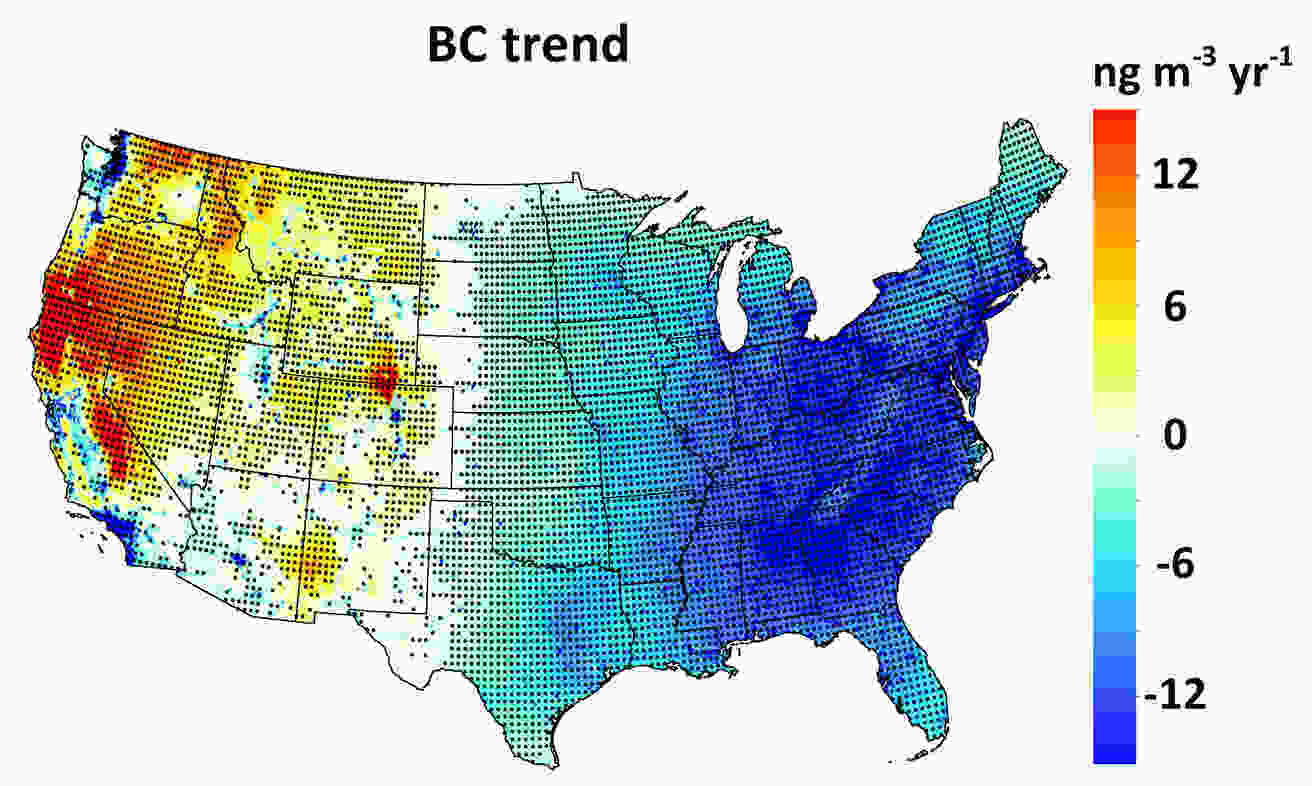
According to the study, the air quality in the western United States has significantly worsened from 2000 to 2020 due to the increase in the frequency and intensity of wildfires. The researchers focused on the concentration of black carbon, a fine-particle air pollutant known to be linked to respiratory and heart diseases. They found that black carbon concentrations in the western U.S. have risen by 86% annually, primarily due to wildfires.
The consequences of this worsening air quality are dire. The study estimates that there has been an increase of 670 premature deaths per year in the region during the two-decade period studied. These premature deaths can be attributed to the adverse health effects of black carbon exposure, although the exact impact on human health is not yet fully understood.
The Impact on Air Quality Improvement Efforts
The findings of the study reveal that these wildfires have undermined the efforts made by federal agencies, such as the Environmental Protection Agency (EPA), to improve air quality. Over the past 20 years, the EPA has implemented regulations to reduce automobile emissions and enhance air quality. However, the increase in wildfires and subsequent air pollution in fire-prone areas and downwind regions has negated the progress made in reducing emissions from other sources.
Jun Wang, the lead corresponding author of the study, emphasizes the significance of these findings, stating, "All the efforts for the past 20 years by the EPA to make our air cleaner basically have been lost in fire-prone areas and downwind regions. We are losing ground." This highlights the urgent need for effective measures to tackle the worsening air quality caused by wildfires.
Regional Differences in Premature Mortality Rates
Unsurprisingly, the study found that the highest premature mortality rates were observed in the western United States, where the wildfires originated, or where the regions were most affected by smoke from wildfires in Canada. The increase of 670 premature deaths per year is considered a conservative estimate, as the full extent of black carbon's impact on human health is not yet fully understood.
In contrast, the eastern United States did not experience major declines in air quality during the same period. This disparity further underscores the need for targeted interventions to address the specific challenges faced by fire-prone areas and downwind regions.
The Midwest and the Threat of Worsening Air Quality
While the Midwest did not witness significant declines in air quality during the study period, the researchers warn that the region is on the brink of experiencing the negative effects of wildfires. Smoke transported in the atmosphere can affect air quality, although the direct health impacts are currently minimal. However, if wildfires continue to increase in intensity or frequency, the air quality in the Midwest could deteriorate rapidly.
Jing Wei, the lead author of the study, explains, "We are on the borderline. If fires increase or become more frequent, our air quality will get worse." This serves as a wake-up call for policymakers and communities in the Midwest to take proactive measures to prevent further degradation of air quality.
The Methodology: Deep Learning and Satellite Data
To estimate the concentration of black carbon and premature deaths, the researchers employed advanced techniques in data analysis. They utilized satellite data and ground-based stations to monitor air quality. However, surface stations alone did not provide complete spatial coverage, especially in rural areas. To overcome this limitation, the researchers turned to "deep learning," a method that uses supercomputer systems to cluster data and generate accurate predictions.
By employing deep learning, the researchers were able to calculate black carbon concentrations at a kilometer-by-kilometer resolution, providing a comprehensive view of the extent of air pollution caused by wildfires. They also developed a formula that incorporated average life span, black carbon exposure, and population density to estimate premature deaths associated with wildfire emissions.
Implications for Public Health and Policy
The study's findings have significant implications for both public health and policy. The increasing intensity and frequency of wildfires in the United States have not only counteracted the reduction in anthropogenic emissions but have also exacerbated air pollution, posing higher risks for morbidity and mortality.
Addressing the challenges posed by wildfires requires a multi-faceted approach. Efforts should focus on reducing the occurrence and severity of wildfires through improved fire management strategies, early detection systems, and community awareness. Additionally, there is a need for robust air quality monitoring systems and the development of effective interventions to protect vulnerable populations, especially in fire-prone areas and downwind regions.
Conclusion
The study conducted by researchers at the University of Iowa highlights the alarming impact of wildfires on air quality and human health in the United States. The increase in the frequency and intensity of wildfires has led to a significant deterioration in air quality, particularly in the western regions of the country. This, in turn, has resulted in a higher number of premature deaths associated with black carbon exposure.
The findings underscore the urgent need for comprehensive measures to address the challenges posed by wildfires. Efforts should be focused on reducing wildfires, improving air quality monitoring systems, and implementing targeted interventions to protect vulnerable populations. By taking proactive steps, we can mitigate the adverse effects of wildfires on both the environment and human health, ensuring a safer and healthier future.