

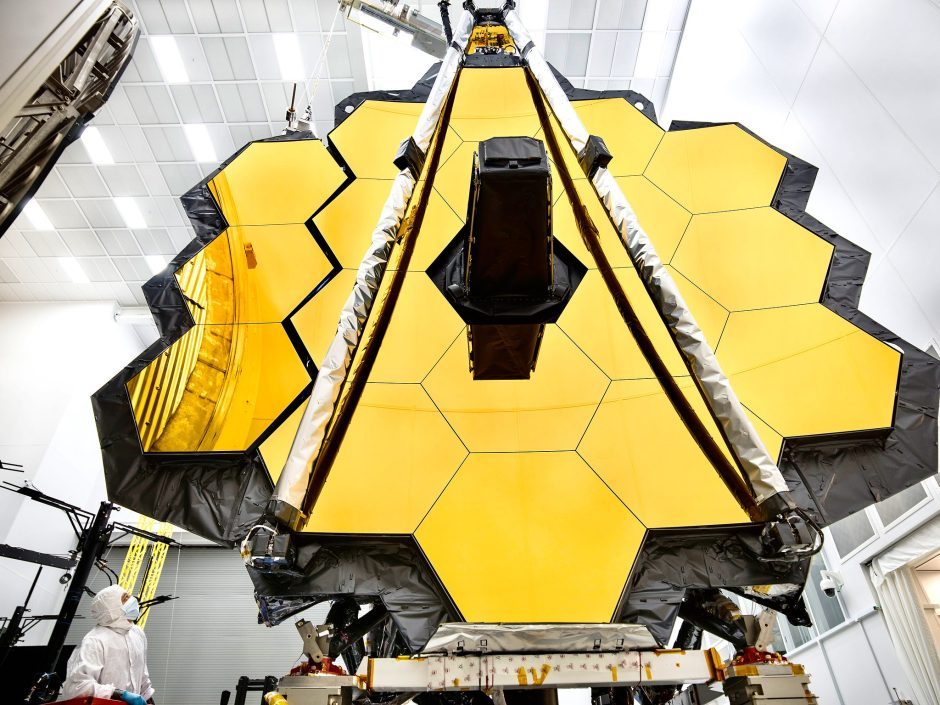
The James Webb Space Telescope is prepared for testing at NASA's Johnson Space Center in Houston. It successfully launched into space on Dec. 25, 2021. Photo courtesy of NASA/Chris Gunn.

Mizzou astronomers use JWST data to discover more galaxies formed in the early universe

In a new study, a team of astronomers led by Haojing Yan at the University of Missouri used data from NASA’s James Webb Space Telescope (JWST) Early Release Observations and discovered 87 galaxies that could be the earliest known galaxies in the universe.

The finding moves astronomers one step closer to finding out when galaxies first appeared in the universe — about 200-400 million years after the Big Bang, said Yan, associate professor of physics and astronomy at MU and lead author on the study. Haojing Yan

“Finding such a large number of galaxies in the early parts of the universe suggests that we might need to revise our previous understanding of galaxy formation,” Yan said. “Our finding gives us the first indication that a lot of galaxies could have been formed in the universe much earlier than previously thought.”

In the study, the astronomers searched for potential galaxies at “very high redshifts.” Yan said the concept of redshifts in astronomy allows astronomers to measure how far away distant objects are in the universe — like galaxies — by looking at how the colors change in the waves of light that they emit.

“If a light-emitting source is moving toward us, the light is being ‘squeezed,’ and that shorter wavelength is represented by blue light or blueshift,” Yan said. “But if that source [of light] is moving away from us, the light it produces is being ‘stretched,’ and changes to a longer wavelength that is represented by red light, or redshift.”

Yan said Edwin Hubble’s discovery in the late 1920s that our universe is ever-expanding is key to understanding how redshifts are used in astronomy.

“Hubble confirmed that galaxies external to our Milky Way galaxy are moving away from us, and the more distant they are, the faster they are moving away,” Yan said. “This relates to redshifts through the notion of distances — the higher the redshift an object is at, such as a galaxy, the further away it is from us.”

Therefore, Yan said the search for galaxies at very high redshifts gives astronomers a way to construct the early history of the universe.

“The speed of light is finite, so it takes time for light to travel over a distance to reach us,” Yan said. “For example, when we look at the sun, we aren’t looking at it as what it looks like in the present, but rather what it looked like some eight minutes ago. That’s because that’s how long it takes for the sun’s radiation to reach us. So, when we are looking at galaxies which are very far away, we are looking at their images from a long time ago.” A pair of color composite images from the galaxy cluster SMACS 0723-27 and its surrounding area taken by NASA’s James Webb Space Telescope through its Early Release Observations (ERO). A team of astronomers led by Haojing Yan at the University of Missouri used the data from these images to identify the objects of interest for their study. These include galaxies that could be the earliest known galaxies in the universe — about 200-400 million years after the Big Bang. The location of each object of interest is indicated by one of three different colored circles — blue, green or red — on the color images. These colors correspond with the range of redshifts where they were found — high (blue), very high (green), or extremely high (red). Graphic by Haojing Yan and Bangzheng Sun. Photos courtesy of NASA, European Space Agency, Canadian Space Agency and the Space Telescope Science Institute.
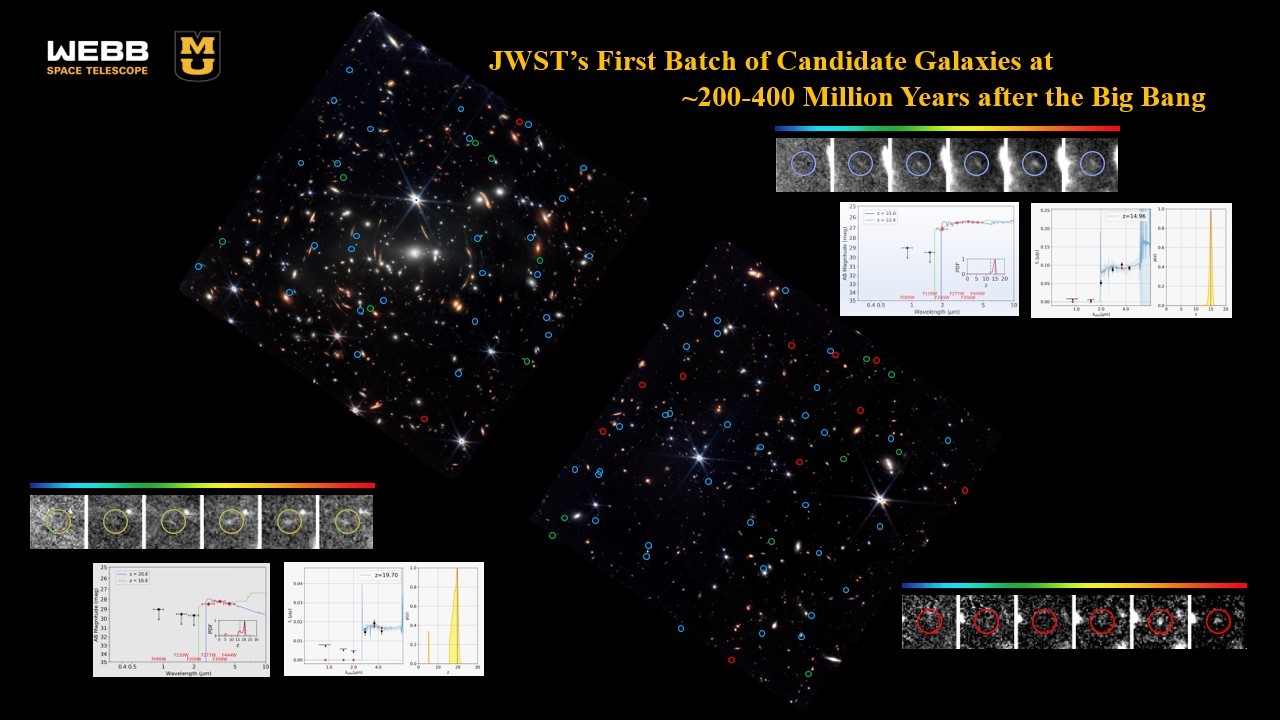
Using this concept, Yan’s team analyzed the infrared light captured by the JWST to identify the galaxies.

“The higher the redshift a galaxy is at, the longer it takes for the light to reach us, so a higher redshift corresponds to an earlier view of the universe,” Yan said. “Therefore, by looking at galaxies at higher redshifts, we are getting earlier snapshots of what the universe looked like long ago.”
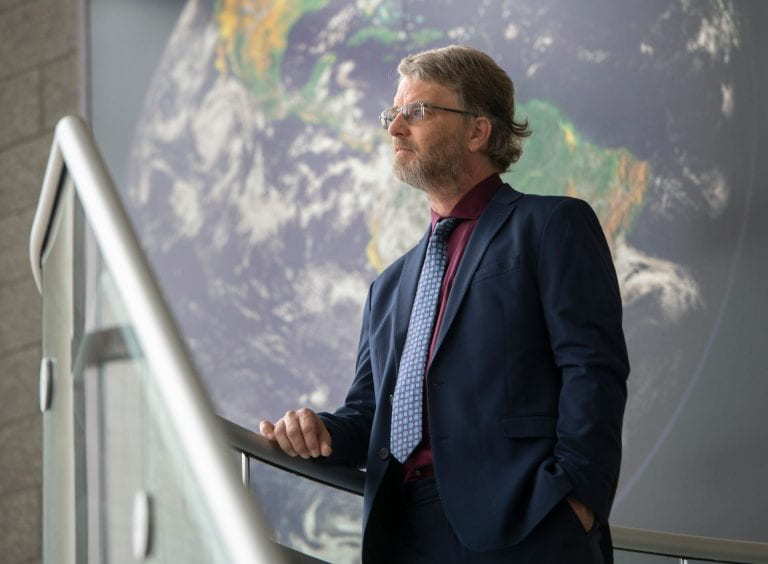
 

J. Keith Moore, UCI professor of Earth system science

UC Irvine prof Moore's analysis shows climate change could cause disaster in the world’s oceans

Deep overturning circulation collapses with strong warming

Climate-driven heating of seawater is causing a slowdown of deep circulation patterns in the Atlantic and Southern oceans, according to University of California, Irvine Earth system scientists, and if this process continues, the ocean’s ability to remove carbon dioxide from the atmosphere will be severely limited, further exacerbating global warming.

In a recent study, these researchers analyzed projections from three dozen climate models and found that the Atlantic Meridional Overturning Circulation and the Southern Meridional Overturning Circulation will slow by as much as 42 percent by 2100. The supercomputer simulations suggest that under worst-case warming, the SMOC could cease entirely by 2300.

"Analysis of the projections from 36 Earth system models over a range of climate scenarios shows that unchecked global warming could lead to a shutdown of the ocean deep circulation,” said co-author J. Keith Moore, UCI professor of Earth system science. “This would be a climate disaster similar in magnitude to the complete melting of the ice sheets on land.”

The importance of overturning circulation

In the Atlantic, as warm water flows northwards on the surface, it cools and evaporates, making it saltier and denser. This heavier water sinks into the deep ocean and proceeds to the south where it eventually rises back up, carrying from the depths the nutrients that are the food foundation of marine ecosystems.

In addition, globe-spanning ocean circulation creates a powerful factory for the processing of atmospheric carbon dioxide. The basic physical and chemical interaction of seawater and air – what Moore and his colleagues call a “solubility pump” – draws CO2 into the ocean. While ocean circulation sends some carbon back to the sky, the net amount is sequestered in the ocean’s depths.

Additionally, a “biological pump” occurs as phytoplankton use CO2 during photosynthesis and in forming carbonate shells. When the plankton and larger animals die, they sink, slowly decomposing and releasing the carbon and nutrients at depth. Some come back up with circulation and upwelling, but a portion remains banked beneath the waves.

“A disruption in circulation would reduce ocean uptake of carbon dioxide from the atmosphere, intensifying and extending the hot climate conditions,” Moore said. “Over time the nutrients that support marine ecosystems would increasingly become trapped in the deep ocean, leading to declining global-ocean biological productivity.”

Humans depend on the solubility pump and the biological pump to help remove some of the CO2 emitted into the air through fossil fuel burning, land use practices, and other activities, according to Moore.

“Our analysis also shows that reducing greenhouse gas emissions now can prevent this complete shutdown of the deep circulation in the future,” he said.

Joining Moore on this project, which was funded by the U.S. Department of Energy, were lead author Yi Liu, a UCI Ph.D. student in Earth system science; Francois Primeau, professor and chair of UCI’s Department of Earth System Science; and Wei-Lei Wang, professor of ocean and Earth sciences at Xiamen University in China. The study depended substantially on simulations developed by the Coupled Model Intercomparison Project phase 6 (CMIP6) project used to inform the IPCC climate assessments.

Japan produces simulation that leads to a better understanding of the motion of living organisms; spontaneous organization of a living system

As anyone who drinks their coffee with milk knows, it's much easier to mix liquids together than to separate them. In fact, the second law of thermodynamics would seem to dictate that a mixture would never be able to separate again if there are no attractive forces between similar particles. However, investigators from the Institute of Industrial Science at The University of Tokyo showed the mechanism by which a mixture of actively spinning particles, such as bacteria, in a fluid can sort themselves in a process called phase separation even without attractions between particles.

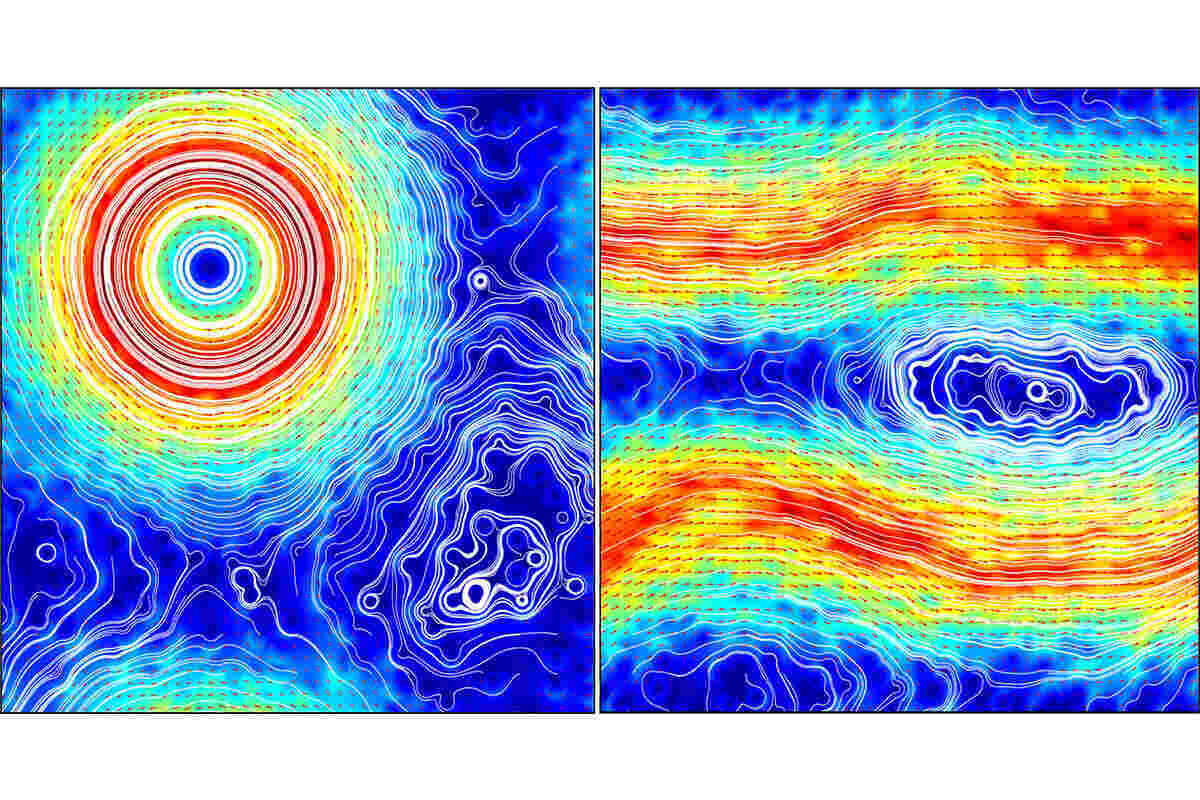
In a study published recently in Communications Physics, researchers from the Institute of Industrial Science at The University of Tokyo have shown that the demixing behavior of two groups of discs rotating in opposite directions, induced only through self-generated flow, can be explained by turbulent effects.

Sometimes mixed liquids can spontaneously "unmix", in a process of phase separation, such as oil and water. While systems without external energy input have been studied for a long time, the situation with the so-called active matter in which particles expend energy to move autonomously, like bacteria or algae, remains poorly understood.

Now, a team of researchers from The University of Tokyo created a supercomputer simulation of a mixture of discs rotating in opposite directions in a fluid to elucidate this phenomenon. The active motion of bacteria or other living organisms in a straight line that leads to a mixture spontaneously separating is already known as "motility-induced phase separation." However, active motion can include rotation as well as translation, but the organization of self-spinning particles has been studied much less.

"Active matter serves as a bridge between biological and physical worlds when considering the laws of self-organization," says the first author of the study, Bhadra Hrishikesh. The researchers found that in the case of self-spinning particles, phase separation creates the largest structure directly from a chaotic state. This is in contrast with ordinary phase separation, in which phase-separated domains grow gradually over time, as we see in salad dressing.

"It was known that a mixture of oppositely rotating disks can undergo phase separation even without a fluid. We were interested in comparing our system--in which the only interactions between particles are carried by the fluid--with a similar driven system without these interactions," says Hajime Tanaka, senior author. The investigators found that the sudden phase separation of the discs into regions of clockwise and counterclockwise collections is due to nonlinear turbulent effects. This research may lead to a better understanding of the motion of living organisms and thereby, the spontaneous organization of living systems.