

Pxhere.com
Pxhere.com

Dutch scientists use AI for predicting calving problems before insemination

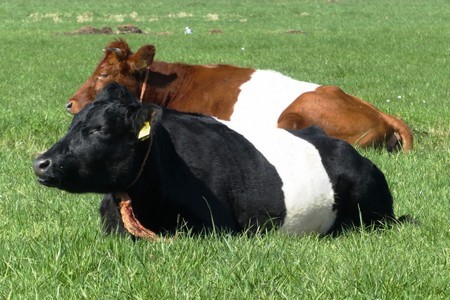
A small percentage of cows will experience problems when calving and breeders would like to know which cows are at risk. Using the vast dataset of the Dutch cattle breeding company CRV, computer scientists at the University of Groningen used artificial intelligence to develop a predictive model that in theory could halve the number of calving problems. Pxhere.com
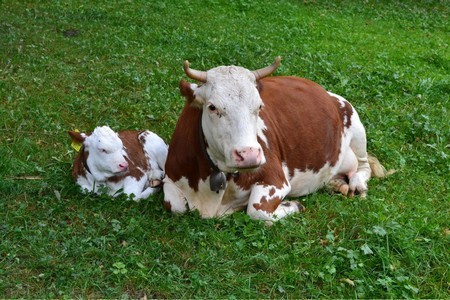
Cattle breeding is data science. Breeding firms provide semen from bulls and register the success of their offspring. Data on the milk yield of the cows and many other characteristics are collected and stored in a vast database, together with the genetic data from all the animals. This allows the companies to attribute an ‘estimated breeding value’ to the animals and find matches for optimal breeding.

Risk

One aspect of breeding is the birthing of calves. In about 3.3 percent of all cases, some kind of complication occurs during calving, which is referred to as dystocia. "This could range from the calf needing to be pulled to needing veterinary intervention," explains Ahmad Alsahaf. "There are models to predict the risk of dystocia, but these work with data only available after insemination. We wanted to produce a model that could predict the risk before insemination."

Alsahaf now works as a postdoctoral researcher at the Department of Biomedical Sciences of Cells & Systems of the University Medical Center Groningen. Still, he has worked on a predictive model for dystocia during his Ph.D. project at the Intelligent Systems research group at the Bernoulli Institute for Mathematics, Computer Science, and Artificial Intelligence at the University of Groningen in The Netherlands.

Challenges

"We were asked to create this model for the cattle breeding company CRV and they gave us a large dataset comprising information on cows and bulls," says Alsahaf. ‘We first used a machine-learning system to analyze the data and create a provisional model. Then, we checked if the most important risk factors made sense. They did and, therefore, we proceeded to build a full model."

There were two main challenges: the first was to clean up and compile the available data. The second was that only 3.3 percent of pregnant cows experience dystocia. "This meant that there was a huge imbalance in our dataset," explains Alsahaf. To solve this, he created a large number of subsets with balanced data and aggregated those to train the predictive model. "Subsequently, we tested this model on a subset of the data that was not used for training and studied the results." It turned out that the model performed significantly better than the chance.

"A colleague of ours calculated that, under ideal circumstances, our model could roughly halve the risk of dystocia. But this requires an ideal combination of bull and cow, which is not always possible." Nevertheless, the model can help farmers and the breeding company to assess the risk of a particular mating before insemination. "This is important since, so far, all other models require information gathered after insemination, which means you are not really preventing complications."
Credit: Carlos Padilla

ALMA successfully restarts observations after cyberattack

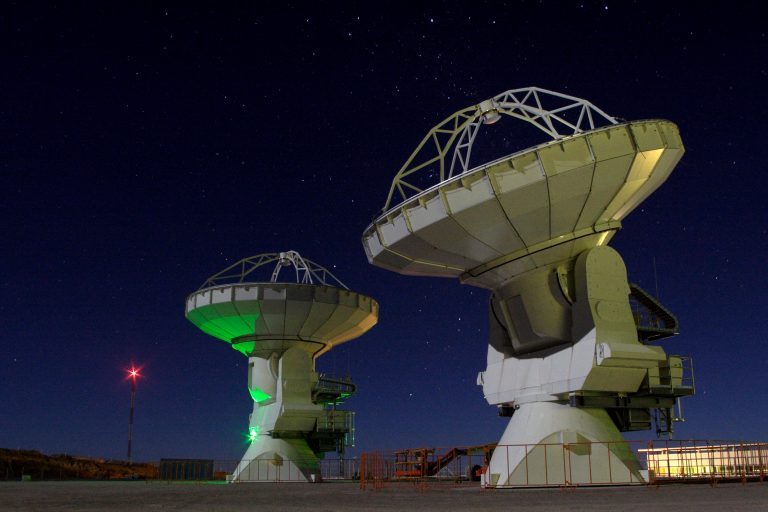
Forty-eight days after suspending observations due to a cyberattack, the Atacama Large Millimeter/submillimeter Array (ALMA) is observing the sky again. The computing staff has worked diligently to rebuild the affected JAO computer system servers and services. This is a crucial milestone in the recovery process. 

On 29 October, ALMA suffered a cyberattack. The computing staff took immediate countermeasures to avoid loss and damage to scientific data and IT infrastructure. The attack affected various critical operational servers and computers. 

“The challenge was to securely restore all the communication and computer systems as quickly as possible. We established an aggressive plan that required coordination with the ALMA partnership worldwide,” explains Jorge Ibsen, Head of the ALMA Computing Department. “Thanks to the active engagement of everyone in the partnership worldwide, especially the Computing, Engineering, and Science Operations staff, and the cybersecurity experts from ESO, NAOJ, and NRAO, we managed to be observing as planned.” 

In the coming weeks, the focus will be on recovering testing infrastructure and systems like the ALMA website and other services, which will allow the recovery of all the functionalities existing before the cyberattack. 

ALMA Director, Sean Dougherty, celebrates that: “It is fantastic to be back doing science observations once again! It has been an enormous challenge to rebuild our systems to return to observing securely. Thanks to everyone at the JAO and across the ALMA partnership for attaining this impressive milestone.” 

China performs hydrodynamic simulations for exploring progenitor system of type Ia supernova

Ph.D. candidate CUI Yingzhen and Prof. MENG Xiangcun from the Yunnan Observatories of the Chinese Academy of Sciences (CAS) performed hydrodynamic simulations on the common-envelope wind model of type Ia supernovae (SNe Ia) and revealed the mass loss mechanism and the main observational features of white dwarf binaries in the common-envelope wind phase. 

The study was published in Astronomy & Astrophysics. 

SNe Ia supernovae are some of the most energetic events in the Universe. They are used as cosmological distance indicators, which have led to the discovery of the accelerating expansion of the Universe. 

One of the most popular progenitor models of SNe Ia is the single-degenerate model, in which a carbon-oxygen white dwarf accretes material from a non-degenerate companion star to increase its mass, and eventually undergoes a thermonuclear explosion. The problem with this model is that when the mass transfer rate exceeds a certain critical value, the accreted envelope of the white dwarf expands and eventually forms a common envelope around the binary system, which may prevent the occurrence of SNe Ia. 

The common-envelope wind model is a modified single-degenerate model that can in principle address the above-mentioned problem by suggesting a strong mass loss at the surface of the common envelope. However, it is not clear how the mass loss at the surface of the common envelope arises and what the observational characteristics of such systems are. 

The researchers carried out detailed hydrodynamic simulations of the common-envelope wind model and found that such systems are always dynamically unstable and consequently produce dramatic mass loss, resulting in an envelope mass of only a few thousand of solar mass. 

By analyzing the internal structure, they found that this instability was driven by ionization-recombination processes of hydrogen and helium in the envelope, the same mechanism as the pulsating excitation of classical Cepheids. In the Hertzsprung-Russell diagram, the center of the evolutionary trajectory of the common-envelope wind model was also located within the classical Cepheid instability strip, implying that this system may appear as periodic variable stars. 

This result can provide theoretical guidance for the subsequent observational search for the progenitor system of SNe Ia.