

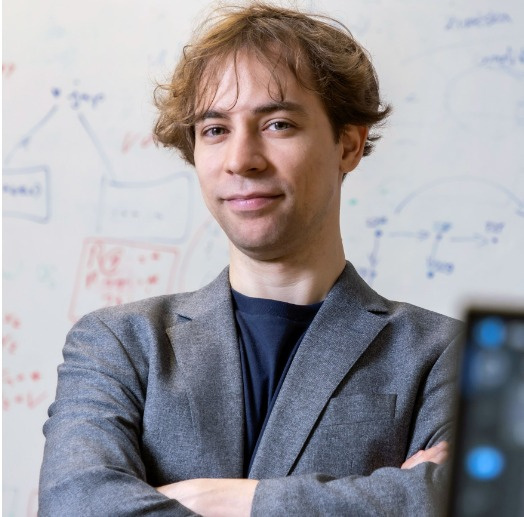
Daniel Gruss. Image source: Lunghammer

Austrian computer scientist Gruss wins grant for research into energy-efficient IT security

Top researchers from Graz University of Technology (TU Graz) in Styria, Austria, will receive highly endowed Starting Grants from the European Research Council in 2022. The research of computer scientist and cybersecurity expert Daniel Gruss and experimental physicist and START Prize winner Marcus Ossiander will receive funding totaling 3.3 million euros over the next five years, the European Research Council announced today.

Of the 408 Starting Grants awarded across the EU, a total of 17 went to researchers from Austrian institutions. Austria is thus in 8th place, ahead of Sweden, Spain, and Denmark, for example. 

Horst Bischof, Vice-Rector for Research and future Rector of TU Graz from autumn 2023: “With Daniel Gruss and Marcus Ossiander, the ERC Starting Grants are not going to strangers, quite the contrary. Both are top researchers in their fields who have already made impressive achievements despite their young ages. Daniel Gruss regularly causes a stir in the world of cybersecurity; Marcus Ossiander is in the process of transferring from Harvard to TU Graz and in this interim phase alone has already acquired an Austrian Science Fund (FWF) START Prize and now the ERC Starting Grant. I extend my warmest congratulations to both of them. TU Graz is particularly proud of such top minds in research.”

Daniel Gruss: Foundations for sustainable security

Daniel Gruss studied computer science at TU Graz from 2008 and dealt early on with the unauthorized tapping of data in his dissertation. In 2018, he was a vital member of an international team of scientists who uncovered the serious hardware security vulnerabilities of Meltdown and Spectre in Intel processors. Since then, he has explored even more IT security vulnerabilities. Gruss holds a tenure track professorship at TU Graz and is a regular speaker at international IT security conferences. He specializes in side-channel attacks in which physical effects allow conclusions to be drawn about protected data. He will now receive the ERC Starting Grant of 1.5 million euros for the “FSSec – Foundations for Sustainable Security” project. “IT already consumes 11 percent of the world’s electricity, with a strong upward trend. The question now is how to increase efficiency without causing security gaps at the same time,” explains Daniel Gruss. So far, energy efficiency has not played a role in safety. But Daniel Gruss wants to change that. For example, using cryptography instead of established error correction methods should help systems achieve a significant gain in efficiency compared to current systems due to the increased security. Just last Friday, November 18, Daniel Gruss was awarded the Promotion Prize of the Austrian State of Styria.
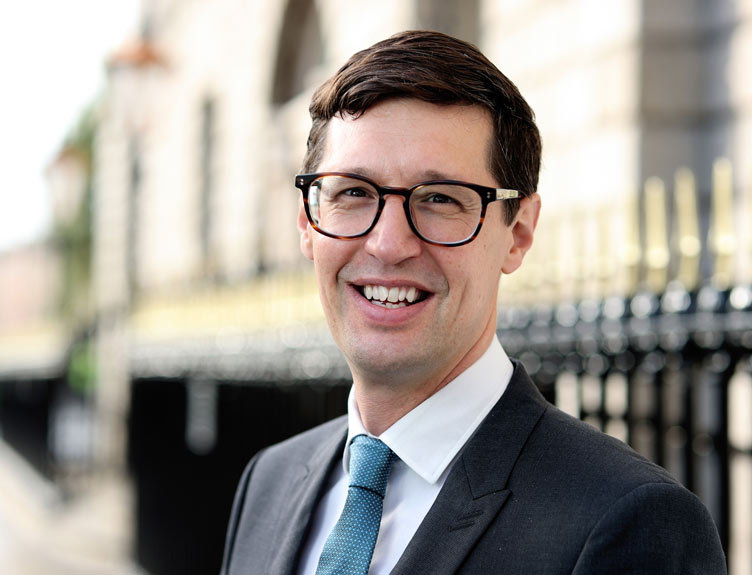
Genomic Data Infrastructure Ireland project supports discovery of genetic causes of disease

Professor Gianpiero Cavalleri, Genomic Data Infrastructure Ireland National Co-Lead, Professor of Human Genetics at RCSI School of Pharmacy and Biomolecular Sciences and Deputy Director of the SFI FutureNeuro Research Centre.RCSI University of Medicine and Health Sciences and FutureNeuro is co-leading, with University College Dublin, the Irish element of a new EU project to support the integration of genomics into healthcare and advance new treatments for patients.
Jointly funded by the European Commission, under the Opens in new window digital Europe Programme, and the Health Research Board (HRB), Genomic Data Infrastructure (GDI) Ireland is part of a consortium of 20 EU Member States with the goal of enabling access to genomics and corresponding clinical data across Europe by creating secure data infrastructure. The project will facilitate a cross-border federated network of national genome collections for biomedical research and personalized medicine solutions.

GDI Ireland National Co-Lead, Professor Gianpiero Cavalleri, Professor of Human Genetics at RCSI and Deputy Director of the Opens in new windowSFI FutureNeuro Research Centre, said: “By realizing this federated analysis system we will enable Irish genomes to be safely and securely analysed alongside similar datasets from other European countries. Such infrastructure can accelerate the discovery of genetic causes of disease and inform the development of much-needed treatments for conditions such as cancer that can have a devastating impact on our lives.”

The Irish GDI hub will establish best practices to manage the Irish genetic data, protecting the security of the personal data contributed by individuals. Work will be informed by the experience and technology developed by European partners.

The GDI project positions Ireland to participate in the ambitious Europe-wide ‘1+ Million Genomes’ initiative, which is driving the development, deployment, and operation of sustainable data-access infrastructures within each participating country.

Commenting on the announcement, Dr. Mairead O’Driscoll, Chief Executive of the Health Research Board, said: “The GDI project brings together national agencies, research organizations, technology providers, and patient organizations in 20 countries. The overarching goal is to design, develop and operationalize a cross-border federated network of national genome collections and other relevant data to advance data-driven personalized medicine for the benefit of European citizens.

“Ireland’s participation in this project will see our researchers, clinicians, patient representatives, experts in data governance, data analysts, and others collaborating on a roadmap for data infrastructure in Ireland and conducting proof-of-concept work using synthetic data.” 

Professor Gianpiero Cavalleri (School of Pharmacy and Biomolecular Sciences, RCSI), and Professor Denis Shields, (University College Dublin), are Co-Directors of the GDI Ireland project with Professor Aedin Culhane (University Limerick) and Professor Markus Helfert (Maynooth University and SFI Empower SPOKE Director) as co-applicants.

The team will be supported by the SFI Centre for Research Training in Genomics Data Science, the Irish Platform for Patient Organisations and Industry (IPPOSI), and Health Research Charities Ireland (HRCI).

Serena Scollen, the European GDI Coordinator also emphasized the importance of having an infrastructure for genomic data. She commented: “Countries will be able to deploy infrastructure to facilitate secure cross-border data access. Ultimately the benefit will be for the citizens of Europe and through shared learnings and improved healthcare, citizens globally.”

German-built simulations show black holes in an eccentric orbit

German-built simulations show black holes in an eccentric orbit

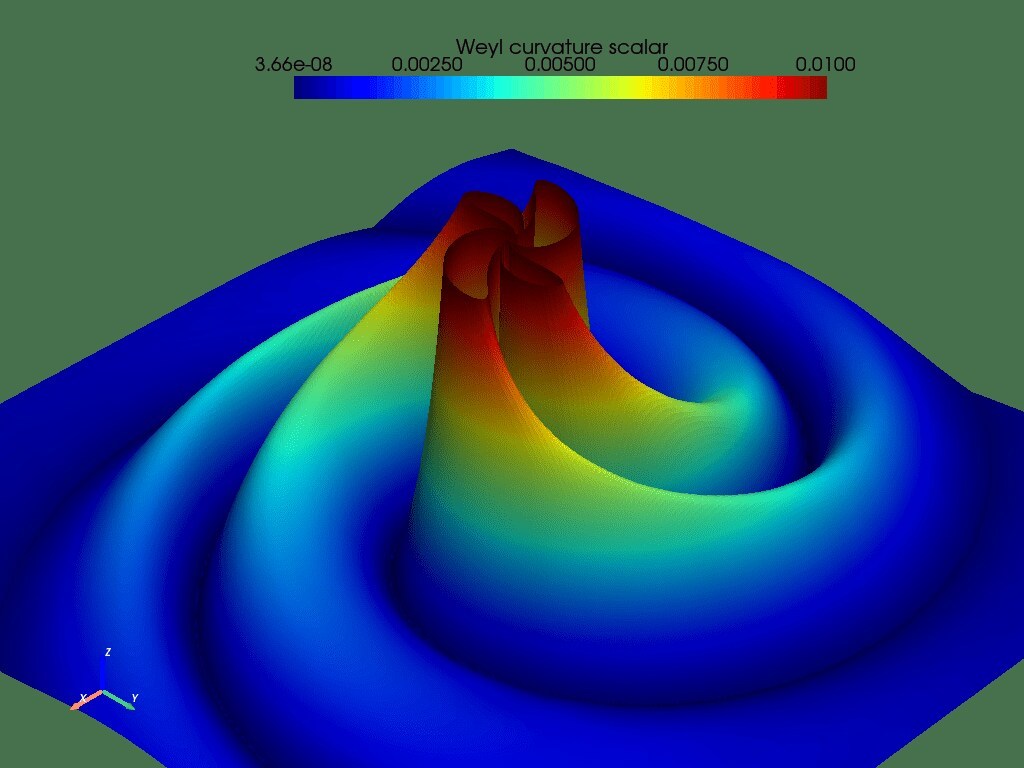
Numerical simulation representing the curvature of spacetime during the merger of the two black holes. Image: AG Bernuzzi/Universität JenaA research team from Jena (Germany) and Turin (Italy) has reconstructed the origin of an unusual gravitational wave signal. The signal GW190521 may result from the merger of two enormous black holes that captured each other in their gravitational field and then collided while spinning around each other in a rapid, eccentric motion. 

When black holes collide in the universe, the clash shakes up space and time: the amount of energy released during the merger is so great that it causes space-time to oscillate, similar to waves on the surface of the water. These gravitational waves spread out through the entire universe and can still be measured thousands of light years away, as was the case on May 21, 2019, when the two gravitational wave observatories LIGO (USA) and Virgo (Italy) captured such a signal. Named GW190521 after the date of its discovery, the gravitational wave event has since provoked discussion among experts because it differs markedly from previously measured signals.

The signal had initially been interpreted to mean that the collision involved two black holes moving in near-circular orbits around each other. “Such binary systems can be created by a number of astrophysical processes,” explains Prof. Sebastiano Bernuzzi, a theoretical physicist from the University of Jena, Germany. Most of the black holes discovered by LIGO and Virgo, for example, are of stellar origin. “That means they are the remnants of massive stars in binary star systems,” adds Bernuzzi, who led the current study. Such black holes orbit each other in quasi-circular orbits, just as the original stars did previously.

One black hole captures a second

“GW190521 behaves significantly differently, however,” explains Rossella Gamba. The lead author of the publication is doing her doctorate in Jena Research Training Group 2522 and is part of Bernuzzi’s team. “Its morphology and explosion-like structure are very different from previous observations.” So, Rossella Gamba and her colleagues set out to find an alternative explanation for the unusual gravitational wave signal. Using a combination of state-of-the-art analytical methods and numerical simulations on supercomputers, they calculated different models for cosmic collision. They came to the conclusion that it must have occurred on a strongly eccentric path instead of a quasi-circular one. A black hole initially moves freely in an environment that is relatively densely filled with matter and, as soon as it gets close to another black hole, it can be “captured” by the other’s gravitational field. This also leads to the formation of a binary system, but here the two black holes do not orbit in a circle, but move eccentrically, in tumbling motions around each other.

“Such a scenario explains the observations much better than any other hypothesis presented so far. The probability is 1:4300,” says Matteo Breschi, doctoral student and co-author of the study, who developed the infrastructure for the analysis. And postdoctoral researcher Dr. Gregorio Carullo adds: “Even though we don’t currently know exactly how common such dynamic movements by black holes are, we don’t expect them to be a frequent occurrence.” This makes the current results all the more exciting, he adds. Nevertheless, more research is needed to clarify beyond doubt the processes that created GW190521.

Teamwork in the Research Training Group

For the current project, the teams in Turin and Jena (as part of the German Research Foundation-funded Jena Research Training Group 2522 “Dynamics and Criticality in Quantum and Gravitational Systems”) developed a general relativistic framework for the eccentric merger of black holes and verified the analytical predictions using simulations of Einstein’s equations. For the first time, models of dynamic encounters were used in the analysis of gravitational wave observation data.