Surrey’s MD simulations of enzymes lead to insights into DNA mutations caused by quantum tunneling

Surrey’s MD simulations of enzymes lead to insights into DNA mutations caused by quantum tunneling

Enzymes, which are crucial to controlling how cells replicate in the human body, could be the very ingredient that encourages DNA to spontaneously mutate – causing potentially permanent genetic errors, according to new research from the University of Surrey.  

Using state-of-the-art quantum chemical calculations, researchers from Surrey’s Quantum Biology Doctoral Training Centre have found that the part of the process by which  DNA replicates itself happens at speeds 100 times faster than previously predicted. This finding sheds new light on the assumed theory that suggests quantum effects would not survive long enough to be impacted by the replication process. 

Max Winokan, a co-author of the study from the University of Surrey, said: “We always thought that quantum mechanics would suffer in a biological environment. However, it was fascinating to find that the mutations caused by quantum tunneling are more stable due to the action of the enzyme, helicase. 

“While others have painted helicase as a gatekeeper to quantum mutation, our research suggests that the enzyme is deeply intertwined with the formation of these mutations.” 

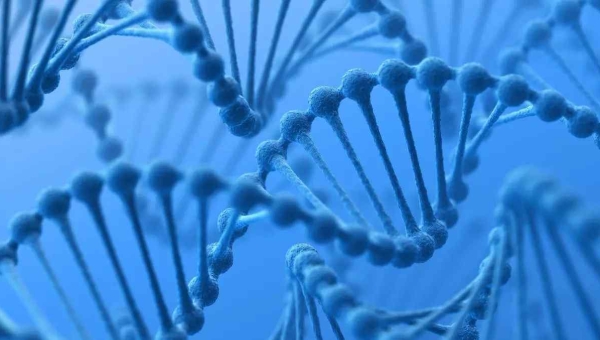
This famous double helix structure gives DNA its remarkable stability, along with its pairing rules between the genetic letters on opposite strands. Normally, A always binds to T, and G always binds to C due to the different structures of these biomolecules and the different number of hydrogen bonds formed between these base pairs. The protons (nuclei of hydrogen atoms) forming such bonds occasionally transfer across them to form rare states known as tautomers. 

When a cell begins to copy itself, it must undergo DNA replication, in which the first step is the separation of the two DNA strands so that each can be used as a template for a new DNA. The strand separation is enabled by a type of enzyme called a ‘helicase’, which binds to one of the DNA strands and pulls it through itself, thereby forcing apart the DNA. Potential mutant DNA bases must survive this process to stand a chance of causing permanent genetic errors.  

However, it was previously thought that the helicase action was too slow. As a result, any spontaneous point mutation would have found its way back to its natural and more stable position when the strands are separated. The new research starts to explain how quantum mechanical effects may hold the key to the secrets of genetic mutations and their many consequences for life on Earth. Additionally, this new report finds that such a mechanical separation in fact stabilizes the mutated forms of DNA. 

Dr Marco Sacchi from the University of Surrey, who leads the computational work for this study, says:  

“There is little understanding of the role of quantum effects in DNA damage and genetic mutations. We believe that we can shed light on the elusive mechanism at the origin of DNA errors only by integrating quantum physics and computational chemistry.” 

Professor Jim Al-Khalili, Co-Director of the Quantum Biology Doctoral Training Centre at the University of Surrey, said: 

“What I find most exciting is that this work brings together cutting-edge research across disciplines: physics, chemistry, and biology, to answer one of the most intriguing questions in science today, and the University of Surrey is fast becoming a world leader in this field where exciting results are emerging.”  
UH review concludes big data rocks, pushing the formation of crystals forward

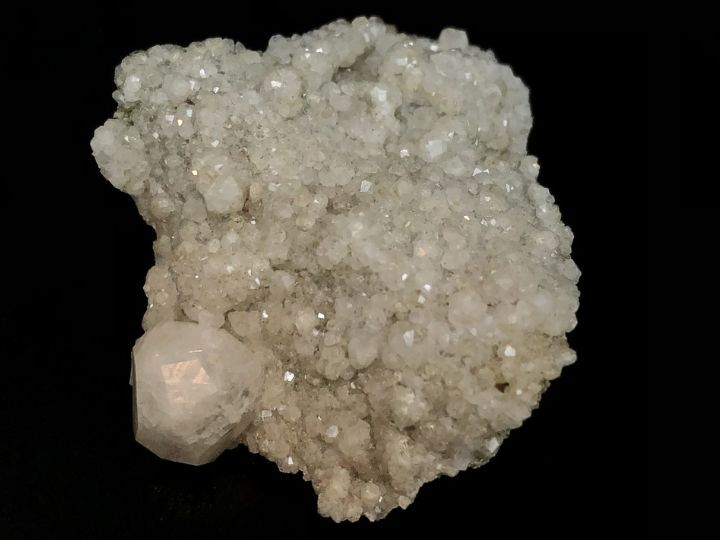
If science and nature were to have a baby, it would surely be the zeolite. This special rock, with its porous structure that traps water inside, also traps atoms and molecules that can cause chemical reactions. That’s why zeolites are important as catalysts, or substances that speed up chemical reactions without harming themselves. Zeolites work their magic in the drug and energy industries and a slew of others. Petrochemicals break large hydrocarbon molecules into gasoline and further into all kinds of petroleum byproducts. Applications like fluid catalytic cracking and hydrocracking rely heavily on zeolites. Natural zeolite mineral originating from Croft Quarry in Leicester, England

So important is the use of zeolites that decades ago scientists began making them (synthetic ones) in the lab with the total number of crystal structures exceeding 250.  

Now, an undisputed bedrock in the global zeolite research community, Jeffrey Rimer, Abraham E. Dukler Professor of chemical and biomolecular engineering at the University of Houston, has published a review summarizing methods over the past decade that have been used to prepare state-of-the-art zeolites with nano-sized dimensions and hierarchical structures.  

The findings emphasize that smaller is better and structure is critical. 

“These features are critical to their performance in a wide range of industrial applications. Notably, the small pores of zeolites impose diffusion limitations for processes involving catalysis or separations where small molecules must access pores without obstruction from the accumulation of residual materials like coke, which is a carbonaceous deposit that blocks pores,” reports Rimer. “This calls for new methods to prepare zeolites with smaller sizes and higher surface area, which is a challenging task because few zeolites can be prepared with sizes less than 100 nanometers.”  

The review article summarizes advanced methods to accomplish this goal, including work from Rimer’s own group on finned zeolites, which he invented. Zeolites with fins are an entirely new class of porous catalysts using unique nano-sized features to speed up the chemistry by allowing molecules to skip the hurdles that limit the reaction. 

Rimer also examines how the emergence of data analytics and machine learning are aiding zeolite design and provides future perspectives in this growing area of research. That helps make up the “new methods” that Rimer suggests as imperative, resulting in major advantages of infusing computational and big data analyses to transition zeolite synthesis away from trial-and-error methodologies. 

Besides, speeding up the process of crystallizing zeolites, and speeding up the reactions of the zeolites themselves, will result in many socioeconomic advantages, according to Rimer. 

“Improved zeolite design includes the development of improved catalysts for energy applications (including advancements in alternative energy), new technologies for regulating emissions that impact the environment, and separations to improve industrial processes with impact on petroleum refining, production of chemicals, and water purification,” he said. 

Cambridge-built AI tackles the challenge of materials structure prediction

Researchers have designed a machine learning method that can predict the structure of new materials with five times the efficiency of the current standard, removing a key roadblock in developing advanced materials for applications such as energy storage and photovoltaics.

University of Cambridge researchers have designed a way to predict the structure of materials given their constitutive elements. The results are reported in the journal Science Advancesgettyimages 1148243894 24ca8

The arrangement of atoms in a material determines its properties. The ability to predict this arrangement computationally for different combinations of elements, without having to make the material in the lab, would enable researchers to quickly design and improve materials. This paves the way for advances such as better batteries and photovoltaics.

However, there are many ways that atoms can ‘pack’ into a material: some packings are stable, others are not. Determining the stability of packing is computationally intensive, and calculating every possible arrangement of atoms to find the best one is not practical. This is a significant bottleneck in materials science.

“This materials structure prediction challenge is similar to the protein folding problem in biology,” said Dr. Alpha Lee from Cambridge’s Cavendish Laboratory, who co-led the research. “There are many possible structures that a material can ‘fold’ into. Except the materials science problem is perhaps even more challenging than biology because it considers a much broader set of elements.”

Lee and his colleagues developed a method based on machine learning that successfully tackles this challenge. They developed a new way to describe materials, using the mathematics of symmetry to reduce the infinite ways that atoms can pack into materials into a finite set of possibilities. They then used machine learning to predict the ideal packing of atoms, given the elements and their relative composition in the material.

Their method accurately predicts the structure of materials that hold promise for piezoelectric and energy harvesting applications, with over five times the efficiency of current methods. Their method can also find thousands of new and stable materials that have never been made before, in a way that is super computationally efficient.  

“The number of materials that are possible is four to five orders of magnitude larger than the total number of materials that we have made since antiquity,” said co-first author Dr. Rhys Goodall, also from the Cavendish Laboratory. “Our approach provides an efficient computational approach that can ‘mine’ new stable materials that have never been made before. These hypothetical materials can then be computationally screened for their functional properties.”

The researchers are now using their machine learning platform to find new functional materials such as dielectric materials. They are also integrating other aspects of experimental constraints into their materials discovery approach.