Climate data can help model the spread of COVID-19

Data from 196 countries finds high UV radiation levels are strongly associated with reduced COVID-19 transmission rates

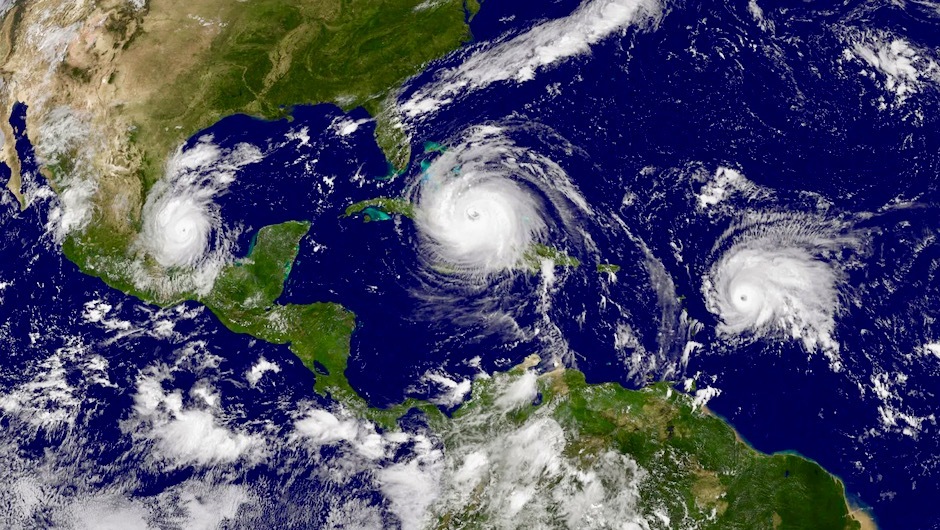
COVID-19 transmission can be more accurately modeled by incorporating meteorological factors, with ultraviolet (UV) radiation as the main driver, according to a new study published this week in the open-access journal PLOS ONE by a team of scientists from the Qatar Environment & Energy Research Institute (QEERI), at Hamad Bin Khalifa University and Transvalor S.A., France. The ensuing results show that meteorological factors play a key role in regression models of COVID-19 risk, with ultraviolet radiation (UV) as the main driver. These results are corroborated by statistical correlation analyses and fixed-effect regression modeling where UV radiation coefficients are found to be significantly negatively correlated with COVID-19 transmission rates.  CREDIT Giovanni Scabbia, CC-BY 4.0 (https://creativecommons.org/licenses/by/4.0/)

A growing number of studies suggest that climate may impact the spread of COVID-19 but the extent to which it modifies COVID-19 risk and transmission is not well understood. Studies on the impact of climate have been piecemeal or poorly controlled — limited to single countries, only taking into account a few climatic parameters, or ignoring socioeconomics, for instance.

In the new paper, the researchers studied data on reported COVID-19 cases in 196 countries over a 14-month period, using socioeconomic, environmental, and global health factors as control variables. They developed three different analytic approaches — statistical, machine learning, and econometric — which modeled the potential contributions of climate to confirmed case numbers.

The results suggest that while disease susceptibility, lockdown compliance, and increased testing are the most effective strategies for preventing the spread of COVID-19, UV radiation is the climate factor most strongly correlated with the spread of COVID-19, with greater UV radiation associated with reduced transmission. For other meteorological and air quality factors, including temperature, absolute humidity, and solar radiation, discrepancies between results in the three analysis methods emphasized the difficulty in understanding the correlations. For instance, the humidity was positively correlated with COVID-19 spread in the machine learning analysis and negatively correlated in the econometric analysis. The temperature was moderately negatively associated with COVID-19 in the statistical analysis but positively correlated with COVID-19 transmission in both the machine learning and econometric analyses.

The authors conclude that UV radiation emerges as the most impactful meteorological factor in COVID-19 transmission across all methods. This could help refine transmission predictions based on seasonality or weather forecasts, and help inform future pandemic response measures that limit the economic impact of complete lockdowns. They point out that this is supported by overwhelming evidence that UV light can effectively kill SARS-CoV-2 and other coronaviruses.

The authors add: “The impact of climate on COVID-19 transmission rates has been the subject of many studies, but it is still poorly understood. In our study, we demonstrated that meteorological factors play a key role in statistical, machine learning, and econometric analyses of COVID-19 risk, with ultraviolet radiation (UV) as the main driver.”

Uncertain analysis in finite elements models

The book “Uncertain Analysis in Finite Elements Models” explains uncertainty analysis for finite elements and general nonlinear problems. It starts with the fundamentals of the topic and progresses to complex methods through 9 chapters. Each chapter focuses on a specific, relevant topic and provides information in a structured reading format for advanced learners. The author explains different models relevant to the topic where applicable, in an effort to cover the diverse aspects of mathematical analysis.

In the first chapter, nonlinear stochastic finite elements for general nonlinear problems and elastoplastic problems are discussed, and three methods are proposed. In Chapter 2, the calculation formula of stochastic finite element is given by using the third-order Taylor expansion and a simple calculation method is addressed. The stress-strength interference model, Monte Carlo simulation, and a new iterative method (NIM) of reliability calculation for linear static problems and linear vibration are proposed. Reliability calculation methods using the homotopy perturbation method (MIHPD) and second order reliability method for nonlinear static problems and nonlinear vibration are proposed.

In Chapter 3, the structural fuzzy reliability calculation of static problem, linear vibration, nonlinear problem, and nonlinear vibration is studied by using the stochastic finite element method. The normal membership function is selected as the membership function, and the calculation formula of fuzzy reliability is presented.

In Chapter 4, Taylor expansion, Neumann expansion, Sherman Morrison Woodbury expansion, and a new iterative method (NIM) for interval finite element calculation of static problems are proposed.

In Chapter 5, Perturbation technology, Taylor expansion, Neumann expansion, Sherman Morrison Woodbury expansion, and a new iterative method (NIM) for interval finite element calculation of structural linear vibration are addressed.

Chapter 6 proposes five calculation methods of nonlinear interval finite element for general nonlinear problems and elastoplastic problems. In the seventh chapter, five methods of interval finite element calculation methods for nonlinear structures are presented.

In the eighth chapter, two improved methods of the random field are proposed. The midpoint method, local average method, interpolation method, and improved interpolation method of interval field and fuzzy field are proposed. The calculation method of mixed field is introduced. In the last chapter, calculation methods of random interval finite element, random fuzzy finite element, and random fuzzy and interval finite element are proposed by using Taylor expansion and Neumann expansion.

University of Bristol develops pioneering mathematical formula that revolutionizes modeling

A groundbreaking mathematical equation has been discovered, which could transform medical procedures, natural gas extraction, and plastic packaging products in the future.

The new equation, developed by scientists at the University of Bristol, indicates that diffusive movement through permeable material can be modeled exactly for the very first time. It comes a century after world-leading physicists Albert Einstein and Marian von Smoluchowski derived the first diffusion equation and marks important progress in representing motion for a wide range of entities from microscopic particles and natural organisms to man-made devices. Scientists have discovered a new equation to model exactly diffusive movement through permeable material for the first time. University of Bristol

Until now, scientists looking at particle motion through porous materials such as biological tissues, polymers, various rocks, and sponges, have had to rely on approximations or incomplete perspectives.

The findings provide a novel technique presenting exciting opportunities in a diverse range of settings including health, energy, and the food industry.

Lead author Toby Kay, who is completing a Ph.D. in Engineering Mathematics, said: “This marks a fundamental step forward since Einstein and Smoluchowski’s studies on diffusion. It revolutionizes the modeling of diffusing entities through complex media of all scales, from cellular components and geological compounds to environmental habitats.

“Previously, mathematical attempts to represent movement through environments scattered with objects that hinder motion, known as permeable barriers, have been limited. By solving this problem, we are paving the way for exciting advances in many different sectors because permeable barriers are routinely encountered by animals, cellular organisms, and humans.”

Creativity in mathematics takes different forms and one of these is the connection between different levels of description of a phenomenon. In this instance, by representing random motion in a microscopic fashion and then subsequently zooming out to describe the process macroscopically, it was possible to find the new equation.

Further research is needed to apply this mathematical tool to experimental applications, which could improve products and services. For example, being able to model accurately the diffusion of water molecules through biological tissue will advance the interpretation of diffusion-weighted MRI (Magnetic Resonance Imaging) readings. It could also offer a more accurate representation of air spreading through food packaging materials, helping to determine shelf life and contamination risk. In addition, quantifying the behavior of foraging animals interacting with macroscopic barriers, such as fences and roads, could provide better predictions on the consequence of climate change for conservation purposes.

The use of geolocators, mobile phones, and other sensors has seen the tracking revolution generate movement data of ever-increasing quantity and quality over the past 20 years. This has highlighted the need for more sophisticated modeling tools to represent the movement of wide-ranging entities in their environment, from natural organisms to man-made devices.

Senior author Dr. Luca Giuggioli, Associate Professor in Complexity Sciences at the University of Bristol, said: “This new fundamental equation is another example of the importance of constructing tools and techniques to represent diffusion when space is heterogeneous, that is when the underlying environment changes from location to location.

“It builds on another long-awaited resolution in 2020 of a mathematical conundrum to describe random movement in confined space. This latest discovery is a further significant step forward in improving our understanding of motion in all its shapes and forms – collectively termed the mathematics of movement – which has many exciting potential applications.”