IRB Barcelona uses ML to expand tumor genome interpretation for personalized cancer treatment

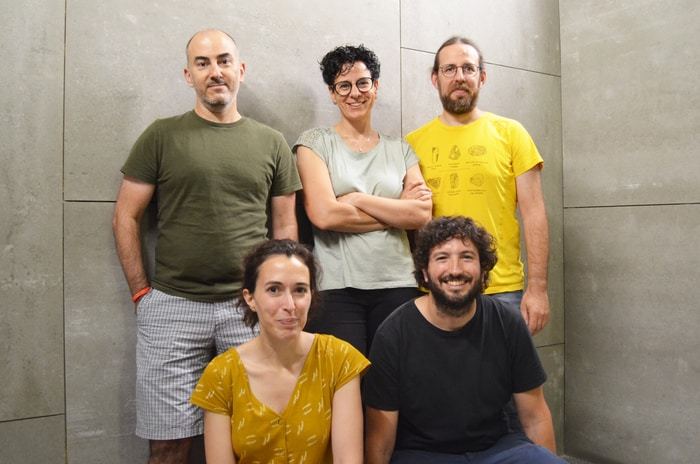
Cancer is increasingly prevalent in society and the efforts of the research community, doctors, and administrations to find solutions to this disease are huge. However, it cannot be treated uniformly, as there are more than 200 types of cancer. In addition, the disease in each patient is unique, because the mutations that give rise to the development of each of the tumors are different in each case. Dr. Abel González-Pérez, Dra. Núria López-Bigas, Jordi Deu, Dra. Olivia Tort and Dr. Santiago Demajo

Dr. Núria López-Bigas, ICREA researcher and head of the Biomedical Genomics lab at IRB Barcelona, is leading a European project that seeks to interpret the profiles of mutations in a specific tumor so that medical doctors can choose the most appropriate treatment for each patient. The platform that analyses potential susceptibilities of each tumor is called Cancer Genome Interpreter and it uses machine learning and other computational methods to systematically extract information from mutations observed in thousands of tumors—28,000 tumors from 66 types of cancer analyzed to date—to improve the interpretation of the variants observed in each patient.

“The Cancer Genome Interpreter, which we have been working on for more than five years, has immense potential and, through this project, we intend to optimize it for its use in hospitals and healthcare centers. We want it to be a key instrument to support the decision-making by clinical oncologists, so that each patient, regardless of the hospital in which the diagnosis is made, receives the most appropriate treatment,” explains Dr. López-Bigas.

Spanning five years, the project has been awarded funding of €10M by the European Commission, which has greatly valued its main aim: to provide an answer to an unmet medical need. The European Commission has also highlighted the quality of the platform, the expertise of the partners, and the solid implementation plan presented.

"Driver" and "passenger" mutations in cancer

Tumors are characterized by uncontrolled cell growth and proliferation. Along this process, cells accumulate many mutations (in the order of thousands in the entire genome). However, only a few of these (usually fewer than 10) are relevant for the development of the tumor.

The Cancer Genome Interpreter identifies those mutations that are important for cancer development and those that may be related to the response to a given treatment. On this basis, a prediction can be made of whether a specific drug can be effective against that tumor or whether the tumor is likely to be resistant to the treatment. With this information, the system provides a report to help medical doctors to make decisions about treatment options.

The project also includes the set-up of virtual tumor boards integrated by international experts with whom medical doctors can consult and discuss the report produced by the Cancer Genome Interpreter. The purpose of such meetings is to promote the exchange of knowledge and thus offer optimal treatment management to all patients, particularly those who are treated in smaller healthcare centers and who often do not have access to many specialized oncologists.

Patient-centered

A key pillar of this project is the involvement of people with cancer through two associations that will form part of the project, representing society and patients, with multiple goals. First, the aim is to involve patients so that they can play an active role in the process of personalized cancer medicine. To this end, the system also provides patients with a report, thus informing them about the molecular features of their tumor.

Second, the project seeks to highlight the value of the information and make patients aware that they can help to improve the system by accepting to share the molecular details of their tumors and their clinical information. In its current version, the Cancer Genome Interpreter has been developed from the analysis of the genomes of the tumors of 28,000 patients, covering more than 60 types of cancer, which are available to the scientific community in public repositories. As new sequenced tumors are added to the public domain, machine-learning methods will improve their predictions, thereby enhancing the interpretation of the tumor mutations for new patients.

The ECPC (the European Cancer Patient Coalition) and the Spanish Association Against Cancer will promote the active participation of cancer patients in this research.

17 partners for an ambitious project

As well as patient associations, IRB Barcelona will be collaborating with 17 different types of European organizations, which offer complementary expertise to address the implementation of personalized cancer medicine from all angles.

Nine hospitals and healthcare centers from four European countries are partners of the project and these will be the first to introduce the platform into their systems: the Vall d’Hebron Institute of Oncology (VHIO); the Gustave Roussy; the Leon Berard Centre de Lutte Contre le Cancer;  Uniklinik RWTH AACHEN; Universitätsklinikum Köln AöR; the Manchester Cancer Research Centre; the Girona Biomedical Research Institute Dr. Josep Trueta (IDIBGI); the Fundació Althaia - Hospital Sant Joan de Déu de Manresa and the Andalusian Health Services, as well as the Catalan Institute of Oncology (ICO) and the Fundación Progreso y Salud of the Regional Government of Andalusia.

Regarding research centres, in addition to IRB Barcelona, the Centro Nacional de Análisis Genómico (CNAG – CRG) is participating in the project. The company Alira Health is the partner in charge of ensuring regulatory aspects and the European Association for Cancer Research (EACR) will be managing communication actions associated with the project.

French scientists develop model that predicts forest tree growth in new environments

The acceleration of climate change has increased forest dieback in a wide range of tree species and environments. In response to this alarming situation, transplantation strategies adapted to evolutionary mechanisms are being studied, for example, the idea of transplanting trees to more compatible climates. A team of INRAE and CNRS scientists have developed models based on height growth in maritime pine to predict how trees respond in a given environment. Their results, published on April 29th in The American Naturalist, show that models which incorporate genomic and climatic data predict tree height growth better than pre-existing models based on climatic data alone. This research could rapidly lead to tangible applications in forest conservation and management, notably based on transplantation strategies.

© Unité conservatoire génétique de Lacanau

Trees are an essential cornerstone in the functioning and survival of forest ecosystems. But as global change accelerates, certain tree populations, too slow to adapt, may experience population decline or even extinction. Conservation and forest management strategies can be implemented to avoid such scenarios, such as moving trees to more compatible climates, known as assisted gene flow, or to threatened populations that lack genetic diversity, known as an evolutionary rescue. Because such strategies commit forest management authorities for several years, it is important to anticipate how transplanted trees will respond to their new environment.

Until now, prediction models have been based mainly on the climate of origin of transplanted tree populations. However, genomic data provide valuable information on adaptive processes in trees, such as growth. With climatic and genomic information more and more accessible thanks to the continually decreasing cost of sequencing technology, the research team developed models combining these two types of data to improve the robustness and accuracy of predictions.

A model based on a large-scale experimental scheme of maritime pine in France, Spain, and Portugal

Researchers developed the models using maritime pine, an emblematic species of the Mediterranean basin. An experimental monitoring system was set up at five sites, in France (Cestas Pierroton), Spain (Asturias, Cáceres, and Madrid), and Portugal (Fundão), with trees from 34 maritime pine populations collected throughout the species' natural habitat. Scientists focused on predicting the height growth of trees, a critical factor in economic and ecological terms given that the fastest growing trees have a higher probability of survival and reproduction.

Results show that observed height variations in maritime pine are explained by the different gene pools from which they originate and by the different climates in which they’ve evolved. The incorporation of climatic and genomic data into the models improved predictions of population height growth by an average of 14–25% depending on the experimental site, compared to models based on climatic data alone.

The findings hold potential for the development of models to predict how transplanted tree populations adapt to a new environment in the context of forest conservation and management.

Georgetown shows how climate change could spark the next pandemic

As the Earth’s climate continues to warm, researchers predict wild animals will be forced to relocate their habitats — likely to regions with large human populations — dramatically increasing the risk of a viral jump to humans that could lead to the next pandemic. Novel viral-sharing events coincide with human population centers. In 2070, human population centers in equatorial Africa, south China, India and Southeast Asia will overlap with projected hotspots of cross-species viral transmission in wildlife. (Image courtesy of Colin Carlson/GUMC)

This link between climate change and viral transmission is described by an international research team led by scientists at Georgetown University.

In their study, the scientists conducted the first comprehensive assessment of how climate change will restructure the global mammalian virome. The work focuses on geographic range shifts — the journeys that species will undertake as they follow their habitats into new areas. As they encounter other mammals for the first time, the study projects they will share thousands of viruses.

The scientists say these shifts bring greater opportunities for viruses like Ebola or coronaviruses to emerge in new areas, making them harder to track, and into new types of animals, making it easier for viruses to jump across a “stepping stone” species into humans.

“The closest analogy is actually the risks we see in the wildlife trade,” says the study’s lead author Colin Carlson, PhD, an assistant research professor at the Center for Global Health Science and Security at Georgetown University Medical Center. “We worry about markets because bringing unhealthy animals together in unnatural combinations creates opportunities for this stepwise process of emergence — like how SARS jumped from bats to civets, then civets to people. But markets aren’t special anymore; in a changing climate, that kind of process will be the reality in nature just about everywhere.”

Of concern is that animal habitats will move disproportionately in the same places as human settlements, creating new hotspots of spillover risk. Much of this process may already be underway in today’s 1.2 degrees warmer world, and efforts to reduce greenhouse gas emissions may not stop these events from unfolding.

An additional important finding is an impact rising temperatures will have on bats, which account for the majority of novel viral-sharing. Their ability to fly will allow them to travel long distances and share the most viruses. Because of their central role in viral emergence, the greatest impacts are projected in southeast Asia, a global hotspot of bat diversity.

“At every step,” said Carlson, “our simulations have taken us by surprise. We’ve spent years double-checking those results, with different data and different assumptions, but the models always lead us to these conclusions. It’s a really stunning example of just how well we can, actually, predict the future if we try.”

As viruses start to jump between host species at unprecedented rates, the authors say that the impacts on conservation and human health could be stunning.

“This mechanism adds yet another layer to how climate change will threaten human and animal health,” says the study’s co-lead author, Gregory Albery, PhD, a postdoctoral fellow in the Department of Biology in the Georgetown University College of Arts and Sciences.

“It’s unclear exactly how these new viruses might affect the species involved, but it’s likely that many of them will translate to new conservation risks and fuel the emergence of novel outbreaks in humans.”

Altogether, the study suggests that climate change will become the biggest upstream risk factor for disease emergence — exceeding higher-profile issues like deforestation, wildlife trade and industrial agriculture. The authors say the solution is to pair wildlife disease surveillance with real-time studies of environmental change.

“When a Brazilian free-tailed bat makes it all the way to Appalachia, we should be invested in knowing what viruses are tagging along,” says Carlson. “Trying to spot these host jumps in real-time is the only way we’ll be able to prevent this process from leading to more spillovers and more pandemics.”

“We’re closer to predicting and preventing the next pandemic than ever,” says Carlson. “This is a big step towards prediction — now we have to start working on the harder half of the problem.”

“The COVID-19 pandemic, and the previous spread of SARS, Ebola, and Zika, show how a virus jumping from animals to humans can have massive effects. To predict their jump to humans, we need to know about their spread among other animals,” said Sam Scheiner, a program director with the U.S. National Science Foundation (NSF), which funded the research. “This research shows how animal movements and interactions due to a warming climate might increase the number of viruses jumping between species.”