

SUPERCOMPUTING NEWS SUPERCOMPUTING NEWS
    • MEDIA KIT
    • MOST READ
    • RSS FEED
    • ACADEMIA
    • AEROSPACE
    • APPLICATIONS
    • ASTRONOMY
    • AUTOMOTIVE
    • BIG DATA
    • BIOLOGY
    • CHEMISTRY
    • CLIENTS
    • CLOUD
    • DEFENSE
    • DEVELOPER TOOLS
    • EARTH SCIENCES
    • ECONOMICS
    • ENGINEERING
    • ENTERTAINMENT
    • GAMING
    • GOVERNMENT
    • HEALTH
    • OIL & GAS
    • INDUSTRY
    • INTERCONNECTS
    • MANUFACTURING
    • MIDDLEWARE
    • MOVIES
    • NETWORKS
    • PHYSICS
    • PROCESSORS
    • RETAIL
    • SCIENCE
    • STORAGE
    • SYSTEMS
    • VISUALIZATION
    • AcyMailing subscription form

    • ADD YOUR VIDEOS
    • MANAGE VIDEOS
    • CONVERSATION INBOX
    • SOCIAL ADVERTISER
    • SOCIAL NETWORK VIDEOS
    • SURVEYS
    • GROUPS
    • PAGES
    • MARKETPLACE LISTINGS
    • APPLICATIONS BROWSER
    • PRIVACY CONFIRM REQUEST
    • PRIVACY CREATE REQUEST
    • LEADERBOARD
    • POINTS LISTING
      • BADGES
    • TRADE SHOWS
Sign In
Tyler O'Neal, Staff Editor DEVELOPER TOOLS February 18, 2020, 1:58 pm

Tulane math professor leads effort to map spread of coronavirus

James 'Mac' Hyman's goal is to help the public health community better understand and predict the spread of the coronavirus.

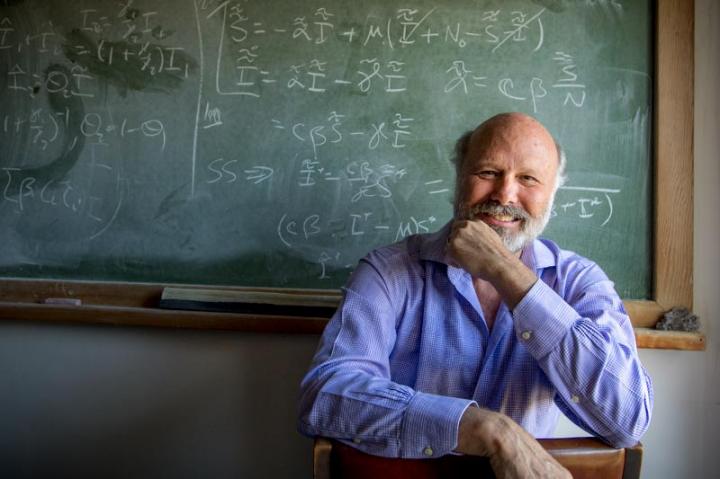
James "Mac" Hyman, the Evelyn and John G. Phillips Distinguished Professor in Mathematics at Tulane University, is using mathematical models to better understand and predict the spread of COVID-19 and to quantify the effectiveness of various efforts to stop it.

The goal of Hyman's work in "mathematical epidemiology" at the Tulane School of Science and Engineering, is to help the public health community understand and anticipate the spread of the infection and evaluate the potential effectiveness of different approaches for bringing it under control. CAPTION James 'Mac' Hyman, a professor at the Tulane University School of Science and Engineering, hopes his mathematical modeling will help the public health community with efforts to bring the COVID-19 outbreak under control.  CREDIT Paula Burch-Celentano{module INSIDE STORY}
Hyman and colleagues at Georgia State University and the Public Health Agency of Canada recently had a paper on COVID-19 accepted by the journal Infectious Disease Modeling and the Journal of Clinical Medicine.

The paper is based on daily reported cases of the virus for each Chinese province from the National Health Commission of China. The paper provides a methodology to predict the number of new infections five, 10, and 15 days in the future for the current epidemic in China.

In the paper, the authors say the predictions can help public health officials prepare the medical care and allocate resources needed to confront the epidemic, as well as to predict the intensity and type of interventions needed to mitigate an epidemic. In the absence of vaccines or antiviral drugs for the virus, the effective implementation of non-drug interventions, such as personal protection and social distancing, will be critical to bringing the epidemic under control.

COVID-19 is a disease caused by a virus named SARS-CoV-2. It is a member of the coronavirus family that's a close cousin to the SARS and MERS viruses that have caused outbreaks in the past.

Last week, Hyman led a workshop titled "Modeling Emerging Infection Diseases," and the coronavirus was a major topic of discussion along with Chagas disease, Dengue fever, and Zika. Among those in attendance were researchers from Tulane, the University of Michigan, the California Academy of Sciences, and the University of Louisiana at Lafayette.

The workshop focused on improving the quality of mathematical models to help guide public health workers to mitigate emerging infections. The goals include identifying the essential problems where modeling can be useful and forming collaborations to address these problems.

"We're trying to create models that can be more effective in guiding public health efforts to mitigate an epidemic," Hyman said. "It's about figuring out what needs to be in a model to estimate the risk of someone being infected and predict the risk that an infected person will be to someone else.

"In the coronavirus, we must account for the way that an infected person can infect the environment, such as a table or door handle, and others can be infected, even if they don't have direct contact with an infected person."

In a note submitted to Science Translational Medicine, Hyman and colleagues said several groups are working independently to predict the spread of COVID-19 and that coordination among the groups is essential and should be supported by government agencies.

He thinks the World Health Organization needs to take the lead by organizing an international effort that focuses on three specific aims - predicting further spread of the virus in China, predicting its potential to spread elsewhere or under various conditions, and predicting the effectiveness of mitigation strategies, such as quarantine, contact reduction, hand hygiene and face masks.

"In the complex 'fog of an outbreak,' the world needs actions guided by expert consensus and, as emphasized in this editorial, further guided by data-driven models that explore response scenarios," he wrote.
Australian research reveals top tools for pinpointing genetic drivers of disease

Tyler O'Neal, Staff Editor DEVELOPER TOOLS July 25, 2019, 2:21 pm

A new benchmarking study has determined the best analysis tools for identifying errors in a patient's DNA that are responsible for driving disease.

Published in Nature Communications, the study is the largest of its kind and was led by Walter and Eliza Hall Institute computational biologists Professor Tony Papenfuss, Dr Daniel Cameron and Mr Leon Di Stefano.

The new study reveals the world's top genomic rearrangement detection tools providing summaries on their performance and recommendations for use. Dr Cameron said the study could ultimately help clinicians determine the best treatments for their patients.

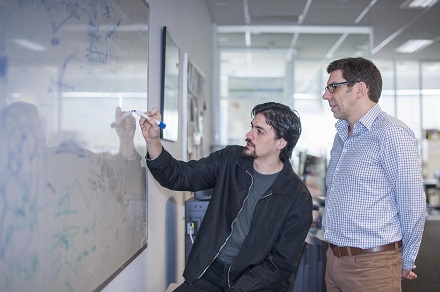
"Basically, you have to understand what is going wrong before you can work out how to fix the problem. In the context of cancer for instance, an understanding of the genetic mutations driving tumour growth could help oncologists determine the most appropriate treatment for their patients," he said. Caption Dr. Daniel Cameron and Professor Tony Papenfuss led the study.{module In-article}

To determine the best genomic rearrangement detection methods, the researchers comprehensively tested 12 of the most widely used tools to see which ones could accurately identify the differences between a patient's genetic information and the standard human reference genome. The findings revealed that a tool called GRIDSS, developed by Professor Papenfuss and Dr Cameron, was one of the best performing options, most accurately able to detect DNA rearrangements.

Dr Cameron said the study would not have been possible without the Institute's supercomputing resource.

"Over the course of two years, we tested 12 of the most popular genomic rearrangement detection tools, generating more than 50 terabytes of data, to determine which tools perform well, and when they perform badly. Without these supercomputing resources, we estimate the study would have taken us more than ten years," he said.

The Institute's Theme Leader for Computational Biology Professor Papenfuss said computational methods were required, more than ever before, for making sense of vast and complex datasets being generated from research.

"Computational studies like this one keep the field up to date with best practice approaches for data analysis. This particular study provides a comprehensive resource for users of genomic rearrangement detection methods, as well as developers in the field. It will also help to direct the next iteration of genomic rearrangement tool development at the Institute," he said.

As new experimental techniques and DNA sequencing machines become available, the very nature of the data they generate is changing. Professor Papenfuss said that older analysis tools, while heavily cited and widely used, could lead to erroneous interpretations if used on data produced by the latest DNA sequencing machines. "This is why it is so important for researchers to find the right match between the analysis tool and dataset at hand," he said.

Page 20 of 20

  • 11
  • 12
  • 13
  • 14
  • 15
  • 16
  • 17
  • 18
  • 19
  • 20
POPULAR RIGHT NOW
  • Supercomputers replace ‘bathtub’ flood maps with physics-based digital twins of Britain’s coastline
    Supercomputers replace ‘bathtub’ flood maps with physics-based digital twins of Britain’s coastline
  • Supercomputers push neural quantum simulation beyond previous limits
    Supercomputers push neural quantum simulation beyond previous limits
  • Intel’s AI supercomputing revival: Q2 financial surge signals new era for CPU-powered HPC infrastructure
    Intel’s AI supercomputing revival: Q2 financial surge signals new era for CPU-powered HPC infrastructure
  • AI infrastructure financing fears shake semiconductor sector
    AI infrastructure financing fears shake semiconductor sector
  • AWS supercomputing investment reaches historic scale as Amazon’s AI strategy powers record financial results
    AWS supercomputing investment reaches historic scale as Amazon’s AI strategy powers record financial results
  • Catching the wave of the future: Supercomputers unlock the hidden dynamics of Venus
    Catching the wave of the future: Supercomputers unlock the hidden dynamics of Venus
  • NCAR supercomputers run planet scale climate experiments impossible in the real world
    NCAR supercomputers run planet scale climate experiments impossible in the real world
  • AI hunts the cosmos: Machine learning helps astronomers discover the first ‘Wandering’ supermassive black hole caught destroying a star
    AI hunts the cosmos: Machine learning helps astronomers discover the first ‘Wandering’ supermassive black hole caught destroying a star
  • Supercomputing for the masses: Meta's vision of a personal superintelligence for everyone
    Supercomputing for the masses: Meta's vision of a personal superintelligence for everyone
  • NVIDIA helps turn AI compute into a new asset class as Wall Street mobilizes $500 billion
    NVIDIA helps turn AI compute into a new asset class as Wall Street mobilizes $500 billion
THIS YEAR'S MOST READ
  • Beamforming the future: BeammWave's 6G push signals the rise of orbital-terrestrial wireless networks
    Joakim Axmon
    Joakim Axmon
  • Wall Street wants to trade supercomputing power like oil
    Wall Street wants to trade supercomputing power like oil
  • Cosmic ambition at scale: UK’s supercomputer unlocks a 2.5 petabytes universe
    Cosmic ambition at scale: UK’s supercomputer unlocks a 2.5 petabytes universe
  • Hidden order, revealed at scale: Supercomputing, electron ptychography uncover the inner workings of relaxor ferroelectrics
    Hidden order, revealed at scale: Supercomputing, electron ptychography uncover the inner workings of relaxor ferroelectrics
  • Intel's Q1 results signal supercomputing surge driving Xeon momentum
    Intel's Q1 results signal supercomputing surge driving Xeon momentum
  • Huawei’s Tau Scaling ambition tests the limits of post-Moore semiconductor reality
    He Tingbo from HUAWEI delivered a keynote speech titled "New Semiconductor Path in Practice"
    He Tingbo from HUAWEI delivered a keynote speech titled "New Semiconductor Path in Practice"
  • When stars fall apart: Supercomputing reveals the hidden physics of black holes
    When stars fall apart: Supercomputing reveals the hidden physics of black holes
  • MIT develops computational framework to probe dark matter via gravitational waves
    MIT develops computational framework to probe dark matter via gravitational waves
  • Memory has become the new compute: Why Micron, SK Hynix crossing $1 trillion matters to supercomputing
    Memory has become the new compute: Why Micron, SK Hynix crossing $1 trillion matters to supercomputing
  • AI breaks conservation barriers: Australia’s Wildlife Observatory leverages supercomputing to protect biodiversity
    AI breaks conservation barriers: Australia’s Wildlife Observatory leverages supercomputing to protect biodiversity
  • FRONTPAGE
  • LATEST
  • POPULAR
  • REGISTER
  • SOCIAL
  • VIDEO
  • SUBSCRIPTION
  • RSS
  • GUIDELINES
  • PRIVACY
  • TOS
  • ABOUT
  • +1 (816) 799-4488
  • editorial@supercomputingonline.com
© 2001 - 2026 SuperComputingOnline.com, LLC. All rights reserved. This material may not be published, broadcast, rewritten or redistributed without permission.
Sign In
  • FRONT PAGE
  • LATEST
    • MEDIA KIT
    • MOST READ
    • RSS FEED
    • ACADEMIA
    • AEROSPACE
    • APPLICATIONS
    • ASTRONOMY
    • AUTOMOTIVE
    • BIG DATA
    • BIOLOGY
    • CHEMISTRY
    • CLIENTS
    • CLOUD
    • DEFENSE
    • DEVELOPER TOOLS
    • EARTH SCIENCES
    • ECONOMICS
    • ENGINEERING
    • ENTERTAINMENT
    • HEALTH
    • INDUSTRY
    • INTERCONNECTS
    • GAMING
    • GOVERNMENT
    • MANUFACTURING
    • MIDDLEWARE
    • MOVIES
    • NETWORKS
    • OIL & GAS
    • PHYSICS
    • PROCESSORS
    • RETAIL
    • SCIENCE
    • STORAGE
    • SYSTEMS
    • VISUALIZATION
  • VIDEOS
    • ADD YOUR VIDEOS
    • MANAGE VIDEOS
  • COMMUNITY
    • TRADE SHOWS
    • SOCIAL NETWORK VIDEOS
    • SURVEYS
    • APPLICATIONS BROWSER
    • CONVERSATION INBOX
    • SOCIAL ADVERTISER
    • GROUPS
    • MARKETPLACE LISTINGS
    • PAGES
    • LEADERBOARD
    • POINTS LISTING
      • BADGES
    • PRIVACY CONFIRM REQUEST
    • PRIVACY CREATE REQUEST

Hey there! We noticed you’re using an ad blocker.