
HPE reports 3Q23 sales increase, but it's not enough

Hewlett Packard Enterprise has announced financial results for the third quarter ended July 31, 2023. The latest financial report from HPE shows that revenue from high-performance computing and AI was only up 1% from the prior year, despite the company's efforts to increase its market share in the sector. This indicates that the company is struggling to make significant progress in the area of supercomputing and may be facing an uphill battle in the future.

Edge momentum and portfolio mix shift drive its revenue growth and gross margin expansion; reiterating GAAP diluted net EPS and raising non-GAAP diluted net EPS guidance for the full year.

Third Quarter Fiscal 2023 Financial Results                                

  • Revenue: $7.0 billion, up 1% from the prior-year period and 3.5% in constant currency   
  • Annualized revenue run-rate (“ARR”): $1.3 billion, up 48% from the prior-year period and in constant currency
  • Gross margins:
    • GAAP of 35.8%, up 130 basis points from the prior-year period and down 20 basis points sequentially 
    • Non-GAAP of 35.9%, up 120 basis points from the prior-year period and down 30 basis points sequentially
  • Diluted net earnings per share (“EPS”):
    • GAAP of $0.35, up 13% from the prior-year period and up 9% sequentially, near the mid-point of our guidance range of $0.34 to $0.38
    • Non-GAAP of $0.49, up 2% from the prior-year period and down 6% sequentially, above our guidance range of $0.44 to $0.48
  • Cash flow from operations: $1.5 billion, an increase of $271 million from the prior-year period
  • Free cash flow: $955 million, up $368 million from the prior-year period
  • Capital returns to shareholders: $341 million in the form of dividends and share repurchases

Outlook

  • Revenue: Estimates Q4 fiscal 2023 revenue to be in the range of $7.2 billion to $7.5 billion, and fiscal 2023 revenue growth to be in the range of 4% to 6% in constant currency
  • ARR: Reiterates our 2022 HPE Securities Analyst Meeting ARR guidance of 35% to 45% Compounded Annual Growth Rate from fiscal 2022 to fiscal 2025
  • Diluted net EPS:
    • Estimates Q4 fiscal 2023 GAAP diluted net EPS to be in the range of $0.36 to $0.40 and non-GAAP diluted net EPS to be in the range of $0.48 to $0.52
    • Reiterates fiscal 2023 GAAP diluted net EPS to be in the range of $1.42 to $1.46 and raises non-GAAP diluted net EPS guidance to be in the range of $2.11 to $2.15
  • GAAP operating profit: Estimates fiscal 2023 GAAP operating profit growth to be in the range of 180% to 184%
  • Non-GAAP operating profit: Estimates fiscal 2023 non-GAAP operating profit growth to be in the range of 6% to 7%
  • Free cash flow: Reiterates guidance of $1.9 billion to $2.1 billion

“HPE delivered another solid quarter in Q3, powered by standout performances in the Intelligent Edge and HPE GreenLake,” said Antonio Neri, president and CEO of Hewlett Packard Enterprise. “Demand improved sequentially across all key business segments, with particular strength in our HPC & AI segment as customers discover HPE’s unique capabilities to power unprecedented levels of performance for AI at scale. Our strategic shift toward edge, hybrid cloud, and AI delivered through our HPE GreenLake platform is working."

“The pivot in our portfolio toward higher-growth, higher-margin markets is visible in our year-over-year expansion of gross margins,” said Jeremy Cox, senior vice president, interim CFO, corporate controller, and chief tax officer of Hewlett Packard Enterprise. “Our differentiated edge-to-cloud strategy is fueling strong results in an uneven market.”

Third Quarter Fiscal 2023 Segment Results

  • Intelligent Edge revenue was $1.4 billion, up 50% from the prior-year period in actual dollars and 53% in constant currency(, with a 29.7% operating profit margin, compared to 16.5% in the prior-year period.
  • High-Performance Computing & Artificial Intelligence (“HPC & AI”) revenue was $836 million, up 1% from the prior-year period in actual dollars and 3% in constant currency, with (0.8)% operating profit margin, compared to 3.4% from the prior-year period.
  • Compute revenue was $2.6 billion, down 13% from the prior-year period in actual dollars and 10% in constant currency, with a 10.9% operating profit margin, compared to 13.5% from the prior-year period.
  • Storage revenue was $1.1 billion, down 5% from the prior-year period in actual dollars and down 2% in constant currency, with a 10.7% operating profit margin, compared to 14.3% from the prior-year period.
  • Financial Services revenue was $873 million, up 7% from the prior-year period in actual dollars and in constant currency, with an 8.4% operating profit margin, compared to 11.8% from the prior-year period. Net portfolio assets of $13.5 billion, up 7.5% from the prior-year period in actual dollars and up 5.2% in constant currency(1). The business delivered a return on equity of 15.8%, down 3.8 points from the prior-year period.

Dividend

The HPE Board of Directors declared a regular cash dividend of $0.12 per share on the company’s common stock, payable on October 13, 2023, to stockholders of record as of the close of business on September 14, 2023.

Fiscal 2023 Fourth Quarter Outlook

HPE estimates revenue to be in the range of $7.2 billion to $7.5 billion. HPE estimates GAAP diluted net EPS to be in the range of $0.36 to $0.40 and non-GAAP diluted net EPS to be in the range of $0.48 to $0.52. Fiscal 2023 fourth quarter non-GAAP diluted net EPS estimates exclude after-tax adjustments of $0.12 per diluted share, primarily related to, stock-based compensation expense, amortization of intangible assets, and acquisition, disposition, and other related charges.

Fiscal 2023 Outlook

HPE estimates fiscal 2023 revenue growth to be in the range of 4% to 6% in constant currency and targets fiscal 2023 GAAP operating profit growth to be in the range of 180% to 184% and non-GAAP operating profit growth to be in the range of 6% to 7%. HPE reiterates GAAP diluted net EPS to be in the range of $1.42 and $1.46 and raises non-GAAP diluted net EPS guidance to be in the range of $2.11 and $2.15. Fiscal 2023 non-GAAP diluted net EPS estimates exclude after-tax adjustments of $0.69 per diluted share, primarily related to stock-based compensation expense, amortization of intangible assets, and transformation costs.
Unreliable forecasts: Stevens researchers challenge weather forecasters' biggest weakness

Effective community responses to sudden storms, floods, and other emergencies require more accurate 'nowcasting' algorithms.

Anyone who’s been caught in an unexpected downpour knows that weather forecasting is an imperfect science. Now, researchers at Stevens Institute of Technology are aiming at one of meteorologists’ biggest blind spots: extremely short-term forecasts, or nowcasts, that predict what will happen in a given location over the next few minutes. 

“This isn’t just about whether you should take your umbrella with you when you go on a walk,” said Dr. Marouane Temimi. “The forecasts that we’re missing – the ones that look 2 to 5 minutes into the future – are precisely what’s needed to respond to storms, floods, and other emergencies effectively.”

The National Oceanic and Atmospheric Administration (NOAA) publishes round-the-clock rainfall predictions, but its shortest-term forecasts begin a few hours into the future. The lack of more immediate nowcasting hinders community responses to sudden catastrophes such as Hurricane Ida, for example, in which rapid flooding killed multiple people in New York City, explained Dr. Temimi, a hydrometeorologist at Stevens whose work appears in the Aug. 19 online issue of Environmental Modeling & Software.

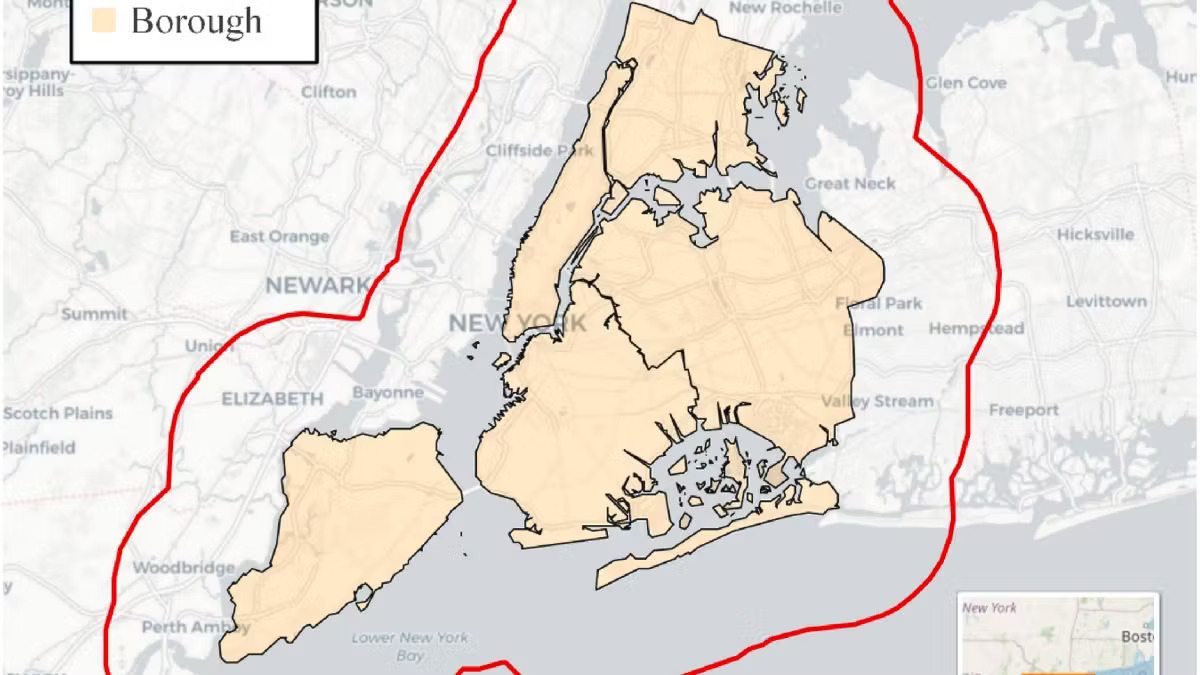
Researchers in Temimi’s lab used historical data from the NOAA’s weather radar systems to test the accuracy of seven different nowcasting algorithms. Studying eight years of meteorological data from the New York region, they were able to provide the first robust comparison of the models’ accuracy across a wide range of weather conditions. The work will help determine which models work best in any given location or use case.

The Stevens team studied both deterministic and probabilistic nowcasting models. While the former assumes that a rain cell will not change over time, the latter accounts for the chaotic, ever-changing nature of a rain cell, which is determined by the dynamics of warm and cold air within a cloud. For predictions over periods of a few minutes, both models proved highly accurate. Over periods of up to 90 minutes, however, probabilistic models were significantly more accurate.

If probabilistic models are highly accurate in predicting both long- and short-term rainfall events, why have deterministic models? Validating deterministic models is useful because probabilistic models are far more computationally demanding. For instance, LINDA-P, a probabilistic model, proved to be the most accurate model tested, but it takes 15 minutes to generate a nowcast based on current conditions. Therefore, it can’t be used for extremely short-term projections.

Some models also perform better in certain conditions: LINDA-P is designed to predict sudden torrential rainfall, enabling it to outperform other models during summer months, when sporadic but intense storms are more likely to occur. Other models make granular predictions that are more error-prone, but useful when higher-resolution forecasting is needed.

“The key takeaway is that we need to select nowcasting models based on their intended use-case,” said Achraf Tounsi, the paper’s lead author who recently completed his doctorate in Temimi’s lab. “If you want to know if it will rain in the next five minutes, you need a deterministic model. If you’re running an airport or seaport and want data for the next 20 minutes, or hour, you’ll be better served with a probabilistic model.”

Temimi and Tounsi will dig into the reasons why certain models perform better than others across a range of conditions. By using those insights to improve algorithms, and sourcing more precise weather data, it should be possible to develop more versatile and accurate nowcasting models.

“That’s our next assignment,” said Tounsi. “We hope to develop our nowcasting model — and teach it to outperform the ones we’ve assessed in this paper.”

The research conducted by Stevens researchers into the blind spot of weather forecasting is an important step forward in understanding the limitations of current forecasting models. However, further research is needed to explore the implications of their findings and to develop more accurate forecasting models. The results of this research suggest that weather forecasting may be improved by taking into account the effects of small-scale weather phenomena, but more research is needed to confirm this.

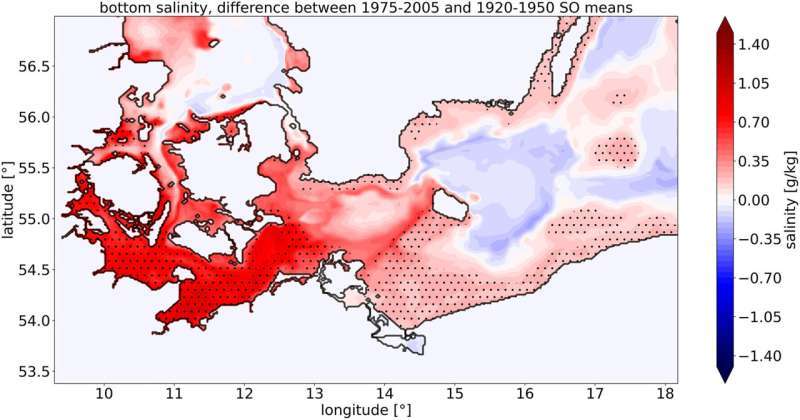
Differences between 1975–2005 and 1920–1950 September–October (SO) means of bottom salinity. Black dots indicate significant changes according to a Student's t test with a significance level of 0.95. Credit: Geophysical Research Letters (2023). DOI: 10.1029/2023GL103853

Uncovering the cause of sea temperature rise: A hopeless endeavour?

At the bottom of the Bornholm Basin in the central Baltic Sea, the water temperature has risen faster than at the surface in recent decades. In Germany, Warnemünde researchers have now been able to explain this unusual development with a temporal change in the water exchange between the North Sea and the Baltic Sea. It ensures that, in addition to the rapid increase in temperature in the surface water, which can be observed everywhere in the Baltic Sea and can be attributed to global warming, the temperature in the deep water also rises. The research results have now been published in the renowned journal Geophysical Research Letters.

We are registering an increase in the surface temperatures of the seas worldwide due to global warming - this is also the case in the Baltic Sea. While the surface water reacts relatively quickly to the higher temperature in the atmosphere, the deeper water absorbs the heat only with a delay. In some areas of the Baltic Sea, however, the lower layers are warming faster than the surface water.

How can that be? Leonie Barghorn, physical oceanographer at the Leibniz Institute for Baltic Sea Research Warnemünde (IOW), together with her colleagues, investigated whether temporal changes in the inflow of North Sea water into the Baltic Sea could be
the cause.

The brackish Baltic Sea gets its salt content from the North Sea. However, due to its higher salt content, the North Sea water flowing in is heavier than the brackish water of the Baltic Sea and therefore flows in at the bottom of the Baltic Sea. This is not a permanent process, because the Baltic Sea usually has a high level due to numerous inflows and large amounts of annual precipitation, which results in a strong outflow. Only under certain meteorological and/or oceanographic conditions do these ratios reverse, so that North Sea water can reach the Baltic Sea.

For decades, the fall and winter storms were thought to be the main drivers of these conditions. In 2002, it was possible for the first time to identify and examine more closely a saltwater inflow that deviated from this pattern: in calm summer weather, an inflow of North Sea water into the Baltic Sea was driven solely by horizontal differences in salinity. While these events are much weaker in scope, they occur more frequently. And of course, North Sea water that flows into the Baltic Sea in summer or early autumn
is significantly warmer than that that enters via winter inflows.

There are still no sufficiently long series of observations on the summer inflows so a trend determination based on the measurement data is too large and is fraught with uncertainty. Leonie Barghorn therefore used the tool of supercomputer simulation to investigate whether the frequency of saltwater inflows in summer and early autumn has increased over the past 150 years and whether there is a causal link to temperature increase in the deep water of the Bornholm Sea. "We analyzed a so-called 'hindcast' simulation, covering the period from 1850 to 2008,” explains Leonie Barghorn of her methodology. Leonie Barghorn, physical oceanographer at the IOW, together with her colleagues, investigated whether inflowing North Sea water contributes to the warming of the Baltic Sea deep water in the Bornholm Sea. (Photo: IOW / D.Amm)

"By comparing the data from the two seasons of summer and early autumn with those of the entire year, it became clear that in the model period under consideration, the summer and early autumn salt input increased and the winter one decreased." While the Arkona Basin upstream of the Bornholm Basin is regularly mixed due to its shallower depth, so that the inflowing warm salt water is distributed over the entire water column, the downstream Gotland Basin is not accessible for the small summer to early autumn saltwater inflows. Thus prevail only in Bornholm Basin Conditions that make this "floor heating" visible.

Co-author Markus Meier adds: "We do not yet know exactly what caused the salt input to be shifted to the warm season. In any case, the consequences for the Bornholm Basin can be serious, because higher temperatures will also drive up oxygen depletion and thus promote the spread of 'dead zones'.”

The research conducted by the Warnemünde team has provided valuable insight into the cause of high temperatures at the bottom of the sea. However, more research is needed to fully understand the underlying mechanisms at play and to develop effective solutions. Without further research, it is unlikely that the cause of these high temperatures can be fully understood or addressed.